
BuddhistCatholicContemplativeEvangelicalGeneral ChristianHinduJewishLatter-day SaintMuslimNew VisionsProgressive Christian
Beliefs
- Buddhist
- Catholic
- Contemplative
- Evangelical
- General Christian
- Hindu
- Jewish
- Latter-day Saint
- More Voices
- Muslim
- New Visions
- Pagan
- Progressive Christian
Topics
- Religion News
- Food and Religion
- Sports and Religion
- Religious Art
- Religious Music and Entertainment
- Religious Events
- History and Religion
- Style and Religion
- Politics and Religion
- Women in Religion
- Recreation Outdoors and Religion
- Business Finance and Religion
- Careers Workplace and Religion
- Education and Religion
- Family Parenting and Religion
- Health Fitness and Religion
- Home and Religion
- Relationships and Religion
- Technology and Religion
- Travel and Religion
Columnists
- Buddhist Columnists
- Business Finance and Religion Columnists
- Careers Workplace and Religion Columnists
- Catholic Columnists
- Contemplative Columnists
- Education and Religion Columnists
- Evangelists Columnists
- Family Parenting and Religion Columnists
- General Christian Columnists
- Health Fitness and Religion Columnists
- Hindu Columnists
- History and Religion Columnists
- Home and Religion Columnists
- Jewish Columnists
- More Voices Columnists
- Latter Day Columnists
- Muslim Columnists
- New Visions Columnists
- Nonreligious Columnists
- Pagan Columnists
- Politics and Religion Columnists
- Progressive Columnists
- Recreation Outdoors and Religion Columnists
- Relationships and Religion Columnists
- Religion News Columnists
- Religious Art Columnists
- Religious Events Columnists
- Religious Music and Entertainment Columnists
- Sports and Religion Columnists
- Style and Religion Columnists
- Technology and Religion Columnists
- Travel and Religion Columnists
- Women in Religion Columnists
Resource Library
- 2026 Calendar
- Library of World Religions
- The 100 Most Holy Places on Earth
- Patheos Answers
- Podcasts
- Videos
- Faith Leaders Database
- Anglican Episcopalian
- Bahai
- Baptist
- Buddhism
- Christianity
- Confucianism
- Eastern Orthodoxy
- Hinduism
- Holiness and Pentecostal
- ISKCON
- Islam
- Judaism
- Lutheran
- Methodist
- The Church of Jesus Christ of Latter-day Saints
- New Age
- Paganism
- Presbytarian and Reformed
- Protestantism
- Religion Behind the Scenes
- Roman Catholic
- Scientology
- Shia Islam
- Sikhism
- Sufism
- Sunni Islam
- Taoism
- Zen
- See all religions
Research Tools
 Ad-Free & Subscriber Log-In Subscription Support
Ad-Free & Subscriber Log-In Subscription Support
Follow Patheos 

- Trending:
- Forgiveness
- |
- Marriage
- |
- Consciousness
- |
- Death Penalty
- |
- Election
- |
- Halloween
 Pop Theology
- Home
- Progressive Christian
- Religious Music & Entertainment
- First Generation Films…
First Generation Films…
Last updated on: January 1, 2008 at 11:45 am by J. Ryan Parker
First Generation Films… 2008-01-01T11:45:10-08:00 J. Ryan Parker
Patheos Explore the world's faith through different perspectives on religion and spirituality! Patheos has the views of the prevalent religions and spiritualities of the world.
 For a class on religion, race, and American film, I watched several movies that dealt with immigrants and non-Christian
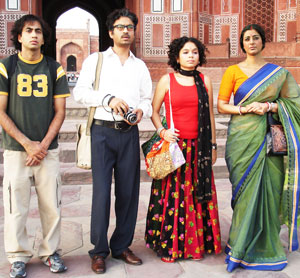 religions, with the recognition that American religion is anything but monolithic. Nearly all of these films dealt with the tension between immigrant parents and their children (whether born in the United States or not) as the children seek to rectify their parents’ traditional culture with American culture. So once can potentially see films as diverse as The Jazz Singer (1927) and Dim Sum (1985) telling virtually the same story. Seeing Dim Sum piqued my interest in director Wayne Wang’s films, and so I recently watched his 1982 film, Chan is Missing. Along with this film, I also saw Mira Nair’s The Namesake (2007), based on the novel by Jhumpa Lahiri. Though both involve immigrant cultures, their differences make for two unique films.
Chan is Missing marks the birth of Wayne Wang’s cinematic career that has taken an interesting turn in recent years. It focuses on two characters, Jo (Wood Moy) and Steve (Marc Hayashi), as they look for Chan, a business partner with whom they hope to start a taxi service. Speculations about Chan and his whereabouts abound as the film progresses, turning into an actively-reversed Waiting for Godot. Along the way, we get a glimpse into Chinese immigrant politics (though never fully explored) and the tension between traditional Jo and his younger, hipper counterpart Steve.
Shot in black-and-white in the streets of San Francisco, the film is a stark contrast to Wang’s colorful Dim Sum and other subsequent films. There is an immediacy to Chan is Missing that is missing from even a film like Dim Sum. It feels as if we are part of the story, sitting so close to the actors while they argue over Chan’s location: whereas Dim Sum felt more observational, this film feels more participatory and is necessarily an important film in studying Chinese immigrant culture.
In contrast to Wang’s Chan is Missing, we have Mira Nair’s The Namesake, a film that draws on India’s colorful tradition to effect a beautiful film. The Namesake tells the story of Ashoke Ganguli (Irfan Khan) and his wife Ashima’s (Tabu) journey to the United States where Ashoke pursues a degree and a professorship. Though they have children, the film focuses on their firstborn son, Gogol (Kal Penn), and the emotional and spiritual struggles he faces as he grows up. While his Indian background presents interesting, unique aspects to this struggle, it also plays out like most coming-of-age stories. Gogol must create his own identity in the face of American secularism and his parents’ desires for him. He decides to adopt his good name, which becomes Nick, majors in architecture, and dates a white, American girl. However, when his father reveals the importance of his given name, Gogol, and eventually dies, Gogol embraces his traditional roots, mourns his father’s death, and marries an Indian girl. Although this may seem like a peaceful return to tradition for Gogol, he finds little peace here as his new wife cheats on him. The film ends on an appropriate note as Gogol rides on a train, a symbol of his ongoing quest for an American/Bengali identity.
The Namesake seems to be yet another straightforward adaptation of the book. It is a gorgeous film but not overwhelmingly so. The filmmakers do not drown us in colorful costumes and ceremonies although they could have. Unfortunately, we are not immersed in Gogol’s spiritual, emotional struggle either. The tension between what Gogol must give up or adapt and what he seeks to embrace seem more implied than expressed, or are simply boiled down to a funny name and a white girlfriend. Nevertheless, the film is enjoyable and bolstered by Penn’s fantastic performance, a break from his more sophomoric Harold and Kumar roles.
Both Chan is Missing (Not Rated, 80 mins.) and The Namesake (PG-13, 122 mins.) are available on DVD. The special features on The Namesake are a nice addition and include segments from a filmmaking course at Columbia University where the filmmaking team discusses the creative process from storyboards to marketing.
Previous Post

January 1, 2008
HAPPY NEW YEAR!
Next Post
January 9, 2008 An Extra Special Series...
Browse Our Archives
Select a Category Classics DVD Film Music News Pop Culture Events Print Sports Television Uncategorized Video Games
Select a Month March 2017 February 2017 January 2017 December 2016 November 2016 October 2016 September 2016 August 2016 July 2016 June 2016 May 2016 April 2016 March 2016 February 2016 January 2016 December 2015 November 2015 October 2015 September 2015 August 2015 July 2015 June 2015 May 2015 April 2015 March 2015 February 2015 January 2015 December 2014 November 2014 October 2014 September 2014 August 2014 July 2014 June 2014 May 2014 April 2014 March 2014 February 2014 January 2014 December 2013 November 2013 October 2013 September 2013 August 2013 July 2013 June 2013 May 2013 April 2013 March 2013 February 2013 January 2013 December 2012 November 2012 October 2012 September 2012 August 2012 July 2012 June 2012 May 2012 April 2012 March 2012 February 2012 January 2012 December 2011 November 2011 October 2011 September 2011 August 2011 July 2011 June 2011 May 2011 April 2011 March 2011 February 2011 January 2011 December 2010 November 2010 October 2010 September 2010 August 2010 July 2010 June 2010 May 2010 April 2010 March 2010 February 2010 January 2010 December 2009 November 2009 October 2009 September 2009 August 2009 July 2009 June 2009 May 2009 April 2009 March 2009 February 2009 January 2009 December 2008 November 2008 October 2008 September 2008 August 2008 July 2008 June 2008 May 2008 April 2008 March 2008 February 2008 January 2008 December 2007 November 2007 October 2007 September 2007 August 2007 July 2007 June 2007 May 2007 April 2007 March 2007
Follow Us!
TAKE THE
Religious Wisdom Quiz
Who is the Good Shepherd in Jesus' teaching?
Select your answer to see how you score.
Peter Moses David Jesus
Related posts from Pop Theology


At SXSW2017: May It Last: A Portrait of...

At SXSW 2017: "Untold Tales of Armistead Maupin"
TRENDING AT PATHEOS Progressive Christian

Why Christians Have a Sacred Duty to Vote:...
The Bible offers strong support for the sacred duty to vote. Here...

What Being a Modern-Day Apostle Means to Me
In my last column, I discussed the ins and outs of modern-day...

Did Ancient China Once Worship the God of...
Across human history, a common thread weaves through the origins of the...

Love Your Neighbor – Including Earth-Kin: Lev. 19,...
God’s command to love your neighbor means acting in an ethical and...

Lead a Church Study of “Jesus and Lao...
Guest writer Jack Thomas (The Irreverent Reverend) reflects on leading his church...

Principles for Understanding the Apostolic Ministry Today
Whenever people discover that my formal ministry title is "apostle," as in...
view all Progressive Christian blogs
Ad-Free & Subscriber Log-In Subscription Support
- About Us
- 2026 Calendar
- Videos
- Podcasts
- Library of World Religions
- Faith In Media Tracker
- Advertise With Us
- Write for Us
- Privacy Policy
- Terms of Service
- Do Not Sell My Data
- Contact Us
- Radiant Digital
- Manage Newsletter Subscriptions
- Unsubscribe From Notifications
- Sitemap
Copyright 2008-2026, Patheos. All rights reserved.
Subscription Support Ad-Free & Subscriber Log-In
Follow Patheos