
BuddhistCatholicContemplativeEvangelicalGeneral ChristianHinduJewishLatter-day SaintMuslimNew VisionsProgressive Christian
Beliefs
- Buddhist
- Catholic
- Contemplative
- Evangelical
- General Christian
- Hindu
- Jewish
- Latter-day Saint
- More Voices
- Muslim
- New Visions
- Pagan
- Progressive Christian
Topics
- Religion News
- Food and Religion
- Sports and Religion
- Religious Art
- Religious Music and Entertainment
- Religious Events
- History and Religion
- Style and Religion
- Politics and Religion
- Women in Religion
- Recreation Outdoors and Religion
- Business Finance and Religion
- Careers Workplace and Religion
- Education and Religion
- Family Parenting and Religion
- Health Fitness and Religion
- Home and Religion
- Relationships and Religion
- Technology and Religion
- Travel and Religion
Columnists
- Buddhist Columnists
- Business Finance and Religion Columnists
- Careers Workplace and Religion Columnists
- Catholic Columnists
- Contemplative Columnists
- Education and Religion Columnists
- Evangelists Columnists
- Family Parenting and Religion Columnists
- General Christian Columnists
- Health Fitness and Religion Columnists
- Hindu Columnists
- History and Religion Columnists
- Home and Religion Columnists
- Jewish Columnists
- More Voices Columnists
- Latter Day Columnists
- Muslim Columnists
- New Visions Columnists
- Nonreligious Columnists
- Pagan Columnists
- Politics and Religion Columnists
- Progressive Columnists
- Recreation Outdoors and Religion Columnists
- Relationships and Religion Columnists
- Religion News Columnists
- Religious Art Columnists
- Religious Events Columnists
- Religious Music and Entertainment Columnists
- Sports and Religion Columnists
- Style and Religion Columnists
- Technology and Religion Columnists
- Travel and Religion Columnists
- Women in Religion Columnists
Resource Library
- 2026 Calendar
- Library of World Religions
- The 100 Most Holy Places on Earth
- Patheos Answers
- Podcasts
- Videos
- Faith Leaders Database
- Anglican Episcopalian
- Bahai
- Baptist
- Buddhism
- Christianity
- Confucianism
- Eastern Orthodoxy
- Hinduism
- Holiness and Pentecostal
- ISKCON
- Islam
- Judaism
- Lutheran
- Methodist
- The Church of Jesus Christ of Latter-day Saints
- New Age
- Paganism
- Presbytarian and Reformed
- Protestantism
- Religion Behind the Scenes
- Roman Catholic
- Scientology
- Shia Islam
- Sikhism
- Sufism
- Sunni Islam
- Taoism
- Zen
- See all religions
Research Tools
 Ad-Free & Subscriber Log-In Subscription Support
Ad-Free & Subscriber Log-In Subscription Support
Follow Patheos 

- Trending:
- Forgiveness
- |
- Marriage
- |
- Consciousness
- |
- Death Penalty
- |
- Election
- |
- Halloween
 Pop Theology
- Home
- Progressive Christian
- Religious Music & Entertainment
- Nature AND Nuture
Nature AND Nuture
Last updated on: September 13, 2007 at 10:57 am by J. Ryan Parker
Nature AND Nuture 2007-09-13T10:57:48-07:00 J. Ryan Parker
Patheos Explore the world's faith through different perspectives on religion and spirituality! Patheos has the views of the prevalent religions and spiritualities of the world.
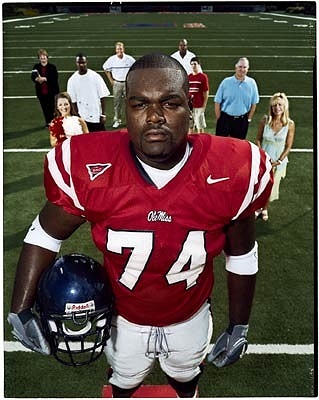 Any serious sports fan simply must be familiar with Michael Lewis, the author of two of the most influential contemporary sports books, Moneyball and The Blind Side. Turning to football in The Blind Side, Lewis writes about the evolution of one particular position and juxtaposes it with an equally unlikely story of a poor black kid adopted by a rich, white, evangelical Christian family. The result is another sports masterpiece full of moral/ethical questions, social criticism, and implicit attacks on one of the most powerful sports organizations in the country.
The Blind Side discusses the evolution of the left tackle position on the offensive line. In response to ferociously fast defensive linemen and linebackers, NFL scouts and coaches began to look for equally sizeable and speedy offensive linemen to protect the quarterback’s blind side (given that most NFL quarterbacks are right-handed) from the likes of Lawrence Taylor. This new necessity would require a person with a freakish combination of size (a particular kind mind you), strength, speed, and agility (built like a Mack truck that handles like a sports car). Needless to say, this odd commodity would be rewarded handsomely (receiving more lucrative contracts than star quarterbacks, runningbacks, or wide receivers) and never make the highlight reel on Sportscenter, unless he failed.
Lewis uses this aspect of football history to explain an unknown, poor black kid’s rise to national fame. Michael Oher is one of thirteen children born to a crack-addict mother and was virtually homeless until the age of fifteen. A friend of the family whisked him away from the ghettoes of west Memphis to the white-washed mansions of east Memphis, particularly to Briarcrest Christian School in hopes that they would provide him with a Christian education in return for his athletic abilities. Given his combination of size, speed, and agility, Lewis concludes, as did Michael’s coaches, that he was born to play left tackle. Yet Oher’s domestic troubles continued until the Tuohy family adopted him. Suddenly, Oher, who never had his own bed, had access to a private jet. Moreover, he finally had the love and support from a family that not only spurned him to athletic greatness but to academic success as well.
Even from this brief synopsis, questions abound as they did for the families surrounding the Tuohys. Why is this white family adopting this poor, black kid? Despite his amassed wealth, Sean Tuohy saw a kindred spirit in Michael as he too came from poor conditions and worked hard for everything he had. Sean was also a star athlete, though not with Michael’s physical gifts.
Another issue in this story: how did Michael live in obscurity to Memphis social services and the public school system for so long? Why was he whisked from school to school and passed on from grade to grade when he was clearly making no academic progress? Lewis’ depiction of Michael’s upbringing reads like a description of a third world country, not the richest country in the world. Why does such a chasm exist between the haves and have nots within only a few miles in this southern city?
There can be no doubt that the Tuohys saved Michael’s life and, with his determination, helped give him life. Yet when Michael enrolled at Ole Miss to play football, the NCAA smelled a rat. They conducted extensive interviews with family and friends to see whether or not the Tuohys had taken Michael in simply to funnel him off to Ole Miss, their alma mater. While the NCAA has to fulfill certain obligations, this intense investigation and its implications, made the Tuohys’ extreme act of Christian charity suspect. Yet questions can turn on the NCAA as well. Would they rather Michael have stayed on the streets and died of hunger or gang violence? What if Michael’s physical talents were suited for a less popular sport, would the NCAA have been as concerned?
Potential complications abounded, but the Tuohys’ financial security cut some off at the pass. They did not need whatever money Michael would eventually earn in the NFL. So what if the Tuohys had been in a lower tax bracket? What about families with less financial wealth but with just as much generosity? Can they not help disadvantaged kids with athletic abilities without being accused of gold-digging? Lewis concludes his book with a wonderful observation.
Much more than financial stability, Michael lacked the support system of family and friends to believe in him and encourage him to pursue his dreams. More than clothes and shelter, the Tuohys gave him this. Lewis compares Michael to another promising young black athlete who never made it out of the ghetto. Even with a full scholarship to play football at Florida State University and personal visits from head coach Bobby Bowden, who assured him that, barring injury, he was certain to play in the NFL, this young man’s family and friends constantly told him that he would never make it. Far from being optimistic (or even opportunistic), their pessimism ultimately ended not only a promising career, but his life as well.
Lewis’ remarkable book, available now in paperback, is a wonderful examination of the dual necessity of nature and nuture for both individual and societal success.
Previous Post

September 13, 2007
Christianity and the Social Crisis: Part 2
Next Post
September 20, 2007 Friday Nights...
Browse Our Archives
Select a Category Classics DVD Film Music News Pop Culture Events Print Sports Television Uncategorized Video Games
Select a Month March 2017 February 2017 January 2017 December 2016 November 2016 October 2016 September 2016 August 2016 July 2016 June 2016 May 2016 April 2016 March 2016 February 2016 January 2016 December 2015 November 2015 October 2015 September 2015 August 2015 July 2015 June 2015 May 2015 April 2015 March 2015 February 2015 January 2015 December 2014 November 2014 October 2014 September 2014 August 2014 July 2014 June 2014 May 2014 April 2014 March 2014 February 2014 January 2014 December 2013 November 2013 October 2013 September 2013 August 2013 July 2013 June 2013 May 2013 April 2013 March 2013 February 2013 January 2013 December 2012 November 2012 October 2012 September 2012 August 2012 July 2012 June 2012 May 2012 April 2012 March 2012 February 2012 January 2012 December 2011 November 2011 October 2011 September 2011 August 2011 July 2011 June 2011 May 2011 April 2011 March 2011 February 2011 January 2011 December 2010 November 2010 October 2010 September 2010 August 2010 July 2010 June 2010 May 2010 April 2010 March 2010 February 2010 January 2010 December 2009 November 2009 October 2009 September 2009 August 2009 July 2009 June 2009 May 2009 April 2009 March 2009 February 2009 January 2009 December 2008 November 2008 October 2008 September 2008 August 2008 July 2008 June 2008 May 2008 April 2008 March 2008 February 2008 January 2008 December 2007 November 2007 October 2007 September 2007 August 2007 July 2007 June 2007 May 2007 April 2007 March 2007
Follow Us!
TAKE THE
Religious Wisdom Quiz
Which relative of Saul cursed and threw stones at David during Absalom's rebellion?
Select your answer to see how you score.
Mephibosheth Jonathan Ish-bosheth Shimei
Related posts from Pop Theology


#KillerSerials: An Interview with Kutter Callaway

Book Review: MUSLIMS AND THE MAKING OF AMERICA

TRENDING AT PATHEOS Progressive Christian

Why Christians Have a Sacred Duty to Vote:...
The Bible offers strong support for the sacred duty to vote. Here...

What Being a Modern-Day Apostle Means to Me
In my last column, I discussed the ins and outs of modern-day...

Did Ancient China Once Worship the God of...
Across human history, a common thread weaves through the origins of the...

Love Your Neighbor – Including Earth-Kin: Lev. 19,...
God’s command to love your neighbor means acting in an ethical and...

Lead a Church Study of “Jesus and Lao...
Guest writer Jack Thomas (The Irreverent Reverend) reflects on leading his church...

Principles for Understanding the Apostolic Ministry Today
Whenever people discover that my formal ministry title is "apostle," as in...
view all Progressive Christian blogs
Ad-Free & Subscriber Log-In Subscription Support
- About Us
- 2026 Calendar
- Videos
- Podcasts
- Library of World Religions
- Faith In Media Tracker
- Advertise With Us
- Write for Us
- Privacy Policy
- Terms of Service
- Do Not Sell My Data
- Contact Us
- Radiant Digital
- Manage Newsletter Subscriptions
- Unsubscribe From Notifications
- Sitemap
Copyright 2008-2026, Patheos. All rights reserved.
Subscription Support Ad-Free & Subscriber Log-In
Follow Patheos