
BuddhistCatholicContemplativeEvangelicalGeneral ChristianHinduJewishLatter-day SaintMuslimNew VisionsProgressive Christian
Beliefs
- Buddhist
- Catholic
- Contemplative
- Evangelical
- General Christian
- Hindu
- Jewish
- Latter-day Saint
- More Voices
- Muslim
- New Visions
- Pagan
- Progressive Christian
Topics
- Religion News
- Food and Religion
- Sports and Religion
- Religious Art
- Religious Music and Entertainment
- Religious Events
- History and Religion
- Style and Religion
- Politics and Religion
- Women in Religion
- Recreation Outdoors and Religion
- Business Finance and Religion
- Careers Workplace and Religion
- Education and Religion
- Family Parenting and Religion
- Health Fitness and Religion
- Home and Religion
- Relationships and Religion
- Technology and Religion
- Travel and Religion
Columnists
- Buddhist Columnists
- Business Finance and Religion Columnists
- Careers Workplace and Religion Columnists
- Catholic Columnists
- Contemplative Columnists
- Education and Religion Columnists
- Evangelists Columnists
- Family Parenting and Religion Columnists
- General Christian Columnists
- Health Fitness and Religion Columnists
- Hindu Columnists
- History and Religion Columnists
- Home and Religion Columnists
- Jewish Columnists
- More Voices Columnists
- Latter Day Columnists
- Muslim Columnists
- New Visions Columnists
- Nonreligious Columnists
- Pagan Columnists
- Politics and Religion Columnists
- Progressive Columnists
- Recreation Outdoors and Religion Columnists
- Relationships and Religion Columnists
- Religion News Columnists
- Religious Art Columnists
- Religious Events Columnists
- Religious Music and Entertainment Columnists
- Sports and Religion Columnists
- Style and Religion Columnists
- Technology and Religion Columnists
- Travel and Religion Columnists
- Women in Religion Columnists
Resource Library
- 2026 Calendar
- Library of World Religions
- The 100 Most Holy Places on Earth
- Patheos Answers
- Podcasts
- Videos
- Faith Leaders Database
- Anglican Episcopalian
- Bahai
- Baptist
- Buddhism
- Christianity
- Confucianism
- Eastern Orthodoxy
- Hinduism
- Holiness and Pentecostal
- ISKCON
- Islam
- Judaism
- Lutheran
- Methodist
- The Church of Jesus Christ of Latter-day Saints
- New Age
- Paganism
- Presbytarian and Reformed
- Protestantism
- Religion Behind the Scenes
- Roman Catholic
- Scientology
- Shia Islam
- Sikhism
- Sufism
- Sunni Islam
- Taoism
- Zen
- See all religions
Research Tools
 Ad-Free & Subscriber Log-In Subscription Support
Ad-Free & Subscriber Log-In Subscription Support
Follow Patheos 

- Trending:
- Forgiveness
- |
- Marriage
- |
- Consciousness
- |
- Death Penalty
- |
- Election
- |
- Halloween
 Pop Theology
- Home
- Progressive Christian
- Religious Music & Entertainment
- $40 Million and Two Movies
$40 Million and Two Movies
Last updated on: August 19, 2007 at 3:06 pm by J. Ryan Parker
$40 Million and Two Movies 2007-08-19T15:06:54-07:00 J. Ryan Parker
Patheos Explore the world's faith through different perspectives on religion and spirituality! Patheos has the views of the prevalent religions and spiritualities of the world.
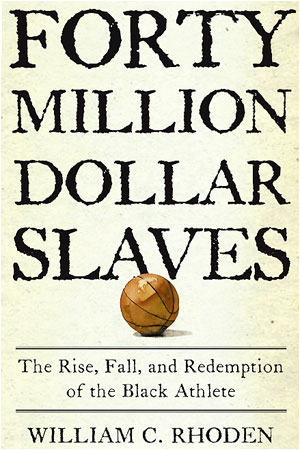 Lately, I have been putting together a syllabus for a course I want to teach on sports and theology, religion, spirituality, ethics…. I have not figured out an appropriate title just yet, but the essence of it will speak to the reality of sports as a field ripe for the discussion of justice, race, gender, etc. Recent scandals in all levels of sport will provide interesting case studies, and the sports sections of both cable television and newspapers will provide primary source material. Furthermore, several books and films deal with these issues as well. One book that will be required reading is William C. Rhoden‘s $40 Million Slaves: The Rise, Fall, and Redemption of the Black Athlete. Two films, Hoop Dreams and Blue Chips, serve as illustrations of this controversial text.
In his book, Rhoden outlines the history of African-American involvement in sports here in the United States from the early days of horseracing and boxing all the way to the owner’s box in professional sports. Far from being a level playing field, the African-American athletic experience has been rife with racism, sexism, and all sorts of injustices, just like the African-American experience in general. As sub-headings for each chapter, Rhodes lists a particular dilemma that describes a historical era but that also still confronts African-American athletes today. His eleven dilemmas are
- Illusion
- Physical Bondage
- Exclusion
- Myopia
- Inclusion Without Power
- Appropriation
- Alienation
- Neutrality
- The Double Burden (faced by African-American women athletes)
- Wealth Without Control
- Ownership
Rhoden’s book is a well-researched text that draws from his experience as a sports journalist and his encounters with many of the athletes about whom he writes. He outlines a scandalous, but I believe ultimately true, analogy. To sum up, in part, Rhoden’s argument, he sees the African-American experience of sports, especially professional sports today, as an extension of the plantation experience. Quite simply put, African-American athletes (and Rhoden argues all athletes to an extent) serve as high-priced slaves for a largely white ownership. The wealth and fame that African-American athletes enjoy betrays several harsh realities, chief among these are Rhoden’s observations of inclusion without power and wealth without control. While the African-American sports experience has seen great strides since the late 1800’s and early 1900’s, Rhoden argues that all is not well. For the most part, African-American athletes are used up by a white system for their “muscle” and simply discarded when their value diminishes, offering little hope for future work on the sidelines or in the front office. The statistics that Rhoden reports on African-American coaches, athletic directors, general managers, or owners in collegiate or professional sports are embarrassingly, appalingly one-sided. There can be no doubt that if an African-American athlete is getting rich, a white owner is getting even richer.
For all their fame and wealth, African-American athletes have no power, no true control over the system that exploits their efforts. Moreover, this system which operates even in junior high and high school (what Rhoden calls the Conveyor Belt) draws African-American athletes away from the larger African-American community and all its struggles. Thus, these athletes almost exist in a social limbo, detatched from the black community but not fully a part of the professional community which they temporarily inhabit. Moreover, the system that throws millions of dollars at these athletes, threatens to take it all away if they do exhibit a social conscious and speak up for their community or any injustice for that matter. (Ocurring after the publication of Rhoden’s text, we can recall LeBron James pitifully sidestepping involvement with his teammates’ protest of the 2008 Olympics being held in China given its repeated human rights violations. James has a shoe contract with Nike. Nike produces its shoes in China.)
These are just a few of the arguments from Rhoden’s book. Yet it is not without a few faults itself. As a friend pointed out to me, Rhoden virtually ignores the contemporary boxing scene in which the promoters, managers, trainers, and boxers are mostly African-American. Instead, Rhoden focuses on boxing in the 1800’s and early 1900’s when Jack Johnson and Tom Molineaux faced vehement racism. While Rhoden’s discussion of Michael Jordan’s exclusion from control of the Washington Wizards signals a grave injustice, he does not delve into Jordan’s extreme gambling habits and how that may or may not have affected the Wizards’ decision to go in a different direction.
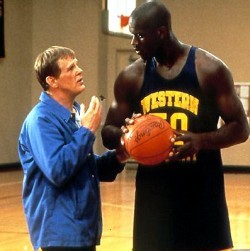 Finally, to see Rhoden’s arguments at work, we can turn to two films, Hoop Dreams and Blue Chips. Hoop Dreams is a documentary that focuses on two inner-city high school students with promising basketball talent yet plagued by financial hardships and broken homes. Nevertheless, the conveyor belt is at work even here as rules are bent and favors granted. Blue Chips focuses on the collegiate side of the system and the increasing pressure on college coaches to get the best athletes at any cost. Here, we see athletes elevated above their peers and detatched from any real sense of community apart from their team.
Previous Post

August 16, 2007
Life on Pause...
Next Post
August 19, 2007 $40 Million: Take Two
Browse Our Archives
Select a Category Classics DVD Film Music News Pop Culture Events Print Sports Television Uncategorized Video Games
Select a Month March 2017 February 2017 January 2017 December 2016 November 2016 October 2016 September 2016 August 2016 July 2016 June 2016 May 2016 April 2016 March 2016 February 2016 January 2016 December 2015 November 2015 October 2015 September 2015 August 2015 July 2015 June 2015 May 2015 April 2015 March 2015 February 2015 January 2015 December 2014 November 2014 October 2014 September 2014 August 2014 July 2014 June 2014 May 2014 April 2014 March 2014 February 2014 January 2014 December 2013 November 2013 October 2013 September 2013 August 2013 July 2013 June 2013 May 2013 April 2013 March 2013 February 2013 January 2013 December 2012 November 2012 October 2012 September 2012 August 2012 July 2012 June 2012 May 2012 April 2012 March 2012 February 2012 January 2012 December 2011 November 2011 October 2011 September 2011 August 2011 July 2011 June 2011 May 2011 April 2011 March 2011 February 2011 January 2011 December 2010 November 2010 October 2010 September 2010 August 2010 July 2010 June 2010 May 2010 April 2010 March 2010 February 2010 January 2010 December 2009 November 2009 October 2009 September 2009 August 2009 July 2009 June 2009 May 2009 April 2009 March 2009 February 2009 January 2009 December 2008 November 2008 October 2008 September 2008 August 2008 July 2008 June 2008 May 2008 April 2008 March 2008 February 2008 January 2008 December 2007 November 2007 October 2007 September 2007 August 2007 July 2007 June 2007 May 2007 April 2007 March 2007
Follow Us!
TAKE THE
Religious Wisdom Quiz
What is the "Great Commission" Jesus gave his followers?
Select your answer to see how you score.
Stay hidden Gather riches Build a temple Go and make disciples
Related posts from Pop Theology


At SXSW2017: May It Last: A Portrait of...

At SXSW 2017: "Untold Tales of Armistead Maupin"
TRENDING AT PATHEOS Progressive Christian

Why Christians Have a Sacred Duty to Vote:...
The Bible offers strong support for the sacred duty to vote. Here...

What Being a Modern-Day Apostle Means to Me
In my last column, I discussed the ins and outs of modern-day...

Did Ancient China Once Worship the God of...
Across human history, a common thread weaves through the origins of the...

Love Your Neighbor – Including Earth-Kin: Lev. 19,...
God’s command to love your neighbor means acting in an ethical and...

Lead a Church Study of “Jesus and Lao...
Guest writer Jack Thomas (The Irreverent Reverend) reflects on leading his church...

Principles for Understanding the Apostolic Ministry Today
Whenever people discover that my formal ministry title is "apostle," as in...
view all Progressive Christian blogs
Ad-Free & Subscriber Log-In Subscription Support
- About Us
- 2026 Calendar
- Videos
- Podcasts
- Library of World Religions
- Faith In Media Tracker
- Advertise With Us
- Write for Us
- Privacy Policy
- Terms of Service
- Do Not Sell My Data
- Contact Us
- Radiant Digital
- Manage Newsletter Subscriptions
- Unsubscribe From Notifications
- Sitemap
Copyright 2008-2026, Patheos. All rights reserved.
Subscription Support Ad-Free & Subscriber Log-In
Follow Patheos