
BuddhistCatholicContemplativeEvangelicalGeneral ChristianHinduJewishLatter-day SaintMuslimNew VisionsProgressive Christian
Beliefs
- Buddhist
- Catholic
- Contemplative
- Evangelical
- General Christian
- Hindu
- Jewish
- Latter-day Saint
- More Voices
- Muslim
- New Visions
- Pagan
- Progressive Christian
Topics
- Religion News
- Food and Religion
- Sports and Religion
- Religious Art
- Religious Music and Entertainment
- Religious Events
- History and Religion
- Style and Religion
- Politics and Religion
- Women in Religion
- Recreation Outdoors and Religion
- Business Finance and Religion
- Careers Workplace and Religion
- Education and Religion
- Family Parenting and Religion
- Health Fitness and Religion
- Home and Religion
- Relationships and Religion
- Technology and Religion
- Travel and Religion
Columnists
- Buddhist Columnists
- Business Finance and Religion Columnists
- Careers Workplace and Religion Columnists
- Catholic Columnists
- Contemplative Columnists
- Education and Religion Columnists
- Evangelists Columnists
- Family Parenting and Religion Columnists
- General Christian Columnists
- Health Fitness and Religion Columnists
- Hindu Columnists
- History and Religion Columnists
- Home and Religion Columnists
- Jewish Columnists
- More Voices Columnists
- Latter Day Columnists
- Muslim Columnists
- New Visions Columnists
- Nonreligious Columnists
- Pagan Columnists
- Politics and Religion Columnists
- Progressive Columnists
- Recreation Outdoors and Religion Columnists
- Relationships and Religion Columnists
- Religion News Columnists
- Religious Art Columnists
- Religious Events Columnists
- Religious Music and Entertainment Columnists
- Sports and Religion Columnists
- Style and Religion Columnists
- Technology and Religion Columnists
- Travel and Religion Columnists
- Women in Religion Columnists
Resource Library
- 2026 Calendar
- Library of World Religions
- The 100 Most Holy Places on Earth
- Patheos Answers
- Podcasts
- Videos
- Faith Leaders Database
- Anglican Episcopalian
- Bahai
- Baptist
- Buddhism
- Christianity
- Confucianism
- Eastern Orthodoxy
- Hinduism
- Holiness and Pentecostal
- ISKCON
- Islam
- Judaism
- Lutheran
- Methodist
- The Church of Jesus Christ of Latter-day Saints
- New Age
- Paganism
- Presbytarian and Reformed
- Protestantism
- Religion Behind the Scenes
- Roman Catholic
- Scientology
- Shia Islam
- Sikhism
- Sufism
- Sunni Islam
- Taoism
- Zen
- See all religions
Research Tools
 Ad-Free & Subscriber Log-In Subscription Support
Ad-Free & Subscriber Log-In Subscription Support
Follow Patheos 

- Trending:
- Forgiveness
- |
- Marriage
- |
- Consciousness
- |
- Death Penalty
- |
- Election
- |
- Halloween
 Pop Feminist
- Home
- Catholic
- Religious Music & Entertainment
- Narnia at Netflix
Narnia at Netflix
Last updated on: October 3, 2018 at 2:13 pm by Emily C. A. Snyder
Narnia at Netflix 2018-10-03T14:13:49-04:00 Emily C. A. Snyder
Patheos Explore the world's faith through different perspectives on religion and spirituality! Patheos has the views of the prevalent religions and spiritualities of the world.
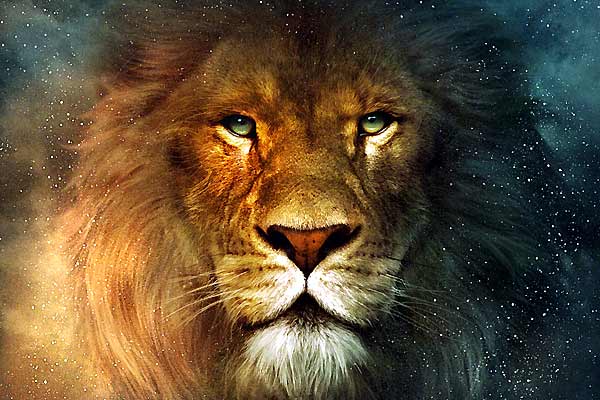
News broke this morning that Netflix has acquired the rights to The Chronicles of Narnia to develop a series based not just on the seven books, but on the greater worldbuilding possibilities of C. S. Lewis’ beloved children’s stories. The idea, so far as it’s being pitched, is to create something akin to the Marvel Cinematic Universe (MCU) or the Star Wars Stories- spanning not only the streaming site but possibly the cinema as well.
Given Narnia’s rocky history on-screen (the latest movie series never made it past The Voyage of the Dawn Treader), as well as the failure of other expansionist fantasies (see the bloated mess of The Hobbit), some are naturally worried that the expansion of Lewis’ worldbuilding will also flop. However, given Netflix’s track record with A Series of Unfortunate Events, as well as the relative success of Narnia on the small screen with in the 1980’s adaptation, the streaming service might be precisely where Narnia belongs.
Let’s look at where Narnia might thrive or fail, in the upcoming adaptation.
Serialized Sci-Fi
As mentioned in a previous article, speculative fiction (science fiction, fantasy, etc.) tends to do fairly well in the long-form, serialized screen treatment. This allows precisely the room one wants for novel-like explorations of fantastic worlds: something that some of Lewis’ later stories might benefit from. I’d love to see more of each island in The Voyage of the Dawn Treader. And I’ve always wanted to explore the southern nations in The Horse and His Boy. Or even better, to see the other worlds in The Magician’s Nephew.
Hence, for the Lewis’ later novels which actually do expand his worldbuilding, the longer, serialized format is going to work beautifully.
However, Lewis’ first several books – the ones that keep being made into films – tend to be more plot-centric than milieu-centric. I worry that the umpteenth-million version of The Lion, The Witch and the Wardrobe will be labored in a multi-episode treatment, since the plot moves along quite briskly. Recent adaptations have tried to bolster Lewis’ narrative by changing characters: Peter being a reluctant king, for example. Although the desire may be great to show what the White Witch is up to while our heroes journey to meet Aslan, I’d hope that those adapting will give a clean read to the better known books, and open up the corners of the world in the lesser known volumes.
Christian Allegory
Douglas Gresham, Lewis’ adopted son and heir to his intellectual property, hasn’t yet proved himself as the man who fully understands the philosophical and theological underpinnings of his step-father’s work. The recent movies, which were made under his supervision, buried the Christian allegory so deep, amping up “worldbuilding” instead, that the movies felt…off somehow.
That said, there is absolutely an inherent danger in letting any of Narnia become so deeply allegorical in regards to religion that the shows become unwatchable. There’s no need to “Sunday school” the books, just as there’s no need to bury the Sunday nature of the stories as well.
Once again: Netflix would do wisest to either give a very clean interpretation – something they might not do if they’re more excited about worldbuilding and general audiences than anything – or, if they’re going to expand the world and reach a general audience, they would actually do best to double down into what Lewis is actually trying to say. What Truths he’s illuminating.
This will be on of the trickiest tightropes to walk, and the one that I have my gravest doubts Netflix’s scribes will achieve.
Not Enough World to Build
Lastly, there’s the question of whether Lewis’ world ought to be built up. What he sketched out, in the grand scheme of all fantasy, is fairly thin. He paints with watercolors more than oils. He doodles more than he sculpts. This was, of course, a major source of contention between Tolkien and Lewis. Lewis is rather carefree with his world – he is writing allegory, after all – whereas Tolkien was considerably more deliberate about the verisimilitude of Middle Earth.
Similarly, and I know we don’t want to think about it, but, Lewis has a bit of English jingo-ism built into some of his other nations, like Calormen, which is less drawn from Islamic culture as it’s a scathing, British-y, sniffing and looking down upon India and the mid-east sort of view. Considering how important the god Tash is in later books, adapting the only other fleshed out civilization in Narnia will require a sensitive touch.
The press release seems to indicate that Netflix is considering writing entirely new stories set in Narnia – which makes us wonder whether their understanding of stories that might exist in Narnia will be more Rogue One or Solo. Regardless, it will be fan fiction which can go terribly right or way, way, waaaaaaay off-base.
In the end: everything depends on the degree to which the adapters look at Narnia. Do they just see a cash cow? The series will flop. Do they understand allegory? The series might succeed. Do they just want a bloated fantasy? The series will stall. Do they want to honor the original plots cleanly or with true depth? They might just have a mega-hit.
Here’s to you, Aslan. Looking forward to seeing you back on the small screen.
 Photo courtesy of the C. S. Lewis Company.
Want more of the Pop Feminist? Become my patron on Patreon for as little as $1/month!
Previous Post

September 28, 2018
Let's Believe Brett Kavanaugh
Next Post

October 10, 2018 HOT TAKE: Doctor Who Gets A Facelift
Browse Our Archives
Select a Category #MeToo Art Catholic Artists Catholicism Culture Dating Definitions Fairy Tales Irish Jewish Literature Love & Marriage Meditation Movies Musicals Poetry Pop Feminist Psychology Shakespeare Social Media Story structure Theatre TV Uncategorized Verse Drama Well-Meaning Patriarchy
Select a Month December 2019 June 2019 May 2019 April 2019 March 2019 February 2019 January 2019 December 2018 November 2018 October 2018 September 2018 August 2018 July 2018 June 2018 May 2018 April 2018 March 2018
Follow Us!
TAKE THE
Religious Wisdom Quiz
In the Parable of the Sower, what does the seed represent?
Select your answer to see how you score.
The Word of God The Law Money Judgment
Support this
Column


Related posts from Pop Feminist
Plotting Surprises: Or How To Ruin Great Shows
With Great Storytelling Comes Great Responsibility - Spider-Man:...
The Good, the Bad, and the Baffling of...
TRENDING AT PATHEOS Catholic

Creation, Preservation, and Teleology in Catholic Theology
As I write this, it is very early Monday morning. Like millions...

The Parable Of The Sower And The Word...
One of Christ’s most famous parables is that of the sower who...

Rejecting Doom: Christian Hope And Human Action
Christianity is a religion of hope. We are to have hope and...

Why I Choose the Eucharist Over the Sermon
Choose the Eucharist, Not the Sermon What are we supposed to get...

5 Design Elements Found in Spiritually Rooted Homes
Putting Spirituality Into Home Decor Our homes are more than our living...

Credo: A Story of God Told with the...
About 10 years ago, I began to imagine a personal "Credo" that...
view all Catholic blogs
Ad-Free & Subscriber Log-In Subscription Support
- About Us
- 2026 Calendar
- Videos
- Podcasts
- Library of World Religions
- Faith In Media Tracker
- Advertise With Us
- Write for Us
- Privacy Policy
- Terms of Service
- Do Not Sell My Data
- Contact Us
- Radiant Digital
- Manage Newsletter Subscriptions
- Unsubscribe From Notifications
- Sitemap
Copyright 2008-2026, Patheos. All rights reserved.
Subscription Support Ad-Free & Subscriber Log-In
Follow Patheos