
BuddhistCatholicContemplativeEvangelicalGeneral ChristianHinduJewishLatter-day SaintMuslimNew VisionsProgressive Christian
Beliefs
- Buddhist
- Catholic
- Contemplative
- Evangelical
- General Christian
- Hindu
- Jewish
- Latter-day Saint
- More Voices
- Muslim
- New Visions
- Pagan
- Progressive Christian
Topics
- Religion News
- Food and Religion
- Sports and Religion
- Religious Art
- Religious Music and Entertainment
- Religious Events
- History and Religion
- Style and Religion
- Politics and Religion
- Women in Religion
- Recreation Outdoors and Religion
- Business Finance and Religion
- Careers Workplace and Religion
- Education and Religion
- Family Parenting and Religion
- Health Fitness and Religion
- Home and Religion
- Relationships and Religion
- Technology and Religion
- Travel and Religion
Columnists
- Buddhist Columnists
- Business Finance and Religion Columnists
- Careers Workplace and Religion Columnists
- Catholic Columnists
- Contemplative Columnists
- Education and Religion Columnists
- Evangelists Columnists
- Family Parenting and Religion Columnists
- General Christian Columnists
- Health Fitness and Religion Columnists
- Hindu Columnists
- History and Religion Columnists
- Home and Religion Columnists
- Jewish Columnists
- More Voices Columnists
- Latter Day Columnists
- Muslim Columnists
- New Visions Columnists
- Nonreligious Columnists
- Pagan Columnists
- Politics and Religion Columnists
- Progressive Columnists
- Recreation Outdoors and Religion Columnists
- Relationships and Religion Columnists
- Religion News Columnists
- Religious Art Columnists
- Religious Events Columnists
- Religious Music and Entertainment Columnists
- Sports and Religion Columnists
- Style and Religion Columnists
- Technology and Religion Columnists
- Travel and Religion Columnists
- Women in Religion Columnists
Resource Library
- 2026 Calendar
- Library of World Religions
- The 100 Most Holy Places on Earth
- Patheos Answers
- Podcasts
- Videos
- Faith Leaders Database
- Anglican Episcopalian
- Bahai
- Baptist
- Buddhism
- Christianity
- Confucianism
- Eastern Orthodoxy
- Hinduism
- Holiness and Pentecostal
- ISKCON
- Islam
- Judaism
- Lutheran
- Methodist
- The Church of Jesus Christ of Latter-day Saints
- New Age
- Paganism
- Presbytarian and Reformed
- Protestantism
- Religion Behind the Scenes
- Roman Catholic
- Scientology
- Shia Islam
- Sikhism
- Sufism
- Sunni Islam
- Taoism
- Zen
- See all religions
Research Tools
 Ad-Free & Subscriber Log-In Subscription Support
Ad-Free & Subscriber Log-In Subscription Support
Follow Patheos 

- Trending:
- Forgiveness
- |
- Marriage
- |
- Consciousness
- |
- Death Penalty
- |
- Election
- |
- Halloween
 Pop Feminist
- Home
- Catholic
- Religious Music & Entertainment
- LONGING FOR HOME: Being Irish in America
LONGING FOR HOME: Being Irish in America
Last updated on: March 17, 2018 at 9:48 pm by Emily C. A. Snyder
LONGING FOR HOME: Being Irish in America 2018-03-17T21:48:05-04:00 Emily C. A. Snyder
Patheos Explore the world's faith through different perspectives on religion and spirituality! Patheos has the views of the prevalent religions and spiritualities of the world.
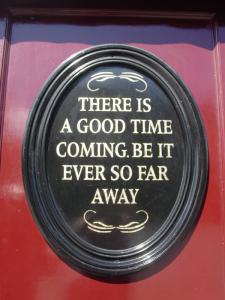 There’s something about growing up Irish American that settles deep in your bones. I don’t know when I first heard the bodhrán , but there was something in hearing that instrument that thrummed inside me in the way that Ravel and Mozart and even Andrew Lloyd Webber didn’t. It was primal. It meant I had to tap my toes. And I’m from New England, or that part of New England that takes the England part very seriously. I once saw an entire audience at a thousand seat theatre refuse to move when the fire alarm went off because the show was still going and we’d rather die than appear impolite.
I don’t know when I first heard a reel, or how I learned the lyrics to “Johnny Jump Up.” We didn’t celebrate our Irishness – on both sides of the family – much more than an overboiled roast and a dry sodabread on St. Patrick’s Day. It was more that when I read the stories of Faerie, I knew they belonged to me and I belonged to them – in the same way I knew I would only ever be an enthusiastic voyager in reading Russian fairy tales, for instance. A long plaintive song, telling an epic story and sung only with the accompaniment of your own echo, felt right. There weren’t peat fires in my soul, but there were forests, and hills, and grass, and stones. There were skirts and tea and wildflowers in my hair.
There was, to a degree, an Ireland that no longer exists. Because the Ireland I’ve been handed ended in the 1800’s.
Because to be Irish American is to have the stories of Ireland stop the moment you stepped foot on Ellis Island.
Because the story of Irish Americans is a story of exile, and a home that no longer exists.
Stories from the Past
I’m the daughter of a genealogist, and grew up with a surgical understanding of my heritage.
My English ancestors go all the way back to nineteen years after the Mayflower, into the American Revolution, and the settling of Long Island. In America, I’m sometimes aware of my impressive pedigree and the fact that I can boast about how far back we go. (And that although my relative arrived in Salem, he was not there for the witch trials. Yet, how cool is it that I have to explain that! Because he could have been.) Growing up and loving all things British, Sunday nights were dominated by PBS: Mystery! and Masterpiece Theatre. And it’s little wonder that half my published novels and many of my most recent plays owe a huge debt of influence to my English forebears. Yet when I visited London, I felt still like a tourist: one of those many New England Colonials turned Anglophile, tolerated as the rascally younger cousins of my British tutors, very welcome – but not at home.
My German-Austrian-Swiss heritage is more recent to America, arriving a little before the first World War and as an escape from a troubled home. Studying in Austria, at the Steubenville-owned Kartause, I was struck by the beauty of my ancestors’ nation. The sense of space, the comfort of living snuggled in the mountains, the endless pine trees. And, apparently looking sufficiently Bavarian, I was addressed directly by many kindly Austrians who presumed I was One Of Them…and who then looked thoroughly confused when I had to apologize for not understanding them in my broken Germanish. They still gave me lifts home through the Alps, and checked to make sure I hadn’t sprained my ankle while I climbed the Alps, and pointed me towards an empty train car as we whizzed through the Alps, and offered me a cigarette when I got lost…in the Alps. Austrians are great. The Alps are tricky.
I have yet to visit Scotland (somebody finance the trip and I’ll tell you all about it), so I haven’t many details there. The bagpipes make me tear up and feel vaguely patriotic – although towards what, I’m not sure – but otherwise the heather on the hill and I are fairly unacquainted.
But Ireland.
Irish in America
My family, on both my mother’s and father’s side, roughly 75% of my heritage, come from all over the south and west and a bit in the heartland of Ireland, too. We grew up with stories about the passages on the boats, and the escape from the famine, and the stories that awaited the Irish when they came to Americae: stepping off Ellis Island and into the Civil War. Fighting for a cause that wasn’t theirs, but promised meals and clothes and a stipend if you survived. That “Irish need not apply.” That my great-great-grandmother had three fingers on her hand chopped off because of the mill where she finally got work. My Irish great-grandmother who married the Scottish Protestant boy – and had to elope to do so. Because the world was changing, and they were changing, too. About my grandmother trying so hard not to be Irish, while surrounded by New England WASPS – and how that translated into her sitting me down when I was seven and not letting me eat until I could hold a silver knife and fork, properly. How to “pass” for a New Englander with deep roots in the colonies, and not for a boisterous Irish lass. How to love Agatha Christie instead of Yates. How to sing Mozart instead of “Siúil a Rún.”
To be Irish was also to be Catholic. No matter how you covered up your Irishness, how much you hummed “Rule Brittania” – you were also Catholic. Defiantly Catholic. Rebelliously Catholic. You Can Take Our Country, and Starve Us Out, and Kill Our Tongue, and Make Us Flee – but you cannot Take Our Faith Catholic. To be Irish, to be Catholic, was to suffer and endure and sing sad love songs and mad, hopeful songs of war and failure and the glorious Long Defeat. And to beat up your enemies by still being there tomorrow, having reproduced like hell in the meantime. To be Irish, to be Catholic, to be American was to long for a home you’d never seen: in Heaven and on earth. It was to talk as fondly of St. Paddy as it was to talk of your uncle Paddy; and as natural to speak and know the story and shortcomings of both.
Had you asked me, I was a true daughter of the Emerald Isle…that is, until I visited home again.
American in Ireland
In 2006, I had just finished directing one of the most significant shows of my life, William Shakespeare’s Hamlet. The post-show depression I felt after that show was deep. (If you’ve never experienced being part of a significant play, imagine breaking up with the world, and then killing your mother, while the dust from Lewis’ Wardrobe sifts helplessly through your hands and all you’re left with is the memory of fire.)
My Mother, in her wisdom, sent my sister and I on a walkabout back to the homeland for a week. We arrived in Shannon, rented a car that drove on the wrong side of the road (while we were jetlagged, and staying awake by shouting along to “I’m Gonna Be (500 Miles)” by the Proclaimers). I’m not quite sure what I expected: more trees, for one. Ruins. More trees. Hedgerows and green, grassy hills, and thatch houses, and pubs. Maybe, if I’m being honest, a fairy. (Don’t judge me!) Sheep. I expected sheep. And at least one cliff. And a cross.
There were hedgerows. Terrifying hedgerows that hemmed in the winding streets too tightly and actually took off our sideview mirror by the end of the adventure. There were farms, and green, grassy hills, and thatch houses, and pubs, and sheep and cows besides, and a cliff that I was too tired to climb, and maybe no wayside crosses, but we saw a hidden altar stone or two. No fairies. And almost no trees. Fewer ruins than expected. And still: no trees.
It turns out, we discovered from some relatives that Mom sent us to visit, that the English had come and taken all the trees. The better to build ships to conquer the Colonies with. It made me think of the flagpole in the leafy New England town of Portsmouth where I grew up. They’d erected that flagpole and flew Betsy Ross’ flag from it, as a sign that the British would be taking no more of New Hampshire’s trees for their ships. So the British had gone back to Ireland and taken their trees instead. And I’d grown up with trees, and my ancestors hadn’t.
We visited many of our relatives, who showed us the old homestead, still standing, modernized only with indoor plumbing and a gas stove. We had tea with third cousins twice removed – so many cousins, so much tea. That when we finally arrived in Dublin, I pointed to the Golden Arches and said, “There, Julie. There, let us enter the embassy of our nation. Let us go into McDonalds and have a Diet Coke in defiance of all this damn tea!”
Yet even sinking our teeth into a processed burger, or later that night when we forewent a trip to the Guinness factory in favor of a little out-of-place Italian restaurant in Temple Bar, there was that same sense throughout the entire trip: that we didn’t have to do the touristy things, and eat “authentic” Irish food, because we were home. One of our cousins, earlier in the week, had rushed us through several tourist attractions which felt unnatural. We would have been glad – indeed, we were gladdest, when we could just wander and trip upon something small and insignificant and “ours.” Like mucking about in your house, rather than taking the grand tour. Let us kick off our shoes and enjoy no pretenses, and catch up with how you’ve been on this side of the Atlantic for the past 150 years.
Outside of the lack of trees, one of the most surprising and disheartening things to learn was how our Irish cousins had come to distrust or even hate the faith. While we Americans still fought for our right to be Catholic in a society that was largely suspicious of the church of Rome (we know how you feared Kennedy), the Irish having finally found some freedom seemed to be defeated. We made friends with the British, escaped the famine and survived. They stayed and watched themselves grow so desperate, their mouths were green from eating grass. They set off bombs for freedom; we built New York. They remember relatives who were taken out and beaten for being Catholic by the Black and Tans, while my Scottish Protestant great-grandfather welcomed child number five with his Irish Catholic wife.
This was home – but we had left home and prospered. They had stayed home, and barely survived.
Still, someone took out the bodhrán, and someone poured the tea, and someone knew how to dance, and someone else could sing, and the best way to beat your enemy was by being there tomorrow, even if you barely made it through today.
So, to all my Irish brothers and sisters, to all my ancestors and those cousins I’ve yet to meet, to those who crossed the ships, and to those who stayed for home, and to those who will come, and those still looking for a way into the fair and Faerie, I say:
Éirinn go Brách
_____
 Support the Pop Feminist for as little as $1/month! Become my patron on Patreon.
Image courtesy of a lovely trip to Ireland in 2006.
Previous Post

March 16, 2018
IN DEPTH ANALYSIS: A Wrinkle in Time
Next Post

March 17, 2018 THROUGH CHILDREN'S EYES: A Wrinkle in Time
Browse Our Archives
Select a Category #MeToo Art Catholic Artists Catholicism Culture Dating Definitions Fairy Tales Irish Jewish Literature Love & Marriage Meditation Movies Musicals Poetry Pop Feminist Psychology Shakespeare Social Media Story structure Theatre TV Uncategorized Verse Drama Well-Meaning Patriarchy
Select a Month December 2019 June 2019 May 2019 April 2019 March 2019 February 2019 January 2019 December 2018 November 2018 October 2018 September 2018 August 2018 July 2018 June 2018 May 2018 April 2018 March 2018
Follow Us!
TAKE THE
Religious Wisdom Quiz
How was Haman punished for his plot?
Select your answer to see how you score.
He was hanged on the gallows he built He was turned into a pillar of salt He was exiled He was beheaded
Support this
Column


Related posts from Pop Feminist
Plotting Surprises: Or How To Ruin Great Shows
With Great Storytelling Comes Great Responsibility - Spider-Man:...

The Good, the Bad, and the Baffling of...

Graves & Grace: On the Burning of Notre...
TRENDING AT PATHEOS Catholic

Creation, Preservation, and Teleology in Catholic Theology
As I write this, it is very early Monday morning. Like millions...

The Parable Of The Sower And The Word...
One of Christ’s most famous parables is that of the sower who...

Rejecting Doom: Christian Hope And Human Action
Christianity is a religion of hope. We are to have hope and...

Why I Choose the Eucharist Over the Sermon
Choose the Eucharist, Not the Sermon What are we supposed to get...

5 Design Elements Found in Spiritually Rooted Homes
Putting Spirituality Into Home Decor Our homes are more than our living...

Credo: A Story of God Told with the...
About 10 years ago, I began to imagine a personal "Credo" that...
view all Catholic blogs
Ad-Free & Subscriber Log-In Subscription Support
- About Us
- 2026 Calendar
- Videos
- Podcasts
- Library of World Religions
- Faith In Media Tracker
- Advertise With Us
- Write for Us
- Privacy Policy
- Terms of Service
- Do Not Sell My Data
- Contact Us
- Radiant Digital
- Manage Newsletter Subscriptions
- Unsubscribe From Notifications
- Sitemap
Copyright 2008-2026, Patheos. All rights reserved.
Subscription Support Ad-Free & Subscriber Log-In
Follow Patheos