
BuddhistCatholicContemplativeEvangelicalGeneral ChristianHinduJewishLatter-day SaintMuslimNew VisionsProgressive Christian
Beliefs
- Buddhist
- Catholic
- Contemplative
- Evangelical
- General Christian
- Hindu
- Jewish
- Latter-day Saint
- More Voices
- Muslim
- New Visions
- Pagan
- Progressive Christian
Topics
- Religion News
- Food and Religion
- Sports and Religion
- Religious Art
- Religious Music and Entertainment
- Religious Events
- History and Religion
- Style and Religion
- Politics and Religion
- Women in Religion
- Recreation Outdoors and Religion
- Business Finance and Religion
- Careers Workplace and Religion
- Education and Religion
- Family Parenting and Religion
- Health Fitness and Religion
- Home and Religion
- Relationships and Religion
- Technology and Religion
- Travel and Religion
Columnists
- Buddhist Columnists
- Business Finance and Religion Columnists
- Careers Workplace and Religion Columnists
- Catholic Columnists
- Contemplative Columnists
- Education and Religion Columnists
- Evangelists Columnists
- Family Parenting and Religion Columnists
- General Christian Columnists
- Health Fitness and Religion Columnists
- Hindu Columnists
- History and Religion Columnists
- Home and Religion Columnists
- Jewish Columnists
- More Voices Columnists
- Latter Day Columnists
- Muslim Columnists
- New Visions Columnists
- Nonreligious Columnists
- Pagan Columnists
- Politics and Religion Columnists
- Progressive Columnists
- Recreation Outdoors and Religion Columnists
- Relationships and Religion Columnists
- Religion News Columnists
- Religious Art Columnists
- Religious Events Columnists
- Religious Music and Entertainment Columnists
- Sports and Religion Columnists
- Style and Religion Columnists
- Technology and Religion Columnists
- Travel and Religion Columnists
- Women in Religion Columnists
Resource Library
- 2026 Calendar
- Library of World Religions
- The 100 Most Holy Places on Earth
- Patheos Answers
- Podcasts
- Videos
- Faith Leaders Database
- Anglican Episcopalian
- Bahai
- Baptist
- Buddhism
- Christianity
- Confucianism
- Eastern Orthodoxy
- Hinduism
- Holiness and Pentecostal
- ISKCON
- Islam
- Judaism
- Lutheran
- Methodist
- The Church of Jesus Christ of Latter-day Saints
- New Age
- Paganism
- Presbytarian and Reformed
- Protestantism
- Religion Behind the Scenes
- Roman Catholic
- Scientology
- Shia Islam
- Sikhism
- Sufism
- Sunni Islam
- Taoism
- Zen
- See all religions
Research Tools
 Ad-Free & Subscriber Log-In Subscription Support
Ad-Free & Subscriber Log-In Subscription Support
Follow Patheos 

- Trending:
- Forgiveness
- |
- Marriage
- |
- Consciousness
- |
- Death Penalty
- |
- Election
- |
- Halloween
 Ponder Anew
- Home
- Evangelical
- “Good, Good Father” is a Bad, Bad Song. That’s What It Is.
“Good, Good Father” is a Bad, Bad Song. That’s What It Is.
Last updated on: June 20, 2020 at 1:49 pm by Jonathan Aigner
“Good, Good Father” is a Bad, Bad Song. That’s What It Is. 2020-06-20T13:49:34-05:00 Jonathan Aigner
Patheos Explore the world's faith through different perspectives on religion and spirituality! Patheos has the views of the prevalent religions and spiritualities of the world.
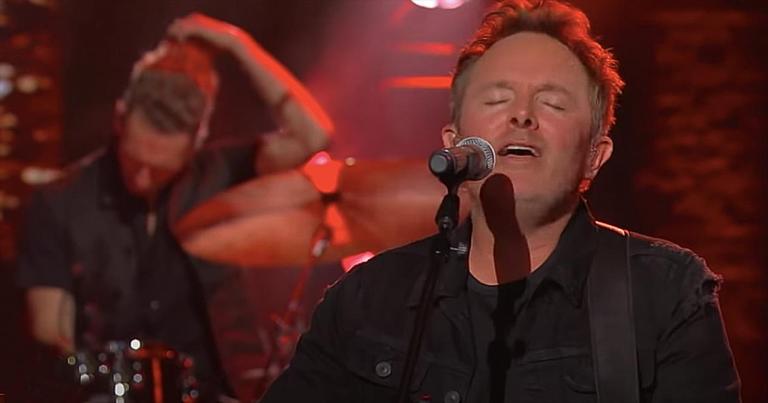
Seriously, folks, if your church is doing “Good, Good Father” tomorrow, you need a new church. You really do. You really do. You really do.
Never mind that Father’s Day shouldn’t intrude on the church. Jesus made that clear enough by saying “Who is my mother, and who are my brothers?” comment.
But this song is a crappy, crappy song. That’s what it is. And if it weren’t for evangelical Christianity’s obsession with warm fuzzy pseudo worship, it would’ve gone unnoticed upon release.
Is it really that bad?
Yes, it is.
Here’s how it goes…
Oh, I’ve heard a thousand stories of what they think you’re like
But I’ve heard the tender whispers of love in the dead of night
And you tell me that you’re pleased
And that I’m never alone
You’re a Good, Good Father
It’s who you are, it’s who you are, it’s who you are
And I’m loved by you
It’s who I am, it’s who I am, it’s who I am
Oh, and I’ve seen many searching for answers far and wide
But I know we’re all searching
For answers only you provide
‘Cause you know just what we need
Before we say a word
You’re a Good, Good Father…
’cause you are perfect in all of your ways
You are perfect in all of your ways
You are perfect in all of your ways to us
You are perfect in all of your ways
You are perfect in all of your ways
You are perfect in all of your ways to us
Oh, it’s love so undeniable
I, I can hardly speak
Peace so unexplainable
I, I can hardly think
As you call me deeper still
Into love, love, love
You’re a Good, Good Father…
You’re a Good, Good Father…
It’s completely narcissistic.
Of course, any song that says practically nothing about God’s character tends to drift toward narcissism. But this one begins and ends with us. The “thousand stories” we might have heard don’t matter, since we’ve heard whispers of love in “the dead of night” (creepy!). Consider the unabashed arrogance here! The witness of the saints is disregarded for the way we experience God.
Incredibly, the text is so narcissistic that it is devoted to self without even trying to be. Look at the refrain, which we repeat ad nauseam. After the “good Father/it’s who you are” piece, the only way we can possibly understand the second part is self-referentially. “I’m loved by you/it’s who I am” in this case can only mean “You love me because of me!”
It’s scary that the writers didn’t seem to notice this. And it’s even scarier that we all like sheep fumble along through all the repetition as our “worship leaders” stand on their stages and croon it. This just isn’t okay.
It’s terrible poetry.
Step back and take a look. No rhyme scheme. Abundance of passive voice. It’s almost comical. It doesn’t try, it doesn’t try, it doesn’t try..
It’s impossible to sing congregationally.
If you read music, take a look for yourself. Syncopation and compound meter is a recipe for a train wreck.
God isn’t our “Daddy.”
It succumbs to the modern tendency to over-familiarize the personal nature of Abba.
Christian culture is obsessed with the idea of a personal “Daddy-God.” So it is with “Good, Good Father.” The writers allude to God as a father figure that tucks children into bed and scratches their heads during bedtime prayers. But that’s not the heart of the Aramaic term. Abba isn’t “daddy.” It isn’t “dada.” It isn’t desperate, childlike babble. It indicates our relational status as God’s adopted children, children who are deeply loved, while preserving an air of deep respect, distance, and reverence.
When we worship, we aren’t climbing into our Daddy-God’s lap. Be are affirming our faith alongside others who share it, and who will ideally hold us accountable that the constant repetition of truth takes hold within us.
Some of you will say that we should accept this kind of song because of the good intentions behind it.
That’s even more concerning to me. I firmly believe their intentions are good. They don’t even realize that they’re luring congregations into constantly repeating how they feel about God, and divorcing those feelings from anything concrete. And the church, including the scholars and pastors who should know better, continue to turn a blind eye and let it happen.
The worship industry will peddle this fluff, and it will try to make us believe that it’s brilliant. That’s how they make money. We should be angry at ourselves falling for it; for downloading it by the million, consuming it into our parched minds and spirits, and demanding it in our worship “experiences.”
We’ve got to do better.
We’ve got to stop putting dreck like this into the hearts and mouths of God’s people, and letting them think they’ve worshiped.
It’s time we focus our worship away from the music and toward the Table.
It’s time we return to voicing our prayers with careful, specific, honed poetry and prose, so that our prayers of praise, confession, and thanksgiving speak truthfully and honestly about God and about ourselves.
It’s time we reject Nashville’s and Atlanta’s and Australia’s narcissistic, indulgent offerings of thinly-veiled self-adulation.
It’s time we rediscover the simple, intelligent, elegant language that once permeated the church’s worship, so we don’t fall for this kind of unrefined and subjective babble anymore.
We can’t let this stuff slide.
“Stupid” words have no place in liturgy.


Previous Post

June 19, 2020
7 Reasons Churches Should Still Be Using Hymnals During COVID-19
Browse Our Archives
Select a Category Church of St. YouTube congregational singing congregational song contemporary critiques corporate worship Hymn of the Week hymn singing hymnody and hymnology hymns masturbatory worship Uncategorized worship Worship Quotes
Select a Month February 2023 January 2023 October 2022 September 2022 April 2022 February 2022 January 2022 December 2021 July 2021 June 2021 May 2021 April 2021 January 2021 December 2020 November 2020 July 2020 June 2020 May 2020 April 2020 March 2020 February 2020 January 2020 November 2019 September 2019 July 2019 June 2019 May 2019 April 2019 March 2019 February 2019 January 2019 December 2018 November 2018 October 2018 September 2018 August 2018 July 2018 June 2018 May 2018 April 2018 March 2018 February 2018 January 2018 December 2017 October 2017 September 2017 August 2017 July 2017 June 2017 May 2017 April 2017 March 2017 February 2017 January 2017 December 2016 November 2016 October 2016 September 2016 July 2016 June 2016 May 2016 April 2016 March 2016 February 2016 January 2016 December 2015 November 2015 October 2015 September 2015 August 2015 July 2015 June 2015 May 2015 February 2015 January 2015 December 2014 October 2014 September 2014 August 2014 July 2014
Follow Us!
TAKE THE
Religious Wisdom Quiz
In Revelation, how many lampstands does John see?
Select your answer to see how you score.
Twelve lampstands Seven golden lampstands Ten lampstands Four lampstands
Related posts from Ponder Anew

Hymn of the Day: Love Divine, All Loves...

Hymn of the Day: Christ, Whose Glory Fills...
Hymn of the Day: Where Cross the Crowded...
Hymn of the Day: Open Now Thy Gates...
TRENDING AT PATHEOS Evangelical

How the author of the world's best hymn...
I've been working with John Newton for a while now. This makes...

Long before this Lectio Divina, Psalm 130 - the song - started...

What About the Trees? Another Living Parable
After I finished writing the last article about falling leaves as a...

Why Classical Education Is a Conversation, Not a...
Come and Read: Joy in Classical Education When I was a little...

Falling Leaves: A Living Parable on Letting Go
I’ve spent the vast majority of my life in the southeast corner...

Cornell University has received a great deal of negative publicity and intense...
view all Evangelical blogs
Ad-Free & Subscriber Log-In Subscription Support
- About Us
- 2026 Calendar
- Videos
- Podcasts
- Library of World Religions
- Faith In Media Tracker
- Advertise With Us
- Write for Us
- Privacy Policy
- Terms of Service
- Do Not Sell My Data
- Contact Us
- Radiant Digital
- Manage Newsletter Subscriptions
- Unsubscribe From Notifications
- Sitemap
Copyright 2008-2026, Patheos. All rights reserved.
Subscription Support Ad-Free & Subscriber Log-In
Follow Patheos