
BuddhistCatholicContemplativeEvangelicalGeneral ChristianHinduJewishLatter-day SaintMuslimNew VisionsProgressive Christian
Beliefs
- Buddhist
- Catholic
- Contemplative
- Evangelical
- General Christian
- Hindu
- Jewish
- Latter-day Saint
- More Voices
- Muslim
- New Visions
- Pagan
- Progressive Christian
Topics
- Religion News
- Food and Religion
- Sports and Religion
- Religious Art
- Religious Music and Entertainment
- Religious Events
- History and Religion
- Style and Religion
- Politics and Religion
- Women in Religion
- Recreation Outdoors and Religion
- Business Finance and Religion
- Careers Workplace and Religion
- Education and Religion
- Family Parenting and Religion
- Health Fitness and Religion
- Home and Religion
- Relationships and Religion
- Technology and Religion
- Travel and Religion
Columnists
- Buddhist Columnists
- Business Finance and Religion Columnists
- Careers Workplace and Religion Columnists
- Catholic Columnists
- Contemplative Columnists
- Education and Religion Columnists
- Evangelists Columnists
- Family Parenting and Religion Columnists
- General Christian Columnists
- Health Fitness and Religion Columnists
- Hindu Columnists
- History and Religion Columnists
- Home and Religion Columnists
- Jewish Columnists
- More Voices Columnists
- Latter Day Columnists
- Muslim Columnists
- New Visions Columnists
- Nonreligious Columnists
- Pagan Columnists
- Politics and Religion Columnists
- Progressive Columnists
- Recreation Outdoors and Religion Columnists
- Relationships and Religion Columnists
- Religion News Columnists
- Religious Art Columnists
- Religious Events Columnists
- Religious Music and Entertainment Columnists
- Sports and Religion Columnists
- Style and Religion Columnists
- Technology and Religion Columnists
- Travel and Religion Columnists
- Women in Religion Columnists
Resource Library
- 2026 Calendar
- Library of World Religions
- The 100 Most Holy Places on Earth
- Patheos Answers
- Podcasts
- Videos
- Faith Leaders Database
- Anglican Episcopalian
- Bahai
- Baptist
- Buddhism
- Christianity
- Confucianism
- Eastern Orthodoxy
- Hinduism
- Holiness and Pentecostal
- ISKCON
- Islam
- Judaism
- Lutheran
- Methodist
- The Church of Jesus Christ of Latter-day Saints
- New Age
- Paganism
- Presbytarian and Reformed
- Protestantism
- Religion Behind the Scenes
- Roman Catholic
- Scientology
- Shia Islam
- Sikhism
- Sufism
- Sunni Islam
- Taoism
- Zen
- See all religions
Research Tools
 Ad-Free & Subscriber Log-In Subscription Support
Ad-Free & Subscriber Log-In Subscription Support
Follow Patheos 

- Trending:
- Forgiveness
- |
- Marriage
- |
- Consciousness
- |
- Death Penalty
- |
- Election
- |
- Halloween
 Ponder Anew
- Home
- Evangelical
- 7 Reasons Churches Should Still Be Using Hymnals During COVID-19
7 Reasons Churches Should Still Be Using Hymnals During COVID-19
Last updated on: June 19, 2020 at 12:11 pm by Jonathan Aigner
7 Reasons Churches Should Still Be Using Hymnals During COVID-19 2020-06-19T12:11:28-05:00 Jonathan Aigner
Patheos Explore the world's faith through different perspectives on religion and spirituality! Patheos has the views of the prevalent religions and spiritualities of the world.
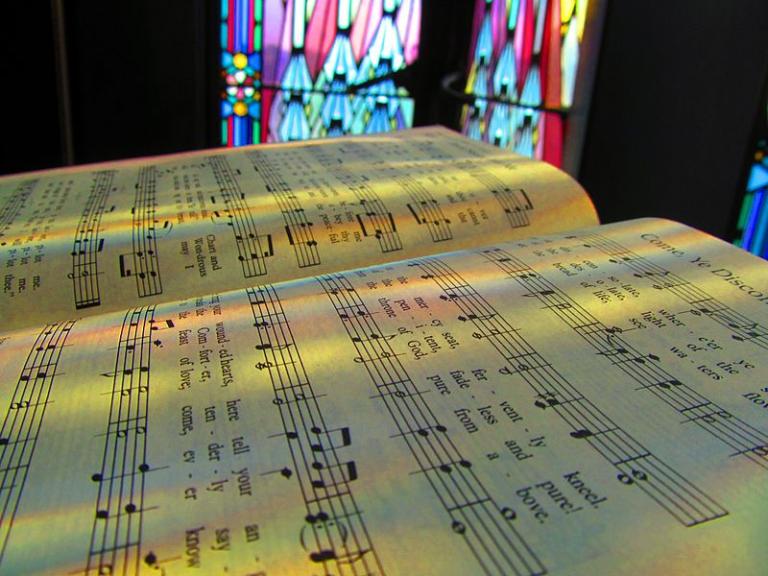
Note: I am not suggesting a return to congregational singing until scientific consensus states that it is safe. This is not about singing. Rather, many churches are removing hymnals, but projecting hymn texts as they are sung or played by musicians.
Seriously, don’t get rid of your hymnals.
You don’t need to get rid of your hymnals to protect from the COVID-19 virus. At least not entirely. But first, let’s talk about why hymnals are important to keep around, even if public singing has yet to resume.
Hymnals allow people to take possession of the music.
Beyond that, I know congregants that love to find out the next Sunday’s hymns during the previous week, so they can open up their hymnal, refresh the words, and work on their part. Preparation like that is, on its own, an act of personal devotion and worship.
Hymnals are a theological textbook.
Hymnals are hand-held volumes of Christian theology, cohesively and beautifully stated by saints throughout the millennia. Having it in your possession and consciously taking in the printed words is a formative experience like no other.
Hymnals involve tactile action.
Hymnals make the people work. Picking up the hymnal, finding the right page, and holding it up to sing grounds you in time and space. Feeling the weight in your hand engages you in the activity more than staring at a screen ever could. Especially in this time when we’re deprived of physically engaging with the world around us, this tactile action keeps people engaged in worship, even if they aren’t able to sing.
Hymnals are not distracting in the way screens are.
Anyplace where screens are present and in use, we automatically orient ourselves so that they are the center of attention. We are trained to look at screens whenever they are on, which causes us to ignore the rest of what is around us. In liturgy, this means we are distracted from the entirety of the drama playing out in front of us, and we are distracted from our fellow worshipers and leaders. With all of its benefits to our society, technology is isolating.
Screens are difficult to follow.
In addition, screens are actually very difficult to follow. Whenever I’m forced to read a projected text, I am so easily lost in the colors, backgrounds, and movements. I find myself anticipating when the next slide will be advanced. When I’m using a hymnal, none of that comes into play. I have the words and music, and I don’t even have to worry about turning the page.
Hymnals preserve the aesthetics of the Sanctuary.
There is rarely a good place to hang a screen. Even worse, when installed into older spaces, the result can be a visual nightmare. After centuries of designing liturgical architecture to be beautiful and reflective of our communion with the kingdom of heaven, we have now made them entirely pragmatic. The introduction of technology into sacred architecture has hastened this descent from architectural beauty to stark ugliness.
Hymnals are reminders that God and the life of prayer continue after the screen goes dark.
The words on the screen, like most modern pop worship ditties, are fleeting. They’re here one instant, and they’ve disappeared the next. Okay, obviously you can throw a hymnal away if you want, but text on a screen is there one second and gone the next. There’s no visible permanence. Hymnals are symbols of consistency. They give life and breath to the great musical expressions of faith. They demonstrate that what we sing is worth keeping around.
By the way, all of these are good reasons to get rid of your screens, too. I’ve written about this a bunch of times.
How can we use hymnals safely?
I’m in no way suggesting you ignore any official legal or medical guidelines.
I am, however, suggesting that you find ways of keeping hymnals a part of your worship. You don’t need to install costly and intrusive projectors and screens. You don’t need to waste a bunch of extra paper and toner on expanded leaflets. Just use some common sense. Here are some suggestions:
1. Encourage congregants to bring their own.
If people can afford it, encourage them to purchase their own hymnal. Used copies can often make this more affordable. If they can’t afford it, perhaps the church could as a ministry.
2. Check out hymnals to individuals and families.
Have a system for checking out hymnals as if they were library books. Allow them to bring them to worship, once in-person worship has resumed, or use them from home.
3. Disinfect the covers after each service.
This would be most practical for smaller churches with only one service. According to multiple reports, including this recent one from Harvard Medical School, the virus is unlikely to survive on any surface from one Sunday to the next.
Basically, hymnals are important. Don’t get rid of them in an attempt to create a false sense of security.
Photo:
wikipedia commons
Previous Post

June 17, 2020
Yes, We Can Still Sing "Onward, Christian Soldiers"
Next Post

June 20, 2020 "Good, Good Father" is a Bad, Bad Song. That's What It Is.
Browse Our Archives
Select a Category Church of St. YouTube congregational singing congregational song contemporary critiques corporate worship Hymn of the Week hymn singing hymnody and hymnology hymns masturbatory worship Uncategorized worship Worship Quotes
Select a Month February 2023 January 2023 October 2022 September 2022 April 2022 February 2022 January 2022 December 2021 July 2021 June 2021 May 2021 April 2021 January 2021 December 2020 November 2020 July 2020 June 2020 May 2020 April 2020 March 2020 February 2020 January 2020 November 2019 September 2019 July 2019 June 2019 May 2019 April 2019 March 2019 February 2019 January 2019 December 2018 November 2018 October 2018 September 2018 August 2018 July 2018 June 2018 May 2018 April 2018 March 2018 February 2018 January 2018 December 2017 October 2017 September 2017 August 2017 July 2017 June 2017 May 2017 April 2017 March 2017 February 2017 January 2017 December 2016 November 2016 October 2016 September 2016 July 2016 June 2016 May 2016 April 2016 March 2016 February 2016 January 2016 December 2015 November 2015 October 2015 September 2015 August 2015 July 2015 June 2015 May 2015 February 2015 January 2015 December 2014 October 2014 September 2014 August 2014 July 2014
Follow Us!
TAKE THE
Religious Wisdom Quiz
How do you show your love for God?
Select your answer to see how you score.
Keeping His Commandments All of these Prayer Looking Forward to Heaven
Related posts from Ponder Anew

Hymn of the Day: Love Divine, All Loves...

Hymn of the Day: Christ, Whose Glory Fills...
Hymn of the Day: Where Cross the Crowded...
Hymn of the Day: Open Now Thy Gates...
TRENDING AT PATHEOS Evangelical

How the author of the world's best hymn...
I've been working with John Newton for a while now. This makes...

Long before this Lectio Divina, Psalm 130 - the song - started...

What About the Trees? Another Living Parable
After I finished writing the last article about falling leaves as a...

Why Classical Education Is a Conversation, Not a...
Come and Read: Joy in Classical Education When I was a little...

Falling Leaves: A Living Parable on Letting Go
I’ve spent the vast majority of my life in the southeast corner...

Cornell University has received a great deal of negative publicity and intense...
view all Evangelical blogs
Ad-Free & Subscriber Log-In Subscription Support
- About Us
- 2026 Calendar
- Videos
- Podcasts
- Library of World Religions
- Faith In Media Tracker
- Advertise With Us
- Write for Us
- Privacy Policy
- Terms of Service
- Do Not Sell My Data
- Contact Us
- Radiant Digital
- Manage Newsletter Subscriptions
- Unsubscribe From Notifications
- Sitemap
Copyright 2008-2026, Patheos. All rights reserved.
Subscription Support Ad-Free & Subscriber Log-In
Follow Patheos