
BuddhistCatholicContemplativeEvangelicalGeneral ChristianHinduJewishLatter-day SaintMuslimNew VisionsProgressive Christian
Beliefs
- Buddhist
- Catholic
- Contemplative
- Evangelical
- General Christian
- Hindu
- Jewish
- Latter-day Saint
- More Voices
- Muslim
- New Visions
- Pagan
- Progressive Christian
Topics
- Religion News
- Food and Religion
- Sports and Religion
- Religious Art
- Religious Music and Entertainment
- Religious Events
- History and Religion
- Style and Religion
- Politics and Religion
- Women in Religion
- Recreation Outdoors and Religion
- Business Finance and Religion
- Careers Workplace and Religion
- Education and Religion
- Family Parenting and Religion
- Health Fitness and Religion
- Home and Religion
- Relationships and Religion
- Technology and Religion
- Travel and Religion
Columnists
- Buddhist Columnists
- Business Finance and Religion Columnists
- Careers Workplace and Religion Columnists
- Catholic Columnists
- Contemplative Columnists
- Education and Religion Columnists
- Evangelists Columnists
- Family Parenting and Religion Columnists
- General Christian Columnists
- Health Fitness and Religion Columnists
- Hindu Columnists
- History and Religion Columnists
- Home and Religion Columnists
- Jewish Columnists
- More Voices Columnists
- Latter Day Columnists
- Muslim Columnists
- New Visions Columnists
- Nonreligious Columnists
- Pagan Columnists
- Politics and Religion Columnists
- Progressive Columnists
- Recreation Outdoors and Religion Columnists
- Relationships and Religion Columnists
- Religion News Columnists
- Religious Art Columnists
- Religious Events Columnists
- Religious Music and Entertainment Columnists
- Sports and Religion Columnists
- Style and Religion Columnists
- Technology and Religion Columnists
- Travel and Religion Columnists
- Women in Religion Columnists
Resource Library
- 2026 Calendar
- Library of World Religions
- The 100 Most Holy Places on Earth
- Patheos Answers
- Podcasts
- Videos
- Faith Leaders Database
- Anglican Episcopalian
- Bahai
- Baptist
- Buddhism
- Christianity
- Confucianism
- Eastern Orthodoxy
- Hinduism
- Holiness and Pentecostal
- ISKCON
- Islam
- Judaism
- Lutheran
- Methodist
- The Church of Jesus Christ of Latter-day Saints
- New Age
- Paganism
- Presbytarian and Reformed
- Protestantism
- Religion Behind the Scenes
- Roman Catholic
- Scientology
- Shia Islam
- Sikhism
- Sufism
- Sunni Islam
- Taoism
- Zen
- See all religions
Research Tools
 Ad-Free & Subscriber Log-In Subscription Support
Ad-Free & Subscriber Log-In Subscription Support
Follow Patheos 

- Trending:
- Forgiveness
- |
- Marriage
- |
- Consciousness
- |
- Death Penalty
- |
- Election
- |
- Halloween
 Ponder Anew
- Home
- Evangelical
- Churches Are Closing, So Why Is Church Planting Still a Thing?
Churches Are Closing, So Why Is Church Planting Still a Thing?
Last updated on: April 7, 2019 at 2:44 pm by Jonathan Aigner
Churches Are Closing, So Why Is Church Planting Still a Thing? 2019-04-07T14:44:33-05:00 Jonathan Aigner
Patheos Explore the world's faith through different perspectives on religion and spirituality! Patheos has the views of the prevalent religions and spiritualities of the world.
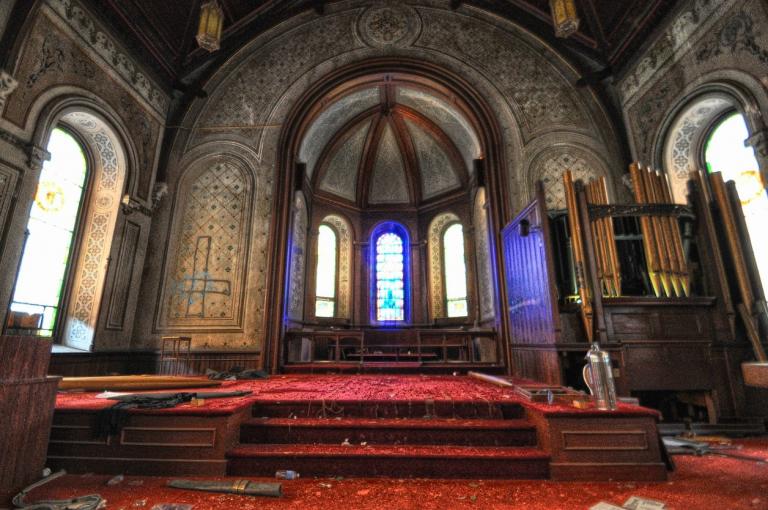
Why is church planting still a thing?
In my work and studies over the past couple of decades I’ve run into many a person – young, middle-aged embarking on a second career path, or retired looking for a place of service in their later years – spoke of a call they felt on their life, not just to ministry, but specifically to planting new churches. One wealthy suburban church I served stated it plainly in their long-term vision: “We will plant three new vital, growing churches in surrounding communities in the next ten years.”
I’ve been uncomfortable with this model for a long time. Why is church planting such a great idea when we can’t fill the ones we already to have? When so many congregations are more concerned with paying the bills than being the body of Christ in their neighborhood, what makes us think the key is starting new churches?
What in the world are we doing?
We are building a church on consumerism. When we plant a new church, we aren’t really evangelizing, we are merely offering a new option, a new flavor, a jesusy novelty from which people can choose. We are introducing a new competitor into the local church economy. And if we brand ourselves in just the right way, we can have, at least for a little while, maybe we can have the coolest church in town.
A New, Possibly Unpopular Model
It’s time to be honest. The concept of church planting is a quaint idea, one that has probably run its course as a legitimate model of domestic evangelism. What was once a new frontier now has more churches than chain restaurants, and they can’t all keep their doors open.
So I’d like to propose a new model.
It will sound like sacrilege to many of you, I know.
Instead of church planters, we need church closers.
Yeah, I know, it sounds awful. But think about it. Those of you who regularly attend church, how many other churches do you pass on your way to your own? I can’t even count, but it’s probably 50. The reality is that most of those can’t even afford to maintain their buildings. They can’t pay their pastor fairly. They are already on the brink of locking their doors for good. Even if they try to deny it, the end is near.
Instead of closing as a last resort, let’s be proactive.
We Have Too Many Churches As it Is
In the suburb of Houston where I live, there are five struggling United Methodist churches. They might not admit it, but they are all struggling.
In fact, there used to be six, but one sold their land when the school district offered a ton of cash.
Combined, the sanctuaries of those five churches could probably accommodate 2000 worshipers. Yet the membership – not attendance, but membership – of those churches, according to the handy UMC find-a-church feature, totals 978. Even if everybody on the rolls attended, never got sick, never traveled, never became shut-in, and the congregations were never divided up into traditional and contemporary silos, the buildings still wouldn’t be more than half-full.
While these all were once thriving congregations, they no longer are. Their stories are mostly the same. The population changed, the area declined, the industries closed. Some of them even moved out of declining neighborhoods only to be caught by the decline a couple decades later. Some people jumped ship as the big box McCongregations moved into surrounding areas.
More than anything else, I suspect, cultural shifts gave people freedom to stop going to church if they didn’t want to.
All of these churches still have catchy, optimistic slogans, each one subtly suggesting that their dying Methodist church is somehow different.
“We’re the church that loves kids.”
“Come grow with us.”
“We won’t tell you what you’ve done wrong, but what Jesus has done right!”
“We’re a family of faith that cares.”
But the writing is on the wall. Each week brings more funerals. New attendees that once seemed excited now have better things too do. The glory days of these churches aren’t coming back. So why in the world does this town still need five Methodist churches?
It doesn’t. It can barely sustain five churches of any stripe.
But they toil away, trying in vain to bring a few butts into their seats and delay the inevitable another month or two.
Check Your Calls
Maybe this description hits close to home. Maybe this describes your church, your community.
But what might happen if the people in these congregations decided to quit competing? What if they combined their congregations, their resources? What if parishioners dropped their allegiance to their own churches as if they were cigarette brands, and sacrificed them for the sake of the kingdom?
What if these churches worked to proclaim Christ crucified instead of peddling themselves to an area of a few square miles?
I get it. It’s a hard spot to be in. There’s lots of history here. These are buildings in which we’ve first heard about Jesus’ love, baptized our children, married our spouses, and buried our parents. These are important places in which stones of Ebenezer have been raised in your lives. I have those in my own life, too, and I’m thankful for them.
But still, Christ calls, “Follow me.” Maybe that call beckons you out of those beloved places. Churches, maybe Christ is calling you to sell your buildings and your land and be church closers, not planters. Instead of trying to attract membership, maybe just settle for being the church.
Stop the Competition
Both of these types of churches – the new plant and the one that’s declining – are trying to trap people with a gospel substitute. Namely, they want to sell people on a weekly event instead of preaching the good news of Jesus Christ. But this isn’t making disciples. In fact, it’s selling people on a lie. Consumerism is killing the church, yet we continue to treat people as consumers.
All of the church must stop courting spiritual consumers. Worship is for believers, not novelty seekers. Rebuke them. They know not what they do.
Stop offering them different worship formats and pseudo liturgies built on commercial entertainment.
Stop advertising the benefits your church can offer over all the other ones.
Stop trying to attract bored Christians from other churches.
Stop planting new churches when there are too many already.
Stop fighting to keep your doors open when there are other options.
Stop predicating your existence on attracting more butts to your dusty pews.
Slim down. Streamline. Cut the fat. Come together and worship with elegant, refined liturgy rich with Scripture and history, symbol and ritual. Don’t act like a young upstart company trying to gain a share of the market, or like an old brand that must reinvent itself. Worship like the church.
And then go.
Go out and feed the hungry.
Go out and clothe the naked.
Go out and fight for justice.
Go out and end oppression.
Go out and proclaim anew the old, old story of God’s love.
And do all of this in the name of the one who sent you.
Then you’ll actually be the church.
Photo:
flickr
Previous Post

March 31, 2019
Fourth Sunday of Lent: Come, Thou Fount of Every Blessing
Next Post

April 7, 2019 Fifth Sunday in Lent: My Song Is Love Unknown
Browse Our Archives
Select a Category Church of St. YouTube congregational singing congregational song contemporary critiques corporate worship Hymn of the Week hymn singing hymnody and hymnology hymns masturbatory worship Uncategorized worship Worship Quotes
Select a Month February 2023 January 2023 October 2022 September 2022 April 2022 February 2022 January 2022 December 2021 July 2021 June 2021 May 2021 April 2021 January 2021 December 2020 November 2020 July 2020 June 2020 May 2020 April 2020 March 2020 February 2020 January 2020 November 2019 September 2019 July 2019 June 2019 May 2019 April 2019 March 2019 February 2019 January 2019 December 2018 November 2018 October 2018 September 2018 August 2018 July 2018 June 2018 May 2018 April 2018 March 2018 February 2018 January 2018 December 2017 October 2017 September 2017 August 2017 July 2017 June 2017 May 2017 April 2017 March 2017 February 2017 January 2017 December 2016 November 2016 October 2016 September 2016 July 2016 June 2016 May 2016 April 2016 March 2016 February 2016 January 2016 December 2015 November 2015 October 2015 September 2015 August 2015 July 2015 June 2015 May 2015 February 2015 January 2015 December 2014 October 2014 September 2014 August 2014 July 2014
Follow Us!
TAKE THE
Religious Wisdom Quiz
Dry bones in a valley came together, received sinews and flesh, then breath entered them. What did this valley represent?
Select your answer to see how you score.
The house of Israel The dead God's army The resurrection
Related posts from Ponder Anew

Hymn of the Day: Love Divine, All Loves...

Hymn of the Day: Christ, Whose Glory Fills...
Hymn of the Day: Where Cross the Crowded...
Hymn of the Day: Open Now Thy Gates...
TRENDING AT PATHEOS Evangelical

How the author of the world's best hymn...
I've been working with John Newton for a while now. This makes...

Long before this Lectio Divina, Psalm 130 - the song - started...

What About the Trees? Another Living Parable
After I finished writing the last article about falling leaves as a...

Why Classical Education Is a Conversation, Not a...
Come and Read: Joy in Classical Education When I was a little...

Falling Leaves: A Living Parable on Letting Go
I’ve spent the vast majority of my life in the southeast corner...

Cornell University has received a great deal of negative publicity and intense...
view all Evangelical blogs
Ad-Free & Subscriber Log-In Subscription Support
- About Us
- 2026 Calendar
- Videos
- Podcasts
- Library of World Religions
- Faith In Media Tracker
- Advertise With Us
- Write for Us
- Privacy Policy
- Terms of Service
- Do Not Sell My Data
- Contact Us
- Radiant Digital
- Manage Newsletter Subscriptions
- Unsubscribe From Notifications
- Sitemap
Copyright 2008-2026, Patheos. All rights reserved.
Subscription Support Ad-Free & Subscriber Log-In
Follow Patheos