
BuddhistCatholicContemplativeEvangelicalGeneral ChristianHinduJewishLatter-day SaintMuslimNew VisionsProgressive Christian
Beliefs
- Buddhist
- Catholic
- Contemplative
- Evangelical
- General Christian
- Hindu
- Jewish
- Latter-day Saint
- More Voices
- Muslim
- New Visions
- Pagan
- Progressive Christian
Topics
- Religion News
- Food and Religion
- Sports and Religion
- Religious Art
- Religious Music and Entertainment
- Religious Events
- History and Religion
- Style and Religion
- Politics and Religion
- Women in Religion
- Recreation Outdoors and Religion
- Business Finance and Religion
- Careers Workplace and Religion
- Education and Religion
- Family Parenting and Religion
- Health Fitness and Religion
- Home and Religion
- Relationships and Religion
- Technology and Religion
- Travel and Religion
Columnists
- Buddhist Columnists
- Business Finance and Religion Columnists
- Careers Workplace and Religion Columnists
- Catholic Columnists
- Contemplative Columnists
- Education and Religion Columnists
- Evangelists Columnists
- Family Parenting and Religion Columnists
- General Christian Columnists
- Health Fitness and Religion Columnists
- Hindu Columnists
- History and Religion Columnists
- Home and Religion Columnists
- Jewish Columnists
- More Voices Columnists
- Latter Day Columnists
- Muslim Columnists
- New Visions Columnists
- Nonreligious Columnists
- Pagan Columnists
- Politics and Religion Columnists
- Progressive Columnists
- Recreation Outdoors and Religion Columnists
- Relationships and Religion Columnists
- Religion News Columnists
- Religious Art Columnists
- Religious Events Columnists
- Religious Music and Entertainment Columnists
- Sports and Religion Columnists
- Style and Religion Columnists
- Technology and Religion Columnists
- Travel and Religion Columnists
- Women in Religion Columnists
Resource Library
- 2026 Calendar
- Library of World Religions
- The 100 Most Holy Places on Earth
- Patheos Answers
- Podcasts
- Videos
- Faith Leaders Database
- Anglican Episcopalian
- Bahai
- Baptist
- Buddhism
- Christianity
- Confucianism
- Eastern Orthodoxy
- Hinduism
- Holiness and Pentecostal
- ISKCON
- Islam
- Judaism
- Lutheran
- Methodist
- The Church of Jesus Christ of Latter-day Saints
- New Age
- Paganism
- Presbytarian and Reformed
- Protestantism
- Religion Behind the Scenes
- Roman Catholic
- Scientology
- Shia Islam
- Sikhism
- Sufism
- Sunni Islam
- Taoism
- Zen
- See all religions
Research Tools
 Ad-Free & Subscriber Log-In Subscription Support
Ad-Free & Subscriber Log-In Subscription Support
Follow Patheos 

- Trending:
- Forgiveness
- |
- Marriage
- |
- Consciousness
- |
- Death Penalty
- |
- Election
- |
- Halloween
 Ponder Anew
- Home
- Evangelical
- It Really Shouldn’t Be a Burden to Sing the Whole Hymn
It Really Shouldn’t Be a Burden to Sing the Whole Hymn
Last updated on: August 2, 2018 at 10:26 pm by Jonathan Aigner
It Really Shouldn’t Be a Burden to Sing the Whole Hymn 2018-08-02T22:26:29-05:00 Jonathan Aigner
Patheos Explore the world's faith through different perspectives on religion and spirituality! Patheos has the views of the prevalent religions and spiritualities of the world.
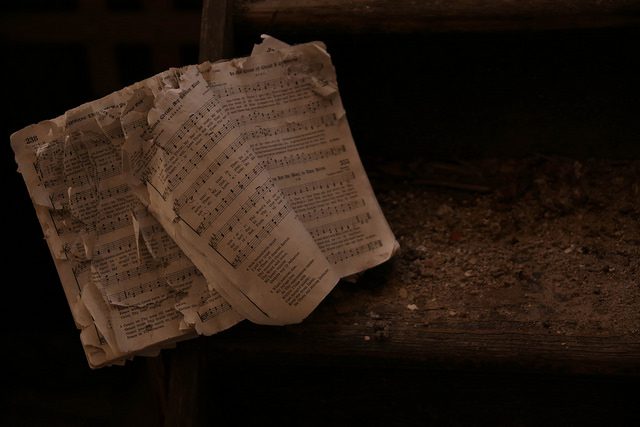
In my time as a church musician, I have gotten more than an occasional gripe about why we have to sing all the stanzas of all the hymns. Often they come from the pews, occasionally they come from choir members. More often than you’d believe, they come from pastors.
Fortunately at my current post, this really isn’t an issue, but other places, it’s been made into a big deal.
Of course, there are many clergy who align a little closer with my perspective, like this fella who weighed in on Facebook recently:
“I’m a priest, and I agree that circumcising hymns for the sake of brevity is the same as circumcising Gentiles for the sake of the gospel. Paul was against the latter; I am against the former.”
So is it an unforgivable sin to occasionally, by which I really mean rarely, omit a stanza or two?
Probably not. Let’s be honest about this one. Most hymns in our hymnals have been altered in a myriad of ways from the original poetry. Archaic, exclusive language has sometimes been edited, theology has occasionally been tweaked, and more than these, stanzas have been removed. There are even very rare cases in which I always omit one of the stanzas that remain, like these:
- In Bill and Glo’s “Because He Lives” (which would take a pastoral decree for me to do in the first place), I always omit that silly second stanza about baby Benjy.
- In “Away In a Manger,” I always cut the second stanza because I refuse to believe that the little Lord Jesus never cried. Suggesting that he didn’t denies two thousand years of incarnational theology. Jesus the Christ was fully God and fully human. That means, like every other baby in history, he freaking had gas.
Again, let’s be honest. There is rarely, if ever, a really good reason to cut the hymn as it appears in a particular hymnal. Here are the two reasons I hear most often:
1. It’s boring to sing all the stanzas.
Maybe people will get bored if the hymn goes on longer than their attention span. So what? That’s their problem, not the hymn’s, not the organist’s, not the pastor’s. (Well, it kind of is the pastor’s problem when people start sending emails, but, whatever.) John Wesley said it quite well in his oft-quoted Directions for Singing:
Sing all. See that you join with the congregation as frequently as you can. Let not a slight degree of weakness or weariness hinder you. If it is a cross to you, take it up, and you will find it a blessing.
Pastors, when you get those emails, kindly respond like Johnny W. Music in worship, especially hymnody, is not a hook to keep people engaged, nor is it a tool to elicit good feelings, it is a discipline which must be developed. Just like the rest of the liturgy.
2. We need to save time.
No, you don’t. Not this way.
Again, speaking especially to pastors, the best way to save time during a worship service is to cut out announcements, which rarely do any good, anyway. Come on, you know this is true. If they weren’t already showing up to help mow the grass and trim the hedges, they’re still not coming after you bring it up in worship.
The next best way is to cut out small talk from the pulpit, which rarely does any good, anyway. In previous churches I’ve served, I have actually pulled recordings and timed the number of mid-liturgy explanations, impromptu personal anecdotes, and other self-indulgent blabberings. In churches that don’t adhere strictly to the liturgical script, the amount of time wasted on these diversions can be staggering.
After that, the best way to save time is to cut down sermons that last over 15 minutes, because those extra five, ten, fifteen, twenty, or however many minutes rarely do any good, anyway. Come on, pastors, you know this is true.
Honestly, all of these things, which have become commonplace in the contemporary church, do nothing but steal the liturgy from the people in the pews. A sermon is not supposed to be the focal point of Christian liturgy, but should be a concise exposition and expounding on the texts for the day given to the people as part of their work. So, give worship back to the people. Let them lift their own voices, and save your own for when it’s really needed.
Oh, and by the way, cutting stanzas from hymns doesn’t save much time, anyway.
Back at a previous position of mine, the one where “Norman the Baby Boomer Methodist Pastor” promoted “Crystal the Middle-Aged Trained Paralegal/Untrained Musician” to be my boss, this was a real point of contention. One of the first Sundays after her reign of terror began, Crystal confronted me on Facebook Messenger about my choosing to do all seven stanzas of the Methodist national anthem, also known as “O For a Thousand Tongues to Sing.”
It went something like this.
Crystal the MATPUM: The traditional worship experience went over again. Remember, you need to be off the stage by 10:40. Gotta cut some of the verses next time.
Jonathan: Oh really? That was a pretty short hymn, I thought.
Crystal: Seven is too many verses in general. Need to cut to four, or maybe even three.
Jonathan: I just timed it myself, and each stanza took under 15 seconds a piece.
Crystal: Well, the band was late getting on the stage
Jonathan: When you did announcements at the beginning, you spoke for nearly 8 minutes. I could see the clock in the back from the choir loft. Instead of trying to save mere seconds by chopping down a two-line hymn, could you possibly keep announcements to three minutes or so? It would save a lot of time and wouldn’t take anything away from the congregation.
Crystal: We’ve talked about this before, Jonathan. It’s important that I take an active role in your worship experience, and those announcements were decided upon by the staff, anyway.
Jonathan: I understand, Crystal, but I promise you it wasn’t too long. Maybe we should have a conversation with Pastor Norman about this.
Crystal: I’ve already talked with Norman. He was surprised you kept to the seven verses.
Jonathan: Well, he didn’t indicate to me that we should make any changes, so I just went ahead as planned.
Crystal: We’ve talked about this before too, Jonathan. If Norman goes over, it’s still your job to end on time.
Jonathan: Well, what about last week in the contemporary service when you…
Crystal: Yes, contemporary EXPERIENCE. What about it?
Jonathan: Sorry…er…experience, but what about when you sang “One Thing Remains” by Jesus Culture at the end and it went on for nearly eight minutes before you wrapped it up? You were only repeating the refrain, which is what? Ten words? You were repeating it over and over. I think we can sing all the stanzas if they’re so short and…
Crystal: The Spirit was moving me to keep going like that.
Jonathan: Oh, okay. Well, the Spirit told me doing all the stanzas of “O For a Thousand Tongues” was okay, because at least the words were different and I wasn’t trying to phony up some emotional/religious fervor. And even with the introduction, the whole thing was over in, like, two minutes and thirty seconds. So I think we’re good.
Crystal: I’m sorry, I can’t work like this. You may have all those “degrees” and all those “lessons” and play those “instruments,” but I’m the boss, so you need to watch the time and be prepared to cut verses every week.
Jonathan: We’ll see how the Spirit leads, Crystal.
So anyway, the point of that conversation is that stanzas of hymns are not that long, and if you feel a time crunch to wrap them up sooner, the real time-guzzling culprit is probably going to be found elsewhere in the service.
Now that we’ve blown the two categories of complaints out of the water, here are a few reasons for singing the whole hymn.
1. Skipping stanzas often destroys poetic and theological cohesion.
It’s important to keep in mind that what the hymnal contains is often a shortened version of the original hymnal. But hymnal committees generally do a good job presenting a text with a lucid flow between stanzas so that we get a cohesive poetic statement. In the best examples, omitting stanzas is theologically violent.
2. Skipping stanzas is awkward.
Even if you notate it in the bulletin, even if you announce it from the chancel, skipping stanzas always makes for one of those weird moments when the congregants look at each other with looks that say, “Are we really going to do this?” or “Is this the one we’re supposed to skip?” or “Which hymn number am I supposed to be on?”
Sometimes you even get one of those weird train wrecks in which everyone is singing something different. This could all be avoided quite easily by just singing the whole darn hymn.
3. Skipping stanzas is really not beneficial in any way.
With rare exception, it doesn’t save time and it doesn’t help the liturgy.
If the people you serve struggle to understand why we sing hymns, and why we usually sing the entire hymn, there’s an opportunity for pastoral instruction and leadership, not reluctant accommodation. I think the idea of omitting stanzas likely arose from the overriding pragmatism of the previous generation, which ultimately valued felt needs of the people over liturgy, symbol, and mystery.
It’s time to reevaluate this practice, and help our people return to finding the reward that comes with liturgical discipline.


Previous Post

August 1, 2018
How Breastfeeding Is Like Liturgy: A Dad's Perspective
Next Post
August 2, 2018 The Worst Southern Baptist Sins: Dancing, Cardplaying, & 3rd Stanza-ing
Browse Our Archives
Select a Category Church of St. YouTube congregational singing congregational song contemporary critiques corporate worship Hymn of the Week hymn singing hymnody and hymnology hymns masturbatory worship Uncategorized worship Worship Quotes
Select a Month February 2023 January 2023 October 2022 September 2022 April 2022 February 2022 January 2022 December 2021 July 2021 June 2021 May 2021 April 2021 January 2021 December 2020 November 2020 July 2020 June 2020 May 2020 April 2020 March 2020 February 2020 January 2020 November 2019 September 2019 July 2019 June 2019 May 2019 April 2019 March 2019 February 2019 January 2019 December 2018 November 2018 October 2018 September 2018 August 2018 July 2018 June 2018 May 2018 April 2018 March 2018 February 2018 January 2018 December 2017 October 2017 September 2017 August 2017 July 2017 June 2017 May 2017 April 2017 March 2017 February 2017 January 2017 December 2016 November 2016 October 2016 September 2016 July 2016 June 2016 May 2016 April 2016 March 2016 February 2016 January 2016 December 2015 November 2015 October 2015 September 2015 August 2015 July 2015 June 2015 May 2015 February 2015 January 2015 December 2014 October 2014 September 2014 August 2014 July 2014
Follow Us!
TAKE THE
Religious Wisdom Quiz
How did God respond to Job’s complaints?
Select your answer to see how you score.
Through a prophet In a dream From a whirlwind By sending an angel
Related posts from Ponder Anew
A Simple Way to Improve Congregational Singing: Get...

7 Reasons Hymns are Better than Contemporary Worship...
How To Choose Music For A Funeral
9 Hymns For Christians Who Struggle With Depression
TRENDING AT PATHEOS Evangelical

How the author of the world's best hymn...
I've been working with John Newton for a while now. This makes...

Long before this Lectio Divina, Psalm 130 - the song - started...

What About the Trees? Another Living Parable
After I finished writing the last article about falling leaves as a...

Why Classical Education Is a Conversation, Not a...
Come and Read: Joy in Classical Education When I was a little...

Falling Leaves: A Living Parable on Letting Go
I’ve spent the vast majority of my life in the southeast corner...

Cornell University has received a great deal of negative publicity and intense...
view all Evangelical blogs
Ad-Free & Subscriber Log-In Subscription Support
- About Us
- 2026 Calendar
- Videos
- Podcasts
- Library of World Religions
- Faith In Media Tracker
- Advertise With Us
- Write for Us
- Privacy Policy
- Terms of Service
- Do Not Sell My Data
- Contact Us
- Radiant Digital
- Manage Newsletter Subscriptions
- Unsubscribe From Notifications
- Sitemap
Copyright 2008-2026, Patheos. All rights reserved.
Subscription Support Ad-Free & Subscriber Log-In
Follow Patheos