
BuddhistCatholicContemplativeEvangelicalGeneral ChristianHinduJewishLatter-day SaintMuslimNew VisionsProgressive Christian
Beliefs
- Buddhist
- Catholic
- Contemplative
- Evangelical
- General Christian
- Hindu
- Jewish
- Latter-day Saint
- More Voices
- Muslim
- New Visions
- Pagan
- Progressive Christian
Topics
- Religion News
- Food and Religion
- Sports and Religion
- Religious Art
- Religious Music and Entertainment
- Religious Events
- History and Religion
- Style and Religion
- Politics and Religion
- Women in Religion
- Recreation Outdoors and Religion
- Business Finance and Religion
- Careers Workplace and Religion
- Education and Religion
- Family Parenting and Religion
- Health Fitness and Religion
- Home and Religion
- Relationships and Religion
- Technology and Religion
- Travel and Religion
Columnists
- Buddhist Columnists
- Business Finance and Religion Columnists
- Careers Workplace and Religion Columnists
- Catholic Columnists
- Contemplative Columnists
- Education and Religion Columnists
- Evangelists Columnists
- Family Parenting and Religion Columnists
- General Christian Columnists
- Health Fitness and Religion Columnists
- Hindu Columnists
- History and Religion Columnists
- Home and Religion Columnists
- Jewish Columnists
- More Voices Columnists
- Latter Day Columnists
- Muslim Columnists
- New Visions Columnists
- Nonreligious Columnists
- Pagan Columnists
- Politics and Religion Columnists
- Progressive Columnists
- Recreation Outdoors and Religion Columnists
- Relationships and Religion Columnists
- Religion News Columnists
- Religious Art Columnists
- Religious Events Columnists
- Religious Music and Entertainment Columnists
- Sports and Religion Columnists
- Style and Religion Columnists
- Technology and Religion Columnists
- Travel and Religion Columnists
- Women in Religion Columnists
Resource Library
- 2026 Calendar
- Library of World Religions
- The 100 Most Holy Places on Earth
- Patheos Answers
- Podcasts
- Videos
- Faith Leaders Database
- Anglican Episcopalian
- Bahai
- Baptist
- Buddhism
- Christianity
- Confucianism
- Eastern Orthodoxy
- Hinduism
- Holiness and Pentecostal
- ISKCON
- Islam
- Judaism
- Lutheran
- Methodist
- The Church of Jesus Christ of Latter-day Saints
- New Age
- Paganism
- Presbytarian and Reformed
- Protestantism
- Religion Behind the Scenes
- Roman Catholic
- Scientology
- Shia Islam
- Sikhism
- Sufism
- Sunni Islam
- Taoism
- Zen
- See all religions
Research Tools
 Ad-Free & Subscriber Log-In Subscription Support
Ad-Free & Subscriber Log-In Subscription Support
Follow Patheos 

- Trending:
- Forgiveness
- |
- Marriage
- |
- Consciousness
- |
- Death Penalty
- |
- Election
- |
- Halloween
 Ponder Anew
- Home
- Evangelical
- 8 Reasons Adding a Contemporary Service Might Be a Bad Idea
8 Reasons Adding a Contemporary Service Might Be a Bad Idea
Last updated on: March 9, 2017 at 8:34 am by Jonathan Aigner
8 Reasons Adding a Contemporary Service Might Be a Bad Idea 2017-03-09T08:34:17-05:00 Jonathan Aigner
Patheos Explore the world's faith through different perspectives on religion and spirituality! Patheos has the views of the prevalent religions and spiritualities of the world.
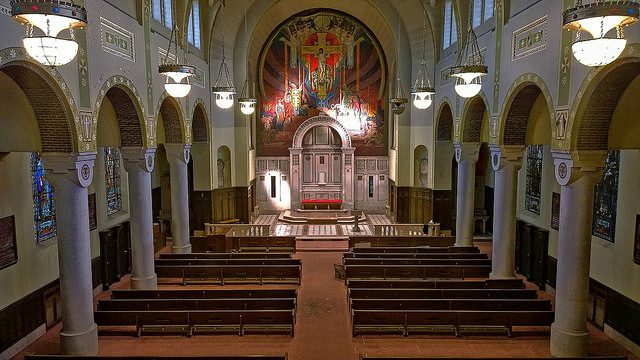
The High Cost of the Worship Wars
The worst thing about the worship wars wasn’t the fact that churches were fighting over something that didn’t matter. Worship does matter. How we worship matters, too.
It wasn’t that, as a recent comment said, “Satan rejoices when we get bogged down with issues of style.” If anything, I have to believe that God wants us to use our God-given brains and think deeply about the content of our liturgy.
The worst thing about the worship wars was that worship in the church was radically reframed as a matter of preference.
There’s the real tragedy, because any conversation about worship is fundamentally about meaning, not preference. But we forgot that, and with the emphasis shifted from meaningful liturgy to personal taste, we arrived at the conclusion that worship style must be imprinted on each individual’s personhood.
The solution seemed clear at this point. To keep the peace and end the worship wars, each church must offer varying worship styles. This idea caught on, and everyone breathed a huge sigh of relief. Nothing was really fixed, of course, but it swept the issue under the rug. And this solution that gave us pseudo-peace in the Sanctuary became a de facto church growth strategy.
1. It divides otherwise healthy congregations.
Megachurch wisdom says that unless you’re doing contemporary worship, your church will die. Of course, there are many examples that prove otherwise. And many churches with only contemporary services are closing, also. But since nearly all megachurches are decidedly contemporary, the message seems to carry some weight, especially with our belief that bigger is better and that numbers equal success. And so, out of fear, these churches have splintered themselves into oblivion by adding something that they really never needed in the first place. One mainline church I served was told by its bishop that the new behemoth megachurch moving in down the street would steal all their prospective members unless they started a contemporary service. A decade after being scared into splintering over “style,” the mainline church has never recovered.
2. It often segregates membership along demographic lines.
I think this is one of the most tragic points. Children and youth need to worship with their parents and their parent’s parents. The elderly, likewise, need to worship with the young. We all need to worship with those who don’t look like us, don’t talk like us, and don’t vote like us. Usually, different services are offered with the assumption that the contemporary is to hook non-believers and young people, and the traditional is the old-time favorites hour for the older folks. Of course, one day we will all join the heavenly choir, and something tells me we’re not going to have a smorgasbord of corporate worship options to attend. We’ll join in singing the unending hymn, even if we don’t like the tune, even if there are no projection screens, even if the seating doesn’t perfectly mold to each individual backside. Perhaps we should start practicing now.
3. Only churches with huge budgets can pull it off.
If your church has a huge chunk of cash to throw at this new service, enough to make it a professional-level performance, you might be numerically successful for a time. Create something entertaining enough, and people may show up for a while. But an untold number of smaller, less wealthy congregations have decided to start a contemporary service with limited resources. And by limited resources, I mean a few men of a certain age who will gladly relive their glory days, when they played in a garage cover band with some psychedelic name, say, the “Translucent Umbrellas.” The pastor, who is probably about the same age, thinks this is a great idea that will really pack in the young people. So they take off their shoes, grab their guitars, plug in their amps, and substitute their decades-old “new” songs, along with a few by Hillsong or Chris Tomlin, for the hymns in the traditional service.
Churches, hear me. Please stop trying this. It will end up failing because, though the novelty might seem cute to other church members, it will be embarrassing to young people and outsiders, and will seem way more out of touch than a traditional service. Don’t add a “contemporary” service, especially if you don’t have the funds to make it into the spectacle like the megachurch pattern demands. Just be yourself. Use your regular old songs with your regular old liturgy, but do it as well and with as much intentionality as you possibly can.
4. It establishes a false “old vs. new” dichotomy.
Historic Christian worship, which most would now call traditional, has always sung new songs. Now, traditional worship has been equated with nostalgia, and contemporary with pop culture. It shouldn’t be this way. We should all be singing, speaking, and praying new things, incorporating them into the best of previous generations. Liturgy that is stuck in a particular time. always becomes narcissistic, self-indulgent, and trite.
5. It assumes that historic elements of Christian worship are optional.
The formative, didactic function of music and other service elements are compromised. If a church truly believes an element of liturgy is important, it should be important for everyone. Because our faith is formed by how we worship, our worship should be crafted theologically. But the multiple service format says elements of worship are only as valuable as an audience finds them meaningful. For instance, “If the Apostles’ Creed means something to you, fine, go ahead and say it. If not, that’s fine too. It’s really all about what makes you most comfortable.” This is a problem. We don’t worship because it makes us happy or excited or sentimental, but because it’s important. If our faith tradition has long valued something, does that value go away because it doesn’t necessarily get butts in the seats?
6. It reduces corporate worship to an activity of individualistic self-expression instead of a gathering of covenant people.
If worship services are about “connecting” to God, we might as well just stay home. Comfort and convenience over community and covenant. But that’s not the point. We worship because we are a distinct group bound together by the Christian story. What God hath joined together, let no worship “style” put asunder.
7. It creates a self-centered atmosphere.
Churches that proclaim freedom of choice in worship gatherings would likely lose half of their congregation if one of those choices when away. It’s about me, what I want, and if that’s not happening, I’m going to take my ball or guitar or hymnal and go home.
8. It bows at the altar of American consumerism.
This message of this false religion is that the customer is always right, that you can have it your own way. Of course, that’s a lie. It’s a lie that pits one thing up against another and makes you believe you actually have real choices.


Photo:
Flickr, creative commons 2.0
Previous Post

March 5, 2017
Lectionary Hymn of the Week: O Love, How Deep, How Broad, How High
Next Post
March 9, 2017 Lectionary Hymn of the Week: God's Own Child, I Gladly Say It
Browse Our Archives
Select a Category Church of St. YouTube congregational singing congregational song contemporary critiques corporate worship Hymn of the Week hymn singing hymnody and hymnology hymns masturbatory worship Uncategorized worship Worship Quotes
Select a Month February 2023 January 2023 October 2022 September 2022 April 2022 February 2022 January 2022 December 2021 July 2021 June 2021 May 2021 April 2021 January 2021 December 2020 November 2020 July 2020 June 2020 May 2020 April 2020 March 2020 February 2020 January 2020 November 2019 September 2019 July 2019 June 2019 May 2019 April 2019 March 2019 February 2019 January 2019 December 2018 November 2018 October 2018 September 2018 August 2018 July 2018 June 2018 May 2018 April 2018 March 2018 February 2018 January 2018 December 2017 October 2017 September 2017 August 2017 July 2017 June 2017 May 2017 April 2017 March 2017 February 2017 January 2017 December 2016 November 2016 October 2016 September 2016 July 2016 June 2016 May 2016 April 2016 March 2016 February 2016 January 2016 December 2015 November 2015 October 2015 September 2015 August 2015 July 2015 June 2015 May 2015 February 2015 January 2015 December 2014 October 2014 September 2014 August 2014 July 2014
Follow Us!
TAKE THE
Religious Wisdom Quiz
To what place did Jacob flee after stealing his brother's blessing?
Select your answer to see how you score.
Nineveh Haran Egypt Bethel
Related posts from Ponder Anew

Hymn of the Day: Love Divine, All Loves...

Hymn of the Day: Christ, Whose Glory Fills...
Hymn of the Day: Where Cross the Crowded...
Hymn of the Day: Open Now Thy Gates...
TRENDING AT PATHEOS Evangelical

The REST of Your Life: A Creative Wrestles...
This week I had a conversation with a good friend from church....

How the author of the world's best hymn...
I've been working with John Newton for a while now. This makes...

Long before this Lectio Divina, Psalm 130 - the song - started...

What About the Trees? Another Living Parable
After I finished writing the last article about falling leaves as a...

Why Classical Education Is a Conversation, Not a...
Come and Read: Joy in Classical Education When I was a little...

Cornell University has received a great deal of negative publicity and intense...
view all Evangelical blogs
Ad-Free & Subscriber Log-In Subscription Support
- About Us
- 2026 Calendar
- Videos
- Podcasts
- Library of World Religions
- Faith In Media Tracker
- Advertise With Us
- Write for Us
- Privacy Policy
- Terms of Service
- Do Not Sell My Data
- Contact Us
- Radiant Digital
- Manage Newsletter Subscriptions
- Unsubscribe From Notifications
- Sitemap
Copyright 2008-2026, Patheos. All rights reserved.
Subscription Support Ad-Free & Subscriber Log-In
Follow Patheos