
BuddhistCatholicContemplativeEvangelicalGeneral ChristianHinduJewishLatter-day SaintMuslimNew VisionsProgressive Christian
Beliefs
- Buddhist
- Catholic
- Contemplative
- Evangelical
- General Christian
- Hindu
- Jewish
- Latter-day Saint
- More Voices
- Muslim
- New Visions
- Pagan
- Progressive Christian
Topics
- Religion News
- Food and Religion
- Sports and Religion
- Religious Art
- Religious Music and Entertainment
- Religious Events
- History and Religion
- Style and Religion
- Politics and Religion
- Women in Religion
- Recreation Outdoors and Religion
- Business Finance and Religion
- Careers Workplace and Religion
- Education and Religion
- Family Parenting and Religion
- Health Fitness and Religion
- Home and Religion
- Relationships and Religion
- Technology and Religion
- Travel and Religion
Columnists
- Buddhist Columnists
- Business Finance and Religion Columnists
- Careers Workplace and Religion Columnists
- Catholic Columnists
- Contemplative Columnists
- Education and Religion Columnists
- Evangelists Columnists
- Family Parenting and Religion Columnists
- General Christian Columnists
- Health Fitness and Religion Columnists
- Hindu Columnists
- History and Religion Columnists
- Home and Religion Columnists
- Jewish Columnists
- More Voices Columnists
- Latter Day Columnists
- Muslim Columnists
- New Visions Columnists
- Nonreligious Columnists
- Pagan Columnists
- Politics and Religion Columnists
- Progressive Columnists
- Recreation Outdoors and Religion Columnists
- Relationships and Religion Columnists
- Religion News Columnists
- Religious Art Columnists
- Religious Events Columnists
- Religious Music and Entertainment Columnists
- Sports and Religion Columnists
- Style and Religion Columnists
- Technology and Religion Columnists
- Travel and Religion Columnists
- Women in Religion Columnists
Resource Library
- 2026 Calendar
- Library of World Religions
- The 100 Most Holy Places on Earth
- Patheos Answers
- Podcasts
- Videos
- Faith Leaders Database
- Anglican Episcopalian
- Bahai
- Baptist
- Buddhism
- Christianity
- Confucianism
- Eastern Orthodoxy
- Hinduism
- Holiness and Pentecostal
- ISKCON
- Islam
- Judaism
- Lutheran
- Methodist
- The Church of Jesus Christ of Latter-day Saints
- New Age
- Paganism
- Presbytarian and Reformed
- Protestantism
- Religion Behind the Scenes
- Roman Catholic
- Scientology
- Shia Islam
- Sikhism
- Sufism
- Sunni Islam
- Taoism
- Zen
- See all religions
Research Tools
 Ad-Free & Subscriber Log-In Subscription Support
Ad-Free & Subscriber Log-In Subscription Support
Follow Patheos 

- Trending:
- Forgiveness
- |
- Marriage
- |
- Consciousness
- |
- Death Penalty
- |
- Election
- |
- Halloween
 Ponder Anew
- Home
- Evangelical
- Have Worship Your Way, or: The Real Reason the Worship Wars Were Terrible
Have Worship Your Way, or: The Real Reason the Worship Wars Were Terrible
Last updated on: January 8, 2021 at 5:25 pm by Jonathan Aigner
Have Worship Your Way, or: The Real Reason the Worship Wars Were Terrible 2021-01-08T17:25:14-05:00 Jonathan Aigner
Patheos Explore the world's faith through different perspectives on religion and spirituality! Patheos has the views of the prevalent religions and spiritualities of the world.

As I said in my last post, the worship wars sucked. But they didn’t suck because the way we worship isn’t important. The worship wars sucked because they recreated the church’s worship in our image. They reduced it to a matter of preference. They devalued it into a marketing tool for church growth. And they left us with a weird dynamic in which we tiptoe around too afraid to question the wisdom of the prevailing worship trends and the worship industry’s choke-hold on Sunday morning. It’s that uncomfortable, whispered, awkward egalitarian dynamic that pushed me to start writing about it and, hopefully, bring about some difficult, yet direly important conversations.
Frankly, the walking on eggshells must stop.
Pastor Josh over at the MTV Pastor blog here on Patheos has respectfully responded to my 9 Reasons to Stop Dividing the Church over Its Worship post. His heart for his congregation is evident, and as a recovering Baptist myself, I can understand the theology behind some of his reasoning. But his list of 9 Reasons to Start Expanding Your Church’s Worship Through New Styles reads more like a litany of ways in which the worship wars have distorted our understanding of Christian worship, and I think it warrants some attention.
“It’s a picture of what heaven could look like.” Pastor Josh says that we don’t know what worship in heaven (I prefer to say “on the renewed earth”) will look like, and that diversity in “worship style” may be a foretaste of glory divine. Well, we actually do know a few things. We know from John’s Apocalypse that it follows a heavenly liturgy, which we will one day join the angels in proclaiming. Will the song sound like western classical music? American commercial pop? I don’t suspect either. But here in the “not yet” period, we have millennia of history upon which to draw conclusions about our worship practices. (Woe to the Israelite who stumbled into the Holy of Holies asking where he could find the contemporary service.) When it comes to music especially, we have generations upon generations of congregational song, organically emanating from the voice of the people. We have texts crafted by psalmists, theologians, professors, mystics, poets, and pastors. And, until the recent birth of preferential worship, they all correspond to the Revelation liturgy in pointing to a triune God as the divine Object and Subject of Christian worship. A smorgasbord of worship options is a foreign and awkward concept.
“It teaches people to celebrate how God uniquely designed each one of us.” Worship style is not imprinted on our personhood. You will find the same spectrum of personalities in historic liturgical worship as in a so-called “contemporary” one. The difference is not in our preferences, but what we actually believe about the act of gathered worship.
Of course, we all worship in diverse ways in that we find ourselves in many different aspects of life and work. My work as a musician and educator, as a spouse and parent is in itself a worshipful expression, and so it is for others regardless of their vocation or relationship status. But the gathered worship of the church is a uniting act in which we come together as the people of God, proclaim God’s Word, partake in God’s Sacraments, and are molded into the church we are called to be for the world. It’s not a venue in which we can expect to have our own choice of jesusy entertainment performed by a cover band and call it worship.
That’s what makes Pastor Darin’s message below so damaging. I’ve used this video in other posts, but it so strikingly (and unknowingly) preaches this worship distortion that I feel like I need to include it here.
(Does the thing about chairs remind anyone else of Goldilocks and the Three Bears?)
“It’s a compelling reminder that the church is a family of believers, not time and a building.” I don’t get this. I think the opposite is true. A gathering of diverse believers united by love for God and each other more reflects a family than different services in different times and locations.
“If a church has more than one service, it’s already ‘divided.’” In a way, but, assuming the services are identical, the divide is not theological, missional, or ideological.
“New worship styles can help reach more people.” That’s the number one lie of the worship wars. We don’t worship to attract unbelievers. We don’t worship in a way that gets the most butts in the seats. We don’t worship according to the prevailing winds of contemporary culture. We don’t worship so that music or entertaining preaching can do our dirty work for us. Of course, the liturgy is inherently evangelistic, in that it points to Christ, ideally culminating with the gifts of God poured out for us so that we can be poured out from our places of worship into a dry, thirsty land. Reducing worship to a method of boosting attendance compromises its worshipful function and starves the church of what it needs to be the church.
“Multiple worship styles allows more to serve.” Really? Were they being turned away before?
“It reminds us that unity is not the same as conformity.” Pastor Josh says, “A united church doesn’t have to be a homogeneous church.” But multiple styles do in fact tend to create homogeneous congregations within a congregation. They create demographically homogeneous services. They create musically homogeneous services. Admittedly, in many cases, like a church announcement I saw on the Facebook the other day that revealed plans for a new service and the hope that it would attract new and younger attendees. And thus, they divide the church. They build silos. They create larger congregations in which the right hand has no idea what the left hand is doing, nor does is care.
“You can become ‘all things to all people’ without bowing at the altar of consumerism.” This pauline snippet spawns more problematic church practices than perhaps any other. Paul is not advocating some wild, radical, no holds barred evangelistic pragmatism. The message remains the same, “foolish,” unbelievable, offensive gospel (Paul’s word, remember!). Paul is preaching the personal revocation of rights here, a willingness to forfeit personal freedoms for the good of other believers and the message of the gospel. There’s a message for the church there, but it has nothing to do with worshiping in a way that appeals to different audiences. And, regardless, gathered worship is not supposed to “win” the coveted, elusive prize of butts in the seats. In fact, trying to hook in an audience through entertainment is nothing if not consumer-oriented.
“I’ve seen multiple worship styles work to be a net positive to the churches I’ve served in.” How do we know it’s a net positive? Attendance gain? The lack of apparent discord? That’s hardly proof of positive results. It’s possibly just proof that nobody notices, or worse, cares about the division, the homogeneous congregations within the congregation, the silos, the theological disparity, or the consumer-oriented approach. It means churches might just be content to live in ignorant bliss, as long as attendance is high and dissent quiet. It means people may not even know why they’re there to begin with. It means people might not understand the function of the liturgy. And that’s a terrifying position to be in.
We’ve got to believe that how we worship matters. Not because more butts are in the seats, but because like a diet of junk food, preferential worship leads to an unhealthy church.


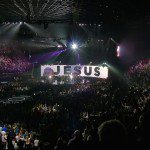
Photo: Flickr: Andrew Stawarz, creative commons 2.0
Previous Post

December 3, 2015
9 Reasons to Stop Dividing Your Church's Worship over Style
Browse Our Archives
Select a Category Church of St. YouTube congregational singing congregational song contemporary critiques corporate worship Hymn of the Week hymn singing hymnody and hymnology hymns masturbatory worship Uncategorized worship Worship Quotes
Select a Month February 2023 January 2023 October 2022 September 2022 April 2022 February 2022 January 2022 December 2021 July 2021 June 2021 May 2021 April 2021 January 2021 December 2020 November 2020 July 2020 June 2020 May 2020 April 2020 March 2020 February 2020 January 2020 November 2019 September 2019 July 2019 June 2019 May 2019 April 2019 March 2019 February 2019 January 2019 December 2018 November 2018 October 2018 September 2018 August 2018 July 2018 June 2018 May 2018 April 2018 March 2018 February 2018 January 2018 December 2017 October 2017 September 2017 August 2017 July 2017 June 2017 May 2017 April 2017 March 2017 February 2017 January 2017 December 2016 November 2016 October 2016 September 2016 July 2016 June 2016 May 2016 April 2016 March 2016 February 2016 January 2016 December 2015 November 2015 October 2015 September 2015 August 2015 July 2015 June 2015 May 2015 February 2015 January 2015 December 2014 October 2014 September 2014 August 2014 July 2014
Follow Us!
TAKE THE
Religious Wisdom Quiz
Which Persian king allowed Ezra to take Jewish exiles and gifts to Jerusalem?
Select your answer to see how you score.
Darius Nebuchadnezzar Cyrus Artaxerxes
Related posts from Ponder Anew

Hymn of the Day: Love Divine, All Loves...

Hymn of the Day: Christ, Whose Glory Fills...
Hymn of the Day: Where Cross the Crowded...
Hymn of the Day: Open Now Thy Gates...
TRENDING AT PATHEOS Evangelical

The REST of Your Life: A Creative Wrestles...
This week I had a conversation with a good friend from church....

How the author of the world's best hymn...
I've been working with John Newton for a while now. This makes...

Long before this Lectio Divina, Psalm 130 - the song - started...

What About the Trees? Another Living Parable
After I finished writing the last article about falling leaves as a...

Why Classical Education Is a Conversation, Not a...
Come and Read: Joy in Classical Education When I was a little...

Cornell University has received a great deal of negative publicity and intense...
view all Evangelical blogs
Ad-Free & Subscriber Log-In Subscription Support
- About Us
- 2026 Calendar
- Videos
- Podcasts
- Library of World Religions
- Faith In Media Tracker
- Advertise With Us
- Write for Us
- Privacy Policy
- Terms of Service
- Do Not Sell My Data
- Contact Us
- Radiant Digital
- Manage Newsletter Subscriptions
- Unsubscribe From Notifications
- Sitemap
Copyright 2008-2026, Patheos. All rights reserved.
Subscription Support Ad-Free & Subscriber Log-In
Follow Patheos