
BuddhistCatholicContemplativeEvangelicalGeneral ChristianHinduJewishLatter-day SaintMuslimNew VisionsProgressive Christian
Beliefs
- Buddhist
- Catholic
- Contemplative
- Evangelical
- General Christian
- Hindu
- Jewish
- Latter-day Saint
- More Voices
- Muslim
- New Visions
- Pagan
- Progressive Christian
Topics
- Religion News
- Food and Religion
- Sports and Religion
- Religious Art
- Religious Music and Entertainment
- Religious Events
- History and Religion
- Style and Religion
- Politics and Religion
- Women in Religion
- Recreation Outdoors and Religion
- Business Finance and Religion
- Careers Workplace and Religion
- Education and Religion
- Family Parenting and Religion
- Health Fitness and Religion
- Home and Religion
- Relationships and Religion
- Technology and Religion
- Travel and Religion
Columnists
- Buddhist Columnists
- Business Finance and Religion Columnists
- Careers Workplace and Religion Columnists
- Catholic Columnists
- Contemplative Columnists
- Education and Religion Columnists
- Evangelists Columnists
- Family Parenting and Religion Columnists
- General Christian Columnists
- Health Fitness and Religion Columnists
- Hindu Columnists
- History and Religion Columnists
- Home and Religion Columnists
- Jewish Columnists
- More Voices Columnists
- Latter Day Columnists
- Muslim Columnists
- New Visions Columnists
- Nonreligious Columnists
- Pagan Columnists
- Politics and Religion Columnists
- Progressive Columnists
- Recreation Outdoors and Religion Columnists
- Relationships and Religion Columnists
- Religion News Columnists
- Religious Art Columnists
- Religious Events Columnists
- Religious Music and Entertainment Columnists
- Sports and Religion Columnists
- Style and Religion Columnists
- Technology and Religion Columnists
- Travel and Religion Columnists
- Women in Religion Columnists
Resource Library
- 2026 Calendar
- Library of World Religions
- The 100 Most Holy Places on Earth
- Patheos Answers
- Podcasts
- Videos
- Faith Leaders Database
- Anglican Episcopalian
- Bahai
- Baptist
- Buddhism
- Christianity
- Confucianism
- Eastern Orthodoxy
- Hinduism
- Holiness and Pentecostal
- ISKCON
- Islam
- Judaism
- Lutheran
- Methodist
- The Church of Jesus Christ of Latter-day Saints
- New Age
- Paganism
- Presbytarian and Reformed
- Protestantism
- Religion Behind the Scenes
- Roman Catholic
- Scientology
- Shia Islam
- Sikhism
- Sufism
- Sunni Islam
- Taoism
- Zen
- See all religions
Research Tools
 Ad-Free & Subscriber Log-In Subscription Support
Ad-Free & Subscriber Log-In Subscription Support
Follow Patheos 

- Trending:
- Forgiveness
- |
- Marriage
- |
- Consciousness
- |
- Death Penalty
- |
- Election
- |
- Halloween
 Ponder Anew
- Home
- Evangelical
- Killing the Church with Sunday School
Killing the Church with Sunday School
Last updated on: February 15, 2017 at 8:17 pm by Jonathan Aigner
Killing the Church with Sunday School 2017-02-15T20:17:44-05:00 Jonathan Aigner
Patheos Explore the world's faith through different perspectives on religion and spirituality! Patheos has the views of the prevalent religions and spiritualities of the world.
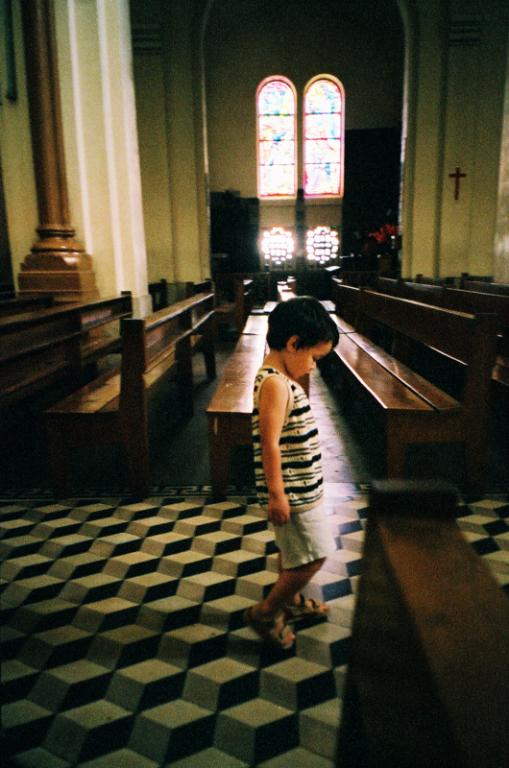
Opening Sentences
I recently ran across this article by Tim Wright called “Sunday Schooling Our Kids out of Church.”
I don’t agree with everything he says, but he has done a great service in pointing out the Sunday School problem.
Over the past few decades, in a largely futile attempt to re-engage the growing segment of non-church attenders, churches have shifted toward a model of separating parents and children on Sunday mornings. Usually, this model advertises a one-hour commitment, sending the adults to a worship service with contemporary music and a self-help, teaching-style sermon, and corralling the kids in Sunday School, where they sing hyperactive “kid-friendly” music to a recorded track, do hands-on activities, and listen to a quick lesson on their own learning level. After an hour of separation, everyone goes home and gets on with their lives.
Of course, there are many other factors at work, which Wright acknowledges, but we’re not doing ourselves any favors.
Call to Include Children in Corporate Worship
I first heard this proposed in one of my own circles a number of years ago. We as a staff were deciding how to best reach young families, or what leadership called a lazy and unmotivated segment of our congregation. As we talked, it became apparent that the majority opinion in the room was that we should aim to hook families into coming for only one hour on Sunday morning. During the discussion, a colleague inadvertently tipped his hand:
“Do we really think that the best thing for kids is to have them singing hymns from the 18th century? I don’t think so.”
I cringed. Everyone else on staff bought it. Ministry there was never the same for me.
I know he really didn’t the grasp the full reach of what he was saying. I know he had good intentions. But it’s a broken model. It hasn’t built up a generation of renewed interest in church attendance. In fact, it’s had the opposite effect, and it’s one of the ways that the church has been alienating young adults for the past 20 or 30 years.
Well, that and the whole politicized gospel of the “religious right,” but that’s another story for another day.
Now, kids are leaving the church faster than ever before.
But why? We tried to engage them on their own level. We didn’t stick them in pews between Mom and Dad and make them sit still. We didn’t force them to participate in the stuff they just couldn’t possible relate to, like liturgy, hymns, long Scripture readings, and that sort of thing. We put together cool music videos, lots of media, we let them shout and dance their little hearts out, we overstimulated them in Jesus’ name! We let them just be kids!
As Wright answers (and correctly, I think), it’s because once they graduated from the programs targeted toward them, there was no connection to the greater life of the church, especially the strange thing the church does together on Sunday mornings that it calls “worship.” Though much effort and expense had been expended to making them into little Christians, nobody had taught them how to be grown-up, churched Christians. And, while it’s certainly possible to be “saved” and not belong to a local congregation, we can’t thrive in isolation. We need one another, and a diverse blend at that. It’s for our own good.
Stanley Hauerwas puts it this way:
“Being a Christian should just scare the hell out of us. It’s like on Sunday we need to rush together for protection. “Oh, I’m not crazy.” That we believe that God was in Christ reconciling the world is craziness. It’s going to make your life really weird. And you just need to get together on Sunday to be pulled back into the reality of God’s kingdom.”
Even if we believe this ourselves, if we’re not training this kind of earnestness into our children, they won’t get it. And there won’t be much point in going to church.
In the name of making church relevant, we have made it completely irrelevant.
Finding that More Profound Alleluia
In the end, I think Wright’s points are great, but I want to offer one more.
Kids are growing up and leaving the church because we’ve stopped expecting enough out of them.
Let’s return to what that fellow staff member said. If participating in more traditional corporate worship, in this case, singing the hymns of the church, isn’t appropriate for children, then what is the alternative? I think his answer would be singing those “kid friendly” songs along with a recorded track or music video.
There’s nothing inherently wrong with kids singing “kid friendly” songs. I certainly did when I was a kid, although they weren’t as cool and weren’t paired with hypnotic media productions (Deep and Wide, anybody? Father Abraham?). But we’ve forgotten that an important component of education is exposing kids to things they can’t yet understand in order to build important connections later on. So, while a traditional Sunday service might be boring and essentially meaningless at times to small children, if we gracefully and patiently teach them the discipline of the routine, the time will come when that will no longer be the case.
In a high school English class, students may read The Great Gatsby or The Catcher in the Rye or The Scarlet Letter, not because they will instantly connect to it and enjoy it (though hopefully this is sometimes the case), but because it’s good for them. Because they need to learn to interact with new ideas, concepts, and worldviews. Even if they seem foreign. Even if they are boring. They may not immediately get it, but down the line, they will be better for it. They will be more equipped to meet the world as adults.
The church needs a similar, doxological education. We need to expect kids to participate, to sit (reasonably) still for a little while (and love them graciously when they can’t), to stumble through the words and sing the notes as best as they are able. Even 17th-century hymns. Even communal prayers that have tough language, like “slavery,” “resurrection,” and “covenant.” Even when they are years away from fully understanding what they’re doing.
Of course, there’s also the possibility that they will understand more than we think.
We need to expect them to do things that are difficult, because in the end, they’re worthwhile.
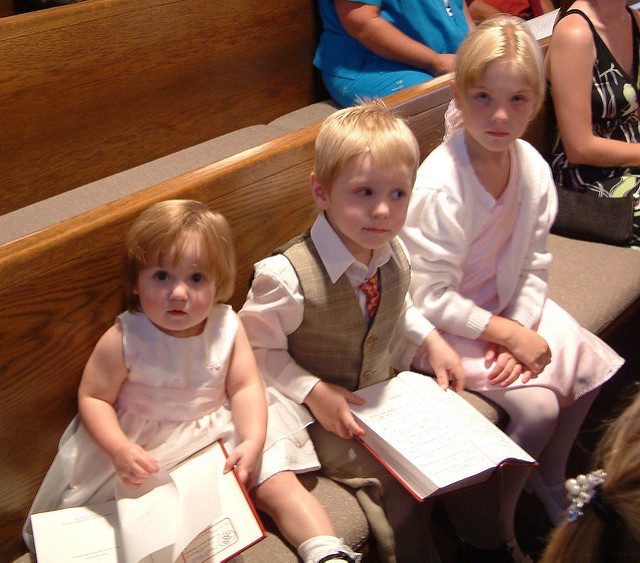
The Charge
Now, a few of those kids who have never darkened a Sanctuary door will make the transition to graze in the adult’s Sunday silo. A few more will return to this format when they have their own kids, because they think good parents take their kids to church. Many, and if the numbers are accurate, most will not. They will have no connection to the church, no “touch points,” no lasting memories, and no working understanding of why we do what we do.
It’s absolutely imperative that we reintegrate children back into our gathered worship. This may take time, it may be messy, but we’ve got to do it.
And we adults need to be there to help them in their growth. To teach them. To make room for them in the pews. To let them follow our fingers as we trace the melody in the hymnal. To be patient with them when they squirm and sigh. Above all, to show them by example the importance of being the church on Sunday so that we can be the church we need to be every other day.
And, as it turns out, there is a glimmer of hope for us traditional people. Those young people who have left the church because they didn’t get it. Well, some of them do have a vital and persistent faith, and they’re desperately searching for deeper connection to that faith in a world and in churches that are increasingly disconnected. That’s why we’re seeing so many of them returning to liturgical churches. Nearly fifty years ago, the established church had the opportunity to reengage a questioning generation, and they failed. We have a similar opportunity now. We need to make room in our tradition for sojourners and their questions, as well.
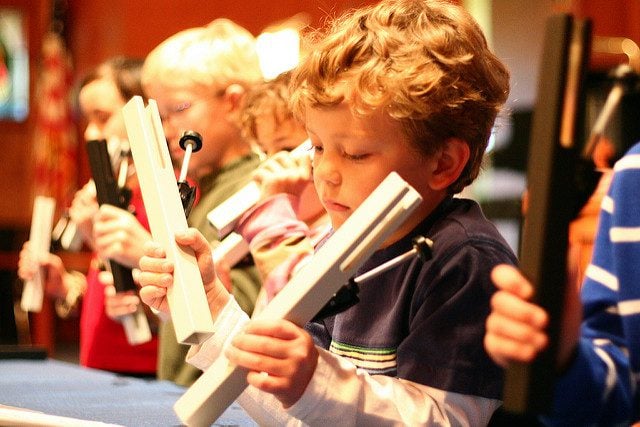
We’ve got to be honest with ourselves. What we’re doing isn’t working.
Christian education is valuable, but the discipline of the worship event is the beating heart of our Christian journey, our nourishment, our Sunday asylum.
It’s time we all worshiped together. Once again. At long last.



Photos:
Flickr, Silence, creative commons 2.0
Flickr, Paw Paw, creative commons 2.0
Flickr, John Morgan, creative commons 2.0
Previous Post

March 11, 2016
Andy Stanley's Apology, and Some Mega-questions for the Megachurch
Next Post
March 15, 2016 Finally! A Simple (yet Effective) Way to Reach Millennials!
Browse Our Archives
Select a Category Church of St. YouTube congregational singing congregational song contemporary critiques corporate worship Hymn of the Week hymn singing hymnody and hymnology hymns masturbatory worship Uncategorized worship Worship Quotes
Select a Month February 2023 January 2023 October 2022 September 2022 April 2022 February 2022 January 2022 December 2021 July 2021 June 2021 May 2021 April 2021 January 2021 December 2020 November 2020 July 2020 June 2020 May 2020 April 2020 March 2020 February 2020 January 2020 November 2019 September 2019 July 2019 June 2019 May 2019 April 2019 March 2019 February 2019 January 2019 December 2018 November 2018 October 2018 September 2018 August 2018 July 2018 June 2018 May 2018 April 2018 March 2018 February 2018 January 2018 December 2017 October 2017 September 2017 August 2017 July 2017 June 2017 May 2017 April 2017 March 2017 February 2017 January 2017 December 2016 November 2016 October 2016 September 2016 July 2016 June 2016 May 2016 April 2016 March 2016 February 2016 January 2016 December 2015 November 2015 October 2015 September 2015 August 2015 July 2015 June 2015 May 2015 February 2015 January 2015 December 2014 October 2014 September 2014 August 2014 July 2014
Follow Us!
TAKE THE
Religious Wisdom Quiz
Who said "as for me and my house, we will serve the Lord"?
Select your answer to see how you score.
Peter Abraham Paul Joshua
Related posts from Ponder Anew

Hymn of the Day: Love Divine, All Loves...

Hymn of the Day: Christ, Whose Glory Fills...
Hymn of the Day: Where Cross the Crowded...
Hymn of the Day: Open Now Thy Gates...
TRENDING AT PATHEOS Evangelical

How the author of the world's best hymn...
I've been working with John Newton for a while now. This makes...

Long before this Lectio Divina, Psalm 130 - the song - started...

What About the Trees? Another Living Parable
After I finished writing the last article about falling leaves as a...

Why Classical Education Is a Conversation, Not a...
Come and Read: Joy in Classical Education When I was a little...

Falling Leaves: A Living Parable on Letting Go
I’ve spent the vast majority of my life in the southeast corner...

Cornell University has received a great deal of negative publicity and intense...
view all Evangelical blogs
Ad-Free & Subscriber Log-In Subscription Support
- About Us
- 2026 Calendar
- Videos
- Podcasts
- Library of World Religions
- Faith In Media Tracker
- Advertise With Us
- Write for Us
- Privacy Policy
- Terms of Service
- Do Not Sell My Data
- Contact Us
- Radiant Digital
- Manage Newsletter Subscriptions
- Unsubscribe From Notifications
- Sitemap
Copyright 2008-2026, Patheos. All rights reserved.
Subscription Support Ad-Free & Subscriber Log-In
Follow Patheos