
BuddhistCatholicContemplativeEvangelicalGeneral ChristianHinduJewishLatter-day SaintMuslimNew VisionsProgressive Christian
Beliefs
- Buddhist
- Catholic
- Contemplative
- Evangelical
- General Christian
- Hindu
- Jewish
- Latter-day Saint
- More Voices
- Muslim
- New Visions
- Pagan
- Progressive Christian
Topics
- Religion News
- Food and Religion
- Sports and Religion
- Religious Art
- Religious Music and Entertainment
- Religious Events
- History and Religion
- Style and Religion
- Politics and Religion
- Women in Religion
- Recreation Outdoors and Religion
- Business Finance and Religion
- Careers Workplace and Religion
- Education and Religion
- Family Parenting and Religion
- Health Fitness and Religion
- Home and Religion
- Relationships and Religion
- Technology and Religion
- Travel and Religion
Columnists
- Buddhist Columnists
- Business Finance and Religion Columnists
- Careers Workplace and Religion Columnists
- Catholic Columnists
- Contemplative Columnists
- Education and Religion Columnists
- Evangelists Columnists
- Family Parenting and Religion Columnists
- General Christian Columnists
- Health Fitness and Religion Columnists
- Hindu Columnists
- History and Religion Columnists
- Home and Religion Columnists
- Jewish Columnists
- More Voices Columnists
- Latter Day Columnists
- Muslim Columnists
- New Visions Columnists
- Nonreligious Columnists
- Pagan Columnists
- Politics and Religion Columnists
- Progressive Columnists
- Recreation Outdoors and Religion Columnists
- Relationships and Religion Columnists
- Religion News Columnists
- Religious Art Columnists
- Religious Events Columnists
- Religious Music and Entertainment Columnists
- Sports and Religion Columnists
- Style and Religion Columnists
- Technology and Religion Columnists
- Travel and Religion Columnists
- Women in Religion Columnists
Resource Library
- 2026 Calendar
- Library of World Religions
- The 100 Most Holy Places on Earth
- Patheos Answers
- Podcasts
- Videos
- Faith Leaders Database
- Anglican Episcopalian
- Bahai
- Baptist
- Buddhism
- Christianity
- Confucianism
- Eastern Orthodoxy
- Hinduism
- Holiness and Pentecostal
- ISKCON
- Islam
- Judaism
- Lutheran
- Methodist
- The Church of Jesus Christ of Latter-day Saints
- New Age
- Paganism
- Presbytarian and Reformed
- Protestantism
- Religion Behind the Scenes
- Roman Catholic
- Scientology
- Shia Islam
- Sikhism
- Sufism
- Sunni Islam
- Taoism
- Zen
- See all religions
Research Tools
 Ad-Free & Subscriber Log-In Subscription Support
Ad-Free & Subscriber Log-In Subscription Support
Follow Patheos 

- Trending:
- Forgiveness
- |
- Marriage
- |
- Consciousness
- |
- Death Penalty
- |
- Election
- |
- Halloween

- Home
- Politics and Religion
- The Senate Filibuster Explained—and Why It Should Be Allowed to Die
The Senate Filibuster Explained—and Why It Should Be Allowed to Die
Last updated on: September 16, 2019 at 7:49 am by Guest Contributor
The Senate Filibuster Explained—and Why It Should Be Allowed to Die 2019-09-16T07:49:21-07:00 Guest Contributor
Patheos Explore the world's faith through different perspectives on religion and spirituality! Patheos has the views of the prevalent religions and spiritualities of the world.
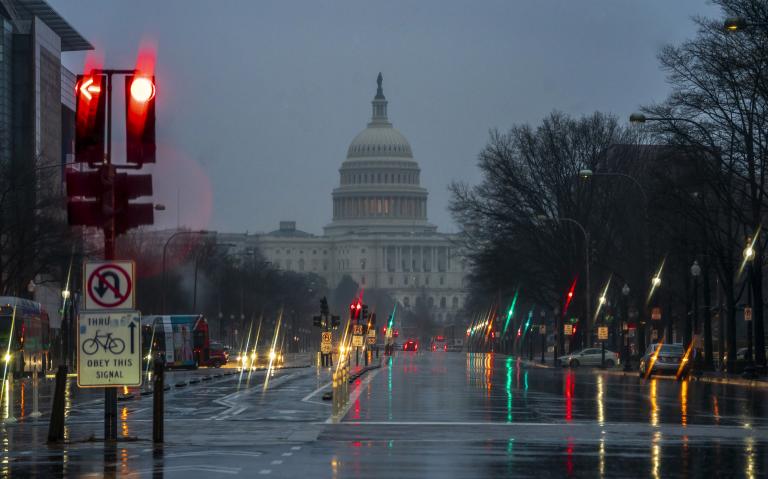
The filibuster is like a stoplight that’s always red. AP Photo/J. Scott Applewhite
Daniel Wirls, University of California, Santa Cruz
Sen. Elizabeth Warren is the latest Democrat to argue an arcane Senate rule governing debate stands in the way of passing a progressive agenda, such as meaningful gun control.
The procedure, known as the filibuster, allows a 41-vote minority in the Senate to block legislation. Its power has been steadily eroding, however, as both Democratic and Republican lawmakers create procedures to get around the roadblock to pass everything from the Affordable Care Act to President Donald Trump’s Supreme Court nominees.
Should the Senate move even farther toward being a legislative body characterized by majority rule rather than minority obstruction?
Many Democrats, including me, might resist anything that helps Trump and his GOP Senate majority pass their agenda. Yet as a scholar of the Senate and advocate of responsible government, I believe the end of the 60-vote Senate would nonetheless be a good thing for the country – and conform to the founders’ intentions.
The filibuster explained
The filibuster, which comes from the Dutch word for pirate, is embodied in Senate Rule XXII. It says cloture – a motion to end debate on a bill – requires a supermajority of at least 60 votes on most matters under consideration.
Although some lawmakers argue the filibuster is what makes the Senate unique, a supermajority threshold is not what defines the legislative chamber.
As political scientists and historians have noted over and over again, supermajority cloture is not part of – and cannot be derived from – the Constitution or any original understanding of the Senate. Elements such as equal representation by the states, six-year terms and a higher age requirement are what distinguish the Senate’s style of deliberation and decision-making from the House.
In fact, although it may seem like the 60-vote filibuster has been with us forever, it’s actually only been around since 1917.
Moreover, the protection of the minority, often cited as a justification for the filibuster, is of the system as a whole: the separate branches, the checks, federalism. It’s not the role of the Senate alone to protect minority interests.
Filibuster erosion
Over several decades, Congress has used dozens of legislative “carve-outs” that have eroded the filibuster and protected specific categories of legislation from minority obstruction in the Senate.
For example, lawmakers use a “fast-track” procedure to pass trade agreements and decide whether to close military bases. This places a time limit on consideration and quashes minority obstruction in the Senate because a simple majority vote will be held at the end of the time restriction.
Increased use of budget reconciliation for major legislation is another carve-out. The Affordable Care Act, efforts to repeal that law and the 2017 Trump tax cut are examples of this process.
In 2013, Democrats controlling the Senate took it a step farther and voted to allow all nominations other than for the Supreme Court to be approved by majority vote. This was the most important change in Senate standing rules – or, to be precise, in their interpretation – since at least 1975. It allowed Democrats to confirm a significant number of nominations for President Barack Obama who were being blocked by the Republican minority.
Just over three years later, the Senate, now under GOP control, voted to apply the same interpretation to nominations to the Supreme Court. The immediate result, of course, was the slim confirmations of Neil Gorsuch and later Brett Kavanaugh.
Restoring the Senate’s important but limited role
Today, the 60-vote Senate remains powerful but circumscribed.
This threshold for ending debate still applies to most legislation, including appropriations bills and most laws in areas such as military policy, the environment or civil rights. And for Democrats hoping to occupy the White House in 2020, the need of a supermajority would likely prevent action on gun control, a Green New Deal and significant health care legislation like “Medicare for All.”
But by creating the various restrictions on its use in recent years, the Senate has repeatedly recognized that the 60-vote threshold is often dysfunctional and that the costs to effective governance are too high. The norms that support the supermajority Senate are eroding.
It’s also contributed to broader congressional dysfunction. The Senate behaves less and less like the world’s “greatest deliberative body” – as some like to believe – and more like the least deliberative, particularly under the leadership of Majority Leader Mitch McConnell. The Senate rarely debates, and McConnell – in his self-styled role as the “grim reaper” – doesn’t allow amendments or legislation that he or the president disagrees with to come up for a vote, regardless of how much support it has in the chamber.
I believe the Senate should change its rules to allow a simple majority to close debate on any bill, nomination or other matter, while also guaranteeing a minimum period of debate for any piece of legislation, which would allow the minority position to be voiced and debated.
In so doing, the Senate would end its undemocratic pretensions and resume its prescribed and limited role in the system of checks and balances. That would be a good thing no matter which party controls the Senate and regardless of who is, or will be, president.
This is an updated version of an article originally published on Dec. 13, 2017.
[ You’re smart and curious about the world. So are The Conversation’s authors and editors. You can read us daily by subscribing to our newsletter. ]
Daniel Wirls, Professor of Politics, University of California, Santa Cruz
This article is republished from The Conversation under a Creative Commons license. Read the original article.
Previous Post

November 3, 2018
A Pep Talk for Everyday Resisters
Next Post

March 5, 2020 Was Jesus a Socialist?
Browse Our Archives
Select a Category Uncategorized
Select a Month May 2021 November 2020 July 2020 April 2020 March 2020 September 2019 November 2018 February 2018 December 2017 October 2017 June 2017 February 2017 January 2017 October 2016 June 2016 April 2016 March 2016 February 2016
TAKE THE
Religious Wisdom Quiz
Which Psalm is famous as the "Shepherd's Psalm"?
Select your answer to see how you score.
Psalm 119 Psalm 1 Psalm 51 Psalm 23
Related posts from Politics Blue
How Faith Groups Feel After Biden’s First 100...

For the Healing of a Nation: Five Ways...

Evangelicals and Trump: A Tipping Point

SCOTUS Ruling on Religious Liberty
TRENDING AT PATHEOS Politics and Religion


Gas Prices: What Would Jesus Pay?
Many of my conservative Christian friends have been having a field day...

Jesus Was a Social Deviant: A Brief History...
Americans like to say that this country was founded on the...

On Max Lucado Preaching At Washington National Cathedral
There has been a bit of controversy over the past week about...

Digital Deception: How We Ended Up Here And...
The American experiment has reached its moment of reckoning, and we seem...

“The evangelical vote is more diverse than you...
Rev. Jim Ball, EFB Co-Chair, is one of the voices featured in...
view all Politics and Religion blogs
Ad-Free & Subscriber Log-In Subscription Support
- About Us
- 2026 Calendar
- Videos
- Podcasts
- Library of World Religions
- Faith In Media Tracker
- Advertise With Us
- Write for Us
- Privacy Policy
- Terms of Service
- Do Not Sell My Data
- Contact Us
- Radiant Digital
- Manage Newsletter Subscriptions
- Unsubscribe From Notifications
- Sitemap
Copyright 2008-2026, Patheos. All rights reserved.
Subscription Support Ad-Free & Subscriber Log-In
Follow Patheos