
BuddhistCatholicContemplativeEvangelicalGeneral ChristianHinduJewishLatter-day SaintMuslimNew VisionsProgressive Christian
Beliefs
- Buddhist
- Catholic
- Contemplative
- Evangelical
- General Christian
- Hindu
- Jewish
- Latter-day Saint
- More Voices
- Muslim
- New Visions
- Pagan
- Progressive Christian
Topics
- Religion News
- Food and Religion
- Sports and Religion
- Religious Art
- Religious Music and Entertainment
- Religious Events
- History and Religion
- Style and Religion
- Politics and Religion
- Women in Religion
- Recreation Outdoors and Religion
- Business Finance and Religion
- Careers Workplace and Religion
- Education and Religion
- Family Parenting and Religion
- Health Fitness and Religion
- Home and Religion
- Relationships and Religion
- Technology and Religion
- Travel and Religion
Columnists
- Buddhist Columnists
- Business Finance and Religion Columnists
- Careers Workplace and Religion Columnists
- Catholic Columnists
- Contemplative Columnists
- Education and Religion Columnists
- Evangelists Columnists
- Family Parenting and Religion Columnists
- General Christian Columnists
- Health Fitness and Religion Columnists
- Hindu Columnists
- History and Religion Columnists
- Home and Religion Columnists
- Jewish Columnists
- More Voices Columnists
- Latter Day Columnists
- Muslim Columnists
- New Visions Columnists
- Nonreligious Columnists
- Pagan Columnists
- Politics and Religion Columnists
- Progressive Columnists
- Recreation Outdoors and Religion Columnists
- Relationships and Religion Columnists
- Religion News Columnists
- Religious Art Columnists
- Religious Events Columnists
- Religious Music and Entertainment Columnists
- Sports and Religion Columnists
- Style and Religion Columnists
- Technology and Religion Columnists
- Travel and Religion Columnists
- Women in Religion Columnists
Resource Library
- 2026 Calendar
- Library of World Religions
- The 100 Most Holy Places on Earth
- Patheos Answers
- Podcasts
- Videos
- Faith Leaders Database
- Anglican Episcopalian
- Bahai
- Baptist
- Buddhism
- Christianity
- Confucianism
- Eastern Orthodoxy
- Hinduism
- Holiness and Pentecostal
- ISKCON
- Islam
- Judaism
- Lutheran
- Methodist
- The Church of Jesus Christ of Latter-day Saints
- New Age
- Paganism
- Presbytarian and Reformed
- Protestantism
- Religion Behind the Scenes
- Roman Catholic
- Scientology
- Shia Islam
- Sikhism
- Sufism
- Sunni Islam
- Taoism
- Zen
- See all religions
Research Tools
 Ad-Free & Subscriber Log-In Subscription Support
Ad-Free & Subscriber Log-In Subscription Support
Follow Patheos 

- Trending:
- Forgiveness
- |
- Marriage
- |
- Consciousness
- |
- Death Penalty
- |
- Election
- |
- Halloween

- Home
- Politics and Religion
- Donald Trump “Alone” Can Define Truth
Donald Trump “Alone” Can Define Truth
Last updated on: October 6, 2016 at 1:24 pm by Guest Contributor
Donald Trump “Alone” Can Define Truth 2016-10-06T13:24:05-07:00 Guest Contributor
Patheos Explore the world's faith through different perspectives on religion and spirituality! Patheos has the views of the prevalent religions and spiritualities of the world.
By Matthew Snider.
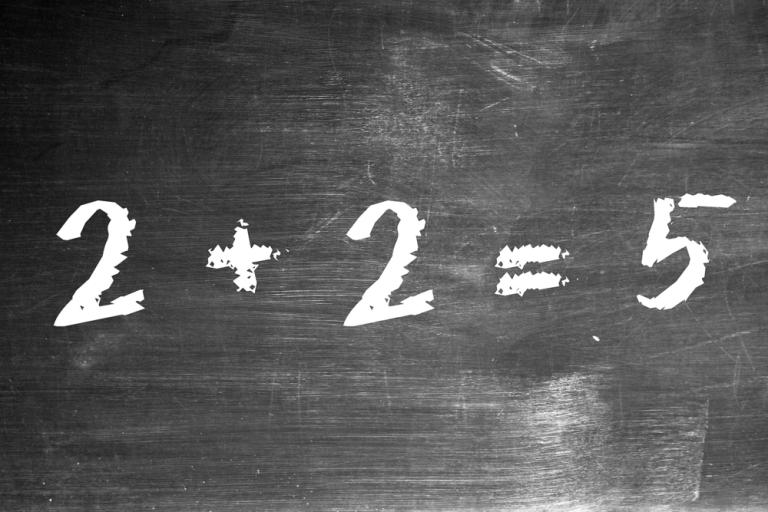
George Orwell’s monumental political novel, 1984, has been used almost endlessly since it was originally published to impugn administrations, companies, and all manner of authorities that are perceived as too powerful. It’s become such an inextricable part of our cultural vocabulary that it seems difficult to imagine our political conversation if it didn’t exist. But beyond the novel’s warnings about powerful governments and political doublespeak, one quote that has remained with me ever since I first read the novel seems more important than ever in 2016.
“There was truth and there was untruth, and if you clung to the truth even against the whole world, you were not mad.”
Contemporary politics has always involved exaggeration and equivocation (regrettably, perhaps necessarily). There can be endless debates about when it began, who’s to blame, and who should fact-check. But 2016 signals some new kind of shift from exploiting the nuanced shades of language to a radical attempt to entirely reject the sentiment Orwell expressed in 1984.
In the first debate of the general election, Donald Trump denied he originally supported the invasion of Iraq; he denied he continued to perpetuate birtherism after President Obama produced his birth certificate; he mischaracterized the outcome of Floyd v. City of New York so severely as to either suggest outright deception or an alarming lack of understanding of the American court system; he denied that he claimed climate change was a Chinese-sponsored hoax; he lied about Ford job losses; he continued to purposefully mischaracterize the role his father played in his business success and his previous comments on women.
This is not an ordinary election of misleading self-interested candidate versus misleading self-interested candidate. All politicians take advantage of linguistic wiggle room; all politicians cherry pick statistics or details for their agenda. This is not what Donald Trump does. Donald Trump marks the end of objective truth for many Americans—an attitude which has been silently, pervasively de rigueur for years with many—and which will inevitably only unmoor us further from the agreed reality upon which society depends. Confronted with his own words—on support for the Iraq invasion, on his role in perpetuating the myth of Obama’s birthplace, on the language he has used to describe women and minorities, to name only a few—Donald’s lazy but repetitive denials seem to work in persuading his supporters that he “alone” can define what did or didn’t happen. In attacking his undeniably policy-wonk opponent, Donald hides behind the “policy” blurbs and empty blog posts on his own website. Donald Trump is exploiting this breakdown between truth and untruth to foster and amplify persistent hatreds among many Americans bred and born by a changing society in which straight, cis-gendered, white Christians are suddenly no longer “more equal” than the rest of us. In this wasteland of meaninglessness, Trump pries open the darkest immoral cracks in the façade of American exceptionalism and gives these hatreds license to come out into the light.
Absent some stable connection between word and meaning, there can be no culture, no political tradition, no Western civilization. And it’s in this miasma of truth and untruth (never one and always both) that Trump’s win or loss in November will leave us to wander like disconnected refugees, incapable of communicating, babbling incomprehensibly at one another like another shattered people at the crumbling base of their Tower.
It’s undeniable that in many ways our society is captivated (perhaps paralyzed) by a moment of nostalgia, if it can be called that. More fittingly, it might be called false nostalgia, the longing for a place we’ve never been. Society itself has answered that longing as much in Mad Men and Downton Abbey as in the hearkening anthem to “Make America Great Again.” Arguably from the beginning, American politics has been an exercise in civilizational, aspirational apotheosis: the longing insistence that “America’s best days are ahead of it” or that “it’s (only) Morning in America.” And as much as “make America great again” seeks to coddle its supplicants into believing that America can be great “again,” it is inseparably the act of a people looking backward, an exercise in reversal befitting Lot’s wife. It echoes with the wilting enthusiasm of a defeated ego. It is not the message Americans deserve, but when the message has been drained of any meaning, it’s the only message we’re going to get. And if we can’t agree on this, then we truly have no common language in which we can communicate anymore.
Each candidate, each party has interest in framing this election about “the stakes,” “the future of our country,” or the particular set of interests one group or another finds critically important this year. But despite party, despite personality, despite routine political exaggeration and equivocation, there is truth and there is untruth and Donald Trump singularly jeopardizes this distinction.
Matthew Snider writes on culture, religion, and politics from Maryland. He can be found on Twitter @matthewsnider.
Previous Post

June 8, 2016
Why Hillary Clinton Won't Win
Next Post
January 16, 2017 Where's the Love?
Browse Our Archives
Select a Category Uncategorized
Select a Month May 2021 November 2020 July 2020 April 2020 March 2020 September 2019 November 2018 February 2018 December 2017 October 2017 June 2017 February 2017 January 2017 October 2016 June 2016 April 2016 March 2016 February 2016
TAKE THE
Religious Wisdom Quiz
True or False: The Gospel of John records seven miracles (signs) of Jesus.
Select your answer to see how you score.
TRUE FALSE
Related posts from Politics Blue
How Faith Groups Feel After Biden’s First 100...
For the Healing of a Nation: Five Ways...
Evangelicals and Trump: A Tipping Point
SCOTUS Ruling on Religious Liberty
TRENDING AT PATHEOS Politics and Religion


Gas Prices: What Would Jesus Pay?
Many of my conservative Christian friends have been having a field day...

Jesus Was a Social Deviant: A Brief History...
Americans like to say that this country was founded on the...

On Max Lucado Preaching At Washington National Cathedral
There has been a bit of controversy over the past week about...

Digital Deception: How We Ended Up Here And...
The American experiment has reached its moment of reckoning, and we seem...

“The evangelical vote is more diverse than you...
Rev. Jim Ball, EFB Co-Chair, is one of the voices featured in...
view all Politics and Religion blogs
Ad-Free & Subscriber Log-In Subscription Support
- About Us
- 2026 Calendar
- Videos
- Podcasts
- Library of World Religions
- Faith In Media Tracker
- Advertise With Us
- Write for Us
- Privacy Policy
- Terms of Service
- Do Not Sell My Data
- Contact Us
- Radiant Digital
- Manage Newsletter Subscriptions
- Unsubscribe From Notifications
- Sitemap
Copyright 2008-2026, Patheos. All rights reserved.
Subscription Support Ad-Free & Subscriber Log-In
Follow Patheos