
BuddhistCatholicContemplativeEvangelicalGeneral ChristianHinduJewishLatter-day SaintMuslimNew VisionsProgressive Christian
Beliefs
- Buddhist
- Catholic
- Contemplative
- Evangelical
- General Christian
- Hindu
- Jewish
- Latter-day Saint
- More Voices
- Muslim
- New Visions
- Pagan
- Progressive Christian
Topics
- Religion News
- Food and Religion
- Sports and Religion
- Religious Art
- Religious Music and Entertainment
- Religious Events
- History and Religion
- Style and Religion
- Politics and Religion
- Women in Religion
- Recreation Outdoors and Religion
- Business Finance and Religion
- Careers Workplace and Religion
- Education and Religion
- Family Parenting and Religion
- Health Fitness and Religion
- Home and Religion
- Relationships and Religion
- Technology and Religion
- Travel and Religion
Columnists
- Buddhist Columnists
- Business Finance and Religion Columnists
- Careers Workplace and Religion Columnists
- Catholic Columnists
- Contemplative Columnists
- Education and Religion Columnists
- Evangelists Columnists
- Family Parenting and Religion Columnists
- General Christian Columnists
- Health Fitness and Religion Columnists
- Hindu Columnists
- History and Religion Columnists
- Home and Religion Columnists
- Jewish Columnists
- More Voices Columnists
- Latter Day Columnists
- Muslim Columnists
- New Visions Columnists
- Nonreligious Columnists
- Pagan Columnists
- Politics and Religion Columnists
- Progressive Columnists
- Recreation Outdoors and Religion Columnists
- Relationships and Religion Columnists
- Religion News Columnists
- Religious Art Columnists
- Religious Events Columnists
- Religious Music and Entertainment Columnists
- Sports and Religion Columnists
- Style and Religion Columnists
- Technology and Religion Columnists
- Travel and Religion Columnists
- Women in Religion Columnists
Resource Library
- 2026 Calendar
- Library of World Religions
- The 100 Most Holy Places on Earth
- Patheos Answers
- Podcasts
- Videos
- Faith Leaders Database
- Anglican Episcopalian
- Bahai
- Baptist
- Buddhism
- Christianity
- Confucianism
- Eastern Orthodoxy
- Hinduism
- Holiness and Pentecostal
- ISKCON
- Islam
- Judaism
- Lutheran
- Methodist
- The Church of Jesus Christ of Latter-day Saints
- New Age
- Paganism
- Presbytarian and Reformed
- Protestantism
- Religion Behind the Scenes
- Roman Catholic
- Scientology
- Shia Islam
- Sikhism
- Sufism
- Sunni Islam
- Taoism
- Zen
- See all religions
Research Tools
 Ad-Free & Subscriber Log-In Subscription Support
Ad-Free & Subscriber Log-In Subscription Support
Follow Patheos 

- Trending:
- Forgiveness
- |
- Marriage
- |
- Consciousness
- |
- Death Penalty
- |
- Election
- |
- Halloween
 Poisoner's Apothecary
- Home
- Pagan
- Illumination, Inspiration and Imbolc
Illumination, Inspiration and Imbolc
Last updated on: January 29, 2020 at 1:51 pm by Coby Michael Ward
Illumination, Inspiration and Imbolc 2020-01-29T13:51:55-04:00 Coby Michael Ward
Patheos Explore the world's faith through different perspectives on religion and spirituality! Patheos has the views of the prevalent religions and spiritualities of the world.
For years I considered Imbolc, just another extra holy day to be observed. It didn’t hold a lot of personal resonance with me, and this can feel true for many individuals when it comes to the pagan holy days or witches’ Sabbats. Simply reading about the day’s history and traditional observances, learning the myth of an associated deity; or making Brigid’s cross every year because that’s just what you do, leaves some wanting for relevance and deeper meaning. Celebrations like Samhain and Beltane are outwardly witchy and their symbolic associations are self-evident. While everyday can’t be Samhain, (unfortunately!) additional occult understanding of the Sabbats can be discerned by looking at them holistically. By looking not just at one Sabbat, but three; the Sabbat in question, its predecessor and the one following, we can gain additional insight into the story being played out by the stars. Think of it as an ongoing story that plays out over and over again in the Heavens, not just an autonomous observation.
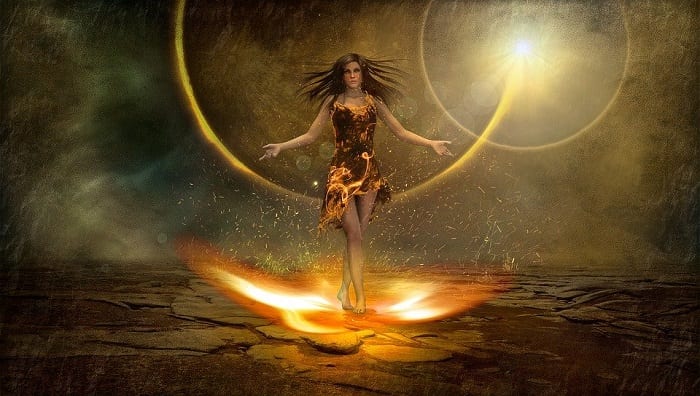
pixabay.com. Kellepics.
The Cardinal Signs
Framing this bigger picture are the four cardinal signs of the zodiac, acting as signposts. Personally, I have found that a combination of astrological, mythological and historical associations provide the best and most comprehensive sense of the “flavor” of the season in question. We can look at the cardinal zodiac signs, those that begin the seasons to start seeing the interaction within the Wheel of the Year as a whole. For example; Aries is the sign that begins Spring, Cancer the Summer, Libra the Autumn, and Capricorn the Winter. The Sun moving into each of these signs is what marks the astrological change from one season to another. However, due to astronomical precession the Sun is now in its previous sign during these occurrences. The classical model can still be used, and gives the best understanding because it was the stars that first wrote human cosmology. In addition to the Sun sign; we can look to the Moon and the sign it occupies as well.

Zodiac Squares. Wikipedia Commons.
The Sun sign will tell us more about the overall energy of the Sabbat, and what this means for the wider community. It tell us what energies we can best send out into the world at this time. By looking at the Moon sign we find insight to how we can personally integrate these energies on a personal level and how that applies to our own lives. While the ruling Sun sign will stay the same, the Moon sign will change the season’s flavor from year-to-year.
Astrological Implications for Imbolc
Imbolc is a cross-quarter holy day, sitting at the mid-point between the cardinal signs of the zodiac. These cross quarter days are at the mid-point of each season, and are fixed signs. They are the linchpin holding it all-together. These are the gatekeepers of the cosmos, containing both light and darkness, allowing the ebb an flow between these two polarity to continue their eternal dance. Imbolc falls under the sign of Aquarius. It is preceded by the Winter Solstice and followed by the Vernal Equinox. Within Imbolc we see this paradox of greatest darkness and new light. As a fire festival, light is of central importance to Imbolc. However, in the Northern Hemisphere, at this time of year; Imbolc is often the one fire festival held indoors. I find this appropriate for the mysteries of Imbolc. An image of a single flame, burning defiantly in the face of a dark winter’s night comes to mind. A light of hope and warmth shining through the lonely windows of a house on a snow covered hill blanketed in darkness-this is where we cultivate our inner flame. It is through this realization that the fires we cultivate within ourselves are initially ignited and tended in darkness.
The overall feeling I get from Imbolc is very “Light betwixt the horns.” Although the darkest day has passed, we are now in the dead of winter. Images of solitary flames illuminating the making of a Witch’s Pact and work with familiar spirits come to mind. Since the winter solstice, the Sun has been blackened we have burned away what wasn’t serving us this past year, and we have cultivated a fertile field to plant our new seeds. Now is the time to invite the light back in, to call upon that inner fire, the black flame within ourselves. These are like the first stirring fires within the earth that awaken the life sleeping in darkness. Interestingly, the illumination of Imbolc is anchored between the horns of Capricorn from the winter solstice and the Horns of Aries at the vernal equinox. Themes of illumination and bringers of light make multiple appearances in the practices surrounding Imbolc.

Baphomet, Wikipedia Common License. Eliphas Levi.
The Light Between
Like the other cross-quarter days, Imbolc, is a catalyst of energetic exchange. A liminal time which initially seems paradoxical, but on further inspection reveals deeper points of connection. Forces of individuation and inspiration are powerful at this time. It is now that we can seize the momentum for the early growth of that which was interred during the dark half of the year. Imbolc falls under the rulership of Aquarius, the water bearer. Aquarius, an air sign rules over the mental realms and can be seen as a “light-bringer” or “bearer of inspiration,” which he pours from his vessel. The influence of Aquarius activates our mental abilities, our ability to communicate and to relate with others. Aquarius is all about individuality, invention, and mental depth. They can also be unpredictable, as well as daring, passionate and courageous; which they share in common with their opposition, Leo.
Each Sabbat also holds the seed of its opposing holy day, in this case Lughnasadh (Leo) and Imbolc (Aquarius). Here we have two fire festivals, linked by their opposing positions on the Wheel of the Year. Both festivals are constructed around the creative energy of fire/light. This theme of light and light bearers is recurring in both Lughnasadh and Imbolc. They are also under the influence of two of the most individualistic signs, Leo and Aquarius. From this side of the wheel we receive influence from Leo’s creative force. Driven by passion this creative energy differs from Aquarius in that it is not mental creativity. It is a deeper, more generative force of creation which creates simply for the sake of creating. At Imbolc we are drawing that illuminating fire up and into ourselves. By Lughnasadh the solitary flame we have stoked since February is released out into the world in a creative fury.
Be inspired! Stoke your fire and be illuminated!
Previous Post
December 21, 2019
Spellcrafting with Baneful Herbs
Next Post

February 16, 2020 Saturnian Melancholy & Daemonic Inspiration
Browse Our Archives
Select a Category alchemy astrology Community Outreach and Events Current Events Featured Practitioners Gods and Goddesses green magic Green Witchcraft herbalism History of the Devil luciferian tradition Magic Magic and Ritual Magic and Witchcraft in History Magical Community magical herbalism Medieval Herbalism Metaphysics Modern Witchcraft natal charts natural magic Northern Traditions Occult Art Occult Artifacts Occultism pagan authors Pagan Community Pagan Holidays pagan philosophy Pagan Sightseeing Paganism Personal Practice planetary glyphs planetary symbols Recommended Reading Sabbatic Witchcraft samhain satanism Spells The Armchair The Poison Path Traditional Witchcraft Uncategorized Veneficium wicca witch's practice Witchcraft witches' sabbats
Select a Month December 2022 September 2022 August 2022 July 2022 March 2022 February 2022 January 2022 December 2021 October 2021 September 2021 August 2021 July 2021 May 2021 April 2021 March 2021 January 2021 December 2020 October 2020 September 2020 July 2020 June 2020 May 2020 April 2020 March 2020 February 2020 January 2020 December 2019 November 2019 October 2019 September 2019 August 2019 July 2019 June 2019 May 2019 April 2019 March 2019 February 2019 January 2019 December 2018 November 2018 October 2018 September 2018 August 2018 July 2018 June 2018 May 2018 April 2018 March 2018 February 2018 January 2018 December 2017 November 2017 October 2017 September 2017 August 2017 July 2017 June 2017 May 2017 April 2017 March 2017 February 2017 January 2017 December 2016 November 2016 October 2016 September 2016 August 2016 July 2016 June 2016 May 2016 March 2016 February 2016
Follow Us!
TAKE THE
Religious Wisdom Quiz
What Christian tradition is famous for the musical "Gregorian chant"?
Select your answer to see how you score.
Methodist Roman Catholic Presbyterian Anglican
Related posts from Poisoner's Apothecary

Interview with a Vampyre Witch: Alexis Pharae
Christian Rätsch, Undying Contributions to the Poison Path
Smoke Divination: The Art of Capnomancy
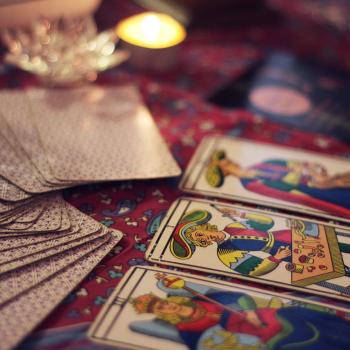
Witch City Tarot Gathering Re-Cap
TRENDING AT PATHEOS Pagan

I was recently chatting with someone on Instagram. She asked me what...

While there are many people who share their results, the end of...

On July 23, I saw Christopher Nolan's The Odyssey which is Homer’s...

As I write this two big events have just finished up. One...

Restoring the Watershed of Divine Love
Perhaps cooperation is not something we manufacture through legislation, ideology, or moral...

Many UUs don’t pray because of bad experiences in a previous religion,...
view all Pagan blogs
Ad-Free & Subscriber Log-In Subscription Support
- About Us
- 2026 Calendar
- Videos
- Podcasts
- Library of World Religions
- Faith In Media Tracker
- Advertise With Us
- Write for Us
- Privacy Policy
- Terms of Service
- Do Not Sell My Data
- Contact Us
- Radiant Digital
- Manage Newsletter Subscriptions
- Unsubscribe From Notifications
- Sitemap
Copyright 2008-2026, Patheos. All rights reserved.
Subscription Support Ad-Free & Subscriber Log-In
Follow Patheos