
BuddhistCatholicContemplativeEvangelicalGeneral ChristianHinduJewishLatter-day SaintMuslimNew VisionsProgressive Christian
Beliefs
- Buddhist
- Catholic
- Contemplative
- Evangelical
- General Christian
- Hindu
- Jewish
- Latter-day Saint
- More Voices
- Muslim
- New Visions
- Pagan
- Progressive Christian
Topics
- Religion News
- Food and Religion
- Sports and Religion
- Religious Art
- Religious Music and Entertainment
- Religious Events
- History and Religion
- Style and Religion
- Politics and Religion
- Women in Religion
- Recreation Outdoors and Religion
- Business Finance and Religion
- Careers Workplace and Religion
- Education and Religion
- Family Parenting and Religion
- Health Fitness and Religion
- Home and Religion
- Relationships and Religion
- Technology and Religion
- Travel and Religion
Columnists
- Buddhist Columnists
- Business Finance and Religion Columnists
- Careers Workplace and Religion Columnists
- Catholic Columnists
- Contemplative Columnists
- Education and Religion Columnists
- Evangelists Columnists
- Family Parenting and Religion Columnists
- General Christian Columnists
- Health Fitness and Religion Columnists
- Hindu Columnists
- History and Religion Columnists
- Home and Religion Columnists
- Jewish Columnists
- More Voices Columnists
- Latter Day Columnists
- Muslim Columnists
- New Visions Columnists
- Nonreligious Columnists
- Pagan Columnists
- Politics and Religion Columnists
- Progressive Columnists
- Recreation Outdoors and Religion Columnists
- Relationships and Religion Columnists
- Religion News Columnists
- Religious Art Columnists
- Religious Events Columnists
- Religious Music and Entertainment Columnists
- Sports and Religion Columnists
- Style and Religion Columnists
- Technology and Religion Columnists
- Travel and Religion Columnists
- Women in Religion Columnists
Resource Library
- 2026 Calendar
- Library of World Religions
- The 100 Most Holy Places on Earth
- Patheos Answers
- Podcasts
- Videos
- Faith Leaders Database
- Anglican Episcopalian
- Bahai
- Baptist
- Buddhism
- Christianity
- Confucianism
- Eastern Orthodoxy
- Hinduism
- Holiness and Pentecostal
- ISKCON
- Islam
- Judaism
- Lutheran
- Methodist
- The Church of Jesus Christ of Latter-day Saints
- New Age
- Paganism
- Presbytarian and Reformed
- Protestantism
- Religion Behind the Scenes
- Roman Catholic
- Scientology
- Shia Islam
- Sikhism
- Sufism
- Sunni Islam
- Taoism
- Zen
- See all religions
Research Tools
 Ad-Free & Subscriber Log-In Subscription Support
Ad-Free & Subscriber Log-In Subscription Support
Follow Patheos 

- Trending:
- Forgiveness
- |
- Marriage
- |
- Consciousness
- |
- Death Penalty
- |
- Election
- |
- Halloween
 Poisoner's Apothecary
- Home
- Pagan
- The Fly in the Witch’s Ointment: Redefining the Poison Path
The Fly in the Witch’s Ointment: Redefining the Poison Path
Last updated on: April 25, 2019 at 9:11 am by Coby Michael Ward
The Fly in the Witch’s Ointment: Redefining the Poison Path 2019-04-25T09:11:20-04:00 Coby Michael Ward
Patheos Explore the world's faith through different perspectives on religion and spirituality! Patheos has the views of the prevalent religions and spiritualities of the world.
The Poison Path, or use of ritual entheogens in a spiritual-magical context has existed for centuries, even millennia. There is evidence of such practices in all ancient and indigenous cultures going all the way back to the paleolithic period. Ethnopharmacology grew out of the study of these practices and the cultures that cultivated them. Psychonauts, a term designating individuals who utilize mind altering entheogenic substances for their consciousness expanding effects arose through the work of Jonathan Ott and Gordon Wasson in the 1960s and 1970s. The term “Poison Path” wasn’t introduced until the 1990s with the publication of the Pharmako trilogy written by Dale Pendell, an American poet and ethnobotanist. Over the past few years, the term Poison Path has been adopted by witches and pagans to describe the work related to a collection of plants known for their effects on human physiology, as well as their mythological association with magic and sorcery. Dale Pendell, not a pagan himself, mentions in an interview with Cabinet Magazine, the use of tropane alkaloids being of particular interest to pagans (witches).
” I am in touch with some people who favor the tropanes. Mostly pagans seem to like them. Hopefully, they can spare me some of the fieldwork.” – Dale Pendell, Cabintet Magazine.
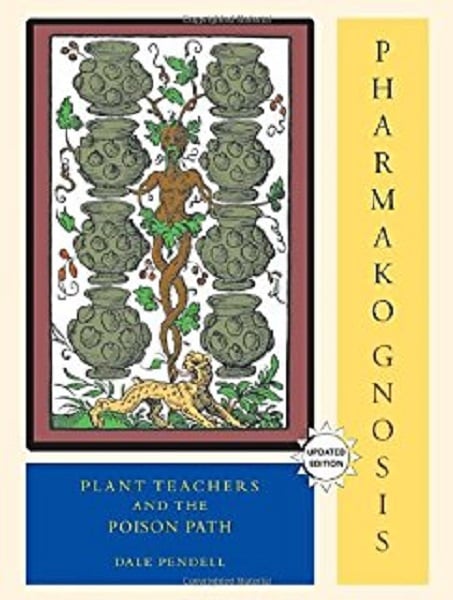
Pharmako Gnosis: Plant Teachers and the Poison Path by Dale Pendell.
The pharmacopoeia is not limited to the group of plants containing the tropane alkaloids, the Solanaceae. Plants of entirely different genuses as well as fungi also fit into this category. Many of the plants are native to Central and South America, such as Diviner’s Sage (Salvia divinorum), and the ingredients used in the well-known Ayahuasca ceremony Brugmansia suaveolens and Banisteriopsis caapi. Psilocybe and Amanita mushrooms also have a large following, the sacred mushroom cult, as well as indigenous traditions across the globe that utilize these fungi.
The use of ritual entheogens belongs to no one group or tradition, ancient animistic cultures have used them as far back as history remembers. These plants and their imagery have made it into sects of Catholicism as well as modern witchcraft. The wisdom and medicine that these diverse plants have to offer are available to anyone who wishes to seek them out. They transcend any religious tradition or spiritual system, unlocking the potential already inherent in each individual. They provide cathartic healing experiences, relief from depression and addiction, in addition to their contributions to modern medicine. As a healing modality and facilitator of spiritual awakening these plants are available to everyone, just like cannabis, which is also a part of this category. The Poison Path is not a great title for this practice or the plants that comprise it. Nonetheless it has stuck until something better comes along. Cannabis provides relief and healing to hundreds of thousands of people. It has been called a sacrament, yet it has remained free of any religious affiliation.
The Poison Path is not traditional witchcraft
I am writing this article in response to an Instagram post that I recently read. The article was posted on the Banefolk profile ran by Sarah Anne Lawless, while Sarah and I differ in some of our opinions I have a lot of respect for her and her work. That being said I don’t disagree with everything in her post, but saw it as an opportunity to further clarify my own personal work in this area. I recently wrote an article titled Baneful Herbs and Traditional Witchcraft, elaborating on some of my thoughts on this very topic.
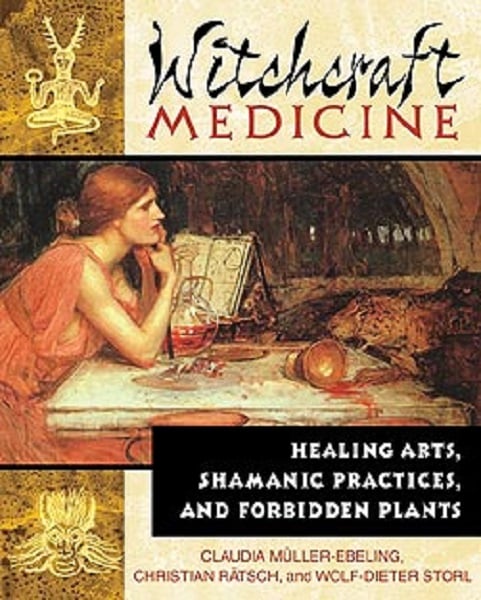
Witchcraft Medicine. healing Arts, Shamanic Practices and Forbidden Plants.
The main point of the post is that “Before Dale [Pendell] you were either a professional ethnopharmacologist or a psychonaut. Today the poison path is often thought of as hedge-witchery with drugs.” The issue the post takes is that the poison path has been equated with traditional witchcraft, and only represented in relation to witchcraft on social media. It goes on to say that this is due to Daniel Schulke’s reappropriation of the term veneficium, stating that his use of the term as well as books like Witchcraft Medicine have led to the conflation of the poison path with contemporary traditional witchcraft. According to the post, this association is arbitrary and has been done for no other reason than to create a new niche commodity for people to profit. While all of the aforementioned books and authors have been influential in the recent interest surrounding these plants and there application, it is something that has gone on within witchcraft traditions since before any of these books were published.
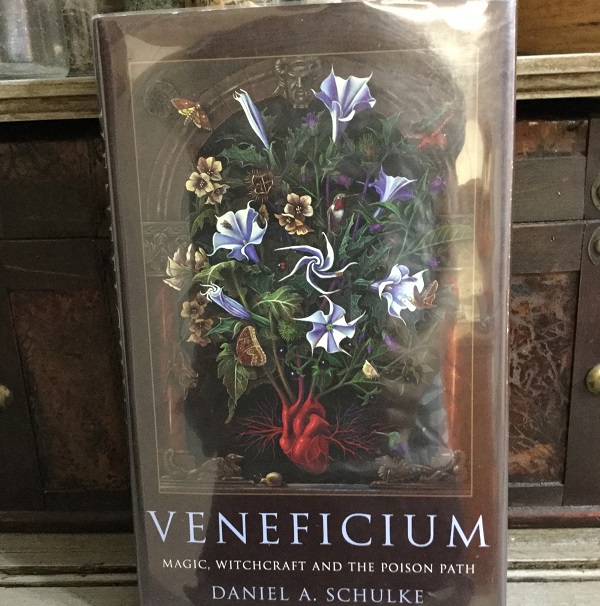
Veneficium, dust jacket art, “Sacred Heart” by Benjamin A. Vierling. Photo by Coby Michael.
Daniel Schulke, whose book Veneficium has brought the term back into popular usage wasn’t the first time this word was used synonymously for witchcraft and the poison path. Thomas Hatsis, in his book the Witches’ Ointment, one of the most indepth modern studies of the witch’s flying ointment and poison-magic explores the origins and usage of this term in antiquity.
“Ancient Greeks and Romans had an assortment of uses for these plant poisons and root intoxicants, yet used the terms venenum (poison) and veneficia (poison magic) interchangeably, indicating one viewpoint on two different drug practices.” -Hatsis, p. 14
Schulke was not the first to equate the use of poisonous or entheogenic plants with the practice of witchcraft by a long shot. As Dale Pendell alluded to, the solanaceae or nightshade family, being of interest to pagans, is not due to their visionary nature. There are many more pleasant and less disturbing visionary plants that can achieve altered consciousness. The tropane alkaloids, known for their uncomfortable side effects and sinister hallucinations, also happen the be the plants most connected to witches and the practice of magic in history and folklore. Many of the plant’s associations with the practice of witchcraft began in ancient Greece and Rome with their literary connections to figures like Hecate and Medea. During the middle ages, when many of our collective concepts of classical or traditional witchcraft arose from a combination of folklore and Christian superstition the legend and lore of these plants also crystallized when the scattered bits of ancient lore was collected and written down. The stories of these plants are also woven throughout pre-Christian mythology. Plants like Henbane, Mandrake and Belladonna figured prominently in Germano-Celtic and Scandinavian cultures.
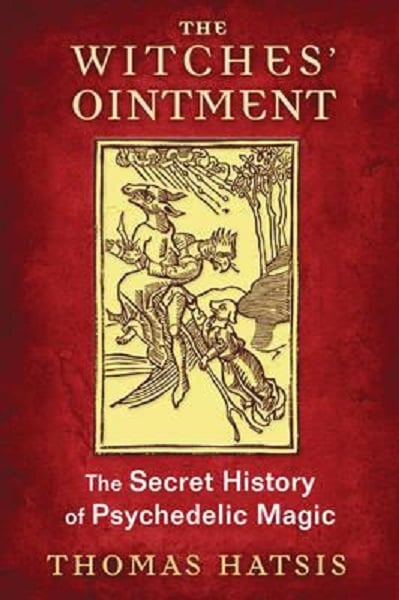
The Witches’ Ointment by Thomas Hatsis. Image from arspsychedelia.com
While the diverse group of entheogenic plants belong to the cultures of the world at large, the Nightshade family shares a particular affinity with the magical practices and pagan beliefs of Europe and the Mediterranean. If anything embodies the collective spirit of witch-lore, it is these plants.
As far as the poison path being thought of as “hedge witchery with drugs,” I would like to dispel that notion at least from my perspective. The chemical, medicinal and psychoactive properties of these plants are of secondary interest to me. I am not looking for an easy access pass to altered states of consciousness, nor am I going to preoccupy myself with finding this elusive general dosage. My area of focus is on the spiritual properties of these plants, their magical applications and their role as plant spirit allies. While I am interested in the chemistry of these plants and how they effect human physiology, it is of no more importance than the chemistry of Myrrh or Mugwort.
That is where I see a distinction between what I do and what others may do, and while I do recognize the connection between theses plants and the practice of witchcraft I do not consider them exclusive. They are both capable of standing alone without the support of the other.
And lets be honest. No one in the magical, occult, pagan, metaphysical community is going to get rich doing what we do. I imagine that our idea of wealth and the mainstream idea of wealth are two very different things. There will always be those who try to take advantage of others, but that will not take them far. To me, wealth means that I get to support myself doing what I love while sharing that love with others and I will use whatever means magical or otherwise to do that.
Poisoner’s Apothecary.
Previous Post
April 18, 2019
Baneful Herbs and Traditional Craft
Next Post
April 28, 2019 Flying High on Hexennacht
Browse Our Archives
Select a Category alchemy astrology Community Outreach and Events Current Events Featured Practitioners Gods and Goddesses green magic Green Witchcraft herbalism History of the Devil luciferian tradition Magic Magic and Ritual Magic and Witchcraft in History Magical Community magical herbalism Medieval Herbalism Metaphysics Modern Witchcraft natal charts natural magic Northern Traditions Occult Art Occult Artifacts Occultism pagan authors Pagan Community Pagan Holidays pagan philosophy Pagan Sightseeing Paganism Personal Practice planetary glyphs planetary symbols Recommended Reading Sabbatic Witchcraft samhain satanism Spells The Armchair The Poison Path Traditional Witchcraft Uncategorized Veneficium wicca witch's practice Witchcraft witches' sabbats
Select a Month December 2022 September 2022 August 2022 July 2022 March 2022 February 2022 January 2022 December 2021 October 2021 September 2021 August 2021 July 2021 May 2021 April 2021 March 2021 January 2021 December 2020 October 2020 September 2020 July 2020 June 2020 May 2020 April 2020 March 2020 February 2020 January 2020 December 2019 November 2019 October 2019 September 2019 August 2019 July 2019 June 2019 May 2019 April 2019 March 2019 February 2019 January 2019 December 2018 November 2018 October 2018 September 2018 August 2018 July 2018 June 2018 May 2018 April 2018 March 2018 February 2018 January 2018 December 2017 November 2017 October 2017 September 2017 August 2017 July 2017 June 2017 May 2017 April 2017 March 2017 February 2017 January 2017 December 2016 November 2016 October 2016 September 2016 August 2016 July 2016 June 2016 May 2016 March 2016 February 2016
Follow Us!
TAKE THE
Religious Wisdom Quiz
Which king's prayer during a deadly illness resulted in 15 more years of life?
Select your answer to see how you score.
Hezekiah Ahab Solomon Josiah
Related posts from Poisoner's Apothecary

Interview with a Vampyre Witch: Alexis Pharae

Christian Rätsch, Undying Contributions to the Poison Path
Smoke Divination: The Art of Capnomancy
Flower Essences from the Witch's Garden
TRENDING AT PATHEOS Pagan

I was recently chatting with someone on Instagram. She asked me what...

While there are many people who share their results, the end of...

On July 23, I saw Christopher Nolan's The Odyssey which is Homer’s...

As I write this two big events have just finished up. One...

Restoring the Watershed of Divine Love
Perhaps cooperation is not something we manufacture through legislation, ideology, or moral...

Many UUs don’t pray because of bad experiences in a previous religion,...
view all Pagan blogs
Ad-Free & Subscriber Log-In Subscription Support
- About Us
- 2026 Calendar
- Videos
- Podcasts
- Library of World Religions
- Faith In Media Tracker
- Advertise With Us
- Write for Us
- Privacy Policy
- Terms of Service
- Do Not Sell My Data
- Contact Us
- Radiant Digital
- Manage Newsletter Subscriptions
- Unsubscribe From Notifications
- Sitemap
Copyright 2008-2026, Patheos. All rights reserved.
Subscription Support Ad-Free & Subscriber Log-In
Follow Patheos