
BuddhistCatholicContemplativeEvangelicalGeneral ChristianHinduJewishLatter-day SaintMuslimNew VisionsProgressive Christian
Beliefs
- Buddhist
- Catholic
- Contemplative
- Evangelical
- General Christian
- Hindu
- Jewish
- Latter-day Saint
- More Voices
- Muslim
- New Visions
- Pagan
- Progressive Christian
Topics
- Religion News
- Food and Religion
- Sports and Religion
- Religious Art
- Religious Music and Entertainment
- Religious Events
- History and Religion
- Style and Religion
- Politics and Religion
- Women in Religion
- Recreation Outdoors and Religion
- Business Finance and Religion
- Careers Workplace and Religion
- Education and Religion
- Family Parenting and Religion
- Health Fitness and Religion
- Home and Religion
- Relationships and Religion
- Technology and Religion
- Travel and Religion
Columnists
- Buddhist Columnists
- Business Finance and Religion Columnists
- Careers Workplace and Religion Columnists
- Catholic Columnists
- Contemplative Columnists
- Education and Religion Columnists
- Evangelists Columnists
- Family Parenting and Religion Columnists
- General Christian Columnists
- Health Fitness and Religion Columnists
- Hindu Columnists
- History and Religion Columnists
- Home and Religion Columnists
- Jewish Columnists
- More Voices Columnists
- Latter Day Columnists
- Muslim Columnists
- New Visions Columnists
- Nonreligious Columnists
- Pagan Columnists
- Politics and Religion Columnists
- Progressive Columnists
- Recreation Outdoors and Religion Columnists
- Relationships and Religion Columnists
- Religion News Columnists
- Religious Art Columnists
- Religious Events Columnists
- Religious Music and Entertainment Columnists
- Sports and Religion Columnists
- Style and Religion Columnists
- Technology and Religion Columnists
- Travel and Religion Columnists
- Women in Religion Columnists
Resource Library
- 2026 Calendar
- Library of World Religions
- The 100 Most Holy Places on Earth
- Patheos Answers
- Podcasts
- Videos
- Faith Leaders Database
- Anglican Episcopalian
- Bahai
- Baptist
- Buddhism
- Christianity
- Confucianism
- Eastern Orthodoxy
- Hinduism
- Holiness and Pentecostal
- ISKCON
- Islam
- Judaism
- Lutheran
- Methodist
- The Church of Jesus Christ of Latter-day Saints
- New Age
- Paganism
- Presbytarian and Reformed
- Protestantism
- Religion Behind the Scenes
- Roman Catholic
- Scientology
- Shia Islam
- Sikhism
- Sufism
- Sunni Islam
- Taoism
- Zen
- See all religions
Research Tools
 Ad-Free & Subscriber Log-In Subscription Support
Follow Patheos 

- Trending:
- Advent
- |
- Forgiveness
- |
- Thanksgiving
- |
- Election
- |
- Seasonal Holidays
- |
- Marriage
 Poisoner's Apothecary
- Home
- Pagan
- Remembering the Spiritual Properties of Entheogenic Herbs
Remembering the Spiritual Properties of Entheogenic Herbs
Last updated on: April 10, 2019 at 8:10 am by Coby Michael Ward
Remembering the Spiritual Properties of Entheogenic Herbs 2019-04-10T08:10:13-04:00 Coby Michael Ward
Patheos Explore the world's faith through different perspectives on religion and spirituality! Patheos has the views of the prevalent religions and spiritualities of the world.
Entheogenic Herbs
Traditional ritual entheogens as the name implies, help us to connect with the spiritual forces in Nature. They help us to bring the essence of the divine into ourselves and also access our own divine connection to the rest of the Universe. They do this through the facilitation of initiatory experiences, by giving us a new perspective and expanding consciousness; while not always a pleasant process, they nonetheless leave an impression. Entheogens have been used by many cultures around the world, and have an extensive history in religious ritual and magic. Many modern practitioners of different forms of witchcraft and neo-shamanism have a desire to work with these traditional plants. In the realm of traditional witchcraft, these plants are known as the witching herbs. They are the quintessential and stereotypical plants historically associated with magic and the spirit world.

Forest Spirit Flickr.
The plants themselves have been elevated to a divine-like status because of the numerous references to them in history and myth. Ancient cultures recognized their usefulness as medicinal herbs, but they did not neglect the powerful spiritual properties of these plants. Oftentimes entheogenic plants and fungi were thought to be gifts from the gods, that were treated as holy sacraments. In animistic societies, these plants were viewed as independent entities with a unique spirit. In this case, one is not just utilizing the plant for its properties, whether magical or medicinal. They are calling upon the spirit of the plant to serve a specific purpose. The Mandrake is the most famous example of this, where the anthropomorphic root resembling the human body was thought to contain a spirit, that when cared for in the proper manner it would work in favor of the person keeping it. These plant fetishes, called manakin, homunculi or alraune were often passed on within families from one generation to another. These powerful roots were so coveted that charlatans would often substitute the more common White Bryony root in Northern Europe, passing it off for genuine Mandrake.
Another example would be the keeping and feeding of roots such as Angelica, Master Root, and High John root. While they do not resemble a human form, they are often treated in the same way. Life is breathed into the root and its spirit is awoken through cleansing and anointing, reminiscent of a kind of baptism. The root is then regularly empowered and fed with various oils, powders and spoken words to strengthen the keepers intentions. The root itself stood as a proxy for the powerful spirit that it contained. Plant spirits are often just as, if not, more willing to partner with humans in the pursuit of spiritual and occult knowledge. Many practitioners have specific plants for which they have developed a familiar relationship, and through this bond their Work is enhanced.
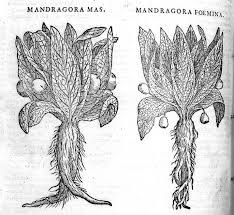
Male and female Mandrake. Public domain.
Today, modern medicine and biochemistry has brought us a deeper understanding of the natural world. We now know that certain plants contain powerful components that can be extracted and turned into medicines. Entheogenic herbs in particular have yielded some of our most important and powerful medicines, and taught us about the chemistry of our own brains. Alkaloids are the active components in entheogenic herbs. Different alkaloids have different effects on human physiology. When it comes to the plants traditionally associated with witchcraft in the European traditions there is one group in particular known as the Solanaceae or Nightshade family. Their particular alkaloids are pain relieving, sedative, anti-spasmodic and in higher concentrations deliriants, which produce hallucinations. These plants have been used since pre-Christian times throughout Europe and the Middle East for their entheogenic properties as well as precious medicines in a time before modern anesthetics and analgesics.
While this modern understanding has given us much beneficial knowledge, and taken us to where we, as practitioners can blend science with magic. It is important that we do not forget the spiritual powers that we are working with, which is what brought us to these plants to begin with. The sacred plants, from a magical perspective cannot simply be reduced to something profane and utilitarian. These are not just drugs, or short cuts to occult knowledge. They are a path, in and of themselves. A path that must be tread by each individual. Many people are so concerned with dosages and preparations, knowing that these plants are poisonous, but hearing of their use in spirit work and witch’s flight. They view these plants as magical potions, nothing more than a pill that can be taken to gain its prescribed effect. These plants do not so easily give up their mysteries.

Absinthe. Pixabay.
They are not a shortcut to spiritual knowledge or magical power, just as they are not pleasant highs to be chased by the recreational drug user. I think that it is a good thing that there are no prescribed dosages, and no one can say for certain what one plant will do for another person. The prospect of potential poisoning and unpleasant side effects keeps the dabblers at bay. Ritual and relationship are the keys to working with these plants and unlocking their mysteries. The ritual process is just as vital a part of this practice as the active components of the plants themselves. Just like we use other plants for their spiritual properties, we do not do so without mindful intention and understanding. Sprinkling or burning some herb without any understanding of its effects and without exerting any will on the outcome is not going to magically produce the effect. This would be taking the practitioner and the work out of the equation.
Read more about entheogenic herbs and the Poison Path Here!
poisonersapothecary.storenvy.com
Previous Post

April 2, 2019
Bane & Beauty: An Interview With Dylan Pierce
Next Post

April 18, 2019 Baneful Herbs and Traditional Craft
Browse Our Archives
Select a Category alchemy astrology Community Outreach and Events Current Events Featured Practitioners Gods and Goddesses green magic Green Witchcraft herbalism History of the Devil luciferian tradition Magic Magic and Ritual Magic and Witchcraft in History Magical Community magical herbalism Medieval Herbalism Metaphysics Modern Witchcraft natal charts natural magic Northern Traditions Occult Art Occult Artifacts Occultism pagan authors Pagan Community Pagan Holidays pagan philosophy Pagan Sightseeing Paganism Personal Practice planetary glyphs planetary symbols Recommended Reading Sabbatic Witchcraft samhain satanism Spells The Armchair The Poison Path Traditional Witchcraft Uncategorized Veneficium wicca witch's practice Witchcraft witches' sabbats
Select a Month December 2022 September 2022 August 2022 July 2022 March 2022 February 2022 January 2022 December 2021 October 2021 September 2021 August 2021 July 2021 May 2021 April 2021 March 2021 January 2021 December 2020 October 2020 September 2020 July 2020 June 2020 May 2020 April 2020 March 2020 February 2020 January 2020 December 2019 November 2019 October 2019 September 2019 August 2019 July 2019 June 2019 May 2019 April 2019 March 2019 February 2019 January 2019 December 2018 November 2018 October 2018 September 2018 August 2018 July 2018 June 2018 May 2018 April 2018 March 2018 February 2018 January 2018 December 2017 November 2017 October 2017 September 2017 August 2017 July 2017 June 2017 May 2017 April 2017 March 2017 February 2017 January 2017 December 2016 November 2016 October 2016 September 2016 August 2016 July 2016 June 2016 May 2016 March 2016 February 2016
Follow Us!
TAKE THE
Religious Wisdom Quiz
Who died at the end of Genesis?
Select your answer to see how you score.
Joseph Reuben Simeon Jacob
Related posts from Poisoner's Apothecary

Interview with a Vampyre Witch: Alexis Pharae

Christian Rätsch, Undying Contributions to the Poison Path
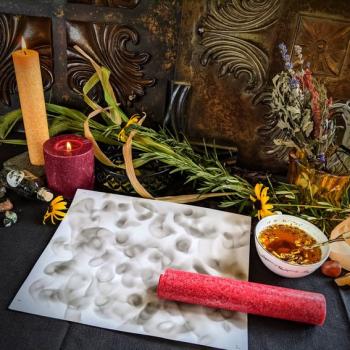
Smoke Divination: The Art of Capnomancy
Flower Essences from the Witch's Garden
TRENDING AT PATHEOS Pagan

To help with the upcoming holiday season, I'm introducing the Holiday Helper...

10 years of the Power Sigil & Moving...
Last week while reorganizing my studio space, I found the sketchbook that...

Why are younger seekers drawn to Paganism and...
One of the things I've noticed the most is that I'm far...

When we talk about Greek religion, we often begin with the dodekatheion—the...

I was recently chatting with someone on Instagram. She asked me what...

On July 23, I saw Christopher Nolan's The Odyssey which is Homer’s...
view all Pagan blogs
Ad-Free & Subscriber Log-In Subscription Support
- About Us
- 2026 Calendar
- Videos
- Podcasts
- Library of World Religions
- Faith In Media Tracker
- Advertise With Us
- Write for Us
- Privacy Policy
- Terms of Service
- Do Not Sell My Data
- Contact Us
- Radiant Digital
- Manage Newsletter Subscriptions
- Unsubscribe From Notifications
- Sitemap
Copyright 2008-2026, Patheos, part of the Radiant Digital network of media brands. All rights reserved.
Subscription Support Ad-Free & Subscriber Log-In
Follow Patheos