
BuddhistCatholicContemplativeEvangelicalGeneral ChristianHinduJewishLatter-day SaintMuslimNew VisionsProgressive Christian
Beliefs
- Buddhist
- Catholic
- Contemplative
- Evangelical
- General Christian
- Hindu
- Jewish
- Latter-day Saint
- More Voices
- Muslim
- New Visions
- Pagan
- Progressive Christian
Topics
- Religion News
- Food and Religion
- Sports and Religion
- Religious Art
- Religious Music and Entertainment
- Religious Events
- History and Religion
- Style and Religion
- Politics and Religion
- Women in Religion
- Recreation Outdoors and Religion
- Business Finance and Religion
- Careers Workplace and Religion
- Education and Religion
- Family Parenting and Religion
- Health Fitness and Religion
- Home and Religion
- Relationships and Religion
- Technology and Religion
- Travel and Religion
Columnists
- Buddhist Columnists
- Business Finance and Religion Columnists
- Careers Workplace and Religion Columnists
- Catholic Columnists
- Contemplative Columnists
- Education and Religion Columnists
- Evangelists Columnists
- Family Parenting and Religion Columnists
- General Christian Columnists
- Health Fitness and Religion Columnists
- Hindu Columnists
- History and Religion Columnists
- Home and Religion Columnists
- Jewish Columnists
- More Voices Columnists
- Latter Day Columnists
- Muslim Columnists
- New Visions Columnists
- Nonreligious Columnists
- Pagan Columnists
- Politics and Religion Columnists
- Progressive Columnists
- Recreation Outdoors and Religion Columnists
- Relationships and Religion Columnists
- Religion News Columnists
- Religious Art Columnists
- Religious Events Columnists
- Religious Music and Entertainment Columnists
- Sports and Religion Columnists
- Style and Religion Columnists
- Technology and Religion Columnists
- Travel and Religion Columnists
- Women in Religion Columnists
Resource Library
- 2026 Calendar
- Library of World Religions
- The 100 Most Holy Places on Earth
- Patheos Answers
- Podcasts
- Videos
- Faith Leaders Database
- Anglican Episcopalian
- Bahai
- Baptist
- Buddhism
- Christianity
- Confucianism
- Eastern Orthodoxy
- Hinduism
- Holiness and Pentecostal
- ISKCON
- Islam
- Judaism
- Lutheran
- Methodist
- The Church of Jesus Christ of Latter-day Saints
- New Age
- Paganism
- Presbytarian and Reformed
- Protestantism
- Religion Behind the Scenes
- Roman Catholic
- Scientology
- Shia Islam
- Sikhism
- Sufism
- Sunni Islam
- Taoism
- Zen
- See all religions
Research Tools
 Ad-Free & Subscriber Log-In Subscription Support
Ad-Free & Subscriber Log-In Subscription Support
Follow Patheos 

- Trending:
- Forgiveness
- |
- Marriage
- |
- Consciousness
- |
- Death Penalty
- |
- Election
- |
- Halloween
 Poisoner's Apothecary
- Home
- Pagan
- Baneful Herbs & Venefic Witchcraft
Baneful Herbs & Venefic Witchcraft
Last updated on: March 4, 2019 at 12:07 am by Coby Michael Ward
Baneful Herbs & Venefic Witchcraft 2019-03-04T00:07:38-04:00 Coby Michael Ward
Patheos Explore the world's faith through different perspectives on religion and spirituality! Patheos has the views of the prevalent religions and spiritualities of the world.
The study of baneful herbs, entheogens, and plants known for their poisonous properties are all part of the branch of magical herbalism known as The Poison Path. This diverse subject touches upon many different topics, and is part of the lore of the broad category of plant magick. With roots in pre-history one encounters the practices of ancient shamanic traditions from around the world, which all utilize some sort of sacred entheogenic sub-stance. Entheogen, meaning to bring the divine into oneself is the preferred term to describe these psychedelic, hypnotic and hallucinogenic substances. Entheogens are wildly different from recreational drugs, and have a devotional aspect, used during rites of passage to commune with the spirit world. These are not the giggly, feel good highs of the recreational drug user. They are powerful psychic catalysts capable of unhinging the mind, enrapturing the soul and freeing the spirit in a single night. Their use is not to be undertaken lightly. Properly understanding how to work with these plants is developed over years of study and experimentation, and is still not without risk. These plants have taken the lives of many an experienced witch amd ethnopharmacologist. There are many ways that one can encounter these plants and unlock their spiritual and magickal potential. It is no wonder that entire traditions have developed around single plants and fungi. The Poison Path is one of these traditions.
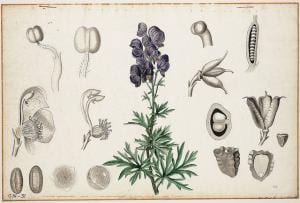
Wolfsbane. Flickr Images.
The Poison Path looks and many different cultures and time periods including modern medicine and bio-chemistry to understand these enigmatic plants and how they may be applied in one’s spiritual practice. There are those who focus on specific groups of plants or traditions within a specific culture. Many practitioners with European ancestry look to those plants commonly found in the history and lore of their ancestors. The Nightshades are the family of plants most commonly found in accounts from across Europe, including archaeological evidence of their use in ancient times as well as medieval materia medica. While the Poison Path is not limited to these plants these are the ones most commonly sought after by witches, pagans and northern practitioners. There are also many plants Native to North and South America that are of interest, showing the commonalities between these plant based practices.
There are many ways that one comes to understand these plants, their spirits and their action on human consciousness. Here are some of the ways that one may work with these plants and come to understand them. Many practitioners will often utilize a combination of the methods described here and are not limited to them. There is also much overlap between these practices. This is my attempt to describe just a few and how they relate to the Poison Path.

pixabay.com
The Entheogenic Witch
During the Middle Ages, many of these plants gained a reputation for being plants that were associated with, and even tended by the Devil Himself. These plants, their hallucinogenic and poisonous properties, were cause for their sinister reputation and connection to witchcraft. Many individuals accused of witchcraft were also accused of poisoning or spreading blight by some unseen means. These were plants used in hexing, calling up the dead and love magic. Their lore grew over time, and plants such as the Mandrake were prized for their magical properties, to find treasure or provide the bearer with familiar spirits. Many practitioners of traditional witchcraft come to find the Poison Path because of their familiarity with these plants. These individuals who are well versed in working with both hands find the allure of these plants enticing. The entheogenic witch uses these plants in spell craft, and as plants most commonly associated with malefic magick, they are all too willing to help in these endeavors. The Witches’ Sabbath is a central theme in the practice of traditional witchcraft, and the use of the witch’s flying ointment plays the pivotal role of helping the witch get their. Many witches come to study these plants for their uses in such ointments. Different plants having different effects may be utilized for all forms of ritual trance, spirit flight and astral projection.

Public Domain Photos
The Psychedelic Witch or Psychonaut
These are the travelers and shapeshifters, well-versed in achieving altered states of consciousness. Much of their devotional work and ritual is performed via some type of altered state using a number of botanical preparations depending on the desired effects. This does not mean that these individuals are always high, or need to be under the influence to work their magick. Something as simple as using Rosemary for focus and memory, or using Mugwort to have prophetic dreams is part of their repertoire. There are all manner of plants that alter our consciousness, but still allow us to be in control and go to work the next day. However, these practitioners can be experienced “trippers” and for important rituals may employ more powerful entheogenic allies such as cannabis, psiloscybe or salvia divinorum. Micro-dosing and plant dietas, are techniques used in combination with fasting and ritual to achieve altered states through the influence of these botanical allies without ingesting larger amounts active ingredients. Flower essences are also a safe way of working with the energies of some of the more toxic plants.

Pexels.com
The Shadow Worker/Death Walker Witch
While these two categories are different in their desired outcome, they utilize these plants in a similar manner. Taking advantage of the plant’s powers over life and death, they utilize these sacred herbs to make the veil between the worlds thin, to loosen the spirit from the body, and to summon shades from the Underworld. Many of these plants through their myth and symbolism are associated with the powers of life, death and rebirth. They are also sacred to deities of the Underworld and the dark side of nature. These plants can help us connect with these much maligned forces and also with the shadow within ourselves. They can teach us that there is much to learn from the darkness, and from death and that it is only our own fear that keeps us from mastering these primal forces. These plants can help us unlock deep insights within ourselves and through communication with the spirit world bring us new knowledge about life and death, light and shadow.
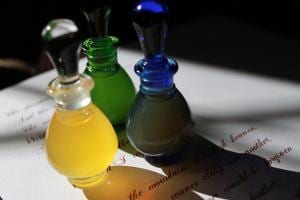
Wikimedia commons.
The Poisoner/Alchemist
There is much to be learned from poison and the role it has played in human history. Not only has poison been used for centuries as a form of assassination, but it has also led to the discovery of some of the most powerful medicines that we continue to use today. The Poisoner is part alchemist, ethnopharmacologist, and toxicologist and has an in depth understanding of the active components present within these plants and how they effect the human physiology. These individuals are the potion makers, who extract alkaloids from baneful herbs for the simple joy of their transmutation. They are mad scientists, experimenting on themselves until they find the perfect dosage. They create tinctures and extracts that are potent enough to actually work, but safe enough that they may be used by a wide range of people. They make medicines for healing pain, helping with sleep and soothing anxiety. These are the individuals resurrecting the wonders of these plants, and making them available to the rest of us.

The Love Potion. Evelyn de Morgan. Wikimedia Commons.
The Love Witch
Venefic herbs get their name from the goddess Venus. This is the other side to the Poison Path. Aphrodisiacs create just as powerful of a reaction in human physiology and brain chemistry. Plants such as Damiana and Cubeb Berries can be infused into wine or made into elixirs to make passions rise. Plants like Mandrake and Henbane, also have an amorous effect depending on the dosage and means of application. They can just as easily stop the heart as well as engulf it with the fires of passion. This is the double edged sword of the goddess who is both life and death, love and lust. In ancient times, words for love potion and poison were often one and the same, just as love can quickly turn sour. These sensuous aphrodisiacs can also bring death.
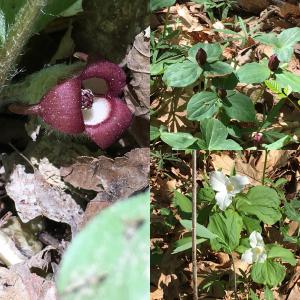
Trillium. Courtesy of the author.
The Witch’s Garden
More and more people are beginning to cultivate their own witch’s garden, containing many of the plants listed above. The other worldy beauty of these plant’s is undeniable. Their dark green, dusty reds and deep purples are beautiful to behold. There are few places more magical than a witch’s garden under the light of the full moon. Night-blooming Daturas and Moonflowers release their intoxicatingly sweet scent, making it a place perfect for nocturnal meditation and reverie. Those who grow a witch’s garden come to understand these plants most intimately because they get to experience them throughout their life cycle. Starting a plant from seed and caring for it over its life cycle forges a strong bond. The spirits of these plants make willing familiars and have much to teach those who approach them without fear. I highly recommend beginning your own witch’s garden if you are interested in learning more about these plants. The best way to learn about their personalities is from the plants themselves.
In Conclusion
These are just some of the roles that these plants play in magical practice. Whether they shift consciousness, feed spirits, or ensnare the senses there is no doubt of the power of the plant world when it comes to the plant’s of the Witch’s Garden. There are many twists and turns on this path, and so much fascinating lore. One thing is to be sure, where you find a mysteriously growing plant with a history of magical lore, you will likely find a witch nearby. As always safety and discretion are paramount when working with any of these plants, and they should not be employed without prior knowledge and experience. These plants should not be feared, but revered and that comes with a healthy dose of common sense when working with them.
Previous Post
February 23, 2019
Tarot Classic Re-Printed in New Edition
Next Post

March 11, 2019 On the Nature of Plants: Ramblings of a Poisoner
Browse Our Archives
Select a Category alchemy astrology Community Outreach and Events Current Events Featured Practitioners Gods and Goddesses green magic Green Witchcraft herbalism History of the Devil luciferian tradition Magic Magic and Ritual Magic and Witchcraft in History Magical Community magical herbalism Medieval Herbalism Metaphysics Modern Witchcraft natal charts natural magic Northern Traditions Occult Art Occult Artifacts Occultism pagan authors Pagan Community Pagan Holidays pagan philosophy Pagan Sightseeing Paganism Personal Practice planetary glyphs planetary symbols Recommended Reading Sabbatic Witchcraft samhain satanism Spells The Armchair The Poison Path Traditional Witchcraft Uncategorized Veneficium wicca witch's practice Witchcraft witches' sabbats
Select a Month December 2022 September 2022 August 2022 July 2022 March 2022 February 2022 January 2022 December 2021 October 2021 September 2021 August 2021 July 2021 May 2021 April 2021 March 2021 January 2021 December 2020 October 2020 September 2020 July 2020 June 2020 May 2020 April 2020 March 2020 February 2020 January 2020 December 2019 November 2019 October 2019 September 2019 August 2019 July 2019 June 2019 May 2019 April 2019 March 2019 February 2019 January 2019 December 2018 November 2018 October 2018 September 2018 August 2018 July 2018 June 2018 May 2018 April 2018 March 2018 February 2018 January 2018 December 2017 November 2017 October 2017 September 2017 August 2017 July 2017 June 2017 May 2017 April 2017 March 2017 February 2017 January 2017 December 2016 November 2016 October 2016 September 2016 August 2016 July 2016 June 2016 May 2016 March 2016 February 2016
Follow Us!
TAKE THE
Religious Wisdom Quiz
What does "Pharisee" mean?
Select your answer to see how you score.
Holy one Healer Separated one Teacher
Related posts from Poisoner's Apothecary

Interview with a Vampyre Witch: Alexis Pharae

Christian Rätsch, Undying Contributions to the Poison Path
Smoke Divination: The Art of Capnomancy
Witch City Tarot Gathering Re-Cap
TRENDING AT PATHEOS Pagan

I was recently chatting with someone on Instagram. She asked me what...

While there are many people who share their results, the end of...

On July 23, I saw Christopher Nolan's The Odyssey which is Homer’s...

As I write this two big events have just finished up. One...

Restoring the Watershed of Divine Love
Perhaps cooperation is not something we manufacture through legislation, ideology, or moral...

Many UUs don’t pray because of bad experiences in a previous religion,...
view all Pagan blogs
Ad-Free & Subscriber Log-In Subscription Support
- About Us
- 2026 Calendar
- Videos
- Podcasts
- Library of World Religions
- Faith In Media Tracker
- Advertise With Us
- Write for Us
- Privacy Policy
- Terms of Service
- Do Not Sell My Data
- Contact Us
- Radiant Digital
- Manage Newsletter Subscriptions
- Unsubscribe From Notifications
- Sitemap
Copyright 2008-2026, Patheos. All rights reserved.
Subscription Support Ad-Free & Subscriber Log-In
Follow Patheos