
BuddhistCatholicContemplativeEvangelicalGeneral ChristianHinduJewishLatter-day SaintMuslimNew VisionsProgressive Christian
Beliefs
- Buddhist
- Catholic
- Contemplative
- Evangelical
- General Christian
- Hindu
- Jewish
- Latter-day Saint
- More Voices
- Muslim
- New Visions
- Pagan
- Progressive Christian
Topics
- Religion News
- Food and Religion
- Sports and Religion
- Religious Art
- Religious Music and Entertainment
- Religious Events
- History and Religion
- Style and Religion
- Politics and Religion
- Women in Religion
- Recreation Outdoors and Religion
- Business Finance and Religion
- Careers Workplace and Religion
- Education and Religion
- Family Parenting and Religion
- Health Fitness and Religion
- Home and Religion
- Relationships and Religion
- Technology and Religion
- Travel and Religion
Columnists
- Buddhist Columnists
- Business Finance and Religion Columnists
- Careers Workplace and Religion Columnists
- Catholic Columnists
- Contemplative Columnists
- Education and Religion Columnists
- Evangelists Columnists
- Family Parenting and Religion Columnists
- General Christian Columnists
- Health Fitness and Religion Columnists
- Hindu Columnists
- History and Religion Columnists
- Home and Religion Columnists
- Jewish Columnists
- More Voices Columnists
- Latter Day Columnists
- Muslim Columnists
- New Visions Columnists
- Nonreligious Columnists
- Pagan Columnists
- Politics and Religion Columnists
- Progressive Columnists
- Recreation Outdoors and Religion Columnists
- Relationships and Religion Columnists
- Religion News Columnists
- Religious Art Columnists
- Religious Events Columnists
- Religious Music and Entertainment Columnists
- Sports and Religion Columnists
- Style and Religion Columnists
- Technology and Religion Columnists
- Travel and Religion Columnists
- Women in Religion Columnists
Resource Library
- 2026 Calendar
- Library of World Religions
- The 100 Most Holy Places on Earth
- Patheos Answers
- Podcasts
- Videos
- Faith Leaders Database
- Anglican Episcopalian
- Bahai
- Baptist
- Buddhism
- Christianity
- Confucianism
- Eastern Orthodoxy
- Hinduism
- Holiness and Pentecostal
- ISKCON
- Islam
- Judaism
- Lutheran
- Methodist
- The Church of Jesus Christ of Latter-day Saints
- New Age
- Paganism
- Presbytarian and Reformed
- Protestantism
- Religion Behind the Scenes
- Roman Catholic
- Scientology
- Shia Islam
- Sikhism
- Sufism
- Sunni Islam
- Taoism
- Zen
- See all religions
Research Tools
 Ad-Free & Subscriber Log-In Subscription Support
Ad-Free & Subscriber Log-In Subscription Support
Follow Patheos 

- Trending:
- Forgiveness
- |
- Marriage
- |
- Consciousness
- |
- Death Penalty
- |
- Election
- |
- Halloween
 Poisoner's Apothecary
- Home
- Pagan
- Wortcunning for Daemonolatry
Wortcunning for Daemonolatry
Last updated on: February 7, 2019 at 2:44 pm by Coby Michael Ward
Wortcunning for Daemonolatry 2019-02-07T14:44:27-04:00 Coby Michael Ward
Patheos Explore the world's faith through different perspectives on religion and spirituality! Patheos has the views of the prevalent religions and spiritualities of the world.
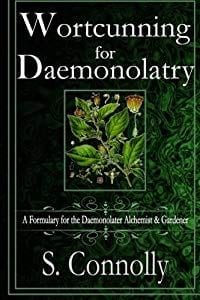
Wortcunning for Daemonolatry: A Formulary for the daemonolater, alchemist and gardener
I recently came across this book by S. Connolly, published by DB Publishing 2011. As an arcane herbalist, I am interested in all the information on plant magic and lore that I can get my hands on. Regardless of the tradition, I seek to understand the ritual and occult uses of plants throughout history and the different ways that practitioners employ them in their work. S. Connolly is a daemonolatress, and has written many books on the topic of working with daemonic forces.
Daemonolatry is a branch of magical practice which employs the powers of daemonic forces known from the grimoire tradition. Like any form of spirit work; it is centered around cultivating a relationship with these distinct spiritual entities. The hierarchical entities that comprise this practice are derived from various sources such as medieval ceremonial magic, the Grimoirum Verum and the Goetia. Working with these entities may be viewed as taboo by some practitioners, however it is a completely valid and effective practice. Outside of the context of Christian pre-conditioning these entities rule over different occult forces in nature with their own unique correspondences, symbols, and pre-disposition. Many of these entities have pre-Christian origins, deriving their names from ancient Sumeria and Babylonia.
A One-of-a-kind Formulary
First and foremost this book is a formulary and the author demonstrates a clear understanding of the necessary preparations used in herbal practices both magical and medicinal. Connolly outlines the instructions for creating incense, oils and tinctures necessary for all herbal practitioners.
There is a section on individual herbs and what they are used for, including both balm and bane. It is a compendium of plant lore useful to the sorcerer, healer and poisoner. Since it is an herbal for the daemonolater, it includes the elemental and planetary correspondences for these daemonic entities. The formulary contains recipes that are aligned with the nature of these forces.
It explains their area of influence for use in specific rituals depending on the desired outcome. Recipes for common magical goals are also included, things that would be of use to any magical practitioner such as: divination, protection, and spirit work. Connolly also includes a number of recipes that are unique to this particular book. She does not hesitate to include recipes utilizing entheogens like Belladonna and Mandrake for inducing trance, divination and creating flying ointments. She cautions the reader on the use of these plants, but by including them creates a well-rounded herbal repertoire.

Atropa belladonna. Scwarze Tolkirsch. Wikimedia Commons
Her unique approach to the creation of magical oils is also notable, explaining how to create elemental and daemonic base oils to keep on hand. When the need arises, the pre-made formulas can be further customized using additional botanical ingredients.
I would recommend this book to anyone interested in the practice of plant magic, wortcunning and the Poison Path. Connolly shares with us her original and practical approach to the application of herbs, roots and oils in magical practice. It gives the reader an interesting look into the use of plants in the practice of daemonolatry and provides one with tools that can be adapted to any tradition.
For More Information on the author, S. Connolly
For more information on daemonolatry and the contributions of S. Connolly
Follow Poisoner’s Apothecary on Facebook
Shop the Poisoner’s Apothecary Here!
Previous Post

January 29, 2019
Imbolc and Candlemas Candle Purification Rituals
Next Post
February 11, 2019 Reliquaries, Charms, & Amulets
Browse Our Archives
Select a Category alchemy astrology Community Outreach and Events Current Events Featured Practitioners Gods and Goddesses green magic Green Witchcraft herbalism History of the Devil luciferian tradition Magic Magic and Ritual Magic and Witchcraft in History Magical Community magical herbalism Medieval Herbalism Metaphysics Modern Witchcraft natal charts natural magic Northern Traditions Occult Art Occult Artifacts Occultism pagan authors Pagan Community Pagan Holidays pagan philosophy Pagan Sightseeing Paganism Personal Practice planetary glyphs planetary symbols Recommended Reading Sabbatic Witchcraft samhain satanism Spells The Armchair The Poison Path Traditional Witchcraft Uncategorized Veneficium wicca witch's practice Witchcraft witches' sabbats
Select a Month December 2022 September 2022 August 2022 July 2022 March 2022 February 2022 January 2022 December 2021 October 2021 September 2021 August 2021 July 2021 May 2021 April 2021 March 2021 January 2021 December 2020 October 2020 September 2020 July 2020 June 2020 May 2020 April 2020 March 2020 February 2020 January 2020 December 2019 November 2019 October 2019 September 2019 August 2019 July 2019 June 2019 May 2019 April 2019 March 2019 February 2019 January 2019 December 2018 November 2018 October 2018 September 2018 August 2018 July 2018 June 2018 May 2018 April 2018 March 2018 February 2018 January 2018 December 2017 November 2017 October 2017 September 2017 August 2017 July 2017 June 2017 May 2017 April 2017 March 2017 February 2017 January 2017 December 2016 November 2016 October 2016 September 2016 August 2016 July 2016 June 2016 May 2016 March 2016 February 2016
Follow Us!
TAKE THE
Religious Wisdom Quiz
Which letter contains a section on taming the tongue?
Select your answer to see how you score.
Titus Galatians Romans James
Related posts from Poisoner's Apothecary

Interview with a Vampyre Witch: Alexis Pharae

Christian Rätsch, Undying Contributions to the Poison Path

Smoke Divination: The Art of Capnomancy
Witch City Tarot Gathering Re-Cap
TRENDING AT PATHEOS Pagan

I was recently chatting with someone on Instagram. She asked me what...

While there are many people who share their results, the end of...

On July 23, I saw Christopher Nolan's The Odyssey which is Homer’s...

As I write this two big events have just finished up. One...

Restoring the Watershed of Divine Love
Perhaps cooperation is not something we manufacture through legislation, ideology, or moral...

Many UUs don’t pray because of bad experiences in a previous religion,...
view all Pagan blogs
Ad-Free & Subscriber Log-In Subscription Support
- About Us
- 2026 Calendar
- Videos
- Podcasts
- Library of World Religions
- Faith In Media Tracker
- Advertise With Us
- Write for Us
- Privacy Policy
- Terms of Service
- Do Not Sell My Data
- Contact Us
- Radiant Digital
- Manage Newsletter Subscriptions
- Unsubscribe From Notifications
- Sitemap
Copyright 2008-2026, Patheos. All rights reserved.
Subscription Support Ad-Free & Subscriber Log-In
Follow Patheos