
BuddhistCatholicContemplativeEvangelicalGeneral ChristianHinduJewishLatter-day SaintMuslimNew VisionsProgressive Christian
Beliefs
- Buddhist
- Catholic
- Contemplative
- Evangelical
- General Christian
- Hindu
- Jewish
- Latter-day Saint
- More Voices
- Muslim
- New Visions
- Pagan
- Progressive Christian
Topics
- Religion News
- Food and Religion
- Sports and Religion
- Religious Art
- Religious Music and Entertainment
- Religious Events
- History and Religion
- Style and Religion
- Politics and Religion
- Women in Religion
- Recreation Outdoors and Religion
- Business Finance and Religion
- Careers Workplace and Religion
- Education and Religion
- Family Parenting and Religion
- Health Fitness and Religion
- Home and Religion
- Relationships and Religion
- Technology and Religion
- Travel and Religion
Columnists
- Buddhist Columnists
- Business Finance and Religion Columnists
- Careers Workplace and Religion Columnists
- Catholic Columnists
- Contemplative Columnists
- Education and Religion Columnists
- Evangelists Columnists
- Family Parenting and Religion Columnists
- General Christian Columnists
- Health Fitness and Religion Columnists
- Hindu Columnists
- History and Religion Columnists
- Home and Religion Columnists
- Jewish Columnists
- More Voices Columnists
- Latter Day Columnists
- Muslim Columnists
- New Visions Columnists
- Nonreligious Columnists
- Pagan Columnists
- Politics and Religion Columnists
- Progressive Columnists
- Recreation Outdoors and Religion Columnists
- Relationships and Religion Columnists
- Religion News Columnists
- Religious Art Columnists
- Religious Events Columnists
- Religious Music and Entertainment Columnists
- Sports and Religion Columnists
- Style and Religion Columnists
- Technology and Religion Columnists
- Travel and Religion Columnists
- Women in Religion Columnists
Resource Library
- 2026 Calendar
- Library of World Religions
- The 100 Most Holy Places on Earth
- Patheos Answers
- Podcasts
- Videos
- Faith Leaders Database
- Anglican Episcopalian
- Bahai
- Baptist
- Buddhism
- Christianity
- Confucianism
- Eastern Orthodoxy
- Hinduism
- Holiness and Pentecostal
- ISKCON
- Islam
- Judaism
- Lutheran
- Methodist
- The Church of Jesus Christ of Latter-day Saints
- New Age
- Paganism
- Presbytarian and Reformed
- Protestantism
- Religion Behind the Scenes
- Roman Catholic
- Scientology
- Shia Islam
- Sikhism
- Sufism
- Sunni Islam
- Taoism
- Zen
- See all religions
Research Tools
 Ad-Free & Subscriber Log-In Subscription Support
Ad-Free & Subscriber Log-In Subscription Support
Follow Patheos 

- Trending:
- Forgiveness
- |
- Marriage
- |
- Consciousness
- |
- Death Penalty
- |
- Election
- |
- Halloween
 Poisoner's Apothecary
- Home
- Pagan
- Cultivating Atropa Belladonna
Cultivating Atropa Belladonna
Last updated on: August 22, 2017 at 11:08 am by Coby Michael Ward
Cultivating Atropa Belladonna 2017-08-22T11:08:30-04:00 Coby Michael Ward
Patheos Explore the world's faith through different perspectives on religion and spirituality! Patheos has the views of the prevalent religions and spiritualities of the world.
Nightshade: A Witch’s Plant-Spirit Familiar
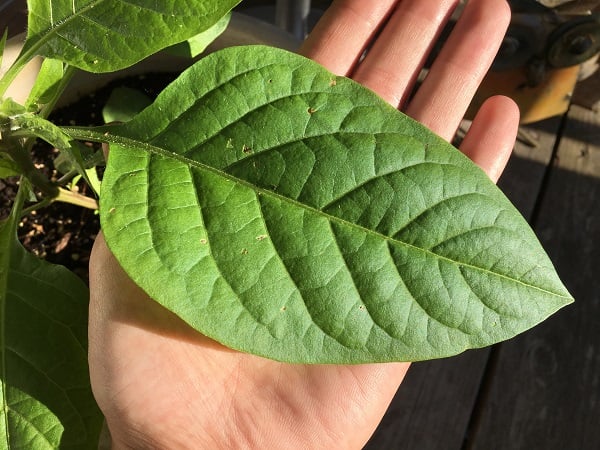
Large Belladonna Leaf. Photographed by Coby Michael Ward.
Nightshade refers to an entire group of plants in the Solanum genus. Other members of this genus include other well-known herbs of magic including Datura, Henbane and Mandrake. Varieties such as Black Nightshade (Solanum nigrum), Common nightshade (Solanum americanum), Bittersweet Nightshade (Solanum dulcamara), and Solanum carolinese all have their own unique characteristics and uses in magic.
Atropa belladonna is one of the traditional herbs of classical witchcraft and medieval medicine. It is a plant that contains chemicals known as alkaloids which can induce trance states and unlock hidden knowledge through direct communion with the plant’s spirit. The states of consciousness induced by the active chemicals of these botanicals allow us to convene in spirit form with the ancient allies of witches and sorcerers of the past. Used in oils and ointments the active ingredients are absorbed directly into the blood stream through the skin. Dosage varies based on individual body chemistry and the specific growing conditions of the plant; too high a dose leading to an uncomfortable delirium and somniferous sleep from which one may not awake. This potent ritual of spirit congress is one of the high sacraments of the Poison Path and treated as such should be approached with reverence and caution, including independent research.
This kind of intense spirit contact is best used in the moment of need, after previous experimentation in a ritual setting. There are many other techniques of working with the baneful herbs that do not require ingestion or altered states of consciousness. The clever witch can find many uses for the baneful herbs whose powers are varied and many. These plant’s from the Devil’s Garden, used in spell work act as a powerful catalyst and lends its power willingly to a witch’s working. By utilizing various parts of the plant and preparing it in certain ways, releasing its genus through occult means; one will find a potent ally in Atropa belladonna. The spirits of the witches’ plants are themselves masters of magic and sorcery.
Collected Lore of Belladonna and other Nightshades
Over the years I have leafed through many resources on botanical lore both on and offline, compiling all of the pertinent magical information that I could find in one of three black books. The information that I have gathered over the years has come from many diverse sources; both modern and historical including those primary sources during the medieval period and those written by witches that have lived in the last century. This collective body of information leaves one with a sense of the genus of the species.
One of the first pieces of information one comes across over and over again in regards to belladonna is her appellation for the goddess Atropos of ancient Greece who was one of the three fates who cut the cord of life. In addition to her connections with the warrior goddess Bellona the plant is known for both Martian and Saturnian correspondences. She is a powerful plant associated with witches, the frenzy of battle, sexuality, seduction, protection and death. She holds many mysteries to teach the witch. Called upon to open the gateways to other realms of consciousness, dream states and parallel worlds; the spirit of belladonna may also be used to cut cords attaching us to toxic people or situations.
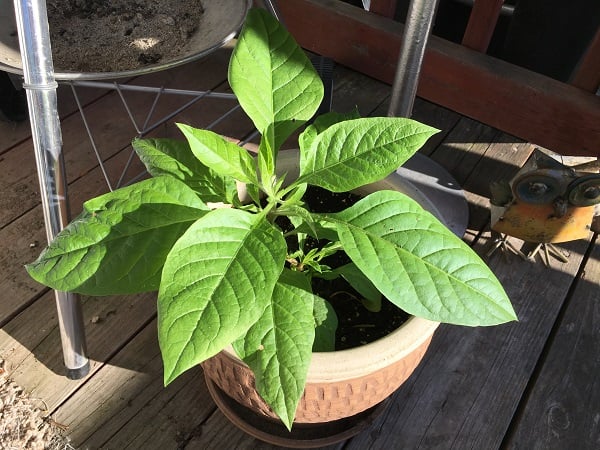
New Belladonna Plant. Photographed by Coby Michael Ward.
The plant’s earthy and saturnian nature is typical of a plant of the underworld, sacred to its ruling goddesses including the sorceresses Circe and Medea. It is thought to aid in spirit flight over earthly realms and journeys into the ancestral forests below, belonging to the lower realms the chthonic plants of the witches garden take the practitioner deep within. It may be added to charms of astral flight and fetishes for necromantic works, and can be used as a powerful protective herb. The plant’s greatest power is its ability to act as a hypnotic. According to some sources, Old Crafters would tincture the berries adding small amounts to red wine to induce trance.
She can also be utilized as an ally in spiritual warfare not only conferring powerful protection, but also ensuring victory in one’s endeavors and destroying enemies through subversive means. Belladonna can also be burned with herbs of a more aggressive martial nature to charm and enchant weapons for magical warfare.
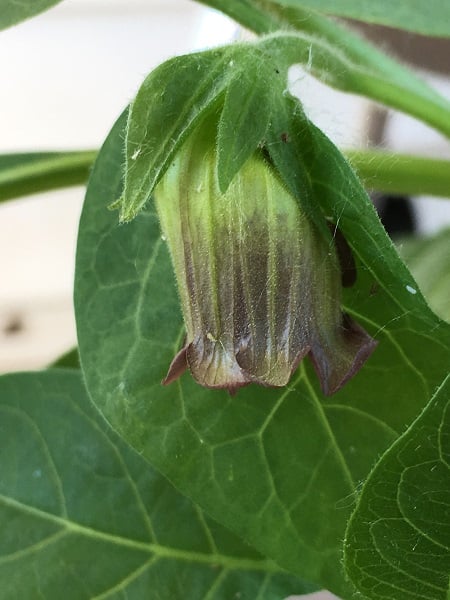
Belladonna Bloom. Photographed by Coby Michael Ward.
Black Nightshade, Solanum nigrum
Black Nightshade is less sexually charged than its sister Atropa, more closely associated with the Dark Goddess, historically the goddess Hecate. The stems and leaves of this commonly growing plant also known as Garden Nightshade have been boiled and the water used to bathe rainmaking effigies. Boiling removes toxins from the plant rendering it safe to eat, however the fresh berries may be eaten in small quantities. Although, a close relative of the more notoriously poisonous nightshades, parts of this plant are edible. Medicinal use of black nightshade can be traced back to Ancient Greece for its cooling, calming, and analgesic properties. The unripe berries contain alkaloids that may be fatal in large quantities. Black nightshade can be used in baneful sorcery, lunar magic, and crone work, including honoring Hekate and celebrating Samhain. The ripe black berries can be made into an ink that can be utilized in darker works when written charms are needed. Common black nightshade grows freely in desolate wasteland spots and along fences and hedges. Sacred to various underworld deities, its berry is used as an ingredient in Kyphi incense. Only the ripe berries are used because when the leaves and stems are burned, they emit toxic fumes. According to Pliny, Solanum nigrum was used by Thessalian witches in a “Philtre to invoke obscene desires, forms, and images.”
Bittersweet Nightshade, Solanum dulcamara
Bittersweet or Woody nightshade is another commonly growing wayside plant, popping up wherever it desires. The woody nightshade has a more delicate vining quality that its stout cousin black nightshade. Bitterweet Nightshade is known for its ability to bind enemies, restricting their actions. All parts of this plant contain alkaloids that vary depending on local influences. The unripe green berries having the highest concentration, becoming less poisonous as they turn from green, to yellow, to red. The red fruits of this plant and its Saturnian aspects evoke dark female underworld spirits. Considered an earthy Saturnian herb; it also has some Mercurial and Air based attributes. Traditionally, like many witches’ plants it was used against sorcery and the evil eye, often used in cleansing and healing rituals. It is considered a typical fairy herb.
There is much left to be discovered by individual cultivation of these plant allies. Also by encountering them in their natural habitat can one discern many secrets about the plants relationship within the cosmos. Belladonna has been a source of intrigue for me since I saw the movie Practical Magic as a young boy. Many of the beginner resources that I studied in the beginning made little mention of the plants of the witch’s garden. Those that did mention these plants gave ominous warnings prohibiting their use or saying that they were code names for other ingredients. Further research led me to discover that many reputable practitioners cultivate and work with these plants, and that their history reaches back hundreds of years. That was one of the things that attracted me to more traditional historically derived witchcraft practices. The authors of such books were not afraid to divulge detailed information about these plants and their use. This information is becoming more and more readily available with the popularity of traditional witchcraft and the witch’s flying ointment. In the past such information could only be found if you knew where too look.
Previous Post

June 6, 2017
A Vessel for Elder Gods
Next Post

June 20, 2017 Changing Perceptions of Spirit Boards
Browse Our Archives
Select a Category alchemy astrology Community Outreach and Events Current Events Featured Practitioners Gods and Goddesses green magic Green Witchcraft herbalism History of the Devil luciferian tradition Magic Magic and Ritual Magic and Witchcraft in History Magical Community magical herbalism Medieval Herbalism Metaphysics Modern Witchcraft natal charts natural magic Northern Traditions Occult Art Occult Artifacts Occultism pagan authors Pagan Community Pagan Holidays pagan philosophy Pagan Sightseeing Paganism Personal Practice planetary glyphs planetary symbols Recommended Reading Sabbatic Witchcraft samhain satanism Spells The Armchair The Poison Path Traditional Witchcraft Uncategorized Veneficium wicca witch's practice Witchcraft witches' sabbats
Select a Month December 2022 September 2022 August 2022 July 2022 March 2022 February 2022 January 2022 December 2021 October 2021 September 2021 August 2021 July 2021 May 2021 April 2021 March 2021 January 2021 December 2020 October 2020 September 2020 July 2020 June 2020 May 2020 April 2020 March 2020 February 2020 January 2020 December 2019 November 2019 October 2019 September 2019 August 2019 July 2019 June 2019 May 2019 April 2019 March 2019 February 2019 January 2019 December 2018 November 2018 October 2018 September 2018 August 2018 July 2018 June 2018 May 2018 April 2018 March 2018 February 2018 January 2018 December 2017 November 2017 October 2017 September 2017 August 2017 July 2017 June 2017 May 2017 April 2017 March 2017 February 2017 January 2017 December 2016 November 2016 October 2016 September 2016 August 2016 July 2016 June 2016 May 2016 March 2016 February 2016
Follow Us!
TAKE THE
Religious Wisdom Quiz
Which major biblical covenant is first introduced in Genesis?
Select your answer to see how you score.
Abrahamic Covenant Mosaic Covenant Davidic Covenant New Covenant
Related posts from Poisoner's Apothecary

Christian Rätsch, Undying Contributions to the Poison Path
Flower Essences from the Witch's Garden
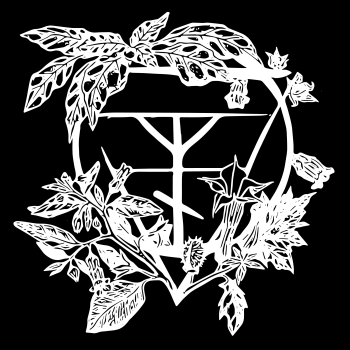
Philosophia Toxicum: A Discourse on the Poison Path

The Witches' Sabbath by Kelden
TRENDING AT PATHEOS Pagan

I was recently chatting with someone on Instagram. She asked me what...

While there are many people who share their results, the end of...

On July 23, I saw Christopher Nolan's The Odyssey which is Homer’s...

As I write this two big events have just finished up. One...

Restoring the Watershed of Divine Love
Perhaps cooperation is not something we manufacture through legislation, ideology, or moral...

Many UUs don’t pray because of bad experiences in a previous religion,...
view all Pagan blogs
Ad-Free & Subscriber Log-In Subscription Support
- About Us
- 2026 Calendar
- Videos
- Podcasts
- Library of World Religions
- Faith In Media Tracker
- Advertise With Us
- Write for Us
- Privacy Policy
- Terms of Service
- Do Not Sell My Data
- Contact Us
- Radiant Digital
- Manage Newsletter Subscriptions
- Unsubscribe From Notifications
- Sitemap
Copyright 2008-2026, Patheos. All rights reserved.
Subscription Support Ad-Free & Subscriber Log-In
Follow Patheos