
BuddhistCatholicContemplativeEvangelicalGeneral ChristianHinduJewishLatter-day SaintMuslimNew VisionsProgressive Christian
Beliefs
- Buddhist
- Catholic
- Contemplative
- Evangelical
- General Christian
- Hindu
- Jewish
- Latter-day Saint
- More Voices
- Muslim
- New Visions
- Pagan
- Progressive Christian
Topics
- Religion News
- Food and Religion
- Sports and Religion
- Religious Art
- Religious Music and Entertainment
- Religious Events
- History and Religion
- Style and Religion
- Politics and Religion
- Women in Religion
- Recreation Outdoors and Religion
- Business Finance and Religion
- Careers Workplace and Religion
- Education and Religion
- Family Parenting and Religion
- Health Fitness and Religion
- Home and Religion
- Relationships and Religion
- Technology and Religion
- Travel and Religion
Columnists
- Buddhist Columnists
- Business Finance and Religion Columnists
- Careers Workplace and Religion Columnists
- Catholic Columnists
- Contemplative Columnists
- Education and Religion Columnists
- Evangelists Columnists
- Family Parenting and Religion Columnists
- General Christian Columnists
- Health Fitness and Religion Columnists
- Hindu Columnists
- History and Religion Columnists
- Home and Religion Columnists
- Jewish Columnists
- More Voices Columnists
- Latter Day Columnists
- Muslim Columnists
- New Visions Columnists
- Nonreligious Columnists
- Pagan Columnists
- Politics and Religion Columnists
- Progressive Columnists
- Recreation Outdoors and Religion Columnists
- Relationships and Religion Columnists
- Religion News Columnists
- Religious Art Columnists
- Religious Events Columnists
- Religious Music and Entertainment Columnists
- Sports and Religion Columnists
- Style and Religion Columnists
- Technology and Religion Columnists
- Travel and Religion Columnists
- Women in Religion Columnists
Resource Library
- 2026 Calendar
- Library of World Religions
- The 100 Most Holy Places on Earth
- Patheos Answers
- Podcasts
- Videos
- Faith Leaders Database
- Anglican Episcopalian
- Bahai
- Baptist
- Buddhism
- Christianity
- Confucianism
- Eastern Orthodoxy
- Hinduism
- Holiness and Pentecostal
- ISKCON
- Islam
- Judaism
- Lutheran
- Methodist
- The Church of Jesus Christ of Latter-day Saints
- New Age
- Paganism
- Presbytarian and Reformed
- Protestantism
- Religion Behind the Scenes
- Roman Catholic
- Scientology
- Shia Islam
- Sikhism
- Sufism
- Sunni Islam
- Taoism
- Zen
- See all religions
Research Tools
 Ad-Free & Subscriber Log-In Subscription Support
Ad-Free & Subscriber Log-In Subscription Support
Follow Patheos 

- Trending:
- Forgiveness
- |
- Marriage
- |
- Consciousness
- |
- Death Penalty
- |
- Election
- |
- Halloween
 Poisoner's Apothecary
- Home
- Pagan
- A Traditional Witch’s Love Affair With History
A Traditional Witch’s Love Affair With History
Last updated on: March 22, 2017 at 8:04 am by Coby Michael Ward
A Traditional Witch’s Love Affair With History 2017-03-22T08:04:43-04:00 Coby Michael Ward
Patheos Explore the world's faith through different perspectives on religion and spirituality! Patheos has the views of the prevalent religions and spiritualities of the world.
“The Gods of the Old Religion Become Demons of the New.”
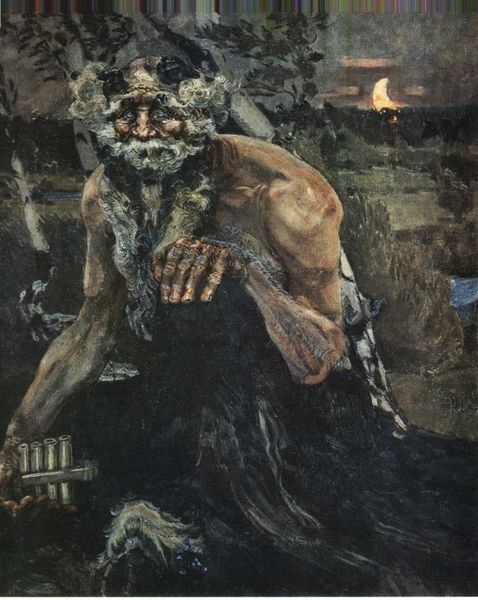
Pan, oil on canvas. Mikhail Vrubel. Wikimedia Common License.
History becomes the lens through which we view the world. It gives us context for our present situation. It helps to answer and understand how we have come to be where we are. I believe that it is my love for history, and desire to investigate the classical roots of witchcraft, that has led me to the path of the traditional witch. By following history back to the beginning of Western Civilization we find some of the first anti-witchcraft laws emerge in the Roman Empire. It is important to note that at this early time there were certain magical practices that were socially acceptable, and those that weren’t were made illegal. Roman culture and politics was the basis for Western Civilization, and shaped many of our basic ideas. While Christianity spread quickly throughout the Roman Empire, much of central and northern Europe remained polytheistic strongholds. This is when Romans coined the term paganus or pagan. The old religion and the new coexisted for sometime outside of the Empire’s reach within the feared Germanic and Celtic tribes, albeit with some apprehension.
As a scholar of traditional or classical witchcraft, the historic influence of the early Church and remaining pagan traditions are of utmost importance in understanding the roots of modern traditional witchcraft. The effects of Latin Christendom on Western civilization is undeniable; influencing everything from politics and fashion to dietary habits and international relations. The Christian worldview seemed to dominate the land eventually becoming the majority. However, there were always those, who from the very beginning questioned the authority of this new religion and sought answers for themselves, often turning to Nature for their answers. There have always been those who can see the divine in the natural world. Scientists of the enlightenment, medieval naturalists, and Renaissance magicians alike stood in opposition to the infallibility of the Bible and the Church. This put them in a dangerous position in regards to the state as well, risking their own lives they were labeled as heretics.
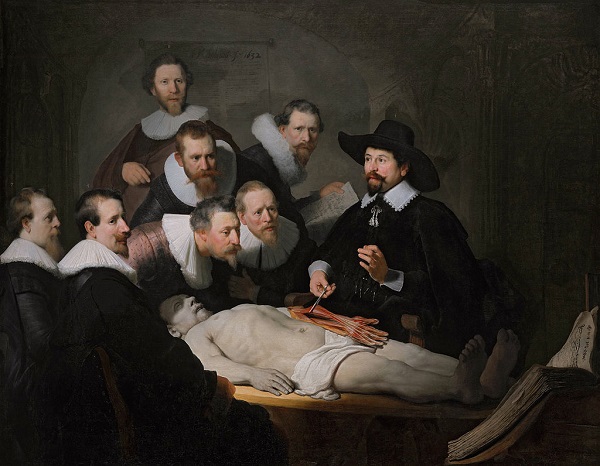
The Anatomy Lesson of Dr. Nicolaes Tulp. Rembrandt 1632. Wikipedia Public domain.
The scientific world began making its own discoveries about the nature of the Universe, which contradicted the doctrine of the Church. Heresy and Inquisition was a way for the Church and state to establish a unified Christian tradition, which would strengthen both of these institutions. Originally the focus was on fellow Christians who were considered a threat to the Church because of their heretical ideas. Those in question would be required to renounce these beliefs and quit sharing them with others. Those who knowingly continued were tried for the crime of heresy, which was viewed as treason. The Inquisition eventually turned to focus its ire against scientists, philosophers, and those accused of witchcraft; basically anyone circulating ideas that were incongruent with the Church’s view.
It was during this tumultuous period that our current view of Witches and the Devil took form. The influence came just as much from the Inquisitors as it did from the accused; reflecting the popular religion, folklore and superstition which all contributed to ideas about witches and their practices. Traditional witches embrace the image of the classical witch archetype of the medieval period. Even some of the more stereotypical imagery influenced by the Inquisition contains valuable insights into the folk lore of the period. It is recognized that there is much insight to be found in this ancient archetype of the witch figure. The symbolism and folklore of the medieval Witches’ Sabbath is a repository of occult knowledge. The diabolic pact and the gift of the familiar spirit, mark the witch as other and begin them on the path. There are many layers of symbols hidden within accounts of the Witches’ Sabbath, which is why it is a central theme in traditional and Sabbatic witchcraft.
“There is no Devil in the Craft.” – Sally Owens
This commonly quoted line from the movie Practical Magic is often used by modern practitioners in order to distance themselves from any negative associations perpetuated by the early Church. This presented the already existing idea that witches are not Devil worshippers, but members of an older nature based religion. While this may be the case, it cuts modern practitioners off from a valuable stream of gnosis that provides a means of deconstructing the Christian framework that many of us were brought up with. Traditional witchcraft utilizes many of the symbols of the witch that may have previously been regarded as superstitious or stereotypical, but when one begins to peel back the layers of these symbols one finds deeper meaning within them.
Another theme unique to traditional witchcraft is the lore of the Witch Mark. This mysterious concept may have come from coerced testimony. However, a closer look reveals a deeper mythology with connections back to antiquity coming to be known as the Mark of Cain. The idea of an initiatory experience transforming one into something different, something other, is not new to human consciousness. In witch mythology the mark is transmitted from Cain, the first sorcerer, who was marked as other by God. It is seen as a spiritual fire that connects those of the Witchblood across time and space. The Mark is something that crosses the boundaries of all traditions, uniting those who seek a deeper truth. Individual spiritual growth is paramount to the witch, forging their own spiritual relationships while discovering for themselves the secrets of the Universe.
This individuality and quest for knowledge is represented by our Promethean mythology, and the figure of Lucifer as the light bringer. He represents the antithesis of static institutionalized religion, bringing the tools of enlightenment to humanity. We see similar themes throughout history in the Renaissance, the Enlightenment and the Romantic period; where certain individuals seek truth outside the walls of religion, often turning to the natural world for answers.
The concept of the Horned God or Witch Father is a piece of modern folklore. A synthesis of Luciferian and Pagan themes represented by the image of the Devil. A combination of the rebellious adversary, the seeker of illumination, and the primal spirits of the natural world create this powerful image. Are the pagan deities of antiquity part of a collective of spirits who align with our pursuits and answer to the call of the Devil. Perhaps the being we call the Horned One is actually many helper spirits, the Witchfather being the collective of the various scribe/messenger/trickster deities historically associated with magic.
Magic and Witchcraft in History
Previous Post
March 15, 2017
Bones, Blood and Poison: The Path of Traditional Witchcraft
Next Post

March 27, 2017 Herodias and the Queen of Witches
Browse Our Archives
Select a Category alchemy astrology Community Outreach and Events Current Events Featured Practitioners Gods and Goddesses green magic Green Witchcraft herbalism History of the Devil luciferian tradition Magic Magic and Ritual Magic and Witchcraft in History Magical Community magical herbalism Medieval Herbalism Metaphysics Modern Witchcraft natal charts natural magic Northern Traditions Occult Art Occult Artifacts Occultism pagan authors Pagan Community Pagan Holidays pagan philosophy Pagan Sightseeing Paganism Personal Practice planetary glyphs planetary symbols Recommended Reading Sabbatic Witchcraft samhain satanism Spells The Armchair The Poison Path Traditional Witchcraft Uncategorized Veneficium wicca witch's practice Witchcraft witches' sabbats
Select a Month December 2022 September 2022 August 2022 July 2022 March 2022 February 2022 January 2022 December 2021 October 2021 September 2021 August 2021 July 2021 May 2021 April 2021 March 2021 January 2021 December 2020 October 2020 September 2020 July 2020 June 2020 May 2020 April 2020 March 2020 February 2020 January 2020 December 2019 November 2019 October 2019 September 2019 August 2019 July 2019 June 2019 May 2019 April 2019 March 2019 February 2019 January 2019 December 2018 November 2018 October 2018 September 2018 August 2018 July 2018 June 2018 May 2018 April 2018 March 2018 February 2018 January 2018 December 2017 November 2017 October 2017 September 2017 August 2017 July 2017 June 2017 May 2017 April 2017 March 2017 February 2017 January 2017 December 2016 November 2016 October 2016 September 2016 August 2016 July 2016 June 2016 May 2016 March 2016 February 2016
Follow Us!
TAKE THE
Religious Wisdom Quiz
What character trait is praised in the Parable of the Good Samaritan?
Select your answer to see how you score.
Pride Compassion Selfishness Deceit
Related posts from Poisoner's Apothecary
The Witches' Sabbath by Kelden
Bryan Staniewski: In League wyth the Devyl
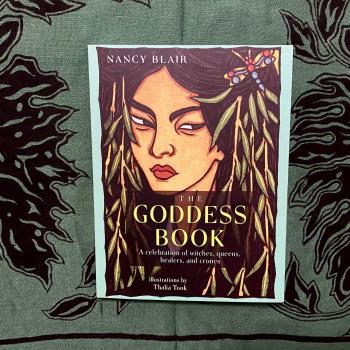
The Goddess Book: A Celebration of Witches, Queens,...
TRENDING AT PATHEOS Pagan

When we talk about Greek religion, we often begin with the dodekatheion—the...

I was recently chatting with someone on Instagram. She asked me what...

While there are many people who share their results, the end of...

On July 23, I saw Christopher Nolan's The Odyssey which is Homer’s...

As I write this two big events have just finished up. One...

Restoring the Watershed of Divine Love
Perhaps cooperation is not something we manufacture through legislation, ideology, or moral...
view all Pagan blogs
Ad-Free & Subscriber Log-In Subscription Support
- About Us
- 2026 Calendar
- Videos
- Podcasts
- Library of World Religions
- Faith In Media Tracker
- Advertise With Us
- Write for Us
- Privacy Policy
- Terms of Service
- Do Not Sell My Data
- Contact Us
- Radiant Digital
- Manage Newsletter Subscriptions
- Unsubscribe From Notifications
- Sitemap
Copyright 2008-2026, Patheos. All rights reserved.
Subscription Support Ad-Free & Subscriber Log-In
Follow Patheos