
BuddhistCatholicContemplativeEvangelicalGeneral ChristianHinduJewishLatter-day SaintMuslimNew VisionsProgressive Christian
Beliefs
- Buddhist
- Catholic
- Contemplative
- Evangelical
- General Christian
- Hindu
- Jewish
- Latter-day Saint
- More Voices
- Muslim
- New Visions
- Pagan
- Progressive Christian
Topics
- Religion News
- Food and Religion
- Sports and Religion
- Religious Art
- Religious Music and Entertainment
- Religious Events
- History and Religion
- Style and Religion
- Politics and Religion
- Women in Religion
- Recreation Outdoors and Religion
- Business Finance and Religion
- Careers Workplace and Religion
- Education and Religion
- Family Parenting and Religion
- Health Fitness and Religion
- Home and Religion
- Relationships and Religion
- Technology and Religion
- Travel and Religion
Columnists
- Buddhist Columnists
- Business Finance and Religion Columnists
- Careers Workplace and Religion Columnists
- Catholic Columnists
- Contemplative Columnists
- Education and Religion Columnists
- Evangelists Columnists
- Family Parenting and Religion Columnists
- General Christian Columnists
- Health Fitness and Religion Columnists
- Hindu Columnists
- History and Religion Columnists
- Home and Religion Columnists
- Jewish Columnists
- More Voices Columnists
- Latter Day Columnists
- Muslim Columnists
- New Visions Columnists
- Nonreligious Columnists
- Pagan Columnists
- Politics and Religion Columnists
- Progressive Columnists
- Recreation Outdoors and Religion Columnists
- Relationships and Religion Columnists
- Religion News Columnists
- Religious Art Columnists
- Religious Events Columnists
- Religious Music and Entertainment Columnists
- Sports and Religion Columnists
- Style and Religion Columnists
- Technology and Religion Columnists
- Travel and Religion Columnists
- Women in Religion Columnists
Resource Library
- 2026 Calendar
- Library of World Religions
- The 100 Most Holy Places on Earth
- Patheos Answers
- Podcasts
- Videos
- Faith Leaders Database
- Anglican Episcopalian
- Bahai
- Baptist
- Buddhism
- Christianity
- Confucianism
- Eastern Orthodoxy
- Hinduism
- Holiness and Pentecostal
- ISKCON
- Islam
- Judaism
- Lutheran
- Methodist
- The Church of Jesus Christ of Latter-day Saints
- New Age
- Paganism
- Presbytarian and Reformed
- Protestantism
- Religion Behind the Scenes
- Roman Catholic
- Scientology
- Shia Islam
- Sikhism
- Sufism
- Sunni Islam
- Taoism
- Zen
- See all religions
Research Tools
 Ad-Free & Subscriber Log-In Subscription Support
Ad-Free & Subscriber Log-In Subscription Support
Follow Patheos 

- Trending:
- Forgiveness
- |
- Marriage
- |
- Consciousness
- |
- Death Penalty
- |
- Election
- |
- Halloween
 Poisoner's Apothecary
- Home
- Pagan
- The Hidden Light of the Dark Ages
The Hidden Light of the Dark Ages
Last updated on: February 20, 2017 at 12:04 pm by Coby Michael Ward
The Hidden Light of the Dark Ages 2017-02-20T12:04:03-04:00 Coby Michael Ward
Patheos Explore the world's faith through different perspectives on religion and spirituality! Patheos has the views of the prevalent religions and spiritualities of the world.
The Magic of the Middle Ages
The middle ages are often referred to as the Dark Ages because many important records from this time period either didn’t survive or were never written. This was a time at the end of the decline of the Roman empire in the years before the Renaissance when there was not much written work produced. However, thanks to scholars in the near east there was a revival in the studies of the classical era, including a popular interest in occultism. It turns out the “Dark Ages” weren’t as dark after all; in fact it served as the fertile soil for the growth that was about to come with the Renaissance.
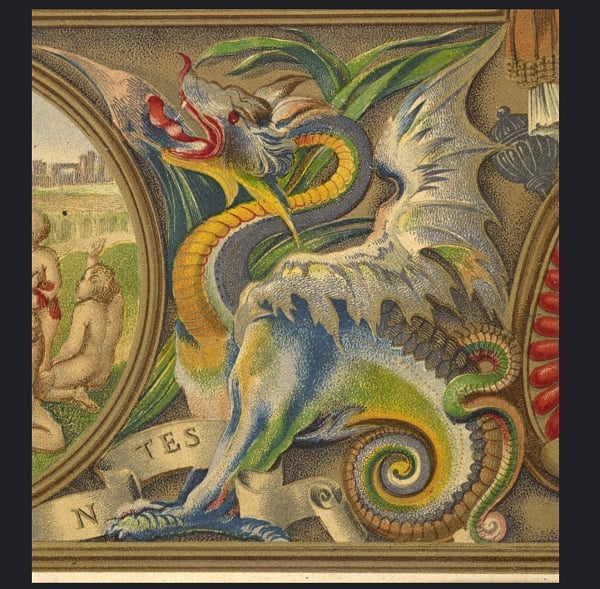
Illustration by John Owens ca 16-17th century. The British Library. Flickr Public Domain.
The Occult Sciences
During the 9th and 10th centuries esoteric texts written in Greek were translated into Arabic. They were preserved in the Near East until finally making their way to the West. Through the 11th and 13th centuries there was a large transmission of Arabic learning to the West. The widespread Ottoman Empire which reached from modern day Turkey to the Balkan peninsula had regular contact with the west. Material concerning the arts and sciences were translated into Latin, which would have a widespread influence on the learned Christians of the West.
The occult sciences were based on an understanding of virtues occultae, the hidden qualities found in nature. Specifically free thinkers of the time were seeking to uncover and understand the subtle and secret relationships between all things in order to use those relationships to one’s benefit. The occult sciences could be utilized to explain unseen relationships between elemental and celestial concepts not otherwise manifest in their physical properties. Natural philosophers believed that nature was the repository for this occult knowledge. By recognizing nature’s secrets one could manipulate this knowledge and create wonders otherwise impossible.
Both theologians and natural philosophers during this time period were looking to understand the world around them. As previously mentioned, the Latin west inherited a rich tradition of literature from antiquity. The influx of new learning in the Latin West in the 12th and 13th century provided a new theoretical framework for natural philosophy. Of course there were already existing folk practices, however learned magic provided a new way of categorizing the occult sciences. Early classifications, such as Isidore of Seville’s Etymologies, presented an overall negative view of magic, claiming that it was an art learned from malefic angels. St. Augustine was also known to have demonized all forms of magic, however there were other’s who advocated for a distinction between natural magic and illicit demonic magic. Some theologians believed that the explanations of natural virtues would help benefit mankind through their practical applications.
Natural Philosophy
Newly translated treatises in natural philosophy introduced natural magic as a new branch of science. Many theologians opposed the idea that magic should be included in the curriculum of learning. There were also those who advocated for its inclusion in the classical studies of the Universities of the time. For example, William of Auvergne was an influential theologian during the 12th century, who introduced natural magic as the 11th part of natural philosophy. Another well-known Dominican theologian and natural philosopher was Albertus Magnus, who contributed to the study of natural philosophy and alchemy. The occult sciences are divided into three broad categories; natural magic, alchemy, and astrology. These categories can be further subdivided into more precise subcategories.
Ritual magic became a popular practice in the area of the occult sciences, this form of learned magic was influenced by the increasing numbers of new works in the Late Middle Ages. Like other forms of learned magic, ritual magic shows its association with Greek, Arabic Neo-platonic, and Jewish Traditions. The manuscripts of this genre draw mostly from Christian biblical and liturgical texts. This allowed for an acceptable form of ritual magic practiced by theologians under the auspices of the Holy Spirit. One identifying characteristic like other types of ceremonial magic, is the length and complexity of these rituals, some of which taking months to complete.
The Forms of Ritual Magic
Ritual magic manifests in two distinct fundamental forms according to medieval theologians. This distinction arose from the attempt to distinguish between acceptable and unacceptable forms of magic. Theurgic magic worked with angelic and celestial forces with the ultimate aim of improving one’s chances of salvation. This type of Christian magic consisted of extensive purification rituals, and other practices for preparing to receive gifts from the Holy Spirit.
Ars notaria, one of the most important texts of ritual theurgy doesn’t mention the word magic. It enables the student to better themselves through the Holy Spirit. This text on Christian mysticism contains a set of Holy Prayers revealed to Solomon to benefit from divine infusion and gain knowledge of the liberal arts. There were other influential texts within this category of Christian magic as well, I think of them as Christian spell books, Liber visionum, Anacrisis, and Ars crucifixi.
Goetia was a considered a more subversive form of ritual magic, but was still practiced by theologians despite conjuring both angelic and demonic beings. This form of ritual magic, often associated with necromancy was inspired by the Catholic Rite of Exorcism. The idea was that only a man of a pure soul could, under God’s protection, control these beings. These necromantic rituals derives many of their details from Catholic liturgy. Goetic rites more visibly utilize suffumigations, magic circles, pentagrams and an array of insturmenta magica. Books on this form of ritual magic, suggest practices familiar to Christian ascetics such as; long periods of abstinence and fasting following by multiple invocations of God, the angels and the Virgin Mary. (Liber conscecratorium)
Condemnation
The Arabic translations of antiquity that supplied the Middle Ages with a wealth of occult knowledge were originally seen as valuable repositories of information. Some individuals condemned these texts as soon as they came to light in the 12th and 13th centuries. The Dominicans condemned alchemy throughout the late 12th century. Franciscans were also forbidden to have books on alchemy. In 1317, a papal bull banned alchemical practices. It wasn’t until the Renaissance that the study of these practices was dignified with the title of Occult Philosophy.
References:
Forshaw, Peter J. The Occult Middle Ages. 2013.
Forshaw, PJ. “Chemistry, that Starry Science” Early Modern Conjunctions of Astrology and Alchemy. Sophia Center Press.
Magic and Witchcraft in History
Next Post

March 5, 2017 Witchcraft in Fundamentalist Evangelicalism
Browse Our Archives
Select a Category alchemy astrology Community Outreach and Events Current Events Featured Practitioners Gods and Goddesses green magic Green Witchcraft herbalism History of the Devil luciferian tradition Magic Magic and Ritual Magic and Witchcraft in History Magical Community magical herbalism Medieval Herbalism Metaphysics Modern Witchcraft natal charts natural magic Northern Traditions Occult Art Occult Artifacts Occultism pagan authors Pagan Community Pagan Holidays pagan philosophy Pagan Sightseeing Paganism Personal Practice planetary glyphs planetary symbols Recommended Reading Sabbatic Witchcraft samhain satanism Spells The Armchair The Poison Path Traditional Witchcraft Uncategorized Veneficium wicca witch's practice Witchcraft witches' sabbats
Select a Month December 2022 September 2022 August 2022 July 2022 March 2022 February 2022 January 2022 December 2021 October 2021 September 2021 August 2021 July 2021 May 2021 April 2021 March 2021 January 2021 December 2020 October 2020 September 2020 July 2020 June 2020 May 2020 April 2020 March 2020 February 2020 January 2020 December 2019 November 2019 October 2019 September 2019 August 2019 July 2019 June 2019 May 2019 April 2019 March 2019 February 2019 January 2019 December 2018 November 2018 October 2018 September 2018 August 2018 July 2018 June 2018 May 2018 April 2018 March 2018 February 2018 January 2018 December 2017 November 2017 October 2017 September 2017 August 2017 July 2017 June 2017 May 2017 April 2017 March 2017 February 2017 January 2017 December 2016 November 2016 October 2016 September 2016 August 2016 July 2016 June 2016 May 2016 March 2016 February 2016
Follow Us!
TAKE THE
Religious Wisdom Quiz
What did Jesus use to feed the 5,000?
Select your answer to see how you score.
A basket of quail Grapes and figs Five loaves and two fish Manna from heaven
Related posts from Poisoner's Apothecary

Interview with a Vampyre Witch: Alexis Pharae

The Satyr's Kiss by Storm Faerywolf
The Fairy Godmother of Occult Publishing
Flower Essences from the Witch's Garden
TRENDING AT PATHEOS Pagan

I was recently chatting with someone on Instagram. She asked me what...

While there are many people who share their results, the end of...

On July 23, I saw Christopher Nolan's The Odyssey which is Homer’s...

As I write this two big events have just finished up. One...

Restoring the Watershed of Divine Love
Perhaps cooperation is not something we manufacture through legislation, ideology, or moral...

Many UUs don’t pray because of bad experiences in a previous religion,...
view all Pagan blogs
Ad-Free & Subscriber Log-In Subscription Support
- About Us
- 2026 Calendar
- Videos
- Podcasts
- Library of World Religions
- Faith In Media Tracker
- Advertise With Us
- Write for Us
- Privacy Policy
- Terms of Service
- Do Not Sell My Data
- Contact Us
- Radiant Digital
- Manage Newsletter Subscriptions
- Unsubscribe From Notifications
- Sitemap
Copyright 2008-2026, Patheos. All rights reserved.
Subscription Support Ad-Free & Subscriber Log-In
Follow Patheos