
BuddhistCatholicContemplativeEvangelicalGeneral ChristianHinduJewishLatter-day SaintMuslimNew VisionsProgressive Christian
Beliefs
- Buddhist
- Catholic
- Contemplative
- Evangelical
- General Christian
- Hindu
- Jewish
- Latter-day Saint
- More Voices
- Muslim
- New Visions
- Pagan
- Progressive Christian
Topics
- Religion News
- Food and Religion
- Sports and Religion
- Religious Art
- Religious Music and Entertainment
- Religious Events
- History and Religion
- Style and Religion
- Politics and Religion
- Women in Religion
- Recreation Outdoors and Religion
- Business Finance and Religion
- Careers Workplace and Religion
- Education and Religion
- Family Parenting and Religion
- Health Fitness and Religion
- Home and Religion
- Relationships and Religion
- Technology and Religion
- Travel and Religion
Columnists
- Buddhist Columnists
- Business Finance and Religion Columnists
- Careers Workplace and Religion Columnists
- Catholic Columnists
- Contemplative Columnists
- Education and Religion Columnists
- Evangelists Columnists
- Family Parenting and Religion Columnists
- General Christian Columnists
- Health Fitness and Religion Columnists
- Hindu Columnists
- History and Religion Columnists
- Home and Religion Columnists
- Jewish Columnists
- More Voices Columnists
- Latter Day Columnists
- Muslim Columnists
- New Visions Columnists
- Nonreligious Columnists
- Pagan Columnists
- Politics and Religion Columnists
- Progressive Columnists
- Recreation Outdoors and Religion Columnists
- Relationships and Religion Columnists
- Religion News Columnists
- Religious Art Columnists
- Religious Events Columnists
- Religious Music and Entertainment Columnists
- Sports and Religion Columnists
- Style and Religion Columnists
- Technology and Religion Columnists
- Travel and Religion Columnists
- Women in Religion Columnists
Resource Library
- 2026 Calendar
- Library of World Religions
- The 100 Most Holy Places on Earth
- Patheos Answers
- Podcasts
- Videos
- Faith Leaders Database
- Anglican Episcopalian
- Bahai
- Baptist
- Buddhism
- Christianity
- Confucianism
- Eastern Orthodoxy
- Hinduism
- Holiness and Pentecostal
- ISKCON
- Islam
- Judaism
- Lutheran
- Methodist
- The Church of Jesus Christ of Latter-day Saints
- New Age
- Paganism
- Presbytarian and Reformed
- Protestantism
- Religion Behind the Scenes
- Roman Catholic
- Scientology
- Shia Islam
- Sikhism
- Sufism
- Sunni Islam
- Taoism
- Zen
- See all religions
Research Tools
 Ad-Free & Subscriber Log-In Subscription Support
Ad-Free & Subscriber Log-In Subscription Support
Follow Patheos 

- Trending:
- Forgiveness
- |
- Marriage
- |
- Consciousness
- |
- Death Penalty
- |
- Election
- |
- Halloween
 Poisoner's Apothecary
- Home
- Pagan
- “A Deed Without A Name: Unearthing the Legacy of Traditional Witchcraft”
“A Deed Without A Name: Unearthing the Legacy of Traditional Witchcraft”
Last updated on: January 23, 2017 at 8:12 pm by Coby Michael Ward
“A Deed Without A Name: Unearthing the Legacy of Traditional Witchcraft” 2017-01-23T20:12:01-04:00 Coby Michael Ward
Patheos Explore the world's faith through different perspectives on religion and spirituality! Patheos has the views of the prevalent religions and spiritualities of the world.
A Deed Without a Name: Unearthing the Legacy of Traditional Witchcraft
Written By Lee Morgan, Illustrations by Brett Morgan. Published by Moon Books.
The Tradition of Witchcraft
Those of us who claim to be traditional witches or identify with the idea of pre-modern traditional witchcraft, enjoy our scholarly books with research done by academics using primary sources. We enjoy the hunt for books written by shadowy masters unknown to the mainstream. Morgan’s vision was to weave together the most prominent of historical references which are some of the central themes of modern traditional witchcraft, into a cohesive presentation of traditional European lore and practice. According to Morgan this book was written to be of value to the “practical student of non-wiccan, post-Christian European Witchcraft.” The practice of magic has been around for millennia, however witchcraft, especially post-Christian practices consequently absorbed much of the symbolism of the dominant faith. Morgan is sure to point this out explaining the changes that occur in magical practice from antiquity throughout the early modern period. Many of these examples cite the work of Carlo Ginzburg and Eva Pocs, who were both influential in the study of historical witchcraft.
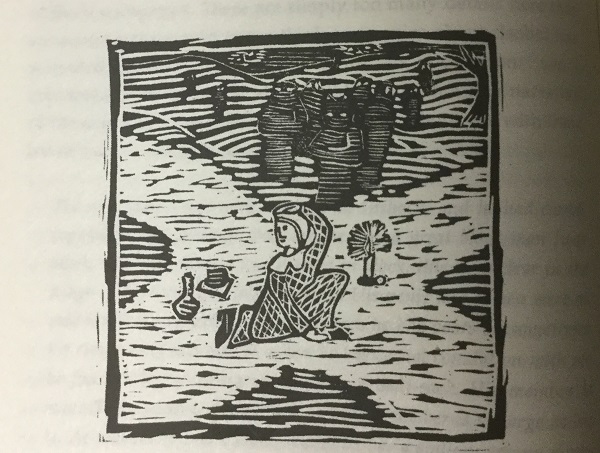
Illustration by Brett Morgan.
An important aspect of Morgan’s writing is his acknowledgement of the Christian reversals that occurred throughout the 15th through the 17th centuries, such as the Witches’ Sabbath, spirit flight, and pacts with the Devil. Many of these reversals shaped our modern understanding of witchcraft. He also distinguishes between the modern revival referred to as Traditional Witchcraft and the other modern revival Wicca. Both streams of witchcraft developed alongside one another, and both share ancient roots. According to Morgan, traditional witchcraft draws on folkloric material and is largely shamanic, whereas Wicca is a religion whose practice is a fusion of Western Occult Ceremonial and natural magic traditions. There is often a lot of confusion within the witchcraft community between these two traditions, however they share the same historical roots and the further back one goes the more these traditions have in common.
The author compares the tradition of witchcraft to an eternal myth which may at first glance seem fragmentary, but after applying the “light of scholarship” and the “dark of occult intuition” we are able to temper and bend these fragments into the links of a long chain of ancestral knowledge. Morgan associates the scholarly component of witchcraft with the straight track and the path of experiential gnosis via occult practices is the crooked road. Both paths intertwine and compliment one another.
I think it is a key trademark of the traditional witch to not only acknowledge the role the early Church played in creating the stereotypical witch, but to also embrace some of those stereotypes as a form of empowerment. Traditional witchcraft does not reach into the distant past for a unified pagan religion. The folk practices of central and western Europe remained intact for 1000 yrs after Christianity came to Rome, many of those practices continuing on right alongside the Rites of the Catholic Church.
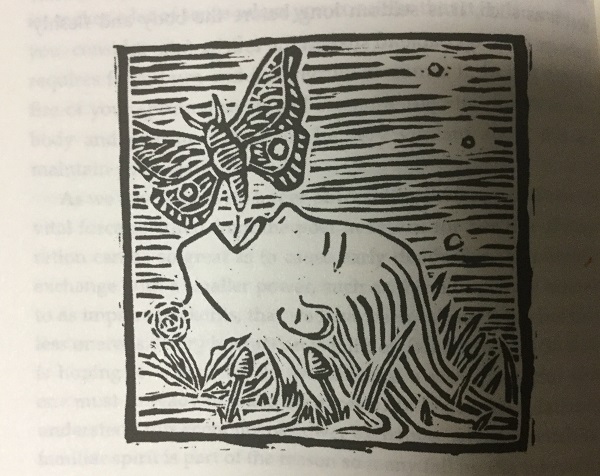
Illustration by Brett Morgan.
This book outlines the origins of these centuries-old practices, and how they relate to modern traditional witchcraft. Spirit flight and spirit familiars are two important theme that the author discusses in depth, outlining various historical accounts and techniques for achieving the states necessary to commit this “deed without a name.” The author also includes instructions on various arcane rites, tables of correspondence, and a reading list for further study into traditional witchcraft, medieval occultism, and the grimoire tradition.
You can buy the book here: Moon Books
Magic and Witchcraft in History
Previous Post

January 17, 2017
The Handfasting of Mr. & Mr. Ward
Next Post
January 29, 2017 Persecution in Pursuit of Knowledge
Browse Our Archives
Select a Category alchemy astrology Community Outreach and Events Current Events Featured Practitioners Gods and Goddesses green magic Green Witchcraft herbalism History of the Devil luciferian tradition Magic Magic and Ritual Magic and Witchcraft in History Magical Community magical herbalism Medieval Herbalism Metaphysics Modern Witchcraft natal charts natural magic Northern Traditions Occult Art Occult Artifacts Occultism pagan authors Pagan Community Pagan Holidays pagan philosophy Pagan Sightseeing Paganism Personal Practice planetary glyphs planetary symbols Recommended Reading Sabbatic Witchcraft samhain satanism Spells The Armchair The Poison Path Traditional Witchcraft Uncategorized Veneficium wicca witch's practice Witchcraft witches' sabbats
Select a Month December 2022 September 2022 August 2022 July 2022 March 2022 February 2022 January 2022 December 2021 October 2021 September 2021 August 2021 July 2021 May 2021 April 2021 March 2021 January 2021 December 2020 October 2020 September 2020 July 2020 June 2020 May 2020 April 2020 March 2020 February 2020 January 2020 December 2019 November 2019 October 2019 September 2019 August 2019 July 2019 June 2019 May 2019 April 2019 March 2019 February 2019 January 2019 December 2018 November 2018 October 2018 September 2018 August 2018 July 2018 June 2018 May 2018 April 2018 March 2018 February 2018 January 2018 December 2017 November 2017 October 2017 September 2017 August 2017 July 2017 June 2017 May 2017 April 2017 March 2017 February 2017 January 2017 December 2016 November 2016 October 2016 September 2016 August 2016 July 2016 June 2016 May 2016 March 2016 February 2016
Follow Us!
TAKE THE
Religious Wisdom Quiz
What does the name "Abraham" mean?
Select your answer to see how you score.
Strong leader Blessed man Shelter Father of many
Related posts from Poisoner's Apothecary

Interview with a Vampyre Witch: Alexis Pharae
Christian Rätsch, Undying Contributions to the Poison Path

Smoke Divination: The Art of Capnomancy

The Satyr's Kiss by Storm Faerywolf
TRENDING AT PATHEOS Pagan

I was recently chatting with someone on Instagram. She asked me what...

While there are many people who share their results, the end of...

On July 23, I saw Christopher Nolan's The Odyssey which is Homer’s...

As I write this two big events have just finished up. One...

Restoring the Watershed of Divine Love
Perhaps cooperation is not something we manufacture through legislation, ideology, or moral...

Many UUs don’t pray because of bad experiences in a previous religion,...
view all Pagan blogs
Ad-Free & Subscriber Log-In Subscription Support
- About Us
- 2026 Calendar
- Videos
- Podcasts
- Library of World Religions
- Faith In Media Tracker
- Advertise With Us
- Write for Us
- Privacy Policy
- Terms of Service
- Do Not Sell My Data
- Contact Us
- Radiant Digital
- Manage Newsletter Subscriptions
- Unsubscribe From Notifications
- Sitemap
Copyright 2008-2026, Patheos. All rights reserved.
Subscription Support Ad-Free & Subscriber Log-In
Follow Patheos