
BuddhistCatholicContemplativeEvangelicalGeneral ChristianHinduJewishLatter-day SaintMuslimNew VisionsProgressive Christian
Beliefs
- Buddhist
- Catholic
- Contemplative
- Evangelical
- General Christian
- Hindu
- Jewish
- Latter-day Saint
- More Voices
- Muslim
- New Visions
- Pagan
- Progressive Christian
Topics
- Religion News
- Food and Religion
- Sports and Religion
- Religious Art
- Religious Music and Entertainment
- Religious Events
- History and Religion
- Style and Religion
- Politics and Religion
- Women in Religion
- Recreation Outdoors and Religion
- Business Finance and Religion
- Careers Workplace and Religion
- Education and Religion
- Family Parenting and Religion
- Health Fitness and Religion
- Home and Religion
- Relationships and Religion
- Technology and Religion
- Travel and Religion
Columnists
- Buddhist Columnists
- Business Finance and Religion Columnists
- Careers Workplace and Religion Columnists
- Catholic Columnists
- Contemplative Columnists
- Education and Religion Columnists
- Evangelists Columnists
- Family Parenting and Religion Columnists
- General Christian Columnists
- Health Fitness and Religion Columnists
- Hindu Columnists
- History and Religion Columnists
- Home and Religion Columnists
- Jewish Columnists
- More Voices Columnists
- Latter Day Columnists
- Muslim Columnists
- New Visions Columnists
- Nonreligious Columnists
- Pagan Columnists
- Politics and Religion Columnists
- Progressive Columnists
- Recreation Outdoors and Religion Columnists
- Relationships and Religion Columnists
- Religion News Columnists
- Religious Art Columnists
- Religious Events Columnists
- Religious Music and Entertainment Columnists
- Sports and Religion Columnists
- Style and Religion Columnists
- Technology and Religion Columnists
- Travel and Religion Columnists
- Women in Religion Columnists
Resource Library
- 2026 Calendar
- Library of World Religions
- The 100 Most Holy Places on Earth
- Patheos Answers
- Podcasts
- Videos
- Faith Leaders Database
- Anglican Episcopalian
- Bahai
- Baptist
- Buddhism
- Christianity
- Confucianism
- Eastern Orthodoxy
- Hinduism
- Holiness and Pentecostal
- ISKCON
- Islam
- Judaism
- Lutheran
- Methodist
- The Church of Jesus Christ of Latter-day Saints
- New Age
- Paganism
- Presbytarian and Reformed
- Protestantism
- Religion Behind the Scenes
- Roman Catholic
- Scientology
- Shia Islam
- Sikhism
- Sufism
- Sunni Islam
- Taoism
- Zen
- See all religions
Research Tools
 Ad-Free & Subscriber Log-In Subscription Support
Ad-Free & Subscriber Log-In Subscription Support
Follow Patheos 

- Trending:
- Forgiveness
- |
- Marriage
- |
- Consciousness
- |
- Death Penalty
- |
- Election
- |
- Halloween
 Poisoner's Apothecary
- Home
- Pagan
- Poison Path Resource Guide: “The Witches’ Ointment”
Poison Path Resource Guide: “The Witches’ Ointment”
Last updated on: December 31, 2016 at 8:23 am by Coby Michael Ward
Poison Path Resource Guide: “The Witches’ Ointment” 2016-12-31T08:23:25-04:00 Coby Michael Ward
Patheos Explore the world's faith through different perspectives on religion and spirituality! Patheos has the views of the prevalent religions and spiritualities of the world.
The Witches’ Ointment: The Secret History of Psychedelic Magic, by Thomas Hatsis
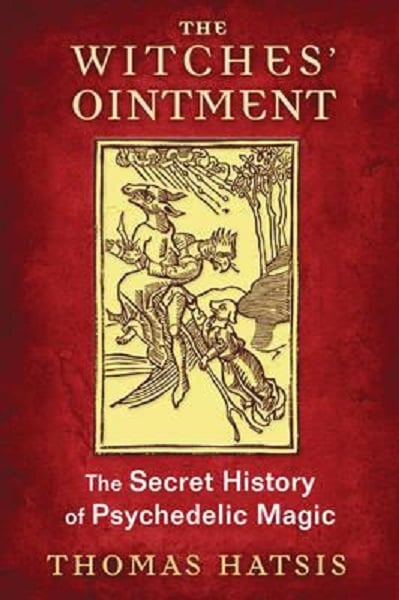
The Witches’ Ointment by Thomas Hatsis. Image from arspsychedelia.com
A well-researched synthesis of obscure materials dating back 500yrs
This original work explores the concept of the witches’ ointment which is central to the understanding of European witchcraft. The witches’ ointment, or unguentum lamiarum, has shown up in various forms throughout human history. It is the medieval witches’ flying ointment that is of particular interest, and Hatsis has painstakingly pieced together information from various primary sources in a way that paints a cohesive picture of the sordid history of this magical ointment. Hatsis constructs the history of the unguentum lamiarum beginning in antiquity, tracing its winding path through medieval and Renaissance Europe. Ten years of dedicated archival research finally pays off giving us one of the first works of its kind, a complete look at the history of this topic. The book contains first-time translations of medieval manuscripts and recipes that have been lost for hundreds of years.
A Twisted History to a Twisted Path
The practices of wise women and those men formally trained in medicine and endorsed by the Church, shared much of the same knowledge and used many of the same tools including salves and ointments containing solanaceous plants. The difference being, that women were unable to obtain the necessary credentials from a university, and therefore practiced medicine outside of the scope of the Church. Hatsis shows how women were suppressed and demonized by the patriarchal societies that they were an integral part of. By demonizing their practices they were able to discredit and prosecute these folk practitioners who were often the only source of medical care for the common people. Throughout this book the reader will see how the stereotype of the witch is constructed, and how this stereotype was used as a political and religious weapon. The witches’ ointment is a central theme in many of the trial accounts throughout Europe. The ointment itself became a symbol of diabolic witchcraft.
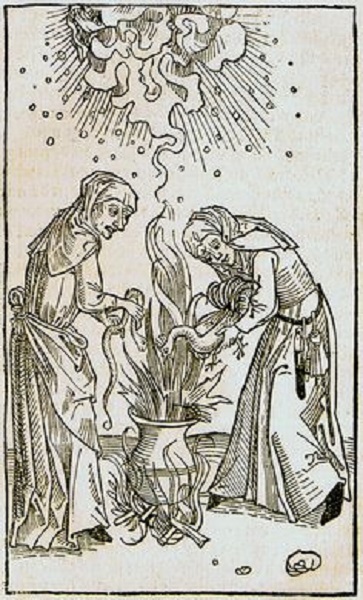
Woodcut from De Lamiis et pythonicis mulieribus, Ulrich Molitor, 1508.
A lot of the trial records contain stereotypical fabrications in regards to some of the more specific details surrounding the preparation and use of these ointments. Later records from Renaissance and modern scholars would provide details after a thorough investigation of the entheogens used in these ointments. The use of these ointments for various medical purposes was widespread, and not considered heretical unless used to worship another deity or spirit. Throughout this book one can see how the once tolerated traditions of the common people would become a threatening target that would be persecuted by the elite.
This has got to be one of the most detailed and in depth resources for the topic of the witches’ ointment. Hatsis has provided us with so much historical information, and presented it coherently in a single resource. Each page is packed with well-researched historical data; as Hatsis outlines some of the more infamous trial records. His analysis separates authentic accounts from those that contain the bias of the Church presenting both side-by-side for comparison. The book follows the trial of Matteucia di Francesco, who was likely the first person to be tried and condemned for the use of a flying ointment to meet with her pagan gods. The trial accounts of Matteucia provide us with some of the most detailed, first-hand accounts of this obscure practice. Important details surrounding the actual preparation and use of these ointments are often left out or over exaggerated by Church propaganda, but here we have a few examples of accounts with much more description.
Hatsis uses these early trial records and various woodcut illustrations that demonstrate the earliest ideas of what heretical practices actually were, and how these ideas were transformed into the concept of the Satanic witch. The study of witches’ ointments is a central part of traditional witchcraft that draws on many elements of the medieval witches’ Sabbath. Since these ointments contain the baneful plants of the Devil’s Garden; research into this area is a large part of the Poison Path because of the use of entheogenic substances for spiritual congress and gnosis.
I would definitely recommend this books to anyone interested in flying ointments, poisonous plants, and sabbatic witchcraft. Hatsis delivers a plethora of new information, and fresh ideas. More information about his research can be found on his website here:
There is also a great video of Hatsis doing a group discussion on the book at Blazing Star O.T.O in Los Angeles. It can be seen here:
Constructing the Satanic Witch: Church and Misogyny
Magic and Witchcraft in History
Previous Post
December 26, 2016
Poison Path Resource Guide: Veneficium by Daniel A. Schulke
Next Post
January 2, 2017 Poison Path Resource Guide: Verdant Gnosis Volume 1 & 2
Browse Our Archives
Select a Category alchemy astrology Community Outreach and Events Current Events Featured Practitioners Gods and Goddesses green magic Green Witchcraft herbalism History of the Devil luciferian tradition Magic Magic and Ritual Magic and Witchcraft in History Magical Community magical herbalism Medieval Herbalism Metaphysics Modern Witchcraft natal charts natural magic Northern Traditions Occult Art Occult Artifacts Occultism pagan authors Pagan Community Pagan Holidays pagan philosophy Pagan Sightseeing Paganism Personal Practice planetary glyphs planetary symbols Recommended Reading Sabbatic Witchcraft samhain satanism Spells The Armchair The Poison Path Traditional Witchcraft Uncategorized Veneficium wicca witch's practice Witchcraft witches' sabbats
Select a Month December 2022 September 2022 August 2022 July 2022 March 2022 February 2022 January 2022 December 2021 October 2021 September 2021 August 2021 July 2021 May 2021 April 2021 March 2021 January 2021 December 2020 October 2020 September 2020 July 2020 June 2020 May 2020 April 2020 March 2020 February 2020 January 2020 December 2019 November 2019 October 2019 September 2019 August 2019 July 2019 June 2019 May 2019 April 2019 March 2019 February 2019 January 2019 December 2018 November 2018 October 2018 September 2018 August 2018 July 2018 June 2018 May 2018 April 2018 March 2018 February 2018 January 2018 December 2017 November 2017 October 2017 September 2017 August 2017 July 2017 June 2017 May 2017 April 2017 March 2017 February 2017 January 2017 December 2016 November 2016 October 2016 September 2016 August 2016 July 2016 June 2016 May 2016 March 2016 February 2016
Follow Us!
TAKE THE
Religious Wisdom Quiz
Which of Job’s friends said, "Consider now: Who, being innocent, has ever perished?"
Select your answer to see how you score.
Bildad Eliphaz Elihu Zophar
Related posts from Poisoner's Apothecary

Christian Rätsch, Undying Contributions to the Poison Path

The Satyr's Kiss by Storm Faerywolf
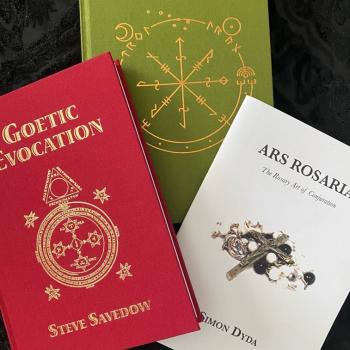
The Fairy Godmother of Occult Publishing
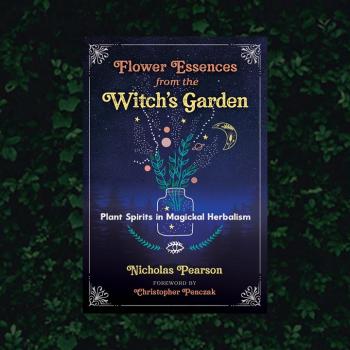
Flower Essences from the Witch's Garden
TRENDING AT PATHEOS Pagan

I was recently chatting with someone on Instagram. She asked me what...

While there are many people who share their results, the end of...

On July 23, I saw Christopher Nolan's The Odyssey which is Homer’s...

As I write this two big events have just finished up. One...

Restoring the Watershed of Divine Love
Perhaps cooperation is not something we manufacture through legislation, ideology, or moral...

Many UUs don’t pray because of bad experiences in a previous religion,...
view all Pagan blogs
Ad-Free & Subscriber Log-In Subscription Support
- About Us
- 2026 Calendar
- Videos
- Podcasts
- Library of World Religions
- Faith In Media Tracker
- Advertise With Us
- Write for Us
- Privacy Policy
- Terms of Service
- Do Not Sell My Data
- Contact Us
- Radiant Digital
- Manage Newsletter Subscriptions
- Unsubscribe From Notifications
- Sitemap
Copyright 2008-2026, Patheos. All rights reserved.
Subscription Support Ad-Free & Subscriber Log-In
Follow Patheos