
BuddhistCatholicContemplativeEvangelicalGeneral ChristianHinduJewishLatter-day SaintMuslimNew VisionsProgressive Christian
Beliefs
- Buddhist
- Catholic
- Contemplative
- Evangelical
- General Christian
- Hindu
- Jewish
- Latter-day Saint
- More Voices
- Muslim
- New Visions
- Pagan
- Progressive Christian
Topics
- Religion News
- Food and Religion
- Sports and Religion
- Religious Art
- Religious Music and Entertainment
- Religious Events
- History and Religion
- Style and Religion
- Politics and Religion
- Women in Religion
- Recreation Outdoors and Religion
- Business Finance and Religion
- Careers Workplace and Religion
- Education and Religion
- Family Parenting and Religion
- Health Fitness and Religion
- Home and Religion
- Relationships and Religion
- Technology and Religion
- Travel and Religion
Columnists
- Buddhist Columnists
- Business Finance and Religion Columnists
- Careers Workplace and Religion Columnists
- Catholic Columnists
- Contemplative Columnists
- Education and Religion Columnists
- Evangelists Columnists
- Family Parenting and Religion Columnists
- General Christian Columnists
- Health Fitness and Religion Columnists
- Hindu Columnists
- History and Religion Columnists
- Home and Religion Columnists
- Jewish Columnists
- More Voices Columnists
- Latter Day Columnists
- Muslim Columnists
- New Visions Columnists
- Nonreligious Columnists
- Pagan Columnists
- Politics and Religion Columnists
- Progressive Columnists
- Recreation Outdoors and Religion Columnists
- Relationships and Religion Columnists
- Religion News Columnists
- Religious Art Columnists
- Religious Events Columnists
- Religious Music and Entertainment Columnists
- Sports and Religion Columnists
- Style and Religion Columnists
- Technology and Religion Columnists
- Travel and Religion Columnists
- Women in Religion Columnists
Resource Library
- 2026 Calendar
- Library of World Religions
- The 100 Most Holy Places on Earth
- Patheos Answers
- Podcasts
- Videos
- Faith Leaders Database
- Anglican Episcopalian
- Bahai
- Baptist
- Buddhism
- Christianity
- Confucianism
- Eastern Orthodoxy
- Hinduism
- Holiness and Pentecostal
- ISKCON
- Islam
- Judaism
- Lutheran
- Methodist
- The Church of Jesus Christ of Latter-day Saints
- New Age
- Paganism
- Presbytarian and Reformed
- Protestantism
- Religion Behind the Scenes
- Roman Catholic
- Scientology
- Shia Islam
- Sikhism
- Sufism
- Sunni Islam
- Taoism
- Zen
- See all religions
Research Tools
 Ad-Free & Subscriber Log-In Subscription Support
Ad-Free & Subscriber Log-In Subscription Support
Follow Patheos 

- Trending:
- Forgiveness
- |
- Marriage
- |
- Consciousness
- |
- Death Penalty
- |
- Election
- |
- Halloween
 Poisoner's Apothecary
- Home
- Pagan
- witches, Witchcraft and Sorcery
witches, Witchcraft and Sorcery
Last updated on: July 2, 2016 at 7:11 am by Coby Michael Ward
witches, Witchcraft and Sorcery 2016-07-02T07:11:11-04:00 Coby Michael Ward
Patheos Explore the world's faith through different perspectives on religion and spirituality! Patheos has the views of the prevalent religions and spiritualities of the world.
In human society, religion serves the function of explaining our social stratification, and giving us a sense of where we fit in. Religion also attempts to explain or justify many of the injustices that are part of human life such as evil, suffering and death. What sets us apart as humans is our language, our ability to understand our individuality, and our spirituality. We use our language to describe our individuality and our spiritual self is a large part of that. Before the rise of monotheism, polytheistic societies accepted and often embraced the deities of neighboring cultures. They could see similarities in the gods of their neighbors. Religion as a descriptive term did not exist during the time of polytheism.
It was not until Christianity took hold of Western Civilization, and the intellectualism of the modern period that this tern came into use in the way it is used today. There are still many eastern traditions do not have an equivalent for our concept of ‘religion’ in their languages. While most understand the concept, there are many spiritual nuances that the English language does not have to describe various spiritual states that other cultures possess. On the topic of magic and witchcraft around the world; magic can be found in every culture. These cultures all have their own native words for magic and magic practitioners. (Strega, brujo, bokor, mambo, heksa, volva, wicce, wicca, witch, sorciere, and many many more) As we often hear, there are as many different definitions for magic as there are practitioners and infinitely more definitions held by non-practitioners. People by nature want to feel as though they fit in somewhere. We use titles and categories to set ourselves apart from other groups. Religion is a common way of doing this because it defines who someone wants to be as a person, gives one a sense of community and has a distinct set of beliefs that set members apart from non-members.
This gives many individuals a feeling of security, but when that security is threatened, people become very defensive and sometimes dangerous. With Paganism being such a broad umbrella term, encompassing many uniquely diverse sets of beliefs, and magic being such a wide spread phenomenon, it can be difficult to accurately discern where one fits in. Those that belong to a coven with a specific tradition or a heathen group worshipping a certain deity, have this sense of community and individuality. Many solitary practitioners struggle with this. Much of our time is spent studying in an attempt to pin point out beliefs, how we define ourselves, our practice and our craft. It is very difficult especially for beginners faced with so many different traditions to choose from. Nowadays, there is an abundance of published information online, however many new practitioners base everything they know on what they read online because of its easy access. Often false information is promulgated online either accidentally or intentionally. That is why it is important to seek your own answers, research and study and come to your own conclusions. If something doesn’t feel right or inspire you magically then discard it. Respect all knowledge, but also respect your own ability to discern what is useful and what is not. There are just as many definitions for the word witchcraft, and such a push to embrace the word witch, that it can be especially confusing for a male witch. Particularly those who are non-Wiccan, what do we call ourselves? We’re told that men are witches too, that warlock is too negative, and wizard to fantastic. Conjuror and Sorcerer remain, but what does that really mean and where do we fit in? When I was younger, in my teenage years, I called myself a witch. I practiced and studied witchcraft ceaselessly. We were told over and over again to ‘reclaim the word witch from its negative history.’ Now, I am twenty seven and after pondering multiple titles for my beliefs and my practice I don’t know that I’ve come any closer, but I have learned a lot about myself along the way. Magic, witchcraft, and sorcery (magicians, witches, and sorcerers) have always been a source of interest for me. Three very similar terms that appear to by synonymous, but in fact are quite different when you look at the details. For example, the word witch. It has many supposed roots and different words in other languages. They all have similar but slightly different meanings; some revered and some reviled. In the English language, the word witch, was used to persecute thousands of people during the Inquisitions. It was used to describe both men and women, and the crime they were guilty of was diabolical witchcraft. ALL of the accused were innocent people, but those that did hold on to the Old Ways were practitioners of folk magic and herbalism, not witchcraft. The words used to describe these people were in their native tongue, not the word witch. Today we embrace the word witch, and it has a much different meaning. A general term referring to practitioners of witchcraft is meant to describe both sexes, but what is witchcraft really? It is separate from the religion of Wicca, though many Wiccans practice witchcraft. Many use it to describe any and all magical practice. In reality all of these different practices have their own names. Some of them practiced by witches and others are not. I used to think of witchcraft in those general terms, but when I think about it in more depth, I see that witchcraft practices include: divination through the communication with shades of the dead (necromancy)….to be continued.
Part II
…veneficium (magic through poison), the use of flying ointments to alter consciousness and leave the body, shapeshifting, honoring the gods of the witches and the Elder gods.
For me, spellwork, often equated with witchcraft should be a distinct category of magic with smaller sub-categories, such as ritual or folk magic. Magic achieved through the means of witchcraft could be accomplished by summoning spirits/deities, veneficium, or altered states of consciousness. The witch could also turn to other methods such as sympathetic spells of folk magic, using herbs and other common items. Sometimes more complicated rituals would be used to call upon various celestial and infernal powers, or methods outside of the spectrum of witchcraft would be used.
Sorcery can be tricky to define because it combines many forms of magical a practice. While witches oftentimes honor specific deities, I choose to designate sorcerers as those who follow the nameless gods of magic. Sorcerers study magic in all of its forms, drawing power from myriad sources. By calling upon various spirits and deities, a sorceress is able to tap into that vein of power and direct it to their ritual. Whereas a witch could invoke or evoke the entity, a sorcerer often works with the collective energy surrounding the many archetypes of the entity. For example, instead of calling upon a specific deity of healing, sorcery would call upon the many faceted archetype that is the quintessence of all healing powers. Sorcerers in this way are able to utilize a multitude of magical techniques from different schools that differentiate them from Western European witchcraft.
Through the use of magical objects such as: herbs, potions, stones, symbols, or talismans; sorcerers are able to tap into the source of their powers to direct it to their ends. This is why many sorcerers are adept at magical artifice, creating magical objects that can be used in spellwork. The more knowledge one accumulates, the more options they have to draw from for their magic because at the very basest all power comes from the same source.
In my opinion, sorcerers are the “Renaissance men” of the magical community. Many witches are also great sorceresses as well, as sorcery is not exclusive one can practice both simultaneously. I personally identify more with the archetype of the sorcerer as far as my research goes, however I also identify mostly with European Traditional Witchcraft in practice.
The magician is our third distinct magic user. The magician is a person who uses ritual magic to summon various entities to do their bidding. The spellwork magicians perform is related to summoning spirits, casting circles of transmutation and spirit traps. Magicians use these entities to effect the physical world and achieve thei will.Magicians, like their counterparts on stage have “assistants” to carry out various tasks. And like all other magic practitioners they do share practices and borrow techniques when necessary.
Whether witchcraft, sorcery, or ritual magic; all have their advantages, and are capable of achieving the same ends. Personally, it is important for me to be able to distinguish from the three. In describing my own identity and the practices of other, keeping these distinctions provides a more nuanced way of describing magical practitioners instead of putting us all under the same umbrella.
Previous Post

February 17, 2016
Poisoner's Apothecary
Next Post

February 18, 2016 "Thou shalt not suffer a witch to live."
Browse Our Archives
Select a Category alchemy astrology Community Outreach and Events Current Events Featured Practitioners Gods and Goddesses green magic Green Witchcraft herbalism History of the Devil luciferian tradition Magic Magic and Ritual Magic and Witchcraft in History Magical Community magical herbalism Medieval Herbalism Metaphysics Modern Witchcraft natal charts natural magic Northern Traditions Occult Art Occult Artifacts Occultism pagan authors Pagan Community Pagan Holidays pagan philosophy Pagan Sightseeing Paganism Personal Practice planetary glyphs planetary symbols Recommended Reading Sabbatic Witchcraft samhain satanism Spells The Armchair The Poison Path Traditional Witchcraft Uncategorized Veneficium wicca witch's practice Witchcraft witches' sabbats
Select a Month December 2022 September 2022 August 2022 July 2022 March 2022 February 2022 January 2022 December 2021 October 2021 September 2021 August 2021 July 2021 May 2021 April 2021 March 2021 January 2021 December 2020 October 2020 September 2020 July 2020 June 2020 May 2020 April 2020 March 2020 February 2020 January 2020 December 2019 November 2019 October 2019 September 2019 August 2019 July 2019 June 2019 May 2019 April 2019 March 2019 February 2019 January 2019 December 2018 November 2018 October 2018 September 2018 August 2018 July 2018 June 2018 May 2018 April 2018 March 2018 February 2018 January 2018 December 2017 November 2017 October 2017 September 2017 August 2017 July 2017 June 2017 May 2017 April 2017 March 2017 February 2017 January 2017 December 2016 November 2016 October 2016 September 2016 August 2016 July 2016 June 2016 May 2016 March 2016 February 2016
Follow Us!
TAKE THE
Religious Wisdom Quiz
What is the main Christian symbol in Ethiopian churches?
Select your answer to see how you score.
The star The Ethiopian cross The fish The anchor
Related posts from Poisoner's Apothecary

The Satyr's Kiss by Storm Faerywolf
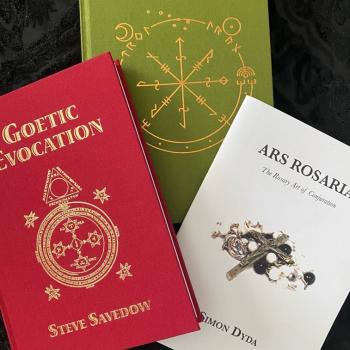
The Fairy Godmother of Occult Publishing
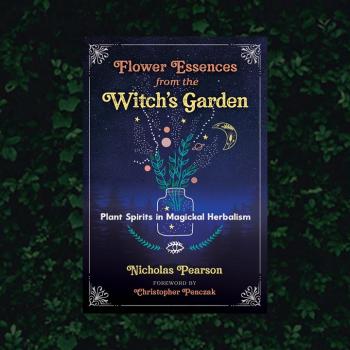
Flower Essences from the Witch's Garden
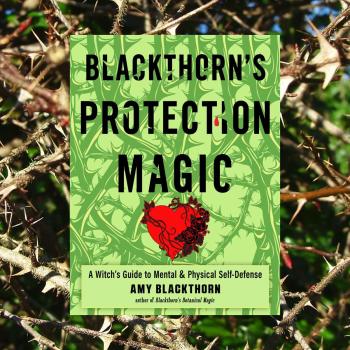
TRENDING AT PATHEOS Pagan

I was recently chatting with someone on Instagram. She asked me what...

While there are many people who share their results, the end of...

On July 23, I saw Christopher Nolan's The Odyssey which is Homer’s...

As I write this two big events have just finished up. One...

Restoring the Watershed of Divine Love
Perhaps cooperation is not something we manufacture through legislation, ideology, or moral...

Many UUs don’t pray because of bad experiences in a previous religion,...
view all Pagan blogs
Ad-Free & Subscriber Log-In Subscription Support
- About Us
- 2026 Calendar
- Videos
- Podcasts
- Library of World Religions
- Faith In Media Tracker
- Advertise With Us
- Write for Us
- Privacy Policy
- Terms of Service
- Do Not Sell My Data
- Contact Us
- Radiant Digital
- Manage Newsletter Subscriptions
- Unsubscribe From Notifications
- Sitemap
Copyright 2008-2026, Patheos. All rights reserved.
Subscription Support Ad-Free & Subscriber Log-In
Follow Patheos