
BuddhistCatholicContemplativeEvangelicalGeneral ChristianHinduJewishLatter-day SaintMuslimNew VisionsProgressive Christian
Beliefs
- Buddhist
- Catholic
- Contemplative
- Evangelical
- General Christian
- Hindu
- Jewish
- Latter-day Saint
- More Voices
- Muslim
- New Visions
- Pagan
- Progressive Christian
Topics
- Religion News
- Food and Religion
- Sports and Religion
- Religious Art
- Religious Music and Entertainment
- Religious Events
- History and Religion
- Style and Religion
- Politics and Religion
- Women in Religion
- Recreation Outdoors and Religion
- Business Finance and Religion
- Careers Workplace and Religion
- Education and Religion
- Family Parenting and Religion
- Health Fitness and Religion
- Home and Religion
- Relationships and Religion
- Technology and Religion
- Travel and Religion
Columnists
- Buddhist Columnists
- Business Finance and Religion Columnists
- Careers Workplace and Religion Columnists
- Catholic Columnists
- Contemplative Columnists
- Education and Religion Columnists
- Evangelists Columnists
- Family Parenting and Religion Columnists
- General Christian Columnists
- Health Fitness and Religion Columnists
- Hindu Columnists
- History and Religion Columnists
- Home and Religion Columnists
- Jewish Columnists
- More Voices Columnists
- Latter Day Columnists
- Muslim Columnists
- New Visions Columnists
- Nonreligious Columnists
- Pagan Columnists
- Politics and Religion Columnists
- Progressive Columnists
- Recreation Outdoors and Religion Columnists
- Relationships and Religion Columnists
- Religion News Columnists
- Religious Art Columnists
- Religious Events Columnists
- Religious Music and Entertainment Columnists
- Sports and Religion Columnists
- Style and Religion Columnists
- Technology and Religion Columnists
- Travel and Religion Columnists
- Women in Religion Columnists
Resource Library
- 2026 Calendar
- Library of World Religions
- The 100 Most Holy Places on Earth
- Patheos Answers
- Podcasts
- Videos
- Faith Leaders Database
- Anglican Episcopalian
- Bahai
- Baptist
- Buddhism
- Christianity
- Confucianism
- Eastern Orthodoxy
- Hinduism
- Holiness and Pentecostal
- ISKCON
- Islam
- Judaism
- Lutheran
- Methodist
- The Church of Jesus Christ of Latter-day Saints
- New Age
- Paganism
- Presbytarian and Reformed
- Protestantism
- Religion Behind the Scenes
- Roman Catholic
- Scientology
- Shia Islam
- Sikhism
- Sufism
- Sunni Islam
- Taoism
- Zen
- See all religions
Research Tools
 Ad-Free & Subscriber Log-In Subscription Support
Ad-Free & Subscriber Log-In Subscription Support
Follow Patheos 

- Trending:
- Forgiveness
- |
- Marriage
- |
- Consciousness
- |
- Death Penalty
- |
- Election
- |
- Halloween
 Poisoner's Apothecary
- Home
- Pagan
- Contemplating the Devil
Contemplating the Devil
Last updated on: July 1, 2016 at 6:29 am by Coby Michael Ward
Contemplating the Devil 2016-07-01T06:29:32-04:00 Coby Michael Ward
Patheos Explore the world's faith through different perspectives on religion and spirituality! Patheos has the views of the prevalent religions and spiritualities of the world.
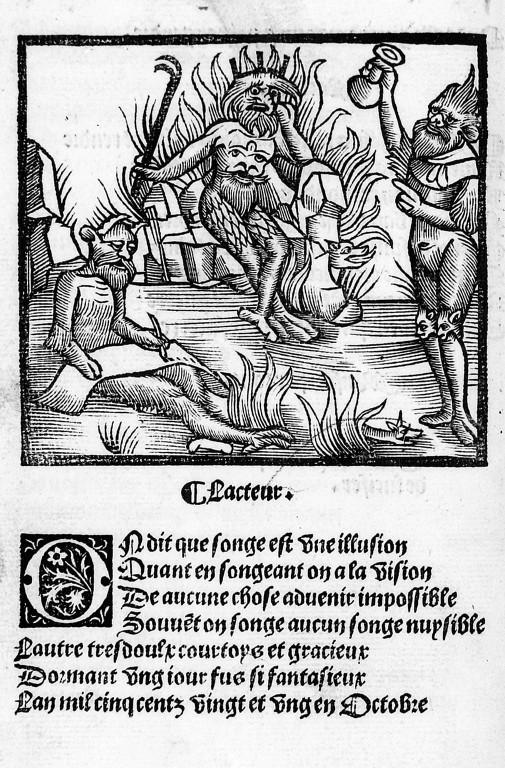
Over the millennia the one who we call the Devil has taken many forms, and gone by many names. These identities have changed over time, as inspiration for his portrayal was drawn form faraway lands. In watching the documentary, The Devil We Know, we get an in depth look at the devil’s identity. In the Book of Job, Satan, as he is identified becomes personified as “the tempter, not necessarily a rival but fulfilling a role for God.” He is also the Light bringer, delivering divine enlightenment to humanity so that they might understand the true nature of the Universe. He is the one, who brought the sacred flame down from Mount Olympus and was punished for doing so, that we might be different from the animals that walk the earth. It isn’t until the Revelation of Saint John that “the devil really gets his personification as the Great Beast according to the documentary. The documentary goes on through the early years to the middle Ages when the devil becomes “the personification of evil in the middle ages.” It is during this time we learn that he takes on “animalistic, monstrous forms based on traits from Pagan deities.” The Devil’s identity is proliferated through multiple means, orally, through artwork, poetry and the writing of the time. One of the most influential texts is Dante’s Divine Comedy, this famous epic completely destroys and eliminates, “any previous angelic associations he may have had.” It is now after all of these changes influenced by religion, politics, and popular culture we are left with the current image of the Devil as Satan the Adversary.. The Church teaches that Satan’s power actually comes from God, he rules with God’s authority. The Devil’s domain is of course Hell and the surface of the Earth. “Hell is a metaphor, meaning life without any presence of God.” (Hell:The Devil’s Domain) Lucifer, when he fell brought down a third of the angels in Heaven and a third of the stars in the skies. The Devil is portrayed as the antithesis of God. In this sense he is God’s opposite and His equal. Lucifer new that he was just as powerful as God when it came to ruling. It was this pride that caused Lucifer to rebel and turn away from God. The video tells us that, “Lucifer wanted to ascend to the throne of God.” And he had the support of many of the watcher angels, “Lucifer fought God’s armies and Michael the archangel.” (Hell:The Devil’s Domain) The authenticity of the Devil as he is known to modern society is questionable. Over the centuries multiple sources from different backgrounds have contributed ideas about Satan, Lucifer, and the Devil. It is important to look at the very first mentions of the Devil and those that came before him. In, Hell: The Devil’s Dominion, we learn that Satan shares his red color with “Seth, the Egyptian God of the Underworld described as a ‘crimson god.” There is also foreshadowing in the Pagan god Pan, the horned god of the wild whose horns were likely demonized, as he was a wild god of sexual desire. According to the video, “biblical conceptions of Hell and the devil evolve over the course of the Bible.” In The Devil We Know, we find out that the popular notion of Satan is not in the Bible. This brings his current identities authenticity into question. Is he really just an amalgam of all the nightmarish taboos people did not want to face? It is surprising to find out that the Serpent in Genesis is not the Devil we know, and according to the documentary the Serpent has no real connection with Satan. It isn’t until the book of Job that we learn that Satan becomes personified as a tempter; here we see the first hints of Satan as a Rival. By the New Testament Satan goes from “serving a necessary purpose for God” to the Devil of the present “Drunk on the Blood of Saints.” (The Devil We Know) The fact that the Devil changes so much from source to source is enough to wonder if the Devil of today is the same entity of early Christianity. The documentary, The Devil We Know: An Objective Look at the Prince of Darkness, raises an interesting point about gender. According to the documentary if “the Devil took human form he would be attractive, eloquent, and charismatic.” The portrayal of the Christian Devil as male has always gone unquestioned, but why is the devil male? The Devil is the rule of his domain, during the early years of Christianity it was likely women couldn’t own property; they were not seen as powerful. The Devil is always portrayed as male because of the patriarchy of the Church. The Devil is also too powerful to be able to be a female, and a female devil would not be seen as worthy of being an adversary of God. Another example of this is Lucifer’s desire to ascend to the throne of God. The idea of such being accomplished by a female demon would not pose such a threat to a society that put women at the low end of the social scale. A female Devil would not be as threatening, and because of this he is portrayed as a male. Even when he is in a bestial form he is depicted as masculine.
?????????????????????????????????????????????????????????????????????????????????????????????????????????????????????????????????????????????????????????
Previous Post

February 18, 2016
"Thou shalt not suffer a witch to live."
Next Post
February 18, 2016 Witchcraft Persecution, 21st Century Style
Browse Our Archives
Select a Category alchemy astrology Community Outreach and Events Current Events Featured Practitioners Gods and Goddesses green magic Green Witchcraft herbalism History of the Devil luciferian tradition Magic Magic and Ritual Magic and Witchcraft in History Magical Community magical herbalism Medieval Herbalism Metaphysics Modern Witchcraft natal charts natural magic Northern Traditions Occult Art Occult Artifacts Occultism pagan authors Pagan Community Pagan Holidays pagan philosophy Pagan Sightseeing Paganism Personal Practice planetary glyphs planetary symbols Recommended Reading Sabbatic Witchcraft samhain satanism Spells The Armchair The Poison Path Traditional Witchcraft Uncategorized Veneficium wicca witch's practice Witchcraft witches' sabbats
Select a Month December 2022 September 2022 August 2022 July 2022 March 2022 February 2022 January 2022 December 2021 October 2021 September 2021 August 2021 July 2021 May 2021 April 2021 March 2021 January 2021 December 2020 October 2020 September 2020 July 2020 June 2020 May 2020 April 2020 March 2020 February 2020 January 2020 December 2019 November 2019 October 2019 September 2019 August 2019 July 2019 June 2019 May 2019 April 2019 March 2019 February 2019 January 2019 December 2018 November 2018 October 2018 September 2018 August 2018 July 2018 June 2018 May 2018 April 2018 March 2018 February 2018 January 2018 December 2017 November 2017 October 2017 September 2017 August 2017 July 2017 June 2017 May 2017 April 2017 March 2017 February 2017 January 2017 December 2016 November 2016 October 2016 September 2016 August 2016 July 2016 June 2016 May 2016 March 2016 February 2016
Follow Us!
TAKE THE
Religious Wisdom Quiz
They will beat their swords into plowshares and their spears into what farming tool?
Select your answer to see how you score.
Hoes Pruning hooks Scythes Sickles
Related posts from Poisoner's Apothecary

Philosophia Toxicum: A Discourse on the Poison Path
Bryan Staniewski: In League wyth the Devyl

The Poison Path Herbal: Baneful herbs, medicinal nightshades...
TRENDING AT PATHEOS Pagan

I was recently chatting with someone on Instagram. She asked me what...

While there are many people who share their results, the end of...

On July 23, I saw Christopher Nolan's The Odyssey which is Homer’s...

As I write this two big events have just finished up. One...

Restoring the Watershed of Divine Love
Perhaps cooperation is not something we manufacture through legislation, ideology, or moral...

Many UUs don’t pray because of bad experiences in a previous religion,...
view all Pagan blogs
Ad-Free & Subscriber Log-In Subscription Support
- About Us
- 2026 Calendar
- Videos
- Podcasts
- Library of World Religions
- Faith In Media Tracker
- Advertise With Us
- Write for Us
- Privacy Policy
- Terms of Service
- Do Not Sell My Data
- Contact Us
- Radiant Digital
- Manage Newsletter Subscriptions
- Unsubscribe From Notifications
- Sitemap
Copyright 2008-2026, Patheos. All rights reserved.
Subscription Support Ad-Free & Subscriber Log-In
Follow Patheos