
BuddhistCatholicContemplativeEvangelicalGeneral ChristianHinduJewishLatter-day SaintMuslimNew VisionsProgressive Christian
Beliefs
- Buddhist
- Catholic
- Contemplative
- Evangelical
- General Christian
- Hindu
- Jewish
- Latter-day Saint
- More Voices
- Muslim
- New Visions
- Pagan
- Progressive Christian
Topics
- Religion News
- Food and Religion
- Sports and Religion
- Religious Art
- Religious Music and Entertainment
- Religious Events
- History and Religion
- Style and Religion
- Politics and Religion
- Women in Religion
- Recreation Outdoors and Religion
- Business Finance and Religion
- Careers Workplace and Religion
- Education and Religion
- Family Parenting and Religion
- Health Fitness and Religion
- Home and Religion
- Relationships and Religion
- Technology and Religion
- Travel and Religion
Columnists
- Buddhist Columnists
- Business Finance and Religion Columnists
- Careers Workplace and Religion Columnists
- Catholic Columnists
- Contemplative Columnists
- Education and Religion Columnists
- Evangelists Columnists
- Family Parenting and Religion Columnists
- General Christian Columnists
- Health Fitness and Religion Columnists
- Hindu Columnists
- History and Religion Columnists
- Home and Religion Columnists
- Jewish Columnists
- More Voices Columnists
- Latter Day Columnists
- Muslim Columnists
- New Visions Columnists
- Nonreligious Columnists
- Pagan Columnists
- Politics and Religion Columnists
- Progressive Columnists
- Recreation Outdoors and Religion Columnists
- Relationships and Religion Columnists
- Religion News Columnists
- Religious Art Columnists
- Religious Events Columnists
- Religious Music and Entertainment Columnists
- Sports and Religion Columnists
- Style and Religion Columnists
- Technology and Religion Columnists
- Travel and Religion Columnists
- Women in Religion Columnists
Resource Library
- 2026 Calendar
- Library of World Religions
- The 100 Most Holy Places on Earth
- Patheos Answers
- Podcasts
- Videos
- Faith Leaders Database
- Anglican Episcopalian
- Bahai
- Baptist
- Buddhism
- Christianity
- Confucianism
- Eastern Orthodoxy
- Hinduism
- Holiness and Pentecostal
- ISKCON
- Islam
- Judaism
- Lutheran
- Methodist
- The Church of Jesus Christ of Latter-day Saints
- New Age
- Paganism
- Presbytarian and Reformed
- Protestantism
- Religion Behind the Scenes
- Roman Catholic
- Scientology
- Shia Islam
- Sikhism
- Sufism
- Sunni Islam
- Taoism
- Zen
- See all religions
Research Tools
 Ad-Free & Subscriber Log-In Subscription Support
Follow Patheos 

- Trending:
- Advent
- |
- Forgiveness
- |
- Thanksgiving
- |
- Election
- |
- Seasonal Holidays
- |
- Marriage
 Pointedly Pagan
- Home
- Pagan
- The Language of Power and the Language of Care
The Language of Power and the Language of Care
Last updated on: May 17, 2015 at 4:37 am by Gus diZerega
The Language of Power and the Language of Care 2015-05-17T04:37:53+00:00 Gus diZerega
Patheos Explore the world's faith through different perspectives on religion and spirituality! Patheos has the views of the prevalent religions and spiritualities of the world.
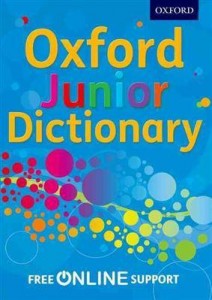
A new edition of the Oxford Junior Dictionary appeared in 2007. New editions add some words and subtract others. This time the pattern in both deletions and additions was troubling. And not just for Pagans.
The big losers were words about religion and nature. The 2007 dictionary dropped words such as ‘acorn’, ‘beaver’, ‘colt’, ‘dandelion’, ‘doe’, ‘ferret’, ‘goldfish’, ‘hamster’, ‘ivy’, ‘pasture’, ‘sycamore’, ‘violet’, and ‘willow’. The trend continued in the 2012 edition with ‘cauliflower’, ‘chestnut’, and ‘clover’ deemed unnecessary. (I’ll cover the religious words below.)
While not comprising all the new words added, modern technology was the big winner. ‘Blog’, ‘bullet point’, ‘broadband’, ‘MP3 Player’, ‘voicemail’, ‘analogue’ and ‘features cut and paste’ were among those added. New nature-oriented words were ‘biodegradable’, ‘endangered’, ‘food chain’, and ‘interdependent’.
Languages are alive, their words and meanings existing in a kind of linguistic ecosystem. New words arise, old words evolve different meanings, and sometimes even venerable words go extinct.
But dropping hamster? Dandelion?
There are healthy ecosystems and ones not so healthy. The same is true for their linguistic equivalent. This pattern is not healthy.

Photo courtesy of Shutterstock.
Words inviting relationships were replaced by words closed to them. The hamster has interests to which we can relate. So does the dandelion. Computer technology does not. We can care about a hamster, or a dandelion. but it makes no sense to say we care about a computer in the same way. We can nurture dandelions or hamsters, but beyond the clearly metaphorical it makes no sense to say we nurture our computer or my blog. We take care of computers and blogs so they can better serve us by being responsive to our will*.* They have no will. Hamsters do and dandelions do at least in the sense of striving to flourish. We can care about living beings in a way we cannot care about objects.
The language of power
No matter how marvelous it is, technology refers to things deriving their meaning entirely from us. They are meaningless in themselves. This has been true from the first chipped rock to the space station. Standards of achievement and failure arise internally from what it is to be a dandelion or a hamster but technology’s success or failure comes from standards external to it- from how well it serves those who use it.
Power over dandelions and hamsters is one of a variety of possible relations we can have with them and often it is not the best. Like ourselves their reality is multidimensional. We can relate to things only on a single dimension. They are useful, a hindrance, or irrelevant. While appropriate with respect to technology, that mentality blinds us to the deeper richness of connection possible within the living world around us.
Pre-modern societies, especially Pagan ones, generally experienced their world as alive and inviting, even requiring, relationship. For example, American Indian languages often used verbs to refer to what we call nouns. Theirs was a world of active subjects where appropriate behavior emerged from the nature of things. Respect and morality are terms of relationship.
In its fascination with power the modern world has steadily reduced the realm of relationship and enlarged the realm of power. The language of technology is the language of power: what it can do, how it can empower us, and how we might fall under its power. Because they are external to us, even technologies enabling us to observe what we otherwise can not, such as galaxies and cells, leave us on the outside looking in. It is only the empathetic mind that makes connection.
The new ecological terms I listed above do not refer to anything with which we can enter into relationship. All of them distance ourselves from concrete encounters to a greater or lesser degree. “Interdependence” refers to nothing in particular. ‘Biodegradable’, ‘food chains’, and ‘endangered’ are even worse in this sense. They are scientific terms, and the scientific ideal seeks to minimize the depth of relationships with what is studied even if this depth personally motivates individual scientists.
The language of isolation
Protesting what was done, a number of prominent writers penned an open letter to Oxford University Press pleading the cuts be reversed. They wrote in part
…it is worrying that in contrast to those [words] taken out, many are associated with the interior, solitary childhoods of today. In light of what is known about the benefits of natural play and connection to nature; and the dangers of their lack, we think the choice of words to be omitted shocking and poorly considered.
A world of things is a world of radical isolation as well as a world mediated by power. It separates us from others in any capacity but their existence as objects. Think of how our encounter with another is changed when we change “he” or “she” to “it.” Insofar as some thing is also a subject, we are walled off from deeper understanding.
A world of relationships invites us to envision power within a deeper context that shapes, moderates, and gives more meaning to it. Relationships limit power in favor of richness and depth of connection.
Consider comments on internet blogs. Over time some have built up genuine communities. My favorite of these is Balloon Juice.(which apparently even has a Pagan contributor) Most blogs however are plagued by trolls and a remarkably low level of respect for other participants. Many who comment have anonymous avatars and even some bloggers do as well. The medium has increased our power to obtain and spread information, but it has made finding relationship more difficult. We are more isolated from the complexity and meaning of human interaction.
The primacy of connection
At the same time modern biology is discovering everything, from quantum connection to our bodies’ cells to human beings as a whole to life on earth can be most accurately described as consisting of relationships. The language of relationship captures the reality of world biology is discovering than is the language of things and power. Yet our civilization as a whole is replacing words inviting deeper embeddedness in life with ones encouraging us to perceive from radical isolation, surrounded by things.
Religion as well
This same pattern appeared when the OJD eliminated terms such as ‘abbey’, ‘bishop’, ‘chapel’, ‘minister’, ‘saint’, and ‘sin’. As Pagans we might be inclined to cheer, but there is a deeper problem here. All religions point to a reality beyond human power and concerns, and to honoring that reality. Religious words reference humanity’s relationship to the more-than-human. Think of the opposite message sent children if someday the OJD were to include along with those absent Christian terms the words ‘Witch’, ‘Druid’, ‘priestess’, ‘Heathen’, and ‘coven’.
Childhood is a time for learning the basics about relationships, but our culture is strengthening their sense of being alone, impeding their awareness of perhaps the most basic human quality: the power to care for others beyond oneself. A dictionary intended for seven year olds will not make a decisive difference.. But it emphasizes what the dominant adult society considers important enough to for them to know. Today the OJD symbolizes the progressive impoverishment of deep human experience in the modern world.
We are born powerless, and it is only through relationships that we are enabled to come into our own power. But when power becomes an end and not a means, relationships dissolve. Friends are useful, but if the reason you want a friend is because friends are useful, you will never be a friend (though you might be an OK economist).
Care is a far stronger force for shaping behavior than is knowledge. And our knowledge always seems more complete than it is. The care emerging from relationship limits our power by taking others into consideration, and so helps us avoid the worst mistakes we can make from our ignorance while further enriching our lives.
We Pagans, most of us anyway, know the world is not a thing, nor are the beings who live with us within it. We are aware the possibilities of relationship are open-ended far beyond the imagination of the power-obsessed civilization in which we live. Many of us know good relationships are the best antidote for the endless pursuit of power over things and over others. I think it is here that the Pagan sensibility stands in most radical opposition to modernity’s infatuation with power.
(Small clarifications and corrections on a misspelling made 5/16.)
Previous Post

March 22, 2015
The spiritual gifts of Wicca do not stop with Wiccans
Next Post

June 11, 2015 Caitlin Jenner, the Duggars, and Us
Browse Our Archives
Select a Category Uncategorized
Select a Month June 2016 April 2016 February 2016 January 2016 December 2015 October 2015 July 2015 June 2015 May 2015 March 2015 January 2015 August 2014 July 2014 June 2014 April 2014 March 2014 February 2014 January 2014 December 2013 November 2013 October 2013 August 2013 July 2013 April 2013 March 2013 February 2013 January 2013 December 2012
Follow Us!
TAKE THE
Religious Wisdom Quiz
According to Hebrews, who serves as a copy and shadow of what is in heaven?
Select your answer to see how you score.
The angels The priests in the earthly sanctuary The apostles The prophets
Related posts from Pointedly Pagan

Politics, Pagan religion and the 2016 elections- up...

Social Justice from a Pagan perspective

My Near Death Experience in Maine: a lesson...

The Parliament of the World's Religions and the...
TRENDING AT PATHEOS Pagan

To help with the upcoming holiday season, I'm introducing the Holiday Helper...

10 years of the Power Sigil & Moving...
Last week while reorganizing my studio space, I found the sketchbook that...

Why are younger seekers drawn to Paganism and...
One of the things I've noticed the most is that I'm far...

When we talk about Greek religion, we often begin with the dodekatheion—the...

I was recently chatting with someone on Instagram. She asked me what...

On July 23, I saw Christopher Nolan's The Odyssey which is Homer’s...
view all Pagan blogs
Ad-Free & Subscriber Log-In Subscription Support
- About Us
- 2026 Calendar
- Videos
- Podcasts
- Library of World Religions
- Faith In Media Tracker
- Advertise With Us
- Write for Us
- Privacy Policy
- Terms of Service
- Do Not Sell My Data
- Contact Us
- Radiant Digital
- Manage Newsletter Subscriptions
- Unsubscribe From Notifications
- Sitemap
Copyright 2008-2026, Patheos, part of the Radiant Digital network of media brands. All rights reserved.
Subscription Support Ad-Free & Subscriber Log-In
Follow Patheos