
BuddhistCatholicContemplativeEvangelicalGeneral ChristianHinduJewishLatter-day SaintMuslimNew VisionsProgressive Christian
Beliefs
- Buddhist
- Catholic
- Contemplative
- Evangelical
- General Christian
- Hindu
- Jewish
- Latter-day Saint
- More Voices
- Muslim
- New Visions
- Pagan
- Progressive Christian
Topics
- Religion News
- Food and Religion
- Sports and Religion
- Religious Art
- Religious Music and Entertainment
- Religious Events
- History and Religion
- Style and Religion
- Politics and Religion
- Women in Religion
- Recreation Outdoors and Religion
- Business Finance and Religion
- Careers Workplace and Religion
- Education and Religion
- Family Parenting and Religion
- Health Fitness and Religion
- Home and Religion
- Relationships and Religion
- Technology and Religion
- Travel and Religion
Columnists
- Buddhist Columnists
- Business Finance and Religion Columnists
- Careers Workplace and Religion Columnists
- Catholic Columnists
- Contemplative Columnists
- Education and Religion Columnists
- Evangelists Columnists
- Family Parenting and Religion Columnists
- General Christian Columnists
- Health Fitness and Religion Columnists
- Hindu Columnists
- History and Religion Columnists
- Home and Religion Columnists
- Jewish Columnists
- More Voices Columnists
- Latter Day Columnists
- Muslim Columnists
- New Visions Columnists
- Nonreligious Columnists
- Pagan Columnists
- Politics and Religion Columnists
- Progressive Columnists
- Recreation Outdoors and Religion Columnists
- Relationships and Religion Columnists
- Religion News Columnists
- Religious Art Columnists
- Religious Events Columnists
- Religious Music and Entertainment Columnists
- Sports and Religion Columnists
- Style and Religion Columnists
- Technology and Religion Columnists
- Travel and Religion Columnists
- Women in Religion Columnists
Resource Library
- 2026 Calendar
- Library of World Religions
- The 100 Most Holy Places on Earth
- Patheos Answers
- Podcasts
- Videos
- Faith Leaders Database
- Anglican Episcopalian
- Bahai
- Baptist
- Buddhism
- Christianity
- Confucianism
- Eastern Orthodoxy
- Hinduism
- Holiness and Pentecostal
- ISKCON
- Islam
- Judaism
- Lutheran
- Methodist
- The Church of Jesus Christ of Latter-day Saints
- New Age
- Paganism
- Presbytarian and Reformed
- Protestantism
- Religion Behind the Scenes
- Roman Catholic
- Scientology
- Shia Islam
- Sikhism
- Sufism
- Sunni Islam
- Taoism
- Zen
- See all religions
Research Tools
 Ad-Free & Subscriber Log-In Subscription Support
Ad-Free & Subscriber Log-In Subscription Support
Follow Patheos 

- Trending:
- Forgiveness
- |
- Marriage
- |
- Consciousness
- |
- Death Penalty
- |
- Election
- |
- Halloween
 Pointedly Pagan
- Home
- Pagan
- The spiritual gifts of Wicca do not stop with Wiccans
The spiritual gifts of Wicca do not stop with Wiccans
Last updated on: March 28, 2015 at 3:24 pm by Gus diZerega
The spiritual gifts of Wicca do not stop with Wiccans 2015-03-28T15:24:25+00:00 Gus diZerega
Patheos Explore the world's faith through different perspectives on religion and spirituality! Patheos has the views of the prevalent religions and spiritualities of the world.
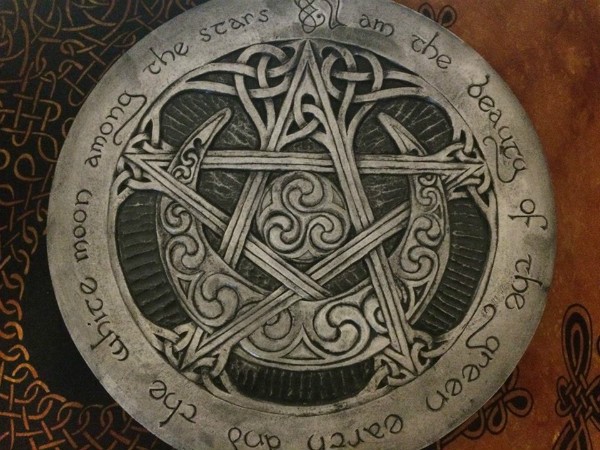
Wicca and similar NeoPagan traditions have already helped humanity far out of proportion to our small numbers. We have disproportionately strengthened two spiritual insights essential to humanity’s future: the sacredness of the feminine and the sacredness of nature. In the absence of a appreciation for both, our society faces increasingly dark times, times even darker than those we are currently suffering.
The crisis of our times
As with every society, America has always presented a positive and negative side. Because of our power, both are large. The positive gives us a vision of universal equality under the law; government by consent of the governed; religious liberty; economic prosperity for all; universal education for all; a society built on human rights rather than the narcissism of race or tribe; and with respect for nature manifesting in a national park system honored and duplicated world-wide and a vision of ecological sustainability. Many of these values are now better manifested in other nations, poor and rich alike.
Our shadow side has included the robbery and genocide of Native Americans; an economy rooted in the horrors of slavery; oppressive and violent racism and tribalism; large religious communities that worship deities who, were they human, would be locked up as criminally insane; aggressive wars in service to endless greed, wars that, like that greed, are now unending; and growing contempt for science and for maintaining a sustainable world for the nature so many of us love, and for future generations of human beings.
This kind of division has always been present but rarely acknowledged. Like other countries, in our laziness and cowardice we prefer looking only at the positive. And so our dark side has never been truly confronted. Today, with the weakening of our inherited moral traditions, forces reflecting our darkest side are explicitly seeking to replace those traditions with their own elevation of power and domination.
A great bifurcation is taking place between what remains of an equality oriented liberal and progressive vision rooted in our Declaration of Independence and our culture’s most authoritarian and world-pathic dimensions, today mostly concentrated in the political right. Our dominant spiritual traditions appear too weak on their own to push back effectively, and in many cases fall under the sway of these forces. For example, the largest group of Americans supporting torture, both in numbers and in percentage, are conservative ‘Christians’.
We have entered such a degenerate state because the moral capital of the Enlightenment, a vision that gave us the best of the modern world, has weakened and exhausted itself. Rooted in the best of liberal Protestantism, this tradition is now failing to push back effectively against forces of domination, nihilism, and violence on the right or from the endless greed of amoral corporations.
This country desperately needs a strengthened moral vision, a renewed sense of right and wrong that rejects today’s practice of giving power to whoever has the most money and weapons. Modernity’s traditional spiritual wells have been reduced to a trickle when they flow at all.
There is some hope. The tiny shoots of a new beginning are growing in those mainstream religions that avoided the worst poisons of conservative monotheism. They increasingly speak of the need to respect the world and honor the feminine side of deity. For millennia these two values have gone together, sharing a common fate. Today their fate and our culture are linked.
The sacredness of the world
For example, The Parliament of World Religions has made sustainability and ecology important themes in the world’s interfaith discussions. By so doing they have magnified the influence of Pagan and indigenous traditions that ground our practice in recognizing the sacredness of the earth. Unlike his predecessors who focused on human issues alone, Pope Francis has warned of global warming and humanity’s role in causing it. Soon he will issue an Encyclical on the topic. He is apparently preparing to take a strong stand against the forces that would destroy the world we love in order to keep making profits no matter what future harm is done to others.
Outside the more demonic monotheisms, care for the world has always been a religious value, but one consistently neglected in favor of purely human centered concerns. Care for the world has always been central to Wicca, and to most other NeoPagan and indigenous traditions. We continually honor it with our Wheel of the Year and with our Esbats. Today humanity must expand our moral universe to include the other-than-human, as most NeoPagans have long done. The best of mainstream religions are learning what we have always known: the world is sacred and not a storehouse of resources to be used however anyone sees fit.
The Divine Feminine
Increasingly the best of the world’s religious traditions are also emphasizing the importance of the sacred feminine. Marcus Borg, a prominent Christian theologian, wrote religious feminism is “the single most important development of theology in my lifetime.” (The God We Never Knew) When I was researching my book Faultlines: the Sixties the Culture Wars, and the Return of the Divine Feminine, I read many of the writings of religious feminists in the Buddhist, Jewish, and Christian communities. Over and over again I discovered they had initially been inspired by Starhawk’s writings and workshops. One could make a good case, reinforced by Borg’s words, that Starhawk will be regarded as one of the most influential religious thinkers of the late Twentieth Century. And she is a Witch.
Pagan yeast in religious dough
We are numerically small but we are at the forefront of two transformations needed if this culture is to make it through this century in good shape. It might not be accidental. As I discuss in Faultlines, many years ago Idris Shaw was working on a biography of Gerald Gardner. Shaw was interested because he had it on his “highest spiritual authority” that Wicca would be a major spiritual “current” in the next century. He abandoned the project, explaining he just couldn’t see it. (172)
Today the two major themes of Gardnerian Wicca, the divine feminine and the sacredness of nature, are increasingly making themselves felt in religious traditions far removed from our own. Perhaps Shaw should have trusted his sources more. We can only hope so, because on these two values the future of a decent society in America might well depend.
Celebration of difference
There is one other gift NeoPagans in general can give to the rest of the world: a shift of religious relations away from toleration and towards celebration. The roots of toleration are in the mutual exhaustion of religious war. What most Christians finally learned, Muslims are hopefully learning now: there is no future in seeking religious hegemony. But toleration becomes weak when the memory of religious war fades, and so aggressive designs towards theocracy are again inflaming the passions and pride of many calling themselves Christians.
Wiccans and Pagans in general focus on the spiritual as it manifests immanently, within the world. Our focus leads us to value diversity because from our perspective literally everything in the world has a sacred dimension, and when properly approached can be a path towards deepening our spiritual awareness. There is not one Pagan way. There is not even one Wiccan way. And many Pagans are happily engaged with other religious traditions as well, as with the Christopagans and others who seek to integrate Buddhism or other paths into their Pagan one. This is what we would expect in a world where the sacred is immanent.
It is in the relationship of our religion, practiced in communities, with our inevitably individual spiritualities, that we make the sacred our own. As we are individuals, so our communities will vary as well. As we practice together we contribute our own threads to the whole divine tapestry of immanent and transcendent beauty that includes and embraces us all.
Previous Post

January 13, 2015
Why monotheisms are so violent. And why the best monotheists are not.
Next Post

May 15, 2015 The Language of Power and the Language of Care
Browse Our Archives
Select a Category Uncategorized
Select a Month June 2016 April 2016 February 2016 January 2016 December 2015 October 2015 July 2015 June 2015 May 2015 March 2015 January 2015 August 2014 July 2014 June 2014 April 2014 March 2014 February 2014 January 2014 December 2013 November 2013 October 2013 August 2013 July 2013 April 2013 March 2013 February 2013 January 2013 December 2012
Follow Us!
TAKE THE
Religious Wisdom Quiz
Who said, "Behold the Lamb of God, who takes away the sin of the world"?
Select your answer to see how you score.
Paul John the Baptist Peter Mary
Related posts from Pointedly Pagan

The Trance of Belief II: Awakening and enjoying


Social Justice from a Pagan perspective
The role of esotericism in Pagan religion
TRENDING AT PATHEOS Pagan

I was recently chatting with someone on Instagram. She asked me what...

While there are many people who share their results, the end of...

On July 23, I saw Christopher Nolan's The Odyssey which is Homer’s...

As I write this two big events have just finished up. One...

Restoring the Watershed of Divine Love
Perhaps cooperation is not something we manufacture through legislation, ideology, or moral...

Many UUs don’t pray because of bad experiences in a previous religion,...
view all Pagan blogs
Ad-Free & Subscriber Log-In Subscription Support
- About Us
- 2026 Calendar
- Videos
- Podcasts
- Library of World Religions
- Faith In Media Tracker
- Advertise With Us
- Write for Us
- Privacy Policy
- Terms of Service
- Do Not Sell My Data
- Contact Us
- Radiant Digital
- Manage Newsletter Subscriptions
- Unsubscribe From Notifications
- Sitemap
Copyright 2008-2026, Patheos. All rights reserved.
Subscription Support Ad-Free & Subscriber Log-In
Follow Patheos