
BuddhistCatholicContemplativeEvangelicalGeneral ChristianHinduJewishLatter-day SaintMuslimNew VisionsProgressive Christian
Beliefs
- Buddhist
- Catholic
- Contemplative
- Evangelical
- General Christian
- Hindu
- Jewish
- Latter-day Saint
- More Voices
- Muslim
- New Visions
- Pagan
- Progressive Christian
Topics
- Religion News
- Food and Religion
- Sports and Religion
- Religious Art
- Religious Music and Entertainment
- Religious Events
- History and Religion
- Style and Religion
- Politics and Religion
- Women in Religion
- Recreation Outdoors and Religion
- Business Finance and Religion
- Careers Workplace and Religion
- Education and Religion
- Family Parenting and Religion
- Health Fitness and Religion
- Home and Religion
- Relationships and Religion
- Technology and Religion
- Travel and Religion
Columnists
- Buddhist Columnists
- Business Finance and Religion Columnists
- Careers Workplace and Religion Columnists
- Catholic Columnists
- Contemplative Columnists
- Education and Religion Columnists
- Evangelists Columnists
- Family Parenting and Religion Columnists
- General Christian Columnists
- Health Fitness and Religion Columnists
- Hindu Columnists
- History and Religion Columnists
- Home and Religion Columnists
- Jewish Columnists
- More Voices Columnists
- Latter Day Columnists
- Muslim Columnists
- New Visions Columnists
- Nonreligious Columnists
- Pagan Columnists
- Politics and Religion Columnists
- Progressive Columnists
- Recreation Outdoors and Religion Columnists
- Relationships and Religion Columnists
- Religion News Columnists
- Religious Art Columnists
- Religious Events Columnists
- Religious Music and Entertainment Columnists
- Sports and Religion Columnists
- Style and Religion Columnists
- Technology and Religion Columnists
- Travel and Religion Columnists
- Women in Religion Columnists
Resource Library
- 2026 Calendar
- Library of World Religions
- The 100 Most Holy Places on Earth
- Patheos Answers
- Podcasts
- Videos
- Faith Leaders Database
- Anglican Episcopalian
- Bahai
- Baptist
- Buddhism
- Christianity
- Confucianism
- Eastern Orthodoxy
- Hinduism
- Holiness and Pentecostal
- ISKCON
- Islam
- Judaism
- Lutheran
- Methodist
- The Church of Jesus Christ of Latter-day Saints
- New Age
- Paganism
- Presbytarian and Reformed
- Protestantism
- Religion Behind the Scenes
- Roman Catholic
- Scientology
- Shia Islam
- Sikhism
- Sufism
- Sunni Islam
- Taoism
- Zen
- See all religions
Research Tools
 Ad-Free & Subscriber Log-In Subscription Support
Ad-Free & Subscriber Log-In Subscription Support
Follow Patheos 

- Trending:
- Forgiveness
- |
- Marriage
- |
- Consciousness
- |
- Death Penalty
- |
- Election
- |
- Halloween
 Pilgrim's Road Trip
- Home
- Evangelical
- Shavuot, Pentecost: To Learn, To Try, To Eat
Shavuot, Pentecost: To Learn, To Try, To Eat
Last updated on: May 17, 2017 at 7:50 pm by Michelle Van Loon
Shavuot, Pentecost: To Learn, To Try, To Eat 2017-05-17T19:50:01-05:00 Michelle Van Loon
Patheos Explore the world's faith through different perspectives on religion and spirituality! Patheos has the views of the prevalent religions and spiritualities of the world.
Shavuot begins at sundown on Tuesday, May 30th. Click here for a 5-minute guide to the holiday.
Pentecost is Sunday, June 4th. Click here for a 5-minute guide to the holiday.
Why am I pairing these two holidays? Because just as every other part of Jesus’ ministry was rooted in his observant Jewish identity, the story of Pentecost recounted in Acts 2 is directly related to the reason people from every known tongue, tribe, and nation had converged on Jerusalem. They were there for the feast of Shavuot.
If we could go back in time to just a few days before the events described in Acts 2, we’d hear the resurrected Jesus telling his friends he was going to empower them to carry to the ends of the earth the news that new life was found only in him. Jesus spoke cryptically about how this empowering would happen. “I am going to send you what my Father has promised; but stay in the city until you have been clothed with power from on high” (Luke 24:49).
These Jewish followers of Jesus already knew they’d be staying in Jerusalem. From all across the land, the people who’d worshiped at the temple in Jerusalem fifty days earlier at Passover returned for corporate worship at Shavuot, the second of the three yearly pilgrim festivals God mandated for his people.
Shavuot was initially given by God to be a holiday celebrating the “first fruits” of the wheat harvest and honoring God’s provision. It came to be identified with the giving of the Law to the Israelites at Mount Sinai. This was not a random reassignment, however; the learned scholars did some calculating based on a clue found in Exodus 19:1: “On the first day of the third month after the Israelites left Egypt—on that very day—they came to the Desert of Sinai.”
These Torah scholars eventually determined that the Israelites received the Ten Commandments fifty days after their departure from Egypt. God’s gift of the Law became the focus of a Shavuot celebration. And on that first Shavuot after the resurrection, Jesus demonstrated both that he himself was the first fruit to which those offerings were pointing, and that he had come to write the law on the hearts of his people through the gift of the Holy Spirit.
Pentecost had a place on the yearly Christian calendar from the second century. Pasche, the observance of the resurrection, was the name for the entire fifty-day period between Easter Sunday and Pentecost Sunday. By the end of the third century, Pentecost was the name given to the final feast day of the fifty days. Over time, a liturgy and an eight-day vigil leading up to Pentecost formed around the day. These holy days were second only to Easter in importance for early believers. Because the date of Pentecost is calculated based on the date of Easter, which is derived from the lunar cycle, the earliest date in the Western church for Pentecost is May 10, and the latest date is June 13.
Many people like to say the Church was born at Pentecost. The signs, wonders, and miracles that exploded like dynamite were (and still are) road signs inviting Jew and Gentile alike—people from every tongue, tribe and nation—into this new community. Though I believe the community of God-fearing, Jesus-following people existed before Pentecost, this community was empowered at Pentecost, and the ripples from that blast have continued through time for the last 2,000 years.
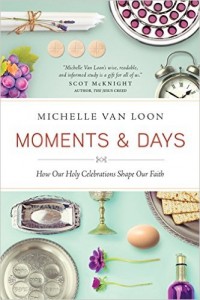 In my ongoing journey through the year, I’ve been posting a bit of information about each major holy day or season in the Jewish and Christian year – along with a “to try” and “to eat”. I’ve discovered many people are interested in being more intentional about learning about the these sacred calendars, but don’t quite know where to start. I’m very happy I can commend a resource that offers a thoughtful historical and devotional overview of each calendar, but also know that many people feel as through attempting to participate will be a pile-on of extra stuff to do (and extra guilt to feel if they can’t do it).
Because Shavuot and Pentecost fall six days apart this year, I’ll offer one simple “to try” suggestion that incorporates both holidays. Shavuot in observant Jewish communities is a holiday given to extended study of God’s word in honor of receiving the Torah at Mt. Sinai. Pentecost is the day in which believers were empowered to obey God’s word. Why not take some extended time sometime between Shavuot and Pentecost to read through Acts 1-7. Place yourself in the story (because if you are a follower of Jesus, you are in the story!) and imagine yourself experiencing the outpouring of the Holy Spirit for the first time. Pray for your church as you read. Pray for the Church universal. And give thanks to God as you do.
To Eat
It wouldn’t be a celebration without food, right? Shavuot is celebrated by enjoying dairy-based treats. Some rabbis have suggested that when the Chosen People received the kosher laws (detailed in Deuteronomy 11:1-47; 14:3-20) as part of the larger Torah given at Sinai, they realized that their cooking utensils were not set up to cook meat and dairy dishes separately; the Hebrew people ate uncooked dairy dishes in response to this law (Exodus 23:19; 24:26; Deuteronomy 14:21). Others have suggested that eating dairy with honey is a way to honor the language of the Torah as being sweet, rich, and fulfilling, just as milk and honey are to us (Song of Songs 4:11). Still others have noted that the custom may simply derive from Shavuot’s roots in the agricultural cycle: In antiquity, cheese was often made in late spring.
In any case, have I got a recipe for you. This dense, not-too-sweet recipe has been in my family since the early 1970s. Sylvia was the Italian grandmother of a neighbor of ours. She made the best old-fashioned New York-style cheesecake, a classic treat among the Jewish community.
 SYLVIA’S CHEESECAKE
1-1⁄2 cups graham cracker crumbs 4 tablespoons sugar
1⁄2 teaspoon cinnamon
4 tablespoons melted butter
Combine the above ingredients in a medium bowl. Press into a but- tered 9-inch springform pan.
Juice of 1 lemon
24 ounces (3 packages) cream cheese, room temperature
1 cup sugar
5 eggs
11⁄2 cups sour cream
2 tablespoons sugar
1 teaspoon vanilla
Preheat oven to 350 degrees. In large mixing bowl, beat together lemon juice, cream cheese, and 1 cup sugar. Beat in eggs one at a time until the mixture is light and fluffy. Pour over crust in springform pan. Bake for 45 minutes.
Remove from oven, and let cool for approximately 20 minutes. Meanwhile, combine the sour cream, 2 tablespoons sugar, and 1 tea- spoon vanilla in a small bowl. Spread over the slightly cooled cheese- cake, then return to the oven for an additional 10 minutes.
Remove from oven and let cool completely. Refrigerate overnight. The following day, remove the springform pan. Serve as is or with fresh berries drizzled with honey.

Previous Post

May 15, 2017
What Does "Rejoice In The Lord" Mean?
Next Post
May 21, 2017 Jerusalem Day 2017
Browse Our Archives
Select a Category Baggage Books Calendar Church and Ministry CVID Ecclesiology Everyday Christian life Faith Falling Upward From The Margins Housing Jesus Movement's Unintended Consequences Midlife Midlife Survey #1 Midlife Survey #2 Moments and Days Out To The Margins Pilgrim's Road Trip Regret Seminary Spiritual Formation Uncategorized What's A Nice Jewish Grandmother Like You Doing In Seminary? When The Heart Waits Writing
Select a Month June 2017 May 2017 April 2017 March 2017 February 2017 January 2017 December 2016 November 2016 October 2016 September 2016 August 2016 July 2016 June 2016 May 2016 April 2016 March 2016 February 2016 January 2016 December 2015 November 2015 October 2015 September 2015 August 2015 July 2015 June 2015 May 2015 April 2015 March 2015 February 2015 January 2015 December 2014 November 2014 October 2014 September 2014 August 2014 July 2014 June 2014 May 2014 April 2014 March 2014 February 2014 January 2014 December 2013 October 2013 September 2013 August 2013 July 2013 June 2013 May 2013 April 2013 March 2013 February 2013 January 2013 December 2012 November 2012 October 2012 September 2012 August 2012 July 2012 June 2012 May 2012 April 2012 March 2012 February 2012 January 2012 December 2011 November 2011 October 2011 September 2011 August 2011 July 2011 June 2011 May 2011 April 2011 March 2011 February 2011 January 2011 December 2010 November 2010 October 2010 September 2010 August 2010 July 2010 June 2010 May 2010 April 2010 March 2010 February 2010 January 2010 December 2009 November 2009 October 2009 September 2009 August 2009 July 2009 June 2009 May 2009 April 2009 March 2009 February 2009 January 2009 December 2008 November 2008 October 2008 September 2008 August 2008 July 2008 June 2008 May 2008 April 2008 March 2008 February 2008 January 2008 December 2007 November 2007 October 2007 September 2007 August 2007 July 2007 June 2007 May 2007 April 2007
Follow Us!
TAKE THE
Religious Wisdom Quiz
True or False: Mark records Jesus' birth narrative in Bethlehem.
Select your answer to see how you score.
TRUE FALSE
Related posts from Pilgrim's Road Trip
It's Still Easter: One Thing To Learn, One...
Yes, Seders Are For Christians*
Passover: One Thing To Try, One Thing To...
Holy Week: Where "Follow Me" Leads Us
TRENDING AT PATHEOS Evangelical

How the author of the world's best hymn...
I've been working with John Newton for a while now. This makes...

Long before this Lectio Divina, Psalm 130 - the song - started...

What About the Trees? Another Living Parable
After I finished writing the last article about falling leaves as a...

Why Classical Education Is a Conversation, Not a...
Come and Read: Joy in Classical Education When I was a little...

Falling Leaves: A Living Parable on Letting Go
I’ve spent the vast majority of my life in the southeast corner...

Cornell University has received a great deal of negative publicity and intense...
view all Evangelical blogs
Ad-Free & Subscriber Log-In Subscription Support
- About Us
- 2026 Calendar
- Videos
- Podcasts
- Library of World Religions
- Faith In Media Tracker
- Advertise With Us
- Write for Us
- Privacy Policy
- Terms of Service
- Do Not Sell My Data
- Contact Us
- Radiant Digital
- Manage Newsletter Subscriptions
- Unsubscribe From Notifications
- Sitemap
Copyright 2008-2026, Patheos. All rights reserved.
Subscription Support Ad-Free & Subscriber Log-In
Follow Patheos