
BuddhistCatholicContemplativeEvangelicalGeneral ChristianHinduJewishLatter-day SaintMuslimNew VisionsProgressive Christian
Beliefs
- Buddhist
- Catholic
- Contemplative
- Evangelical
- General Christian
- Hindu
- Jewish
- Latter-day Saint
- More Voices
- Muslim
- New Visions
- Pagan
- Progressive Christian
Topics
- Religion News
- Food and Religion
- Sports and Religion
- Religious Art
- Religious Music and Entertainment
- Religious Events
- History and Religion
- Style and Religion
- Politics and Religion
- Women in Religion
- Recreation Outdoors and Religion
- Business Finance and Religion
- Careers Workplace and Religion
- Education and Religion
- Family Parenting and Religion
- Health Fitness and Religion
- Home and Religion
- Relationships and Religion
- Technology and Religion
- Travel and Religion
Columnists
- Buddhist Columnists
- Business Finance and Religion Columnists
- Careers Workplace and Religion Columnists
- Catholic Columnists
- Contemplative Columnists
- Education and Religion Columnists
- Evangelists Columnists
- Family Parenting and Religion Columnists
- General Christian Columnists
- Health Fitness and Religion Columnists
- Hindu Columnists
- History and Religion Columnists
- Home and Religion Columnists
- Jewish Columnists
- More Voices Columnists
- Latter Day Columnists
- Muslim Columnists
- New Visions Columnists
- Nonreligious Columnists
- Pagan Columnists
- Politics and Religion Columnists
- Progressive Columnists
- Recreation Outdoors and Religion Columnists
- Relationships and Religion Columnists
- Religion News Columnists
- Religious Art Columnists
- Religious Events Columnists
- Religious Music and Entertainment Columnists
- Sports and Religion Columnists
- Style and Religion Columnists
- Technology and Religion Columnists
- Travel and Religion Columnists
- Women in Religion Columnists
Resource Library
- 2026 Calendar
- Library of World Religions
- The 100 Most Holy Places on Earth
- Patheos Answers
- Podcasts
- Videos
- Faith Leaders Database
- Anglican Episcopalian
- Bahai
- Baptist
- Buddhism
- Christianity
- Confucianism
- Eastern Orthodoxy
- Hinduism
- Holiness and Pentecostal
- ISKCON
- Islam
- Judaism
- Lutheran
- Methodist
- The Church of Jesus Christ of Latter-day Saints
- New Age
- Paganism
- Presbytarian and Reformed
- Protestantism
- Religion Behind the Scenes
- Roman Catholic
- Scientology
- Shia Islam
- Sikhism
- Sufism
- Sunni Islam
- Taoism
- Zen
- See all religions
Research Tools
 Ad-Free & Subscriber Log-In Subscription Support
Follow Patheos 

- Trending:
- Advent
- |
- Forgiveness
- |
- Thanksgiving
- |
- Election
- |
- Seasonal Holidays
- |
- Marriage
 Pilgrim's Road Trip
- Home
- Evangelical
- Yes, Seders Are For Christians*
Yes, Seders Are For Christians*
Last updated on: April 10, 2017 at 3:24 pm by Michelle Van Loon
Yes, Seders Are For Christians* 2017-04-10T15:24:00-05:00 Michelle Van Loon
Patheos Explore the world's faith through different perspectives on religion and spirituality! Patheos has the views of the prevalent religions and spiritualities of the world.
Yes, Seders are for Christians. The asterisk in the title above
Last week’s guest opinion piece written by Rabbi Yehiel Poupko and Rabbi David Sandmel entitled “Jesus Didn’t Eat A Seder Meal” was published on the Christianity Today website as a pushback against the appropriation of Passover Seders by a growing number in the Christian community. The two rabbis pointed out that Passover was given to the Jews, and all others should cease and desist.
A year ago, I interviewed Reform rabbi Evan Moffic about this very topic for Christianity Today. (Link here.) Moffic has a different point of view on the subject, to say the least. His words belong in this conversation about Christians and the Seder. The fact is, this is a conversation – an important one. Poupko and Sandmel don’t speak for all Jews. The Jewish community has a saying: “Two Jews, three opinions.” In other words, our history of learning by questioning cultivates an environment where loving, spirited debate is hard-wired into our very souls.
I am a Jewish follower of Jesus and would like to affirm one concern expressed by Poupko and Sandmel, while challenging a couple of other things about their post.
First, I hear and agree with the concern expressed by Poupko and Sandmel regarding appropriation, the definition of which is using for oneself without permission something that belongs to another. It’s a fancy way of saying “stealing”. The issue of appropriation is reason for my *asterisk* in the title of the post, above. Poupko and Sandmel note:
…adopting another’s ritual shows a lack of respect. Even when pursued with the best of intentions, taking another faith’s sacred ritual and transforming it into an expression of one’s own tradition displays a misunderstanding of the complex nature of faith traditions. Good relations between Christianity and Judaism, and by extension, other faiths as well, may begin with acknowledging common principles, but also demand a clear articulation of the profound differences that separate them. However, it is surely not the goal of good interfaith relations for Jews and Christians to co-opt or reshape one another’s rituals for their own ends.
My husband and I have led quite a few Seders for Gentile friends over the years, and we take special care to help participants understand the Exodus account as well as highlighting the post-Second Temple rabbinic liturgy and customs that helped my people tell the story of God’s deliverance from one generation to another. We also make sure to note where the Jewish Jesus expanded upon tradition extant in his day, for example by washing his disciples feet when it was expected that Jews would cleanse their hands before a meal. Most people I’ve known within the Messianic movement are careful to do the same. However, with the rise in popularity of Seders in some quarters of the Church, there are some who may be leading Seders without highlighting (or knowing!) the difference. It would be a great service if every person leading a Seder for Christians would do what Poupko and Sandmel ask: acknowledge common principles and clearly articulate differences.
My first point of contention regarding this piece is the implication “Jesus didn’t eat a Seder meal (so you shouldn’t either, Christians!)”. Dr. Michael Rydelnik, a Jewish believer and professor at Moody Bible Institute, wrote an excellent rebuttal to Rabbis Poupko and Sandmel entitled “The Passover Hustle“. He writes,
The Seder ritual, as it is practiced today, did not exist at the time of Jesus.” Frankly no one disputes that. Certainly, the Seder meal was only codified after the AD 70 destruction of the Temple. However, the authors know very well that the codification was based on the book of Exodus and oral traditions present for generations. So, the last supper was substantively a Passover meal/a Seder with multiple aspects of Seder ritual evident in the gospels.
Jesus lived during the time the Temple was still standing, thus, the focus of his participation in Passover every year of his life was based on the worship prescribed in the Torah. G. Shane Morris wrote a response to the CT article here, and though he aimed straight into the bane of my existence as a Messianic Jew, replacement theology, in the second half of his article, he did support the reality that Jesus participated fully in Passover as it was practiced during his lifetime: “Jesus did not eat precisely the same meal, nor did any Jew while the second Temple was still standing. But this does not mean that there’s no continuity between what happens now and what happened in Egypt over three-thousand years ago (or what happened in Jerusalem two-thousand years ago, for that matter).”
The question of continuity speaks to what it was Jesus was doing at the last meal he was sharing with his friends. Was Jesus launching a new religion? The long and short answer is NO. He emphasized throughout his ministry the language of fulfillment. In my book about the Jewish and Christian calendars, I quoted Bible teacher Lois Tverberg’s take on what Jesus was saying about fulfilling, rather than abolishing or overwriting the Law:
When he stood on the shore of the Sea of Galilee and delivered his Sermon on the Mount, Jesus emphasized that he’d come to fulfill the Law (Matthew 5:17). Bible teacher Lois Tverberg explains:
“Fulfill the Torah” is a rabbinic idiom that is still in use even today. The word we read as “law” is Torah in Hebrew, and its main sense is teaching, guidance and instruction, rather than legal regulation. It is God’s instructions for living, and because of God’s great authority, it demands obedience and therefore takes on the sense of “law.” The Torah is often understood to mean the first five books of the Bible, but also refers to the Scriptures in general. In Jesus’ time, and among Jews today, this is a very positive thing—that the God who made us would give us instructions for how to live. The rabbis made it their goal to understand these instructions fully and teach people how to live by it.
Tverberg notes that the Hebrew word for “to fulfill” is lekayem (“le-kai-YEM”), a word that signifies upholding or establishing something, as well as to fulfill, complete, or accomplish some- thing. Every single shading of meaning of lekayem in Jesus’ minis- try can be seen in the way in which he partook of his final Passover, hours before his arrest, trial, and crucifixion. Jesus upheld the message and meaning of the Seder as he applied its story of deliverance to himself.
When we read the Gospel accounts of the last meal Jesus shared with his disciples (Matthew 26:17-30; Mark 14:12-26; Luke 22:7-23; John 13–17), we can see the references to the basic elements of the Seder as it is still celebrated today. Jesus took these elements and adapted them to demonstrate to his disciples how he’d come to fulfill (lekayem) the purpose and meaning behind this yearly re-enactment of God’s deliverance of his people. Just as others leading Seders have done before and since, Jesus reframed the traditional texts and rituals of the holiday to infuse them with new meaning.
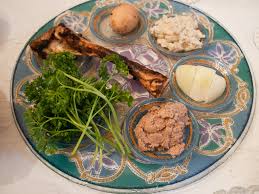 My friend Justin Kron teaches frequently on the Seder, facilitating demonstrations and full Seders for dozens of churches each year. He noted that some in the Jewish community have fears that Seder presentations like the ones he does can and do help Jews understand the Gospel, but adds, “I think they should be celebrating and affirming that Christians are using it to get more in touch with their Jewish heritage. If Christians had maintained this connection back in the Early Church rather than jettisoning it maybe there would have been less antisemitism emanating from it throughout the last 18 centuries.”
My second point of concern is about the position of the piece as a stand-alone op-ed on the Christianity Today website, rather than being presented as a point-counterpoint debate piece where a leader from within the Messianic community or a Christian scholar specializing in Jewish studies was given an opportunity to present a different point of view. I’d hope for the same kind of exchange at CT if the magazine/website printed an article penned by a Muslim, Buddhist or atheist. I’ve been strengthened and encouraged more than I can say by the kind of dialogue CT fosters, and count it a high privilege to have contributed numerous pieces to their website (and very occasionally, their print mag) over the years. I hope that CT will continue the conversation about this topic after Passover 2017 (5777) comes to an end.
Note: On April 10th, CT published this response to last week’s editorial from Mitch Glaser and Darrel Bock.
Have you ever been to a Seder presentation at a church? Attended a Seder led by a Messianic Jew? What was your experience like?

Previous Post

April 6, 2017
Passover: One Thing To Try, One Thing To Taste
Next Post
April 16, 2017 Review: Deliberate Acts of Kindness
Browse Our Archives
Select a Category Baggage Books Calendar Church and Ministry CVID Ecclesiology Everyday Christian life Faith Falling Upward From The Margins Housing Jesus Movement's Unintended Consequences Midlife Midlife Survey #1 Midlife Survey #2 Moments and Days Out To The Margins Pilgrim's Road Trip Regret Seminary Spiritual Formation Uncategorized What's A Nice Jewish Grandmother Like You Doing In Seminary? When The Heart Waits Writing
Select a Month June 2017 May 2017 April 2017 March 2017 February 2017 January 2017 December 2016 November 2016 October 2016 September 2016 August 2016 July 2016 June 2016 May 2016 April 2016 March 2016 February 2016 January 2016 December 2015 November 2015 October 2015 September 2015 August 2015 July 2015 June 2015 May 2015 April 2015 March 2015 February 2015 January 2015 December 2014 November 2014 October 2014 September 2014 August 2014 July 2014 June 2014 May 2014 April 2014 March 2014 February 2014 January 2014 December 2013 October 2013 September 2013 August 2013 July 2013 June 2013 May 2013 April 2013 March 2013 February 2013 January 2013 December 2012 November 2012 October 2012 September 2012 August 2012 July 2012 June 2012 May 2012 April 2012 March 2012 February 2012 January 2012 December 2011 November 2011 October 2011 September 2011 August 2011 July 2011 June 2011 May 2011 April 2011 March 2011 February 2011 January 2011 December 2010 November 2010 October 2010 September 2010 August 2010 July 2010 June 2010 May 2010 April 2010 March 2010 February 2010 January 2010 December 2009 November 2009 October 2009 September 2009 August 2009 July 2009 June 2009 May 2009 April 2009 March 2009 February 2009 January 2009 December 2008 November 2008 October 2008 September 2008 August 2008 July 2008 June 2008 May 2008 April 2008 March 2008 February 2008 January 2008 December 2007 November 2007 October 2007 September 2007 August 2007 July 2007 June 2007 May 2007 April 2007
Follow Us!
TAKE THE
Religious Wisdom Quiz
What animals did Jesus ride into Jerusalem?
Select your answer to see how you score.
A donkey An ox A horse A camel
Related posts from Pilgrim's Road Trip

Shavuot, Pentecost: To Learn, To Try, To Eat

It's Still Easter: One Thing To Learn, One...
Passover: One Thing To Try, One Thing To...

Holy Week: Where "Follow Me" Leads Us
TRENDING AT PATHEOS Evangelical

When you hear the word riches, what comes to mind? For most...

Don’t Miss the Parents: A Creative Christmas Meditation
As we enter the Advent Season, I see many people trying to...

Making Stones Into Bread: Choosing the “Right” Work
I was on my online arts ministry Zoom meeting with the International...

Ukraine’s exhausted Christians face fifth winter of war
By Julian Lukins The full-scale war in Ukraine is taking “a serious...

Russell Brand's Conviction is not anti-Christian Persecution
How do we shed the reputation that the Church is OK with...

Have you ever caught yourself saying, “I’ll do it tomorrow,” or “Now...
view all Evangelical blogs
Ad-Free & Subscriber Log-In Subscription Support
- About Us
- 2026 Calendar
- Videos
- Podcasts
- Library of World Religions
- Faith In Media Tracker
- Advertise With Us
- Write for Us
- Privacy Policy
- Terms of Service
- Do Not Sell My Data
- Contact Us
- Radiant Digital
- Manage Newsletter Subscriptions
- Unsubscribe From Notifications
- Sitemap
Copyright 2008-2026, Patheos, part of the Radiant Digital network of media brands. All rights reserved.
Subscription Support Ad-Free & Subscriber Log-In
Follow Patheos