
BuddhistCatholicContemplativeEvangelicalGeneral ChristianHinduJewishLatter-day SaintMuslimNew VisionsProgressive Christian
Beliefs
- Buddhist
- Catholic
- Contemplative
- Evangelical
- General Christian
- Hindu
- Jewish
- Latter-day Saint
- More Voices
- Muslim
- New Visions
- Pagan
- Progressive Christian
Topics
- Religion News
- Food and Religion
- Sports and Religion
- Religious Art
- Religious Music and Entertainment
- Religious Events
- History and Religion
- Style and Religion
- Politics and Religion
- Women in Religion
- Recreation Outdoors and Religion
- Business Finance and Religion
- Careers Workplace and Religion
- Education and Religion
- Family Parenting and Religion
- Health Fitness and Religion
- Home and Religion
- Relationships and Religion
- Technology and Religion
- Travel and Religion
Columnists
- Buddhist Columnists
- Business Finance and Religion Columnists
- Careers Workplace and Religion Columnists
- Catholic Columnists
- Contemplative Columnists
- Education and Religion Columnists
- Evangelists Columnists
- Family Parenting and Religion Columnists
- General Christian Columnists
- Health Fitness and Religion Columnists
- Hindu Columnists
- History and Religion Columnists
- Home and Religion Columnists
- Jewish Columnists
- More Voices Columnists
- Latter Day Columnists
- Muslim Columnists
- New Visions Columnists
- Nonreligious Columnists
- Pagan Columnists
- Politics and Religion Columnists
- Progressive Columnists
- Recreation Outdoors and Religion Columnists
- Relationships and Religion Columnists
- Religion News Columnists
- Religious Art Columnists
- Religious Events Columnists
- Religious Music and Entertainment Columnists
- Sports and Religion Columnists
- Style and Religion Columnists
- Technology and Religion Columnists
- Travel and Religion Columnists
- Women in Religion Columnists
Resource Library
- 2026 Calendar
- Library of World Religions
- The 100 Most Holy Places on Earth
- Patheos Answers
- Podcasts
- Videos
- Faith Leaders Database
- Anglican Episcopalian
- Bahai
- Baptist
- Buddhism
- Christianity
- Confucianism
- Eastern Orthodoxy
- Hinduism
- Holiness and Pentecostal
- ISKCON
- Islam
- Judaism
- Lutheran
- Methodist
- The Church of Jesus Christ of Latter-day Saints
- New Age
- Paganism
- Presbytarian and Reformed
- Protestantism
- Religion Behind the Scenes
- Roman Catholic
- Scientology
- Shia Islam
- Sikhism
- Sufism
- Sunni Islam
- Taoism
- Zen
- See all religions
Research Tools
 Ad-Free & Subscriber Log-In Subscription Support
Ad-Free & Subscriber Log-In Subscription Support
Follow Patheos 

- Trending:
- Forgiveness
- |
- Marriage
- |
- Consciousness
- |
- Death Penalty
- |
- Election
- |
- Halloween
 Pilgrim's Road Trip
- Home
- Evangelical
- Passover: One Thing To Try, One Thing To Taste
Passover: One Thing To Try, One Thing To Taste
Last updated on: April 6, 2017 at 1:44 pm by Michelle Van Loon
Passover: One Thing To Try, One Thing To Taste 2017-04-06T13:44:29-05:00 Michelle Van Loon
Patheos Explore the world's faith through different perspectives on religion and spirituality! Patheos has the views of the prevalent religions and spiritualities of the world.
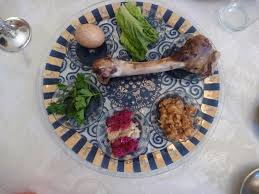
Passover is largely about Egypt; Easter is largely about Passover. – Rabbi Ismar Schorsch
To Try:
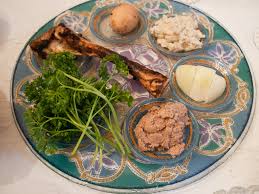
Each year Jewish families retell and experience anew the Exodus through the Seder. From the Hebrew word meaning “order,” the Seder is a formal festival meal that has an entirely different focus and purpose than any other meal of the year. The Seder is to be held on the first night of the Passover observance – this year, on Monday evening, April 10th. (The Feast of Unleavened Bread continues for an additional seven nights, though the entire 8 day grouping is generally known as Passover.)
After the destruction of the temple in AD 70, Passover became a home-centered observance. A written order of service, called a Haggadah (meaning “telling”), is how Seder participants remember and participate in the Exodus story. All five senses are involved: There are elements to see; a story, songs and prayers to hear; and ceremonial foods to taste and touch. Everyone from youngest to oldest is involved as the story is retold, following certain forms and including specific prayers, songs, and Scripture readings.
The Seder’s foundation for the gift of communion gives it an essential place as a teaching tool in the life of a follower of Jesus. Some Christians have made some form of a Seder meal part of their holy week observances, often on Maundy Thursday (April 13th this year). Others have made it part of their family’s life and worship each year. Many Churches invite in organizations like Jews for Jesus or Chosen People to offer a “demonstration Seder” that emphasizes how Jesus celebrated his final Passover with his disciples, and fulfilled it wholly in himself. Yes, Seders are for Christians.

In my ongoing journey through the year, I’ve been posting a bit of information about each major holy day or season in the Jewish and Christian year – along with a “to try” and “to eat”. I’ve discovered many people are interested in being more intentional about learning about the these sacred calendars, but don’t quite know where to start. I’m very happy I can commend a resource that offers a thoughtful historical and devotional overview of each calendar, but also know that many people feel as through attempting to participate will be a pile-on of extra stuff to do (and extra guilt to feel if they can’t do it).
Normally, I attempt to keep my “to discover” suggestion simple, but I do want to nudge you to attend a Seder if you have the opportunity. I also recognize that at this late date, you might not have a ready opportunity to do so. You may want to bookmark Amazon’s page offering Haggadot written from a Messianic Jewish perspective. I haven’t reviewed them all, but am familiar with the one written by the Rubins and the one created by Jamie-Sue Wertheim and Susan Perlman, and can commend them to you as a good starting place in case you want to try a Seder in the future. I promise – you will never experience communion in the same way again once you’ve participated in a Seder.
All of that to say, one simple thing you can do right now, right where you are to connect with the Passover story is to immerse yourself in Scripture. Skip the Charlton Heston movie and read Exodus 1–15. Then see how Jesus participated in this major Jewish feast by reading Matthew 26:17-30, Mark 14:12-26, Luke 22:7-23, and John 13–17.
For a bit of additional reading about Passover:
A five-minute guide to the holiday
A short meditation on the final words of the Passover Seder
What do your kids know about communion?
To Eat:
The big food prohibition at Passover is to avoid foods with leavening agents in them. (See Exodus 12:17-20.) Inventive cooks have come up with all sorts of leaven-free Passover substitutions and “only for Passover” recipes. My favorite is a recipe so good it transcends Passover. The name will tell you everything you need to know about why this toffee treat is so addictive.
Matzo “Crack”
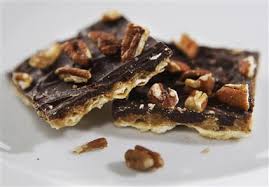 4 to 6 sheets of matzo (Note: If you’re keeping a “kosher for Passover” home, you will need to use matzo that’s labeled for Passover use)
- 1 cup (2 sticks) butter or “kosher for Passover” margarine
- 1 cup brown sugar, packed
- 12 ounces dark or semi-sweet chocolate chips (and yes, there are “kosher for Passover” chocolate chips. Leaven-free is a serious business!)
- 1 tsp vanilla
- 1/2 teaspoon kosher salt and/or toppings of your choice, such as pecan pieces.
Preheat oven to 350°F. Line a 12″ x 17″ rimmed baking sheet with aluminum foil. Make sure the entire sheet and sides of pan are covered, and the foil is tightly fitted to its contours. Cover the bottom of the pan with matzo, fitting pieces to fill without overlapping them.
In a medium saucepan, melt the butter over medium heat until it is melted. Add the brown sugar, stirring constantly, until the mixture becomes a rich nut-brown color in about 4-5 minutes. Add vanilla off the heat, then quickly pour the mixture over the matzo.
Bake the matzo for 5-10 minutes until brown sugar mixture begins to bubble and matzo begins to brown. Remove from oven, and sprinkle with chocolate chips. Wait 2 minutes, then spread the chocolate evenly with a spatula across the surface of the matzo. Sprinkle lightly with salt and the topping of your choice (I like them without the extra stuff on top!), then refrigerate until the chocolate sets and hardens. Break apart matzo into chunks.
You can store them in a sealed container, but I doubt they’ll last long at your home or workplace. They are “crack” after all – and are delicious all year `round.
Previous Post

April 5, 2017
When A Parent Is "Left Behind"
Next Post
April 8, 2017 Yes, Seders Are For Christians*
Browse Our Archives
Select a Category Baggage Books Calendar Church and Ministry CVID Ecclesiology Everyday Christian life Faith Falling Upward From The Margins Housing Jesus Movement's Unintended Consequences Midlife Midlife Survey #1 Midlife Survey #2 Moments and Days Out To The Margins Pilgrim's Road Trip Regret Seminary Spiritual Formation Uncategorized What's A Nice Jewish Grandmother Like You Doing In Seminary? When The Heart Waits Writing
Select a Month June 2017 May 2017 April 2017 March 2017 February 2017 January 2017 December 2016 November 2016 October 2016 September 2016 August 2016 July 2016 June 2016 May 2016 April 2016 March 2016 February 2016 January 2016 December 2015 November 2015 October 2015 September 2015 August 2015 July 2015 June 2015 May 2015 April 2015 March 2015 February 2015 January 2015 December 2014 November 2014 October 2014 September 2014 August 2014 July 2014 June 2014 May 2014 April 2014 March 2014 February 2014 January 2014 December 2013 October 2013 September 2013 August 2013 July 2013 June 2013 May 2013 April 2013 March 2013 February 2013 January 2013 December 2012 November 2012 October 2012 September 2012 August 2012 July 2012 June 2012 May 2012 April 2012 March 2012 February 2012 January 2012 December 2011 November 2011 October 2011 September 2011 August 2011 July 2011 June 2011 May 2011 April 2011 March 2011 February 2011 January 2011 December 2010 November 2010 October 2010 September 2010 August 2010 July 2010 June 2010 May 2010 April 2010 March 2010 February 2010 January 2010 December 2009 November 2009 October 2009 September 2009 August 2009 July 2009 June 2009 May 2009 April 2009 March 2009 February 2009 January 2009 December 2008 November 2008 October 2008 September 2008 August 2008 July 2008 June 2008 May 2008 April 2008 March 2008 February 2008 January 2008 December 2007 November 2007 October 2007 September 2007 August 2007 July 2007 June 2007 May 2007 April 2007
Follow Us!
TAKE THE
Religious Wisdom Quiz
What did the Israelites eat in the wilderness for 40 years?
Select your answer to see how you score.
Bread Manna Locusts Quail
Related posts from Pilgrim's Road Trip
Shavuot, Pentecost: To Learn, To Try, To Eat
It's Still Easter: One Thing To Learn, One...
Yes, Seders Are For Christians*

Holy Week: Where "Follow Me" Leads Us
TRENDING AT PATHEOS Evangelical

How the author of the world's best hymn...
I've been working with John Newton for a while now. This makes...

Long before this Lectio Divina, Psalm 130 - the song - started...

What About the Trees? Another Living Parable
After I finished writing the last article about falling leaves as a...

Why Classical Education Is a Conversation, Not a...
Come and Read: Joy in Classical Education When I was a little...

Falling Leaves: A Living Parable on Letting Go
I’ve spent the vast majority of my life in the southeast corner...

Cornell University has received a great deal of negative publicity and intense...
view all Evangelical blogs
Ad-Free & Subscriber Log-In Subscription Support
- About Us
- 2026 Calendar
- Videos
- Podcasts
- Library of World Religions
- Faith In Media Tracker
- Advertise With Us
- Write for Us
- Privacy Policy
- Terms of Service
- Do Not Sell My Data
- Contact Us
- Radiant Digital
- Manage Newsletter Subscriptions
- Unsubscribe From Notifications
- Sitemap
Copyright 2008-2026, Patheos. All rights reserved.
Subscription Support Ad-Free & Subscriber Log-In
Follow Patheos