
BuddhistCatholicContemplativeEvangelicalGeneral ChristianHinduJewishLatter-day SaintMuslimNew VisionsProgressive Christian
Beliefs
- Buddhist
- Catholic
- Contemplative
- Evangelical
- General Christian
- Hindu
- Jewish
- Latter-day Saint
- More Voices
- Muslim
- New Visions
- Pagan
- Progressive Christian
Topics
- Religion News
- Food and Religion
- Sports and Religion
- Religious Art
- Religious Music and Entertainment
- Religious Events
- History and Religion
- Style and Religion
- Politics and Religion
- Women in Religion
- Recreation Outdoors and Religion
- Business Finance and Religion
- Careers Workplace and Religion
- Education and Religion
- Family Parenting and Religion
- Health Fitness and Religion
- Home and Religion
- Relationships and Religion
- Technology and Religion
- Travel and Religion
Columnists
- Buddhist Columnists
- Business Finance and Religion Columnists
- Careers Workplace and Religion Columnists
- Catholic Columnists
- Contemplative Columnists
- Education and Religion Columnists
- Evangelists Columnists
- Family Parenting and Religion Columnists
- General Christian Columnists
- Health Fitness and Religion Columnists
- Hindu Columnists
- History and Religion Columnists
- Home and Religion Columnists
- Jewish Columnists
- More Voices Columnists
- Latter Day Columnists
- Muslim Columnists
- New Visions Columnists
- Nonreligious Columnists
- Pagan Columnists
- Politics and Religion Columnists
- Progressive Columnists
- Recreation Outdoors and Religion Columnists
- Relationships and Religion Columnists
- Religion News Columnists
- Religious Art Columnists
- Religious Events Columnists
- Religious Music and Entertainment Columnists
- Sports and Religion Columnists
- Style and Religion Columnists
- Technology and Religion Columnists
- Travel and Religion Columnists
- Women in Religion Columnists
Resource Library
- 2026 Calendar
- Library of World Religions
- The 100 Most Holy Places on Earth
- Patheos Answers
- Podcasts
- Videos
- Faith Leaders Database
- Anglican Episcopalian
- Bahai
- Baptist
- Buddhism
- Christianity
- Confucianism
- Eastern Orthodoxy
- Hinduism
- Holiness and Pentecostal
- ISKCON
- Islam
- Judaism
- Lutheran
- Methodist
- The Church of Jesus Christ of Latter-day Saints
- New Age
- Paganism
- Presbytarian and Reformed
- Protestantism
- Religion Behind the Scenes
- Roman Catholic
- Scientology
- Shia Islam
- Sikhism
- Sufism
- Sunni Islam
- Taoism
- Zen
- See all religions
Research Tools
 Ad-Free & Subscriber Log-In Subscription Support
Ad-Free & Subscriber Log-In Subscription Support
Follow Patheos 

- Trending:
- Forgiveness
- |
- Marriage
- |
- Consciousness
- |
- Death Penalty
- |
- Election
- |
- Halloween
 Pilgrim's Road Trip
- Home
- Evangelical
- All The Saints
All The Saints
Last updated on: November 1, 2016 at 10:33 am by Michelle Van Loon
All The Saints 2016-11-01T10:33:37-05:00 Michelle Van Loon
Patheos Explore the world's faith through different perspectives on religion and spirituality! Patheos has the views of the prevalent religions and spiritualities of the world.
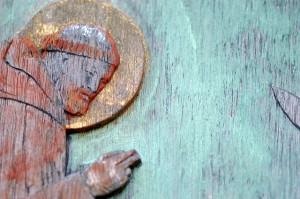 What’s a nice Jewish grandmother like me doing writing about All Saints Day?
Obviously, this day isn’t in my own background, nor is it a day I covered in my book. Ever since I read Jon Sweeney’s excellent The Lure of Saints: A Protestant Experience of Catholic Tradition ten years ago, I’ve had an appreciation for the power of their testimonies in my own life and the awareness that the great cloud of witnesses cheering the Bride onward is made up of people like these; named and nameless, they are clay and courage.
I’ve long been a Halloween-abstainer (though I do like to remember October 31st’s Reformation Day story, too, just to keep my religious traditions fair `n balanced). I can’t embrace the theology of November 2nd’s All Souls Day in which prayers for those in purgatory are offered. But I can join with my Catholic and Orthodox brothers and sisters in giving thanks this day, November 1st, for all of those who’ve died for their faith. Their memory is an incredible blessing to all of us who follow the Lamb who was slain for our sins.
From Father William Saunders at CatholicCulture.org, here’s a bit of history about the origins of All Saints Day:
Both the feast of All Saints and the feast of All Souls evolved in the life of the Church independently of paganism and Halloween. Let us first address the feast of All Saints. The exact origins of this celebration are uncertain, although, after the legalization of Christianity in A.D. 313, a common commemoration of the saints, especially the martyrs, appeared in various areas throughout the Church. For instance in the East, the city of Edessa celebrated this feast on May 13; the Syrians, on the Friday after Easter; and the city of Antioch, on the first Sunday after Pentecost. Both St. Ephrem (d. 373) and St. John Chrysostom (d. 407) attest to this feast day in their preaching. In the West, a commemoration for all the saints also was celebrated on the first Sunday after Pentecost. The primary reason for establishing a common feast day was because of the desire to honor the great number of martyrs, especially during the persecution of Emperor Diocletion (284-305), the worst and most extensive of the persecutions. Quite simply, there were not enough days of the year for a feast day for each martyr and many of them died in groups. A common feast day for all saints, therefore, seemed most appropriate.
In 609, the Emperor Phocas gave the Pantheon in Rome to Pope Boniface IV, who rededicated it on May 13 under the title St. Maria ad Martyres (or St. Mary and All Martyrs). Whether the Holy Father purposefully chose May 13 because of the date of the popular celebration already established in the East or whether this was just a happy coincidence is open to debate.
The designation of Nov. 1 as the feast of All Saints occurred over time. Pope Gregory III (731-741) dedicated an oratory in the original St. Peter’s Basilica in honor of all the saints on Nov. 1 (at least according to some accounts), and this date then became the official date for the celebration of the feast of All Saints in Rome. St. Bede (d. 735) recorded the celebration of All Saints Day on Nov. 1 in England, and such a celebration also existed in Salzburg, Austria. Ado of Vienne (d. 875) recounted how Pope Gregory IV asked King Louis the Pious (778-840) to proclaim Nov. 1 as All Saints Day throughout the Holy Roman Empire. Sacramentaries of the 9th and 10th centuries also placed the feast of All Saints on the liturgical calendar on Nov. 1.
The Beatitudes are a traditional reading on this day, and this passage from Revelation 7:9-17 is a part of the liturgy in many traditions as well:
After this I looked, and there before me was a great multitude that no one could count, from every nation, tribe, people and language, standing before the throne and before the Lamb. They were wearing white robes and were holding palm branches in their hands. And they cried out in a loud voice:
“Salvation belongs to our God,
who sits on the throne,
and to the Lamb.”
All the angels were standing around the throne and around the elders and the four living creatures. They fell down on their faces before the throne and worshiped God, saying:
“Amen!
Praise and glory
and wisdom and thanks and honor
and power and strength
be to our God for ever and ever.
Amen!”
Then one of the elders asked me, “These in white robes—who are they, and where did they come from?”
I answered, “Sir, you know.”
And he said, “These are they who have come out of the great tribulation; they have washed their robes and made them white in the blood of the Lamb. Therefore,
“they are before the throne of God
and serve him day and night in his temple;
and he who sits on the throne
will shelter them with his presence.
‘Never again will they hunger;
never again will they thirst.
The sun will not beat down on them,’
nor any scorching heat.
For the Lamb at the center of the throne
will be their shepherd;
‘he will lead them to springs of living water.’
‘And God will wipe away every tear from their eyes.’
Previous Post

October 24, 2016
Why Does Your Church Worship As It Does?
Next Post
November 7, 2016 Follow The Leader
Browse Our Archives
Select a Category Baggage Books Calendar Church and Ministry CVID Ecclesiology Everyday Christian life Faith Falling Upward From The Margins Housing Jesus Movement's Unintended Consequences Midlife Midlife Survey #1 Midlife Survey #2 Moments and Days Out To The Margins Pilgrim's Road Trip Regret Seminary Spiritual Formation Uncategorized What's A Nice Jewish Grandmother Like You Doing In Seminary? When The Heart Waits Writing
Select a Month June 2017 May 2017 April 2017 March 2017 February 2017 January 2017 December 2016 November 2016 October 2016 September 2016 August 2016 July 2016 June 2016 May 2016 April 2016 March 2016 February 2016 January 2016 December 2015 November 2015 October 2015 September 2015 August 2015 July 2015 June 2015 May 2015 April 2015 March 2015 February 2015 January 2015 December 2014 November 2014 October 2014 September 2014 August 2014 July 2014 June 2014 May 2014 April 2014 March 2014 February 2014 January 2014 December 2013 October 2013 September 2013 August 2013 July 2013 June 2013 May 2013 April 2013 March 2013 February 2013 January 2013 December 2012 November 2012 October 2012 September 2012 August 2012 July 2012 June 2012 May 2012 April 2012 March 2012 February 2012 January 2012 December 2011 November 2011 October 2011 September 2011 August 2011 July 2011 June 2011 May 2011 April 2011 March 2011 February 2011 January 2011 December 2010 November 2010 October 2010 September 2010 August 2010 July 2010 June 2010 May 2010 April 2010 March 2010 February 2010 January 2010 December 2009 November 2009 October 2009 September 2009 August 2009 July 2009 June 2009 May 2009 April 2009 March 2009 February 2009 January 2009 December 2008 November 2008 October 2008 September 2008 August 2008 July 2008 June 2008 May 2008 April 2008 March 2008 February 2008 January 2008 December 2007 November 2007 October 2007 September 2007 August 2007 July 2007 June 2007 May 2007 April 2007
Follow Us!
TAKE THE
Religious Wisdom Quiz
True or False: James says that whoever keeps the whole law but stumbles at just one point is guilty of breaking all of it.
Select your answer to see how you score.
TRUE FALSE
Related posts from Pilgrim's Road Trip
Shavuot, Pentecost: To Learn, To Try, To Eat
It's Still Easter: One Thing To Learn, One...
Yes, Seders Are For Christians*
Passover: One Thing To Try, One Thing To...
TRENDING AT PATHEOS Evangelical

Long before this Lectio Divina, Psalm 130 - the song - started...

What About the Trees? Another Living Parable
After I finished writing the last article about falling leaves as a...

Why Classical Education Is a Conversation, Not a...
Come and Read: Joy in Classical Education When I was a little...

Falling Leaves: A Living Parable on Letting Go
I’ve spent the vast majority of my life in the southeast corner...

Cornell University has received a great deal of negative publicity and intense...

Several years ago, I sat across from a couple whose marriage appeared...
view all Evangelical blogs
Ad-Free & Subscriber Log-In Subscription Support
- About Us
- 2026 Calendar
- Videos
- Podcasts
- Library of World Religions
- Faith In Media Tracker
- Advertise With Us
- Write for Us
- Privacy Policy
- Terms of Service
- Do Not Sell My Data
- Contact Us
- Radiant Digital
- Manage Newsletter Subscriptions
- Unsubscribe From Notifications
- Sitemap
Copyright 2008-2026, Patheos. All rights reserved.
Subscription Support Ad-Free & Subscriber Log-In
Follow Patheos