
BuddhistCatholicContemplativeEvangelicalGeneral ChristianHinduJewishLatter-day SaintMuslimNew VisionsProgressive Christian
Beliefs
- Buddhist
- Catholic
- Contemplative
- Evangelical
- General Christian
- Hindu
- Jewish
- Latter-day Saint
- More Voices
- Muslim
- New Visions
- Pagan
- Progressive Christian
Topics
- Religion News
- Food and Religion
- Sports and Religion
- Religious Art
- Religious Music and Entertainment
- Religious Events
- History and Religion
- Style and Religion
- Politics and Religion
- Women in Religion
- Recreation Outdoors and Religion
- Business Finance and Religion
- Careers Workplace and Religion
- Education and Religion
- Family Parenting and Religion
- Health Fitness and Religion
- Home and Religion
- Relationships and Religion
- Technology and Religion
- Travel and Religion
Columnists
- Buddhist Columnists
- Business Finance and Religion Columnists
- Careers Workplace and Religion Columnists
- Catholic Columnists
- Contemplative Columnists
- Education and Religion Columnists
- Evangelists Columnists
- Family Parenting and Religion Columnists
- General Christian Columnists
- Health Fitness and Religion Columnists
- Hindu Columnists
- History and Religion Columnists
- Home and Religion Columnists
- Jewish Columnists
- More Voices Columnists
- Latter Day Columnists
- Muslim Columnists
- New Visions Columnists
- Nonreligious Columnists
- Pagan Columnists
- Politics and Religion Columnists
- Progressive Columnists
- Recreation Outdoors and Religion Columnists
- Relationships and Religion Columnists
- Religion News Columnists
- Religious Art Columnists
- Religious Events Columnists
- Religious Music and Entertainment Columnists
- Sports and Religion Columnists
- Style and Religion Columnists
- Technology and Religion Columnists
- Travel and Religion Columnists
- Women in Religion Columnists
Resource Library
- 2026 Calendar
- Library of World Religions
- The 100 Most Holy Places on Earth
- Patheos Answers
- Podcasts
- Videos
- Faith Leaders Database
- Anglican Episcopalian
- Bahai
- Baptist
- Buddhism
- Christianity
- Confucianism
- Eastern Orthodoxy
- Hinduism
- Holiness and Pentecostal
- ISKCON
- Islam
- Judaism
- Lutheran
- Methodist
- The Church of Jesus Christ of Latter-day Saints
- New Age
- Paganism
- Presbytarian and Reformed
- Protestantism
- Religion Behind the Scenes
- Roman Catholic
- Scientology
- Shia Islam
- Sikhism
- Sufism
- Sunni Islam
- Taoism
- Zen
- See all religions
Research Tools
 Ad-Free & Subscriber Log-In Subscription Support
Ad-Free & Subscriber Log-In Subscription Support
Follow Patheos 

- Trending:
- Forgiveness
- |
- Marriage
- |
- Consciousness
- |
- Death Penalty
- |
- Election
- |
- Halloween
 Pilgrim's Road Trip
- Home
- Evangelical
- Review: Ruined
Review: Ruined
Last updated on: July 6, 2016 at 11:20 am by Michelle Van Loon
Review: Ruined 2016-07-06T11:20:58-05:00 Michelle Van Loon
Patheos Explore the world's faith through different perspectives on religion and spirituality! Patheos has the views of the prevalent religions and spiritualities of the world.
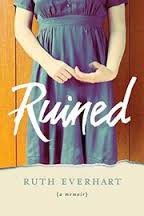 According to the U.S. Department of Justice, 18% of women will be raped at some point during their lifetime. Most victims are acquainted with the perpetrator. The Centers for Disease Control says stranger rapes account for 12.9% that number.
Ruth Everhart and four housemates were held hostage and assaulted by two armed strangers. Her memoir, Ruined (Tyndale, 2016) describes her journey from victim to survivor. She was a college student at Calvin College at the time of the rape, and offers an unflinching narrative about what the crime took from her physically, emotionally, and spiritually:
But if I left this place, where would I go? Who would I be? I was Dutch and Calvinist in the same way I was female – to the bone. How could I walk away from this life? Yet, increasingly, I knew I had lost my place. The world, which had once seemed safe and God-created, was revealed to be full of danger; the church, which had once told me where I belonged in the world, was blind and oblivious and unhelpful. My very body was a liability, a source of pain and vulnerability, a target.
I wanted to love myself, to love my life in a woman’s skin, but that no longer seemed obvious or easy. In fact, what I saw was not only more complicated, it was maddening. For when God created me a woman, God set me up as a target. Set me up.
The insular Dutch Reformed world in which she lived had predictable rules and roles for its members. The rape left Everhart feeling she was an outsider. Her interactions with the police and legal system in the wake of the crime were predictably difficult and dehumanizing, but the alienation caused by no longer fitting into the only community she knew amplified the trauma. She struggles to finish school while walking around campus feeling like a marked woman. Her friendships with the other housemates who were also assaulted that night were both a source of solace and a constant reminder of what each had experienced. Her own sense of being silenced and marginalized as a result of her experience grew to encompass what she saw as systemic silencing of women in the church of her childhood. Her sense of physical well-being was entirely stripped from her. If a couple of armed men could break into an apartment and spend hours raping its residents, where could she ever feel safe again?
As time went on, Everhart sought answers in a destructive relationship with a married seminary student, then by relocating to a new city. Her narrative is a reminder that the road from victim to survivor is not paved. In fact, it is not even clearly marked. She offers readers a great deal of detail about each step of her journey during these first few years. Some readers may find this level of detail slow going, but that’s precisely the point. Reclaiming a new normal after a rape is slow going.
Time doesn’t heal all wounds. Everhart’s life was sent on a different trajectory because of the rape. She eventually meets a man she can trust, which is, at its heart, is a pretty good working definition of love. She eventually finds her way to seminary, where she reclaims a more mature version of her childhood faith. And as she gives birth to her first child, she finds a measure of shalom, of wholeness. Her body was once an object of violence. Childbirth was at once a proclamation of her agency over her own body as well as an expression of hope in its creator.
A social worker once told me it is hard for grief to hit a moving target; Ruined offers readers an unflinching look at what it means to become a moving target in search of sanctuary from trauma.
Note: I received a comp copy of this book from the publisher.
Previous Post

July 3, 2016
S'mores And Much More
Next Post
July 8, 2016 A Time To Be Silent; A Time To Speak
Browse Our Archives
Select a Category Baggage Books Calendar Church and Ministry CVID Ecclesiology Everyday Christian life Faith Falling Upward From The Margins Housing Jesus Movement's Unintended Consequences Midlife Midlife Survey #1 Midlife Survey #2 Moments and Days Out To The Margins Pilgrim's Road Trip Regret Seminary Spiritual Formation Uncategorized What's A Nice Jewish Grandmother Like You Doing In Seminary? When The Heart Waits Writing
Select a Month June 2017 May 2017 April 2017 March 2017 February 2017 January 2017 December 2016 November 2016 October 2016 September 2016 August 2016 July 2016 June 2016 May 2016 April 2016 March 2016 February 2016 January 2016 December 2015 November 2015 October 2015 September 2015 August 2015 July 2015 June 2015 May 2015 April 2015 March 2015 February 2015 January 2015 December 2014 November 2014 October 2014 September 2014 August 2014 July 2014 June 2014 May 2014 April 2014 March 2014 February 2014 January 2014 December 2013 October 2013 September 2013 August 2013 July 2013 June 2013 May 2013 April 2013 March 2013 February 2013 January 2013 December 2012 November 2012 October 2012 September 2012 August 2012 July 2012 June 2012 May 2012 April 2012 March 2012 February 2012 January 2012 December 2011 November 2011 October 2011 September 2011 August 2011 July 2011 June 2011 May 2011 April 2011 March 2011 February 2011 January 2011 December 2010 November 2010 October 2010 September 2010 August 2010 July 2010 June 2010 May 2010 April 2010 March 2010 February 2010 January 2010 December 2009 November 2009 October 2009 September 2009 August 2009 July 2009 June 2009 May 2009 April 2009 March 2009 February 2009 January 2009 December 2008 November 2008 October 2008 September 2008 August 2008 July 2008 June 2008 May 2008 April 2008 March 2008 February 2008 January 2008 December 2007 November 2007 October 2007 September 2007 August 2007 July 2007 June 2007 May 2007 April 2007
Follow Us!
TAKE THE
Religious Wisdom Quiz
Which prophet called bears out of the woods to attack boys who mocked him?
Select your answer to see how you score.
Elijah Samuel Isaiah Elisha
Related posts from Pilgrim's Road Trip
Introducing: Long Days Of Small Things
Review: Deliberate Acts of Kindness
Review: Of Stillness And Storm
Reflection: The Sound of a Million Dreams
TRENDING AT PATHEOS Evangelical

Long before this Lectio Divina, Psalm 130 - the song - started...

What About the Trees? Another Living Parable
After I finished writing the last article about falling leaves as a...

Why Classical Education Is a Conversation, Not a...
Come and Read: Joy in Classical Education When I was a little...

Falling Leaves: A Living Parable on Letting Go
I’ve spent the vast majority of my life in the southeast corner...

Cornell University has received a great deal of negative publicity and intense...

Several years ago, I sat across from a couple whose marriage appeared...
view all Evangelical blogs
Ad-Free & Subscriber Log-In Subscription Support
- About Us
- 2026 Calendar
- Videos
- Podcasts
- Library of World Religions
- Faith In Media Tracker
- Advertise With Us
- Write for Us
- Privacy Policy
- Terms of Service
- Do Not Sell My Data
- Contact Us
- Radiant Digital
- Manage Newsletter Subscriptions
- Unsubscribe From Notifications
- Sitemap
Copyright 2008-2026, Patheos. All rights reserved.
Subscription Support Ad-Free & Subscriber Log-In
Follow Patheos