
BuddhistCatholicContemplativeEvangelicalGeneral ChristianHinduJewishLatter-day SaintMuslimNew VisionsProgressive Christian
Beliefs
- Buddhist
- Catholic
- Contemplative
- Evangelical
- General Christian
- Hindu
- Jewish
- Latter-day Saint
- More Voices
- Muslim
- New Visions
- Pagan
- Progressive Christian
Topics
- Religion News
- Food and Religion
- Sports and Religion
- Religious Art
- Religious Music and Entertainment
- Religious Events
- History and Religion
- Style and Religion
- Politics and Religion
- Women in Religion
- Recreation Outdoors and Religion
- Business Finance and Religion
- Careers Workplace and Religion
- Education and Religion
- Family Parenting and Religion
- Health Fitness and Religion
- Home and Religion
- Relationships and Religion
- Technology and Religion
- Travel and Religion
Columnists
- Buddhist Columnists
- Business Finance and Religion Columnists
- Careers Workplace and Religion Columnists
- Catholic Columnists
- Contemplative Columnists
- Education and Religion Columnists
- Evangelists Columnists
- Family Parenting and Religion Columnists
- General Christian Columnists
- Health Fitness and Religion Columnists
- Hindu Columnists
- History and Religion Columnists
- Home and Religion Columnists
- Jewish Columnists
- More Voices Columnists
- Latter Day Columnists
- Muslim Columnists
- New Visions Columnists
- Nonreligious Columnists
- Pagan Columnists
- Politics and Religion Columnists
- Progressive Columnists
- Recreation Outdoors and Religion Columnists
- Relationships and Religion Columnists
- Religion News Columnists
- Religious Art Columnists
- Religious Events Columnists
- Religious Music and Entertainment Columnists
- Sports and Religion Columnists
- Style and Religion Columnists
- Technology and Religion Columnists
- Travel and Religion Columnists
- Women in Religion Columnists
Resource Library
- 2026 Calendar
- Library of World Religions
- The 100 Most Holy Places on Earth
- Patheos Answers
- Podcasts
- Videos
- Faith Leaders Database
- Anglican Episcopalian
- Bahai
- Baptist
- Buddhism
- Christianity
- Confucianism
- Eastern Orthodoxy
- Hinduism
- Holiness and Pentecostal
- ISKCON
- Islam
- Judaism
- Lutheran
- Methodist
- The Church of Jesus Christ of Latter-day Saints
- New Age
- Paganism
- Presbytarian and Reformed
- Protestantism
- Religion Behind the Scenes
- Roman Catholic
- Scientology
- Shia Islam
- Sikhism
- Sufism
- Sunni Islam
- Taoism
- Zen
- See all religions
Research Tools
 Ad-Free & Subscriber Log-In Subscription Support
Ad-Free & Subscriber Log-In Subscription Support
Follow Patheos 

- Trending:
- Forgiveness
- |
- Marriage
- |
- Consciousness
- |
- Death Penalty
- |
- Election
- |
- Halloween
 Pilgrim's Road Trip
- Home
- Evangelical
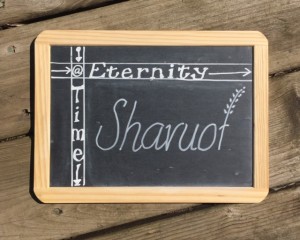
- At The Intersection Of Time & Eternity: Shavuot
At The Intersection Of Time & Eternity: Shavuot
Last updated on: June 6, 2016 at 9:32 am by Michelle Van Loon
At The Intersection Of Time & Eternity: Shavuot 2016-06-06T09:32:59-05:00 Michelle Van Loon
Patheos Explore the world's faith through different perspectives on religion and spirituality! Patheos has the views of the prevalent religions and spiritualities of the world.
There is one point at which the Jewish festal calendar and the Christian calendar intersect, and it is Shavuot, also known as Pentecost. This year, the Jewish people will celebrate Shavuot (shah-voo-OAT) beginning at sundown on Saturday, June 11th. You’d be right in wondering how Shavuot and Pentecost align since the Western Church celebrated Pentecost on May 15th, and the Eastern (Orthodox) Church marks the day this year on June 19th.
While the dates may diverge, Shavuot is the closest spiritual connection point between the lunar-based Jewish calendar prescribed by God in Leviticus 23 and the lunar/solar hybrid calendar worship cycle developed by the early Christian church. Shavuot was originally a celebration of God’s care through his provision of the fruit of the earth – grain. After the destruction of the temple in Jerusalem, the people could no longer fulfill the specific requirements, religious leaders found ways to honor Shavuot’s original emphasis while shifting the focus to rejoice in God’s gift of the Law to the people at Sinai.
I’ve been in Jerusalem twice on Shavuot (so far, Lord willing!), and I remember the joyous summery way in which this Sabbath-for-all holiday is celebrated – flower-wreathed women and dairy treats for everyone, and an all-nighter for observant Jews, who stay awake studying the Law as a sign of their gratitude. Shavuot may not have the cultural recognition as does other Jewish holidays like Chanukah or Passover, but it is for us as believers in Jesus the Jewish Messiah a day given to honor God’s physical and spiritual provision to us as well as the way in which the Holy Spirit was poured out, immersing us in himself in order to write the Law on our hearts? The Greek name for this day, Pentecost, is drawn from the word pentekostos, or fifty, which was the number of days the Jewish people counted from Passover/The Feast of Unleavened Bread to fix the date of Shavuot each year.
The Jewish festal cycle and the Christian calendar each offer holidays that are meant to serve as an on-ramp into the intersection of time and eternity. These moments and days point us beyond our own everyday agendas and connect us with our place in a bigger, more beautiful story. I’ve been blogging a 5-minute intro to each major holiday and season in both the Hebrew and Christian calendars. Acts 2 did not happen in isolation, but in incredible continuity with and fulfillment of Shavuot.
What and when?
When the Temple was standing, on the day after the Passover feast was eaten, the people were to bring an omer, or about half a gallon, of their just-ripened spring- time barley harvest to the temple. This offering launched for the people the marking of seven weeks, or forty-nine days. On the fiftieth day, the people were called to bring another offering, this time from the “first fruit” of wheat, which was the final variety of life-giving grain to ripen during the growing season. (In addition to Leviticus 23:15-22, Scriptures detailing how the people were to observe this holiday can be found in Exodus 23:16; 34:22; Numbers 28:26-31; and Deuteronomy 16:9-12.)
There is a beautiful contrast and symmetry in the two major Jewish springtime pilgrim festivals. Passover’s story is told in part through unleavened bread, eaten in haste, in recollection of God’s deliverance of the people from slavery in Egypt. Passover recounts what God had done for them. Fifty days later, Shavuot was about celebrating God’s provision of the final crop of the spring. The people brought fresh, yeasty loaves and other offerings of gratitude to the Giver of these good gifts. Shavuot was the epilogue to the exodus story—sacrifice replaced with abundance, haste replaced with celebration.
Where?
Shavuot was one of the three pilgrim feasts for the Chosen People. The other two were Passover and Sukkot. Those three feasts were when all the people were required to come together as one in Jerusalem at the Temple.
Why?
After the destruction of the Temple in 70 A.D., Shavuot became identified with the giving of the Law to the Israelites at Mount Sinai. This was not a random reassignment, however; Torah scholars did some calculating based on a clue found in Exodus 19:1: (“On the first day of the third month after the Israelites left Egypt—on that very day—they came to the Desert of Sinai”). These sages eventually determined that the Israelites received the Ten Commandments fifty days after their departure from Egypt. in the absence of a temple where the people could bring their agricultural offerings. Because the word Shavuot is related to the Hebrew word for “oath,” some Jewish sages have likened the act of God giving the Law to the Chosen People at Sinai to a wedding sealing the covenant between God and his people.
How?
Traditional readings on Shavuot include the ten commandments and the book of Ruth. Ruth’s story is a natural complement to the feast, with its themes of harvest (Ruth 2:1–3:5) and faithful response to God’s covenant (Ruth 3:6–4:16).
Christians can mark Shavuot by allowing it to become an opportunity to renew our relationship with the Bible. While there are always some of us who begin each new calendar year with grand plans to read the Bible through in a year, or memorize this passage or that one, Shavuot is about responding to God’s revelation of himself to humanity through his Word. It is also an opportunity to renew our covenant relationship with the One who embodied that to which the “firstfruits” of Shavuot were pointing:
But Christ has indeed been raised from the dead, the firstfruits of those who have fallen asleep. For since death came through a man, the resurrection of the deadcomes also through a man. For as in Adam all die, so in Christ all will be made alive. But each in turn: Christ, the firstfruits; then, when he comes, those who belong to him. (1 Corinthians 15:20-23)
We who are his followers are called firstfruits, too:
He chose to give us birth through the word of truth, that we might be a kind of firstfruits of all he created. (James 1:18)
And because Shavuot is a feast, food is a part of what tells the story of this holy day. Dairy foods are a tradition on Shavuot. Some rabbis have suggested that when the Chosen People received the kosher laws (detailed in Deuteronomy 11:1-47; 14:3-20) as part of the larger Torah given at Sinai, they realized that their cooking utensils were not set up to cook meat and dairy dishes separately; the Hebrew people ate uncooked dairy dishes in response to this law (Exodus 23:19; 24:26; Deuteronomy 14:21). Others have suggested that eating dairy with honey is a way to honor the language of the Torah as being sweet, rich, and fulfilling, just as milk and honey are to us (Song of Songs 4:11). Still others have noted that the custom may simply derive from Shavuot’s roots in the agricultural cycle: In antiquity, cheese was often made in late spring. In any case, if you’re looking for some menu ideas that capture the harvest sweetness of Shavuot, Jamie Geller’s Joy Of Kosher website has plenty of inspiration to get you started.
Coming September 1 : Moments & Days: How Our Holy Celebrations Shape Our Faith. A look at the Jewish feasts, the Christian calendar – and why both are so essential to shaping our lives. Pre-order your copy now from Amazon, Christian Book Distributors, Barnes and Noble, or the publisher, NavPress.
Previous Post

June 3, 2016
When Running Away To Join The Circus Is Not An Option
Next Post
June 7, 2016 Corporate Worship Analysis-itis
Browse Our Archives
Select a Category Baggage Books Calendar Church and Ministry CVID Ecclesiology Everyday Christian life Faith Falling Upward From The Margins Housing Jesus Movement's Unintended Consequences Midlife Midlife Survey #1 Midlife Survey #2 Moments and Days Out To The Margins Pilgrim's Road Trip Regret Seminary Spiritual Formation Uncategorized What's A Nice Jewish Grandmother Like You Doing In Seminary? When The Heart Waits Writing
Select a Month June 2017 May 2017 April 2017 March 2017 February 2017 January 2017 December 2016 November 2016 October 2016 September 2016 August 2016 July 2016 June 2016 May 2016 April 2016 March 2016 February 2016 January 2016 December 2015 November 2015 October 2015 September 2015 August 2015 July 2015 June 2015 May 2015 April 2015 March 2015 February 2015 January 2015 December 2014 November 2014 October 2014 September 2014 August 2014 July 2014 June 2014 May 2014 April 2014 March 2014 February 2014 January 2014 December 2013 October 2013 September 2013 August 2013 July 2013 June 2013 May 2013 April 2013 March 2013 February 2013 January 2013 December 2012 November 2012 October 2012 September 2012 August 2012 July 2012 June 2012 May 2012 April 2012 March 2012 February 2012 January 2012 December 2011 November 2011 October 2011 September 2011 August 2011 July 2011 June 2011 May 2011 April 2011 March 2011 February 2011 January 2011 December 2010 November 2010 October 2010 September 2010 August 2010 July 2010 June 2010 May 2010 April 2010 March 2010 February 2010 January 2010 December 2009 November 2009 October 2009 September 2009 August 2009 July 2009 June 2009 May 2009 April 2009 March 2009 February 2009 January 2009 December 2008 November 2008 October 2008 September 2008 August 2008 July 2008 June 2008 May 2008 April 2008 March 2008 February 2008 January 2008 December 2007 November 2007 October 2007 September 2007 August 2007 July 2007 June 2007 May 2007 April 2007
Follow Us!
TAKE THE
Religious Wisdom Quiz
What is the Christian principle about speaking words?
Select your answer to see how you score.
Always be silent Speak with love and grace Speak harshly Never speak
Related posts from Pilgrim's Road Trip
Shavuot, Pentecost: To Learn, To Try, To Eat
It's Still Easter: One Thing To Learn, One...
Yes, Seders Are For Christians*
Passover: One Thing To Try, One Thing To...
TRENDING AT PATHEOS Evangelical

How the author of the world's best hymn...
I've been working with John Newton for a while now. This makes...

Long before this Lectio Divina, Psalm 130 - the song - started...

What About the Trees? Another Living Parable
After I finished writing the last article about falling leaves as a...

Why Classical Education Is a Conversation, Not a...
Come and Read: Joy in Classical Education When I was a little...

Falling Leaves: A Living Parable on Letting Go
I’ve spent the vast majority of my life in the southeast corner...

Cornell University has received a great deal of negative publicity and intense...
view all Evangelical blogs
Ad-Free & Subscriber Log-In Subscription Support
- About Us
- 2026 Calendar
- Videos
- Podcasts
- Library of World Religions
- Faith In Media Tracker
- Advertise With Us
- Write for Us
- Privacy Policy
- Terms of Service
- Do Not Sell My Data
- Contact Us
- Radiant Digital
- Manage Newsletter Subscriptions
- Unsubscribe From Notifications
- Sitemap
Copyright 2008-2026, Patheos. All rights reserved.
Subscription Support Ad-Free & Subscriber Log-In
Follow Patheos