
BuddhistCatholicContemplativeEvangelicalGeneral ChristianHinduJewishLatter-day SaintMuslimNew VisionsProgressive Christian
Beliefs
- Buddhist
- Catholic
- Contemplative
- Evangelical
- General Christian
- Hindu
- Jewish
- Latter-day Saint
- More Voices
- Muslim
- New Visions
- Pagan
- Progressive Christian
Topics
- Religion News
- Food and Religion
- Sports and Religion
- Religious Art
- Religious Music and Entertainment
- Religious Events
- History and Religion
- Style and Religion
- Politics and Religion
- Women in Religion
- Recreation Outdoors and Religion
- Business Finance and Religion
- Careers Workplace and Religion
- Education and Religion
- Family Parenting and Religion
- Health Fitness and Religion
- Home and Religion
- Relationships and Religion
- Technology and Religion
- Travel and Religion
Columnists
- Buddhist Columnists
- Business Finance and Religion Columnists
- Careers Workplace and Religion Columnists
- Catholic Columnists
- Contemplative Columnists
- Education and Religion Columnists
- Evangelists Columnists
- Family Parenting and Religion Columnists
- General Christian Columnists
- Health Fitness and Religion Columnists
- Hindu Columnists
- History and Religion Columnists
- Home and Religion Columnists
- Jewish Columnists
- More Voices Columnists
- Latter Day Columnists
- Muslim Columnists
- New Visions Columnists
- Nonreligious Columnists
- Pagan Columnists
- Politics and Religion Columnists
- Progressive Columnists
- Recreation Outdoors and Religion Columnists
- Relationships and Religion Columnists
- Religion News Columnists
- Religious Art Columnists
- Religious Events Columnists
- Religious Music and Entertainment Columnists
- Sports and Religion Columnists
- Style and Religion Columnists
- Technology and Religion Columnists
- Travel and Religion Columnists
- Women in Religion Columnists
Resource Library
- 2026 Calendar
- Library of World Religions
- The 100 Most Holy Places on Earth
- Patheos Answers
- Podcasts
- Videos
- Faith Leaders Database
- Anglican Episcopalian
- Bahai
- Baptist
- Buddhism
- Christianity
- Confucianism
- Eastern Orthodoxy
- Hinduism
- Holiness and Pentecostal
- ISKCON
- Islam
- Judaism
- Lutheran
- Methodist
- The Church of Jesus Christ of Latter-day Saints
- New Age
- Paganism
- Presbytarian and Reformed
- Protestantism
- Religion Behind the Scenes
- Roman Catholic
- Scientology
- Shia Islam
- Sikhism
- Sufism
- Sunni Islam
- Taoism
- Zen
- See all religions
Research Tools
 Ad-Free & Subscriber Log-In Subscription Support
Ad-Free & Subscriber Log-In Subscription Support
Follow Patheos 

- Trending:
- Forgiveness
- |
- Marriage
- |
- Consciousness
- |
- Death Penalty
- |
- Election
- |
- Halloween
 Pilgrim's Road Trip
- Home
- Evangelical
- At The Intersection Of Time & Eternity: Ordinary Time
At The Intersection Of Time & Eternity: Ordinary Time
Last updated on: May 19, 2016 at 1:29 pm by Michelle Van Loon
At The Intersection Of Time & Eternity: Ordinary Time 2016-05-19T13:29:06-05:00 Michelle Van Loon
Patheos Explore the world's faith through different perspectives on religion and spirituality! Patheos has the views of the prevalent religions and spiritualities of the world.
It sounds so basic, doesn’t it? After the drama of those mountains and valleys between Advent through Pentecost, “Ordinary Time” sounds like a long, dreary drive across North Dakota. Those of us in congregations not using the church calendar are familiar with the high points of the first half of the Christian year: Christmas and Easter. Ordinary Time? Not so much.
The name Ordinary Time does little to commend it to people who hear “boring” in the word “ordinary”. It makes it sound as though there’s nothing much happening now that all the big holidays are over.
“Ordinary” comes from the Latin word ordinarius, which means “order.” An ordinal number names a thing in its relation- ship to a set—for example, third in line. This is in contrast to cardinal numbers, which describe how many of a thing there are—for example, five crayons. The use of ordinal numbers in the context of the church year refers to the number of counted-upwards weeks between Pentecost and Advent, when a new Church Year begins.
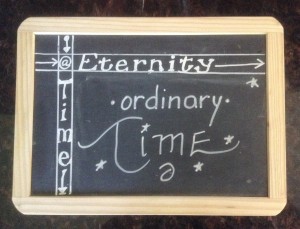
The Jewish festal cycle and the Christian calendar each offer holidays that are meant to serve as an on-ramp into the intersection of time and eternity. These moments and days point us beyond our own everyday agendas and connect us with our place in a bigger, more beautiful story. I’ve been blogging a 5-minute intro to each major holiday and season in both the Hebrew and Christian calendars. Ordinary Time invites us into the ongoing mission that began in the book of Acts. Today, a quick intro to the longest season on the Western liturgical calendar.
Who?
Ordinary time is a way in which you and I – and all of us together as the Church – live out the Pentecost reality: We are the church in the world and for the world. In the kingdom of God, nothing is ordinary.
What?
This excellent post at Internet Monk offers some excellent thoughts about the meaning of this season, and ways in which we can be formed by its emphasis on service, outreach, and vocation.
When?
The long final movement of the Western Church’s Christian Year stretches from now until late November or early December, when Advent begins. The Eastern (Orthodox) Church doesn’t have a direct equivalent to Ordinary Time in their calendar. Instead, the Eastern Church has a series of feasts commemorating other aspects of salvation history through the entire year.
Where and How?
All authority in heaven and on earth has been given to me. Therefore go and make disciples of all nations, baptizing them in the name of the Father and of the Son and of the Holy Spirit, and teaching them to obey everything I have commanded you. And surely I am with you always, to the very end of the age. (Matthew 28:18-20)
Jesus’ instructions are the foundation and scaffolding for each day of our individual lives. The Holy Spirit, poured out on Pentecost, empowers us to go and do what he commands, to the glory of God the Father. Ordinary Time allows us as gathered, called-out people to focus in worship, teaching, and prayer on his mission. It is a reminder, too, that this task-gift was given to the Church. We are not each individual one-person armies. Jesus gave these instruction to the corporate “you” – all of us, together. The scope of the calling is too big for any single person, yet each one of us in the kingdom has an equally essential role to play in that mission.
Here are a few helpful resources to get you started if you’d like to know more about how churches using the liturgical calendar worship during Ordinary Time:
Reformed: Calvin Institute of Christian Worship has a great collection of links and helps
A Biblically-ground ecumenical approach: Christian Resource Institute offers a helpful overview to Ordinary Time worship
In the Methodist tradition: Dr. Marsha McFee’s roundup of Scripture and church service planning ideas
The Church of England: Links to the Scripture texts for each week of worship in Ordinary Time
Being the Church for the world: A Catholic writer discusses what children have to teach us about Ordinary Time
Readers, if you know of other great Ordinary Time resource links, please share them comments section!
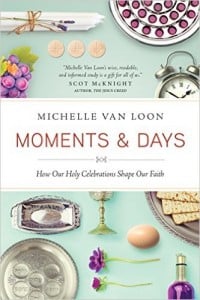
Coming September 1 : Moments & Days: How Our Holy Celebrations Shape Our Faith. A look at the Jewish feasts, the Christian calendar – and why both are so essential to shaping our lives. Pre-order your copy now from Amazon, Christian Book Distributors, Barnes and Noble, or the publisher, NavPress.
Previous Post

May 16, 2016
The Successor To WWJD
Next Post
May 23, 2016 Review - Sensible Shoes: A Story About The Spiritual Journey
Browse Our Archives
Select a Category Baggage Books Calendar Church and Ministry CVID Ecclesiology Everyday Christian life Faith Falling Upward From The Margins Housing Jesus Movement's Unintended Consequences Midlife Midlife Survey #1 Midlife Survey #2 Moments and Days Out To The Margins Pilgrim's Road Trip Regret Seminary Spiritual Formation Uncategorized What's A Nice Jewish Grandmother Like You Doing In Seminary? When The Heart Waits Writing
Select a Month June 2017 May 2017 April 2017 March 2017 February 2017 January 2017 December 2016 November 2016 October 2016 September 2016 August 2016 July 2016 June 2016 May 2016 April 2016 March 2016 February 2016 January 2016 December 2015 November 2015 October 2015 September 2015 August 2015 July 2015 June 2015 May 2015 April 2015 March 2015 February 2015 January 2015 December 2014 November 2014 October 2014 September 2014 August 2014 July 2014 June 2014 May 2014 April 2014 March 2014 February 2014 January 2014 December 2013 October 2013 September 2013 August 2013 July 2013 June 2013 May 2013 April 2013 March 2013 February 2013 January 2013 December 2012 November 2012 October 2012 September 2012 August 2012 July 2012 June 2012 May 2012 April 2012 March 2012 February 2012 January 2012 December 2011 November 2011 October 2011 September 2011 August 2011 July 2011 June 2011 May 2011 April 2011 March 2011 February 2011 January 2011 December 2010 November 2010 October 2010 September 2010 August 2010 July 2010 June 2010 May 2010 April 2010 March 2010 February 2010 January 2010 December 2009 November 2009 October 2009 September 2009 August 2009 July 2009 June 2009 May 2009 April 2009 March 2009 February 2009 January 2009 December 2008 November 2008 October 2008 September 2008 August 2008 July 2008 June 2008 May 2008 April 2008 March 2008 February 2008 January 2008 December 2007 November 2007 October 2007 September 2007 August 2007 July 2007 June 2007 May 2007 April 2007
Follow Us!
TAKE THE
Religious Wisdom Quiz
True or False: James says that whoever keeps the whole law but stumbles at just one point is guilty of breaking all of it.
Select your answer to see how you score.
TRUE FALSE
Related posts from Pilgrim's Road Trip
Shavuot, Pentecost: To Learn, To Try, To Eat
It's Still Easter: One Thing To Learn, One...
Yes, Seders Are For Christians*
Passover: One Thing To Try, One Thing To...
TRENDING AT PATHEOS Evangelical

Long before this Lectio Divina, Psalm 130 - the song - started...

What About the Trees? Another Living Parable
After I finished writing the last article about falling leaves as a...

Why Classical Education Is a Conversation, Not a...
Come and Read: Joy in Classical Education When I was a little...

Falling Leaves: A Living Parable on Letting Go
I’ve spent the vast majority of my life in the southeast corner...

Cornell University has received a great deal of negative publicity and intense...

Several years ago, I sat across from a couple whose marriage appeared...
view all Evangelical blogs
Ad-Free & Subscriber Log-In Subscription Support
- About Us
- 2026 Calendar
- Videos
- Podcasts
- Library of World Religions
- Faith In Media Tracker
- Advertise With Us
- Write for Us
- Privacy Policy
- Terms of Service
- Do Not Sell My Data
- Contact Us
- Radiant Digital
- Manage Newsletter Subscriptions
- Unsubscribe From Notifications
- Sitemap
Copyright 2008-2026, Patheos. All rights reserved.
Subscription Support Ad-Free & Subscriber Log-In
Follow Patheos