
BuddhistCatholicContemplativeEvangelicalGeneral ChristianHinduJewishLatter-day SaintMuslimNew VisionsProgressive Christian
Beliefs
- Buddhist
- Catholic
- Contemplative
- Evangelical
- General Christian
- Hindu
- Jewish
- Latter-day Saint
- More Voices
- Muslim
- New Visions
- Pagan
- Progressive Christian
Topics
- Religion News
- Food and Religion
- Sports and Religion
- Religious Art
- Religious Music and Entertainment
- Religious Events
- History and Religion
- Style and Religion
- Politics and Religion
- Women in Religion
- Recreation Outdoors and Religion
- Business Finance and Religion
- Careers Workplace and Religion
- Education and Religion
- Family Parenting and Religion
- Health Fitness and Religion
- Home and Religion
- Relationships and Religion
- Technology and Religion
- Travel and Religion
Columnists
- Buddhist Columnists
- Business Finance and Religion Columnists
- Careers Workplace and Religion Columnists
- Catholic Columnists
- Contemplative Columnists
- Education and Religion Columnists
- Evangelists Columnists
- Family Parenting and Religion Columnists
- General Christian Columnists
- Health Fitness and Religion Columnists
- Hindu Columnists
- History and Religion Columnists
- Home and Religion Columnists
- Jewish Columnists
- More Voices Columnists
- Latter Day Columnists
- Muslim Columnists
- New Visions Columnists
- Nonreligious Columnists
- Pagan Columnists
- Politics and Religion Columnists
- Progressive Columnists
- Recreation Outdoors and Religion Columnists
- Relationships and Religion Columnists
- Religion News Columnists
- Religious Art Columnists
- Religious Events Columnists
- Religious Music and Entertainment Columnists
- Sports and Religion Columnists
- Style and Religion Columnists
- Technology and Religion Columnists
- Travel and Religion Columnists
- Women in Religion Columnists
Resource Library
- 2026 Calendar
- Library of World Religions
- The 100 Most Holy Places on Earth
- Patheos Answers
- Podcasts
- Videos
- Faith Leaders Database
- Anglican Episcopalian
- Bahai
- Baptist
- Buddhism
- Christianity
- Confucianism
- Eastern Orthodoxy
- Hinduism
- Holiness and Pentecostal
- ISKCON
- Islam
- Judaism
- Lutheran
- Methodist
- The Church of Jesus Christ of Latter-day Saints
- New Age
- Paganism
- Presbytarian and Reformed
- Protestantism
- Religion Behind the Scenes
- Roman Catholic
- Scientology
- Shia Islam
- Sikhism
- Sufism
- Sunni Islam
- Taoism
- Zen
- See all religions
Research Tools
 Ad-Free & Subscriber Log-In Subscription Support
Ad-Free & Subscriber Log-In Subscription Support
Follow Patheos 

- Trending:
- Forgiveness
- |
- Marriage
- |
- Consciousness
- |
- Death Penalty
- |
- Election
- |
- Halloween
 Pilgrim's Road Trip
- Home
- Evangelical
- At The Intersection Of Time And Eternity: Lent
At The Intersection Of Time And Eternity: Lent
Last updated on: February 6, 2016 at 10:10 am by Michelle Van Loon
At The Intersection Of Time And Eternity: Lent 2016-02-06T10:10:07-06:00 Michelle Van Loon
Patheos Explore the world's faith through different perspectives on religion and spirituality! Patheos has the views of the prevalent religions and spiritualities of the world.
Jesus answered, “How can the guests of the bridegroom mourn while he is with them? The time will come when the bridegroom will be taken from them; then they will fast. (Matthew 9:15, Mark 2:19-20, Luke 5:34-35)
Lent was a word once commonly used to describe the lengthening days as winter moved toward spring in the northern hemisphere. Today, it tells a very specific story about the forty days leading up to Easter on the Christian liturgical calendar. Lent begins this year on Wednesday, February 10th. The first movement of the Lenten season takes place on Ash Wednesday, which offers participants a sobering way in which to respond to the beautiful purity of God with repentance. The day sets the tone for the entire Lenten season.
While some Christian calendar events like Easter and Pentecost have their origins in the Jewish feast cycle, Lent developed entirely from church practices. Easter was the primary day on which baptisms were performed in the early church. The preparation period leading to Easter incorporated fasting and instruction for those who were planning to be baptized and join the church. Church leaders and members joined them in this period of self-examination and self-denial in order to ready themselves for the high point of the emerging religious year – Resurrection Day.
Lent has had a position on the Christian liturgical calendar for more than 1,500 years. In recent years, growing numbers of those who attend churches not tied to this calendar have adopted some form of Lenten fasting as a personal formation practice.
The Jewish festal cycle and the Christian calendar each offer holidays that are meant to serve as an on-ramp into the intersection of time and eternity. These moments and days point us beyond our own everyday agendas and connect us with our place in a bigger, more beautiful story. I’ve been blogging a 5-minute intro to each major holiday and season in both the Jewish and Christian calendar. Today, a look at Lent.
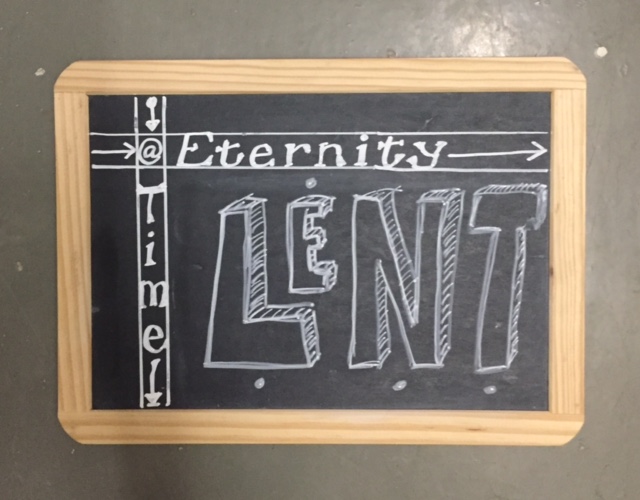
Who?
One of the passages often read on Ash Wednesday includes these words from Joel 2:13: “Rend your heart and not your garments.” The corporate and individual nature of Lenten fasting affords believers a way to focus on humility, self-denial and repentance before God.
What?
Historically, the fasting practices associated with Lent have called for adherents to abstain from meat and all products coming from animals including milk, eggs and cheese. This kind of fast was reminiscent of Daniel’s “vegetables only” fast. Over time, strict fasting rules have been relaxed, though dietary restrictions are still a cornerstone of this season of the church year. Many streams following the church calendar ask members to participate in a full, no-food fast on Ash Wednesday and Good Friday. The (Eastern) Orthodox Church encourages members to abstain from food for the first three days of the Lenten cycle, then maintain a spare diet throughout the rest of Lent, with a few key feast day interruptions to the fast.
Others following the church calendar don’t prescribe specific practices, but instead encourage members to fast from something that’s gotten a little too important to them during this season. This fast can include anything from use of social media (a fast more difficult for some than exorcising meat from the diet!) to abstaining from sweet treats. Others have found it meaningful to include an Isaiah 58 focus on doing works of justice and mercy as part of their fast.
When?
In the Western Church, Lent is observed for the forty days leading up to Easter. Sundays, which were the early church’s weekly first and central way in which the resurrection was celebrated, are not considered part of those forty days, though many people maintain their fasts throughout the entire period from Ash Wednesday through Easter morning.
Why?
Forty is a significant number in the Bible. It usually symbolizes a period of trial, training or testing:
- God sent a flood to cleanse the earth, sparing Noah, his family, and the pairs of animals on the ark Noah built. It rained for forty days and forty nights (Genesis 7:12).
- Moses lived forty years in Egypt, then forty years in Midian before God called him to lead his people from slavery to freedom (Acts 7:23, Exodus 7:7).
- Moses spent forty nights on Mt. Sinai when he received the Law (Exodus 24:18, 34:1-28).
- The Chosen People spent 40 years wandering in the Sinai desert as God’s judgment for their unbelief (Numbers 14:33, 32:13, Deuteronomy 2:7, 8:2, Joshua 5:6).
- At the end of their wanderings, Moses sent spies into the Promised Land for a forty-day reconnaissance mission (Numbers 13:25, 14:34).
- When Israel disobeyed God, he gave them into the hands of their enemies for forty years (Judges 13:1).
- At Mt. Horeb, Elijah fasted from food and water for forty days (1 Kings 19:8).
- The prophet Jonah spent forty days warning Ninevah that they would face destruction if they did not repent of their sins (Jonah 3:4).
- Ezekiel laid on his side for forty days as a prophetic portrait of Judah’s sins (Ezekiel 4:6).
- After his baptism, Jesus spent forty days in the wilderness fasting before facing temptation from Satan (Matthew 4:1-11, Mark 4:12-13, Luke 4:1-13).
- Jesus appeared to many for forty days after his resurrection (Acts 1:3).
- Within forty years, or one generation, after his crucifixion, Jesus’ prophetic words about the destruction of the temple (Matthew 24:1-2, Mark 13:1-2) came true in 70 A.D.
The profound symbolism of the number forty wasn’t wasted on leaders in the early church. It was was a formal way of naming the season they’d grown to observe as they readied for the yearly Pasch (Easter) celebration.
How?
Disciplines of abstinence, such as fasting, puts us in touch with our deepest hungers, pointing us toward the only One who can satisfy them. Lenten fasts are meant to bring us face to face with our soul’s emptiness. In a divine paradox, as we seek to be filled by him, we’re freed to be used of him to pour out his love on his hungry, thirsty world. It’s a profound way to walk with Jesus into the final week of Lent, known as Holy Week.
Lent is not a self-improvement program. Though the discipline of fasting may help us shed a few pounds or break a bad habit, this season of the Christian year isn’t about us. The goal of Lent is to orient our souls toward Jerusalem, where we’ll follow Jesus through the last week of his life. Lenten discipline prepares us to immerse ourselves into the life of Jesus during Holy Week.
A few resources I can commend to you if you’re wondering how you might begin to observe Lent this year:
Between Midnight And Dawn: A Literary Guide For Lent, Holy Week, and Eastertide complied by Sarah Arthur
Sacred Space – Daily prayer following traditional church readings, co-sponsored by Loyola Press and a group of Irish Jesuits.
Helpful round-up of Lenten resources for individuals and families from the Evangelical Alliance of the U.K.
Previous Post

February 4, 2016
We Don't Age Out Of Our Sexuality
Next Post
February 10, 2016 Review: What Every Christian Needs To Know About The Jewishness Of Jesus
Browse Our Archives
Select a Category Baggage Books Calendar Church and Ministry CVID Ecclesiology Everyday Christian life Faith Falling Upward From The Margins Housing Jesus Movement's Unintended Consequences Midlife Midlife Survey #1 Midlife Survey #2 Moments and Days Out To The Margins Pilgrim's Road Trip Regret Seminary Spiritual Formation Uncategorized What's A Nice Jewish Grandmother Like You Doing In Seminary? When The Heart Waits Writing
Select a Month June 2017 May 2017 April 2017 March 2017 February 2017 January 2017 December 2016 November 2016 October 2016 September 2016 August 2016 July 2016 June 2016 May 2016 April 2016 March 2016 February 2016 January 2016 December 2015 November 2015 October 2015 September 2015 August 2015 July 2015 June 2015 May 2015 April 2015 March 2015 February 2015 January 2015 December 2014 November 2014 October 2014 September 2014 August 2014 July 2014 June 2014 May 2014 April 2014 March 2014 February 2014 January 2014 December 2013 October 2013 September 2013 August 2013 July 2013 June 2013 May 2013 April 2013 March 2013 February 2013 January 2013 December 2012 November 2012 October 2012 September 2012 August 2012 July 2012 June 2012 May 2012 April 2012 March 2012 February 2012 January 2012 December 2011 November 2011 October 2011 September 2011 August 2011 July 2011 June 2011 May 2011 April 2011 March 2011 February 2011 January 2011 December 2010 November 2010 October 2010 September 2010 August 2010 July 2010 June 2010 May 2010 April 2010 March 2010 February 2010 January 2010 December 2009 November 2009 October 2009 September 2009 August 2009 July 2009 June 2009 May 2009 April 2009 March 2009 February 2009 January 2009 December 2008 November 2008 October 2008 September 2008 August 2008 July 2008 June 2008 May 2008 April 2008 March 2008 February 2008 January 2008 December 2007 November 2007 October 2007 September 2007 August 2007 July 2007 June 2007 May 2007 April 2007
Follow Us!
TAKE THE
Religious Wisdom Quiz
Which Gospel contains the "Sermon on the Mount"?
Select your answer to see how you score.
Matthew Luke Mark John
Related posts from Pilgrim's Road Trip
Shavuot, Pentecost: To Learn, To Try, To Eat
It's Still Easter: One Thing To Learn, One...
Yes, Seders Are For Christians*
Passover: One Thing To Try, One Thing To...
TRENDING AT PATHEOS Evangelical

The REST of Your Life: A Creative Wrestles...
This week I had a conversation with a good friend from church....

How the author of the world's best hymn...
I've been working with John Newton for a while now. This makes...

Long before this Lectio Divina, Psalm 130 - the song - started...

What About the Trees? Another Living Parable
After I finished writing the last article about falling leaves as a...

Why Classical Education Is a Conversation, Not a...
Come and Read: Joy in Classical Education When I was a little...

Cornell University has received a great deal of negative publicity and intense...
view all Evangelical blogs
Ad-Free & Subscriber Log-In Subscription Support
- About Us
- 2026 Calendar
- Videos
- Podcasts
- Library of World Religions
- Faith In Media Tracker
- Advertise With Us
- Write for Us
- Privacy Policy
- Terms of Service
- Do Not Sell My Data
- Contact Us
- Radiant Digital
- Manage Newsletter Subscriptions
- Unsubscribe From Notifications
- Sitemap
Copyright 2008-2026, Patheos. All rights reserved.
Subscription Support Ad-Free & Subscriber Log-In
Follow Patheos