
BuddhistCatholicContemplativeEvangelicalGeneral ChristianHinduJewishLatter-day SaintMuslimNew VisionsProgressive Christian
Beliefs
- Buddhist
- Catholic
- Contemplative
- Evangelical
- General Christian
- Hindu
- Jewish
- Latter-day Saint
- More Voices
- Muslim
- New Visions
- Pagan
- Progressive Christian
Topics
- Religion News
- Food and Religion
- Sports and Religion
- Religious Art
- Religious Music and Entertainment
- Religious Events
- History and Religion
- Style and Religion
- Politics and Religion
- Women in Religion
- Recreation Outdoors and Religion
- Business Finance and Religion
- Careers Workplace and Religion
- Education and Religion
- Family Parenting and Religion
- Health Fitness and Religion
- Home and Religion
- Relationships and Religion
- Technology and Religion
- Travel and Religion
Columnists
- Buddhist Columnists
- Business Finance and Religion Columnists
- Careers Workplace and Religion Columnists
- Catholic Columnists
- Contemplative Columnists
- Education and Religion Columnists
- Evangelists Columnists
- Family Parenting and Religion Columnists
- General Christian Columnists
- Health Fitness and Religion Columnists
- Hindu Columnists
- History and Religion Columnists
- Home and Religion Columnists
- Jewish Columnists
- More Voices Columnists
- Latter Day Columnists
- Muslim Columnists
- New Visions Columnists
- Nonreligious Columnists
- Pagan Columnists
- Politics and Religion Columnists
- Progressive Columnists
- Recreation Outdoors and Religion Columnists
- Relationships and Religion Columnists
- Religion News Columnists
- Religious Art Columnists
- Religious Events Columnists
- Religious Music and Entertainment Columnists
- Sports and Religion Columnists
- Style and Religion Columnists
- Technology and Religion Columnists
- Travel and Religion Columnists
- Women in Religion Columnists
Resource Library
- 2026 Calendar
- Library of World Religions
- The 100 Most Holy Places on Earth
- Patheos Answers
- Podcasts
- Videos
- Faith Leaders Database
- Anglican Episcopalian
- Bahai
- Baptist
- Buddhism
- Christianity
- Confucianism
- Eastern Orthodoxy
- Hinduism
- Holiness and Pentecostal
- ISKCON
- Islam
- Judaism
- Lutheran
- Methodist
- The Church of Jesus Christ of Latter-day Saints
- New Age
- Paganism
- Presbytarian and Reformed
- Protestantism
- Religion Behind the Scenes
- Roman Catholic
- Scientology
- Shia Islam
- Sikhism
- Sufism
- Sunni Islam
- Taoism
- Zen
- See all religions
Research Tools
 Ad-Free & Subscriber Log-In Subscription Support
Ad-Free & Subscriber Log-In Subscription Support
Follow Patheos 

- Trending:
- Forgiveness
- |
- Marriage
- |
- Consciousness
- |
- Death Penalty
- |
- Election
- |
- Halloween
 Pilgrim's Road Trip
- Home
- Evangelical
- At The Intersection Of Time & Eternity: Epiphany
At The Intersection Of Time & Eternity: Epiphany
Last updated on: January 3, 2016 at 1:13 pm by Michelle Van Loon
At The Intersection Of Time & Eternity: Epiphany 2016-01-03T13:13:10-06:00 Michelle Van Loon
Patheos Explore the world's faith through different perspectives on religion and spirituality! Patheos has the views of the prevalent religions and spiritualities of the world.
We three kings of Orient are
Bearing gifts we traverse afar
Field and fountain, moor and mountain
Following yonder star
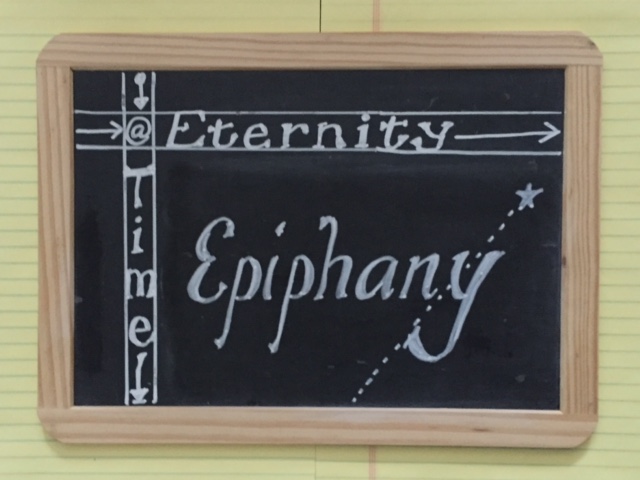
The royal seekers featured in this beloved carol are a part of every manger scene, usually represented by three kingly figures bearing gifts of gold, frankincense and myrrh. These star-following wise men played an important prophetic role the early days of the life of Jesus. Their arrival in Bethlehem to pay homage to the baby King born in a lowly stable is at the heart of the day that marks the end of the Western Christian calendar’s Christmas season, and begins the next movement of the Christian calendar – the season of Epiphany.
I’ve been blogging a 5-minute intro to each major holiday in both the Jewish and Christian calendar. The Jewish festal cycle and the Christian calendar each offer holidays that are meant to serve as an on-ramp into the intersection of time and eternity. These days of yes point us beyond our own everyday agendas and connect us with our place in a bigger, more beautiful story.
If you attend a non-denominational congregation, your church may focus primarily on Christmas and Easter along with non-holiday holidays like Mother’s Day, Father’s Day and Church Picnic Day. If you attend a liturgical congregation, you’re likely familiar with the rhythms of the Church calendar, which recounts the story of Jesus’s life through a yearly cycle of observance. If you have a Jewish background or attend a Messianic congregation, you recognize the distinct cadence of the Leviticus 23 feast cycle and historical holidays of the Jewish calendar.
For each one of us who loves the Scriptures and wants to get to know the Author of those Scriptures better, each holiday in the Jewish calendar and the traditional Christian calendar is an opportunity to learn – and then take that learning off the page/screen and consider how to include it in your own practice.
Who?
Luke 2:-12 recounts the unexpected visit of these men from the east to visit the infant Jesus. It is highly unlikely that they arrived on the scene at the same time as the shepherds. In addition, most scholars and members of many religious traditions believe there were more than three of them, though their number in popular and many artistic renderings is reduced to three in reference to the gifts they brought with them. These influential Gentile men were of the ruling or intellectual elite in the country/region from which they came.
What?
Epiphany reminds us of how Jesus filled full the mission to the world God had given the Jewish people – a mission described in Isaiah 42:6-7: “I, the Lord, have called you in righteousness; I will take hold of your hand. I will keep you and will make you to be a covenant for the people and a light for the Gentiles, to open eyes that are blind, to free captives from prison and to release from the dungeon those who sit in darkness.” He came to find those from within his own Jewish community who recognized their distance from God. He sought those outside this community, people to whom his own people had neglected to reflect God’s light. The Wise Men from the East present us with a powerful image of what it means to be a seeker, and Epiphany demonstrates the wonderful “aha!” of their discovery: The fulfillment of their seeking was an incarnate God who had come seeking them.
When?
The feast of Epiphany first appeared on the church calendar in the fourth century. As the church split between West and East by the mid-eleventh century, the feast came to carry two different emphases.
In the East, the Orthodox family of churches gathered into one day the commemoration of Jesus’ birth, childhood (circumcision, presentation/naming at the temple), baptism by John and the visit by the Magi. Church leaders believed Epiphany, also known as Theophany (“manifestation of God to humanity”), was a fulfillment and celebration of the meaning of Chanukah, the Jewish Feast of Lights.
In the West, the day had a single focus—the revelation of the Messiah to the Gentiles. The weeks following January 6 in the Western Christian calendar continue the themes introduced on Epiphany. Congregations trace the life of Jesus through his baptism and first public miracle at the wedding at Cana. Other themes of the Epiphany season include Jesus’ call to his disciples to follow him and his signs and wonders. The season of Epiphany concludes the Sunday before Lent, with the commemoration of the transfiguration of Jesus.
Where?
Various cultures around the world observe this day in some fascinating ways. One particularly nice tradition is that of blessing one’s home to serve as a launching place of mission and service in the world. T.S. Eliot’s famous poem, The Journey Of The Magi, asks us to imagine from the point of view of the Magi what it might have been like to return home after they visited Bethlehem. It ends with these haunting words:
…We returned to our places, these Kingdoms
But no longer at ease here, in the old dispensation,
With an alien people clutching their gods.
I should be glad of another death.
Epiphany reminds us that our mission in this world flows from our apprehension of Jesus – and this revelation of him means that we will never be the same again.
Why?
He who is fully God chose to become fully human in the most humble and helpless manner imaginable: a baby cradled in his mother’s arms. The Magi recognized Jesus’ divinity in the midst of very un-regal circumstances. How about you and I? Will we?
Previous Post

December 31, 2015
Review: Beginnings
Next Post
January 9, 2016 Unintended Consequences of the Jesus Movement: Our Swag
Browse Our Archives
Select a Category Baggage Books Calendar Church and Ministry CVID Ecclesiology Everyday Christian life Faith Falling Upward From The Margins Housing Jesus Movement's Unintended Consequences Midlife Midlife Survey #1 Midlife Survey #2 Moments and Days Out To The Margins Pilgrim's Road Trip Regret Seminary Spiritual Formation Uncategorized What's A Nice Jewish Grandmother Like You Doing In Seminary? When The Heart Waits Writing
Select a Month June 2017 May 2017 April 2017 March 2017 February 2017 January 2017 December 2016 November 2016 October 2016 September 2016 August 2016 July 2016 June 2016 May 2016 April 2016 March 2016 February 2016 January 2016 December 2015 November 2015 October 2015 September 2015 August 2015 July 2015 June 2015 May 2015 April 2015 March 2015 February 2015 January 2015 December 2014 November 2014 October 2014 September 2014 August 2014 July 2014 June 2014 May 2014 April 2014 March 2014 February 2014 January 2014 December 2013 October 2013 September 2013 August 2013 July 2013 June 2013 May 2013 April 2013 March 2013 February 2013 January 2013 December 2012 November 2012 October 2012 September 2012 August 2012 July 2012 June 2012 May 2012 April 2012 March 2012 February 2012 January 2012 December 2011 November 2011 October 2011 September 2011 August 2011 July 2011 June 2011 May 2011 April 2011 March 2011 February 2011 January 2011 December 2010 November 2010 October 2010 September 2010 August 2010 July 2010 June 2010 May 2010 April 2010 March 2010 February 2010 January 2010 December 2009 November 2009 October 2009 September 2009 August 2009 July 2009 June 2009 May 2009 April 2009 March 2009 February 2009 January 2009 December 2008 November 2008 October 2008 September 2008 August 2008 July 2008 June 2008 May 2008 April 2008 March 2008 February 2008 January 2008 December 2007 November 2007 October 2007 September 2007 August 2007 July 2007 June 2007 May 2007 April 2007
Follow Us!
TAKE THE
Religious Wisdom Quiz
What Christian group emphasizes speaking in tongues as evidence of faith?
Select your answer to see how you score.
Pentecostals Catholics Presbyterians Methodists
Related posts from Pilgrim's Road Trip

Shavuot, Pentecost: To Learn, To Try, To Eat

It's Still Easter: One Thing To Learn, One...
Yes, Seders Are For Christians*
Passover: One Thing To Try, One Thing To...
TRENDING AT PATHEOS Evangelical

The REST of Your Life: A Creative Wrestles...
This week I had a conversation with a good friend from church....

How the author of the world's best hymn...
I've been working with John Newton for a while now. This makes...

Long before this Lectio Divina, Psalm 130 - the song - started...

What About the Trees? Another Living Parable
After I finished writing the last article about falling leaves as a...

Why Classical Education Is a Conversation, Not a...
Come and Read: Joy in Classical Education When I was a little...

Cornell University has received a great deal of negative publicity and intense...
view all Evangelical blogs
Ad-Free & Subscriber Log-In Subscription Support
- About Us
- 2026 Calendar
- Videos
- Podcasts
- Library of World Religions
- Faith In Media Tracker
- Advertise With Us
- Write for Us
- Privacy Policy
- Terms of Service
- Do Not Sell My Data
- Contact Us
- Radiant Digital
- Manage Newsletter Subscriptions
- Unsubscribe From Notifications
- Sitemap
Copyright 2008-2026, Patheos. All rights reserved.
Subscription Support Ad-Free & Subscriber Log-In
Follow Patheos