
BuddhistCatholicContemplativeEvangelicalGeneral ChristianHinduJewishLatter-day SaintMuslimNew VisionsProgressive Christian
Beliefs
- Buddhist
- Catholic
- Contemplative
- Evangelical
- General Christian
- Hindu
- Jewish
- Latter-day Saint
- More Voices
- Muslim
- New Visions
- Pagan
- Progressive Christian
Topics
- Religion News
- Food and Religion
- Sports and Religion
- Religious Art
- Religious Music and Entertainment
- Religious Events
- History and Religion
- Style and Religion
- Politics and Religion
- Women in Religion
- Recreation Outdoors and Religion
- Business Finance and Religion
- Careers Workplace and Religion
- Education and Religion
- Family Parenting and Religion
- Health Fitness and Religion
- Home and Religion
- Relationships and Religion
- Technology and Religion
- Travel and Religion
Columnists
- Buddhist Columnists
- Business Finance and Religion Columnists
- Careers Workplace and Religion Columnists
- Catholic Columnists
- Contemplative Columnists
- Education and Religion Columnists
- Evangelists Columnists
- Family Parenting and Religion Columnists
- General Christian Columnists
- Health Fitness and Religion Columnists
- Hindu Columnists
- History and Religion Columnists
- Home and Religion Columnists
- Jewish Columnists
- More Voices Columnists
- Latter Day Columnists
- Muslim Columnists
- New Visions Columnists
- Nonreligious Columnists
- Pagan Columnists
- Politics and Religion Columnists
- Progressive Columnists
- Recreation Outdoors and Religion Columnists
- Relationships and Religion Columnists
- Religion News Columnists
- Religious Art Columnists
- Religious Events Columnists
- Religious Music and Entertainment Columnists
- Sports and Religion Columnists
- Style and Religion Columnists
- Technology and Religion Columnists
- Travel and Religion Columnists
- Women in Religion Columnists
Resource Library
- 2026 Calendar
- Library of World Religions
- The 100 Most Holy Places on Earth
- Patheos Answers
- Podcasts
- Videos
- Faith Leaders Database
- Anglican Episcopalian
- Bahai
- Baptist
- Buddhism
- Christianity
- Confucianism
- Eastern Orthodoxy
- Hinduism
- Holiness and Pentecostal
- ISKCON
- Islam
- Judaism
- Lutheran
- Methodist
- The Church of Jesus Christ of Latter-day Saints
- New Age
- Paganism
- Presbytarian and Reformed
- Protestantism
- Religion Behind the Scenes
- Roman Catholic
- Scientology
- Shia Islam
- Sikhism
- Sufism
- Sunni Islam
- Taoism
- Zen
- See all religions
Research Tools
 Ad-Free & Subscriber Log-In Subscription Support
Ad-Free & Subscriber Log-In Subscription Support
Follow Patheos 

- Trending:
- Forgiveness
- |
- Marriage
- |
- Consciousness
- |
- Death Penalty
- |
- Election
- |
- Halloween
 Pilgrim's Road Trip
- Home
- Evangelical
- At The Intersection Of Time & Eternity: Feast Of Tabernacles
At The Intersection Of Time & Eternity: Feast Of Tabernacles
Last updated on: September 25, 2015 at 4:55 pm by Michelle Van Loon
At The Intersection Of Time & Eternity: Feast Of Tabernacles 2015-09-25T16:55:32-05:00 Michelle Van Loon
Patheos Explore the world's faith through different perspectives on religion and spirituality! Patheos has the views of the prevalent religions and spiritualities of the world.
The Jewish feast cycle and the Christian calendar each offer an on-ramp into the intersection of time and eternity. If you attend a non-denominational congregation, your church may focus primarily on Christmas and Easter along with non-holiday holidays like Mother’s Day, Father’s Day and Church Picnic Day. If you attend a liturgical congregation, you’re likely familiar with the rhythms of the Church calendar, which recounts the story of Jesus’s life through a yearly cycle of observance. If you have a Jewish background or attend a Messianic congregation, you recognize the distinct cadence of the Leviticus 23 feast cycle and historical holidays of the Jewish calendar.
For those of us who love the Scriptures and the Author of those Scriptures, each holiday in the Jewish calendar and Christian calendar is an opportunity to learn – and then take that learning off the page/screen and consider how to include it in your own practice. To that end, throughout the next year, I’ll be offering a quick “5 W’s and an H” Q & A resource for each holiday or season in both calendars.
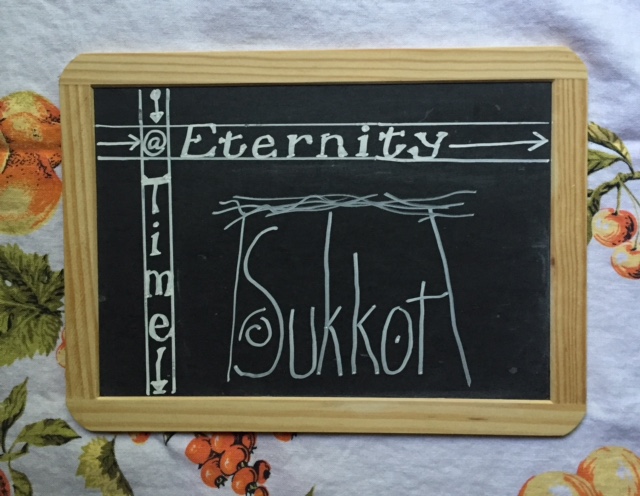
The Feast Of Tabernacles (Sukkot) is the next holiday on the calendar.
Who?
The Feast of Tabernacles is the final holiday in the Jewish feast cycle prescribed by God in Leviticus 23:33-44.
What?
The call to repent of the Feast of Trumpets (Rosh Hashanah) is followed by the Day of Atonement (Yom Kippur) ten days later. Just four days after that, Sukkot begins. This joyous feast required all the Jewish people to gather as one for a period of rejoicing – worship in the form of offerings – and dwelling in temporary shelters known as “sukkahs” or booths as a way to remember the way in which God sheltered his pilgrim people in the desert after he delivered them from slavery in Egypt. This feast also has an eschatological significance for the Jewish people as it points to the end of days when they will be home once and for all, God will be glorified among all the nations throughout his creation, and he dwell among us forever.
When?
Sukkot begins this year at sundown on the evening of Sunday, September 27th, and concludes at sundown, the evening of October 4th.
Where?
Immediately after the end of Yom Kippur, observant Jewish families will erect temporary booth-like structures in their yards, on their balconies, or in any outdoor space they may have available. Most synagogues will erect a booth, or sukkah (soo-KAH; sukkot is the plural form of the word) for the community. These temporary structures aren’t meant to provide permanent shelter. Sukkot roofs are created from branches or other natural material, and must allow those inside a view of the early autumn night sky. Families feast and sometimes elect to live in these boots for the entire feast. Hospitality is a key theme of this festival, which reflects God’s care of his people during the Exodus and throughout history. A second theme is the promise of a new Eden where God will dwell with humankind in permanent, unbroken fellowship. Another name often used for this festival is “The Feast Of Ingathering”.
Why?
Scriptures read during Sukkot include the description of God’s glory of God filling the Temple during its consecration and Zechariah’s prophecy of a final day when those who were once enemies of God would celebrate Sukkot. In the end, God will again dwell with humanity in the same way in which he did in Eden.
According to Scripture, the Feast of Tabernacles lasts seven days, and then, on the eighth day, the people would enjoy a day of rest and rejoicing of the same nature as their weekly Sabbaths. This final day, known as Simchat Torah (seem-KHAT toe-RAH), which means “Rejoicing with the Torah”, the cycle of Torah readings for the year begins anew in Genesis 1. We taste the promise of complete restoration and new creation in this final feast day of rest and new beginnings. This final Biblical feast in the yearly cycle captures both the pilgrim state of God’s people and their hopes for a promised Messiah.
This holiday’s focus is extremely relevant to Christians as well, who believe Jesus was the Messiah, and will return to the world he loves and is redeeming to reign as King. Followers of Jesus can follow the flow of the Feast of Tabernacles through the New Testament. It is not an accident that the gospel of John uses the language of sukkah, tabernacle and temple to testify to Jesus: “The Word became flesh and made his dwelling among us. We have seen his glory, the glory of the one and only Son, who came from the Father, full of grace and truth.” (John 1:14) The Greek word (skenoo) used here for “made his dwelling” means “to tabernacle”. In the final movement of the book of Revelation, John uses language to describe the end of days that echoes Ezekiel’s “dry bones” promise: “And I heard a loud voice from the throne saying, ‘Look! God’s dwelling place is now among the people, and he will dwell with them. They will be his people, and God himself will be with them and be their God.’” (Revelation 21:3)
How?
You can learn more about the background of the feast here and here. Fellowship with friends, family and strangers alike is at the heart of this time of hopeful celebration. Check out delish recipes for Sukkot here and Simchat Torah here.
Previous Post

September 23, 2015
What's In My Medicine?
Next Post
October 1, 2015 How Are We To Learn To Love God With Our Minds?
Browse Our Archives
Select a Category Baggage Books Calendar Church and Ministry CVID Ecclesiology Everyday Christian life Faith Falling Upward From The Margins Housing Jesus Movement's Unintended Consequences Midlife Midlife Survey #1 Midlife Survey #2 Moments and Days Out To The Margins Pilgrim's Road Trip Regret Seminary Spiritual Formation Uncategorized What's A Nice Jewish Grandmother Like You Doing In Seminary? When The Heart Waits Writing
Select a Month June 2017 May 2017 April 2017 March 2017 February 2017 January 2017 December 2016 November 2016 October 2016 September 2016 August 2016 July 2016 June 2016 May 2016 April 2016 March 2016 February 2016 January 2016 December 2015 November 2015 October 2015 September 2015 August 2015 July 2015 June 2015 May 2015 April 2015 March 2015 February 2015 January 2015 December 2014 November 2014 October 2014 September 2014 August 2014 July 2014 June 2014 May 2014 April 2014 March 2014 February 2014 January 2014 December 2013 October 2013 September 2013 August 2013 July 2013 June 2013 May 2013 April 2013 March 2013 February 2013 January 2013 December 2012 November 2012 October 2012 September 2012 August 2012 July 2012 June 2012 May 2012 April 2012 March 2012 February 2012 January 2012 December 2011 November 2011 October 2011 September 2011 August 2011 July 2011 June 2011 May 2011 April 2011 March 2011 February 2011 January 2011 December 2010 November 2010 October 2010 September 2010 August 2010 July 2010 June 2010 May 2010 April 2010 March 2010 February 2010 January 2010 December 2009 November 2009 October 2009 September 2009 August 2009 July 2009 June 2009 May 2009 April 2009 March 2009 February 2009 January 2009 December 2008 November 2008 October 2008 September 2008 August 2008 July 2008 June 2008 May 2008 April 2008 March 2008 February 2008 January 2008 December 2007 November 2007 October 2007 September 2007 August 2007 July 2007 June 2007 May 2007 April 2007
Follow Us!
TAKE THE
Religious Wisdom Quiz
How long was Jonah in the belly of the great fish?
Select your answer to see how you score.
Three days and nights Ten days One day Seven nights
Related posts from Pilgrim's Road Trip
Shavuot, Pentecost: To Learn, To Try, To Eat
It's Still Easter: One Thing To Learn, One...
Yes, Seders Are For Christians*
Passover: One Thing To Try, One Thing To...
TRENDING AT PATHEOS Evangelical

How the author of the world's best hymn...
I've been working with John Newton for a while now. This makes...

Long before this Lectio Divina, Psalm 130 - the song - started...

What About the Trees? Another Living Parable
After I finished writing the last article about falling leaves as a...

Why Classical Education Is a Conversation, Not a...
Come and Read: Joy in Classical Education When I was a little...

Falling Leaves: A Living Parable on Letting Go
I’ve spent the vast majority of my life in the southeast corner...

Cornell University has received a great deal of negative publicity and intense...
view all Evangelical blogs
Ad-Free & Subscriber Log-In Subscription Support
- About Us
- 2026 Calendar
- Videos
- Podcasts
- Library of World Religions
- Faith In Media Tracker
- Advertise With Us
- Write for Us
- Privacy Policy
- Terms of Service
- Do Not Sell My Data
- Contact Us
- Radiant Digital
- Manage Newsletter Subscriptions
- Unsubscribe From Notifications
- Sitemap
Copyright 2008-2026, Patheos. All rights reserved.
Subscription Support Ad-Free & Subscriber Log-In
Follow Patheos