
BuddhistCatholicContemplativeEvangelicalGeneral ChristianHinduJewishLatter-day SaintMuslimNew VisionsProgressive Christian
Beliefs
- Buddhist
- Catholic
- Contemplative
- Evangelical
- General Christian
- Hindu
- Jewish
- Latter-day Saint
- More Voices
- Muslim
- New Visions
- Pagan
- Progressive Christian
Topics
- Religion News
- Food and Religion
- Sports and Religion
- Religious Art
- Religious Music and Entertainment
- Religious Events
- History and Religion
- Style and Religion
- Politics and Religion
- Women in Religion
- Recreation Outdoors and Religion
- Business Finance and Religion
- Careers Workplace and Religion
- Education and Religion
- Family Parenting and Religion
- Health Fitness and Religion
- Home and Religion
- Relationships and Religion
- Technology and Religion
- Travel and Religion
Columnists
- Buddhist Columnists
- Business Finance and Religion Columnists
- Careers Workplace and Religion Columnists
- Catholic Columnists
- Contemplative Columnists
- Education and Religion Columnists
- Evangelists Columnists
- Family Parenting and Religion Columnists
- General Christian Columnists
- Health Fitness and Religion Columnists
- Hindu Columnists
- History and Religion Columnists
- Home and Religion Columnists
- Jewish Columnists
- More Voices Columnists
- Latter Day Columnists
- Muslim Columnists
- New Visions Columnists
- Nonreligious Columnists
- Pagan Columnists
- Politics and Religion Columnists
- Progressive Columnists
- Recreation Outdoors and Religion Columnists
- Relationships and Religion Columnists
- Religion News Columnists
- Religious Art Columnists
- Religious Events Columnists
- Religious Music and Entertainment Columnists
- Sports and Religion Columnists
- Style and Religion Columnists
- Technology and Religion Columnists
- Travel and Religion Columnists
- Women in Religion Columnists
Resource Library
- 2026 Calendar
- Library of World Religions
- The 100 Most Holy Places on Earth
- Patheos Answers
- Podcasts
- Videos
- Faith Leaders Database
- Anglican Episcopalian
- Bahai
- Baptist
- Buddhism
- Christianity
- Confucianism
- Eastern Orthodoxy
- Hinduism
- Holiness and Pentecostal
- ISKCON
- Islam
- Judaism
- Lutheran
- Methodist
- The Church of Jesus Christ of Latter-day Saints
- New Age
- Paganism
- Presbytarian and Reformed
- Protestantism
- Religion Behind the Scenes
- Roman Catholic
- Scientology
- Shia Islam
- Sikhism
- Sufism
- Sunni Islam
- Taoism
- Zen
- See all religions
Research Tools
 Ad-Free & Subscriber Log-In Subscription Support
Ad-Free & Subscriber Log-In Subscription Support
Follow Patheos 

- Trending:
- Forgiveness
- |
- Marriage
- |
- Consciousness
- |
- Death Penalty
- |
- Election
- |
- Halloween
 Pilgrim's Road Trip
- Home
- Evangelical
- Review: The Road To Character
Review: The Road To Character
Last updated on: July 7, 2015 at 8:32 pm by Michelle Van Loon
Review: The Road To Character 2015-07-07T20:32:20-05:00 Michelle Van Loon
Patheos Explore the world's faith through different perspectives on religion and spirituality! Patheos has the views of the prevalent religions and spiritualities of the world.
My general belief is that we’ve accidentally left this moral tradition behind. Over the last several decades, we’ve lost this language, this way of organizing life. We’re not bad. But we are morally inarticulate. We’re not more selfish or venal than people in other times, but we’ve lost the understanding of how character is built. – David Brooks
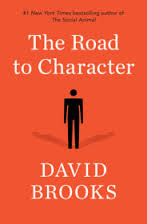 If I could shove one book into the hands of most everyone I know and demand they read it, it would be NY Times columnist and pundit David Brooks’ The Road To Character (Random House, 2015). Of course, Brooks would say that forcing books on people would demonstrate a stunning lack of character on my part. He’d be right. So instead I’m going to tell you why I admired this book, and ask you politely (please and thank you) to buy or borrow it for yourself. The book has provoked self-reflection even among those who were chafed a bit by Brooks’ analysis. Others have been challenged by his thoughtful insights about the way in which character is developed and exercised.
He references the categories in Rabbi Joseph Soloveitchik’s 1965 book Lonely Man Of Faith in order to give his readers a sense of the way in which he understands moral development:
…Adam I is the career-oriented, ambitious side of our nature. Adam I is the external, résumé Adam. Adam I wants to build, create, produce, and discover things. He wants to have high status and win victories. Adam II is the internal Adam. Adam II wants to embody certain moral qualities. Adam II wants to have a serene inner character, a quiet but solid sense of right and wrong— not only to do good, but to be good. Adam II wants to love intimately, to sacrifice self in the service of others, to live in obedience to some transcendent truth, to have a cohesive inner soul that honors creation and one’s own possibilities. While Adam I wants to conquer the world, Adam II wants to obey a calling to serve the world.
These categories hearkened to the spiritual development Father Richard Rohr described in Falling Upward and the journey toward spiritual maturity Janet Hagberg and Robert Guelich detailed in their book The Critical Journey: Stages In The Life Of Faith. I keep circling back to the work of these authors because we as human beings need this framework to understand how spiritual maturity happens. We in the church need it because the way we “do” church often suffocates this growth instead of nurturing it. (Dones, anyone?) I would add Brooks’ book to this group because it serves to illustrate the way in which character expresses Adam II-type maturing spiritual and moral development. We aren’t really sure in our culture or in our churches what it means to be a grown-up. One thing is certain: there’s a whole lot of us who don’t really want to be one.
With chapters covering topics like self-conquest, dignity, and ordered love, this book is not a manifesto for doing what makes you feel good. Adam II character is formed in our lives through sacrifice. Selfishness keeps us stuck in perpetual moral childhood. This should not be a news flash for followers of Jesus. Frankly, it wasn’t a news flash for people who lived a few generations ago, no matter what their creed.
Brooks is not advocating a return to Ye Good Olde Days, however. He is encouraging his readers to reconsider how and for whom they’re living their lives. The Road To Character offers illustrative snapshots of individuals providing both positive and negative examples including church father Augustine, organizer Bayard Rustin, General George Marshall, novelist George Eliot, and quarterback Johnny Unitas. He teases out formative details from their lives in order to help us understand how our choices form and transform us. We can not see in the moment of any given day the impact of a single moral decision we may be asked to make. Each time we make one of those little or big decisions because we’re choosing love – the 1 Corinthians 13 kind – we move toward maturity. It is not easy, Brooks notes. But there is no other road to Adam II character:
Once the necessities for survival are satisfied, the struggle against sin and for virtue is the central drama of life. No external conflict is as consequential or as dramatic as the inner campaign against our own deficiencies. This struggle against, say, selfishness or prejudice or insecurity gives meaning and shape to life. It is more important than the external journey up the ladder of success. This struggle against sin is the great challenge, so that life is not futile or absurd. It is possible to fight this battle well or badly, humorlessly or with cheerful spirit. Contending with weakness often means choosing what parts of yourself to develop and what parts not to develop. The purpose of the struggle against sin and weakness is not to “win,” because that is not possible; it is to get better at waging it. It doesn’t matter if you work at a hedge fund or a charity serving the poor. There are heroes and schmucks in both worlds. The most important thing is whether you are willing to engage in this struggle.
Brooks writes as a seeker, in the best possible iteration of that word. He’s a keen observer, and pushes readers without bullying them to consider who they are going to be, and how they’re going to get there. It’s often a lonely journey toward moral maturity. It takes the kind of character Brooks describes to stay the course.
Have you read this book yet? If so, what did you think?
Previous Post

July 1, 2015
Blogging Truth To Power
Next Post
July 10, 2015 How's Your Soul? Check Your Facebook Feed.
Browse Our Archives
Select a Category Baggage Books Calendar Church and Ministry CVID Ecclesiology Everyday Christian life Faith Falling Upward From The Margins Housing Jesus Movement's Unintended Consequences Midlife Midlife Survey #1 Midlife Survey #2 Moments and Days Out To The Margins Pilgrim's Road Trip Regret Seminary Spiritual Formation Uncategorized What's A Nice Jewish Grandmother Like You Doing In Seminary? When The Heart Waits Writing
Select a Month June 2017 May 2017 April 2017 March 2017 February 2017 January 2017 December 2016 November 2016 October 2016 September 2016 August 2016 July 2016 June 2016 May 2016 April 2016 March 2016 February 2016 January 2016 December 2015 November 2015 October 2015 September 2015 August 2015 July 2015 June 2015 May 2015 April 2015 March 2015 February 2015 January 2015 December 2014 November 2014 October 2014 September 2014 August 2014 July 2014 June 2014 May 2014 April 2014 March 2014 February 2014 January 2014 December 2013 October 2013 September 2013 August 2013 July 2013 June 2013 May 2013 April 2013 March 2013 February 2013 January 2013 December 2012 November 2012 October 2012 September 2012 August 2012 July 2012 June 2012 May 2012 April 2012 March 2012 February 2012 January 2012 December 2011 November 2011 October 2011 September 2011 August 2011 July 2011 June 2011 May 2011 April 2011 March 2011 February 2011 January 2011 December 2010 November 2010 October 2010 September 2010 August 2010 July 2010 June 2010 May 2010 April 2010 March 2010 February 2010 January 2010 December 2009 November 2009 October 2009 September 2009 August 2009 July 2009 June 2009 May 2009 April 2009 March 2009 February 2009 January 2009 December 2008 November 2008 October 2008 September 2008 August 2008 July 2008 June 2008 May 2008 April 2008 March 2008 February 2008 January 2008 December 2007 November 2007 October 2007 September 2007 August 2007 July 2007 June 2007 May 2007 April 2007
Follow Us!
TAKE THE
Religious Wisdom Quiz
Who prophesied destruction for Jerusalem but also promised a New Covenant?
Select your answer to see how you score.
Isaiah Jeremiah Joel Ezekiel
Related posts from Pilgrim's Road Trip
Introducing: Long Days Of Small Things
Review: Deliberate Acts of Kindness
Review: Of Stillness And Storm
Reflection: The Sound of a Million Dreams
TRENDING AT PATHEOS Evangelical

How the author of the world's best hymn...
I've been working with John Newton for a while now. This makes...

Long before this Lectio Divina, Psalm 130 - the song - started...

What About the Trees? Another Living Parable
After I finished writing the last article about falling leaves as a...

Why Classical Education Is a Conversation, Not a...
Come and Read: Joy in Classical Education When I was a little...

Falling Leaves: A Living Parable on Letting Go
I’ve spent the vast majority of my life in the southeast corner...

Cornell University has received a great deal of negative publicity and intense...
view all Evangelical blogs
Ad-Free & Subscriber Log-In Subscription Support
- About Us
- 2026 Calendar
- Videos
- Podcasts
- Library of World Religions
- Faith In Media Tracker
- Advertise With Us
- Write for Us
- Privacy Policy
- Terms of Service
- Do Not Sell My Data
- Contact Us
- Radiant Digital
- Manage Newsletter Subscriptions
- Unsubscribe From Notifications
- Sitemap
Copyright 2008-2026, Patheos. All rights reserved.
Subscription Support Ad-Free & Subscriber Log-In
Follow Patheos