
BuddhistCatholicContemplativeEvangelicalGeneral ChristianHinduJewishLatter-day SaintMuslimNew VisionsProgressive Christian
Beliefs
- Buddhist
- Catholic
- Contemplative
- Evangelical
- General Christian
- Hindu
- Jewish
- Latter-day Saint
- More Voices
- Muslim
- New Visions
- Pagan
- Progressive Christian
Topics
- Religion News
- Food and Religion
- Sports and Religion
- Religious Art
- Religious Music and Entertainment
- Religious Events
- History and Religion
- Style and Religion
- Politics and Religion
- Women in Religion
- Recreation Outdoors and Religion
- Business Finance and Religion
- Careers Workplace and Religion
- Education and Religion
- Family Parenting and Religion
- Health Fitness and Religion
- Home and Religion
- Relationships and Religion
- Technology and Religion
- Travel and Religion
Columnists
- Buddhist Columnists
- Business Finance and Religion Columnists
- Careers Workplace and Religion Columnists
- Catholic Columnists
- Contemplative Columnists
- Education and Religion Columnists
- Evangelists Columnists
- Family Parenting and Religion Columnists
- General Christian Columnists
- Health Fitness and Religion Columnists
- Hindu Columnists
- History and Religion Columnists
- Home and Religion Columnists
- Jewish Columnists
- More Voices Columnists
- Latter Day Columnists
- Muslim Columnists
- New Visions Columnists
- Nonreligious Columnists
- Pagan Columnists
- Politics and Religion Columnists
- Progressive Columnists
- Recreation Outdoors and Religion Columnists
- Relationships and Religion Columnists
- Religion News Columnists
- Religious Art Columnists
- Religious Events Columnists
- Religious Music and Entertainment Columnists
- Sports and Religion Columnists
- Style and Religion Columnists
- Technology and Religion Columnists
- Travel and Religion Columnists
- Women in Religion Columnists
Resource Library
- 2026 Calendar
- Library of World Religions
- The 100 Most Holy Places on Earth
- Patheos Answers
- Podcasts
- Videos
- Faith Leaders Database
- Anglican Episcopalian
- Bahai
- Baptist
- Buddhism
- Christianity
- Confucianism
- Eastern Orthodoxy
- Hinduism
- Holiness and Pentecostal
- ISKCON
- Islam
- Judaism
- Lutheran
- Methodist
- The Church of Jesus Christ of Latter-day Saints
- New Age
- Paganism
- Presbytarian and Reformed
- Protestantism
- Religion Behind the Scenes
- Roman Catholic
- Scientology
- Shia Islam
- Sikhism
- Sufism
- Sunni Islam
- Taoism
- Zen
- See all religions
Research Tools
 Ad-Free & Subscriber Log-In Subscription Support
Ad-Free & Subscriber Log-In Subscription Support
Follow Patheos 

- Trending:
- Forgiveness
- |
- Marriage
- |
- Consciousness
- |
- Death Penalty
- |
- Election
- |
- Halloween
 Pilgrim's Road Trip
- Home
- Evangelical
- Review: Troubled Minds
Review: Troubled Minds
Last updated on: May 7, 2013 at 8:20 am by Michelle Van Loon
Review: Troubled Minds 2013-05-07T08:20:10-05:00 Michelle Van Loon
Patheos Explore the world's faith through different perspectives on religion and spirituality! Patheos has the views of the prevalent religions and spiritualities of the world.
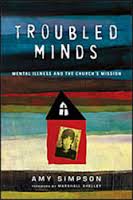 I’ve heard some believers say that mental illness can be reduced to a mind-over-matter issue. “If that depressed person would just apply a little Christian elbow grease by memorizing and applying the Word of God, they’d get over it.”
I’ve heard other believers insist that mental illness is always a spiritual issue. “It’s demons. End of story.”
I’m glad to say I’ve also known believers who’ve been caring and faithful friends to those suffering from mental illness. There are many more who want to be, but don’t know how.
A new book, Troubled Minds (IVP, 2013) will help many more of us learn to be both friend and advocate for the mentally ill in our families, churches and communities. Author Amy Simpson, whose mother was diagnosed with schizophrenia while Amy was growing up, has penned a guide that includes a sensitive retelling of her family’s story and a helpful discussion for those in the church about issues surrounding mental illness including definitions, categories, and chapters about suffering, coping, church and ministry life, stigma, what churches can do and what God does. A rock-solid resource list rounds out the 221-page book.
Simpson notes that in this era where doctors, counselors and social workers are available to treat those with mental illness, we in the church have an important role to play, too:
“…Why is people’s experience in the church so important? Because God cares deeply about the sick and marginalized. He judged the people of Israel harshly because ‘they deprive the poor of justice and deny the rights of the needy among my people. They prey on widows and take advantage of orphans.’ (Is. 10:2) Who is more needy than people suffering from disorders that distort their perceptions of reality itself?”
She goes on to explain that God used her local church, flawed at times in their response to her struggling family, to be a safe place in her turbulent life while consistently pointing her toward Jesus. Those of us who have mentally-ill family members need safe places to process what is happening in our families; those of us who have been diagnosed with mental illness desperately need people to form a caring network around us. This is simply discipleship, and it requires from those of us supporting the ill person or their family a commitment that can’t be crystallized into a workbook, program or recipe. It means faithfulness through the mess, chaos and confusion of drugs, doctors, hospitals and the consequences of the mentally ill person’s choices.
One of the resources throughout the book toward which Simpson points her readers is the National Alliance on Mental Illness (NAMI). I do want to take a moment to recommend to you this grassroots organization (which has chapters in every state). They offer support and education for the mentally-ill and their families, and are also involved in lobbying efforts. They are a helpful community resource for individuals, but they also have much to offer churches wondering how to better care for the mentally-ill in their midst.
Simpson is a strong, capable writer, and does an excellent job addressing the Christian community about a topic most haven’t known how to best respond. Her experience gives her words authority. Though the book is written primarily to inform and motivate, it is also a love letter to the church she believes can rise up and care well for those who qualify as “the least of these”.
Though Simpson touches on demonic activity as a factor in mental illness, she notes, “Confronting demon possession or demonic influence should not be the starting point for our response to troubled people. If an illness responds to medical intervention, it’s a medical problem. And that should be the starting point.” I would have liked her to elaborate a bit further about when consideration of demonic activity might be of value, and how to proceed without further stigmatizing the person or compromising their treatment.
I believe a copy of this book belongs (dog-eared and underlined) on the shelf of every ministry leader I know, as well as those of us who have mentally-ill family members, or have ourselves been diagnosed with mental illness.
***I received a complimentary copy of this book from the publisher, but the price tag did not in any way affect my review of this book.
Previous Post

May 6, 2013
Out To The Margins: Tim Fall
Next Post
May 10, 2013 40+ And The Church / A Matter Of Time
Browse Our Archives
Select a Category Baggage Books Calendar Church and Ministry CVID Ecclesiology Everyday Christian life Faith Falling Upward From The Margins Housing Jesus Movement's Unintended Consequences Midlife Midlife Survey #1 Midlife Survey #2 Moments and Days Out To The Margins Pilgrim's Road Trip Regret Seminary Spiritual Formation Uncategorized What's A Nice Jewish Grandmother Like You Doing In Seminary? When The Heart Waits Writing
Select a Month June 2017 May 2017 April 2017 March 2017 February 2017 January 2017 December 2016 November 2016 October 2016 September 2016 August 2016 July 2016 June 2016 May 2016 April 2016 March 2016 February 2016 January 2016 December 2015 November 2015 October 2015 September 2015 August 2015 July 2015 June 2015 May 2015 April 2015 March 2015 February 2015 January 2015 December 2014 November 2014 October 2014 September 2014 August 2014 July 2014 June 2014 May 2014 April 2014 March 2014 February 2014 January 2014 December 2013 October 2013 September 2013 August 2013 July 2013 June 2013 May 2013 April 2013 March 2013 February 2013 January 2013 December 2012 November 2012 October 2012 September 2012 August 2012 July 2012 June 2012 May 2012 April 2012 March 2012 February 2012 January 2012 December 2011 November 2011 October 2011 September 2011 August 2011 July 2011 June 2011 May 2011 April 2011 March 2011 February 2011 January 2011 December 2010 November 2010 October 2010 September 2010 August 2010 July 2010 June 2010 May 2010 April 2010 March 2010 February 2010 January 2010 December 2009 November 2009 October 2009 September 2009 August 2009 July 2009 June 2009 May 2009 April 2009 March 2009 February 2009 January 2009 December 2008 November 2008 October 2008 September 2008 August 2008 July 2008 June 2008 May 2008 April 2008 March 2008 February 2008 January 2008 December 2007 November 2007 October 2007 September 2007 August 2007 July 2007 June 2007 May 2007 April 2007
Follow Us!
TAKE THE
Religious Wisdom Quiz
I am a day when the high priest enters the Most Holy Place once a year to make atonement. What day am I?
Select your answer to see how you score.
Passover The Day of Trumpets The Day of Atonement The Sabbath
Related posts from Pilgrim's Road Trip
Introducing: Long Days Of Small Things
Review: Deliberate Acts of Kindness
Review: Of Stillness And Storm
Reflection: The Sound of a Million Dreams
TRENDING AT PATHEOS Evangelical

The REST of Your Life: A Creative Wrestles...
This week I had a conversation with a good friend from church....

How the author of the world's best hymn...
I've been working with John Newton for a while now. This makes...

Long before this Lectio Divina, Psalm 130 - the song - started...

What About the Trees? Another Living Parable
After I finished writing the last article about falling leaves as a...

Why Classical Education Is a Conversation, Not a...
Come and Read: Joy in Classical Education When I was a little...

Cornell University has received a great deal of negative publicity and intense...
view all Evangelical blogs
Ad-Free & Subscriber Log-In Subscription Support
- About Us
- 2026 Calendar
- Videos
- Podcasts
- Library of World Religions
- Faith In Media Tracker
- Advertise With Us
- Write for Us
- Privacy Policy
- Terms of Service
- Do Not Sell My Data
- Contact Us
- Radiant Digital
- Manage Newsletter Subscriptions
- Unsubscribe From Notifications
- Sitemap
Copyright 2008-2026, Patheos. All rights reserved.
Subscription Support Ad-Free & Subscriber Log-In
Follow Patheos