
BuddhistCatholicContemplativeEvangelicalGeneral ChristianHinduJewishLatter-day SaintMuslimNew VisionsProgressive Christian
Beliefs
- Buddhist
- Catholic
- Contemplative
- Evangelical
- General Christian
- Hindu
- Jewish
- Latter-day Saint
- More Voices
- Muslim
- New Visions
- Pagan
- Progressive Christian
Topics
- Religion News
- Food and Religion
- Sports and Religion
- Religious Art
- Religious Music and Entertainment
- Religious Events
- History and Religion
- Style and Religion
- Politics and Religion
- Women in Religion
- Recreation Outdoors and Religion
- Business Finance and Religion
- Careers Workplace and Religion
- Education and Religion
- Family Parenting and Religion
- Health Fitness and Religion
- Home and Religion
- Relationships and Religion
- Technology and Religion
- Travel and Religion
Columnists
- Buddhist Columnists
- Business Finance and Religion Columnists
- Careers Workplace and Religion Columnists
- Catholic Columnists
- Contemplative Columnists
- Education and Religion Columnists
- Evangelists Columnists
- Family Parenting and Religion Columnists
- General Christian Columnists
- Health Fitness and Religion Columnists
- Hindu Columnists
- History and Religion Columnists
- Home and Religion Columnists
- Jewish Columnists
- More Voices Columnists
- Latter Day Columnists
- Muslim Columnists
- New Visions Columnists
- Nonreligious Columnists
- Pagan Columnists
- Politics and Religion Columnists
- Progressive Columnists
- Recreation Outdoors and Religion Columnists
- Relationships and Religion Columnists
- Religion News Columnists
- Religious Art Columnists
- Religious Events Columnists
- Religious Music and Entertainment Columnists
- Sports and Religion Columnists
- Style and Religion Columnists
- Technology and Religion Columnists
- Travel and Religion Columnists
- Women in Religion Columnists
Resource Library
- 2026 Calendar
- Library of World Religions
- The 100 Most Holy Places on Earth
- Patheos Answers
- Podcasts
- Videos
- Faith Leaders Database
- Anglican Episcopalian
- Bahai
- Baptist
- Buddhism
- Christianity
- Confucianism
- Eastern Orthodoxy
- Hinduism
- Holiness and Pentecostal
- ISKCON
- Islam
- Judaism
- Lutheran
- Methodist
- The Church of Jesus Christ of Latter-day Saints
- New Age
- Paganism
- Presbytarian and Reformed
- Protestantism
- Religion Behind the Scenes
- Roman Catholic
- Scientology
- Shia Islam
- Sikhism
- Sufism
- Sunni Islam
- Taoism
- Zen
- See all religions
Research Tools
 Ad-Free & Subscriber Log-In Subscription Support
Ad-Free & Subscriber Log-In Subscription Support
Follow Patheos 

- Trending:
- Forgiveness
- |
- Marriage
- |
- Consciousness
- |
- Death Penalty
- |
- Election
- |
- Halloween
 Pilgrim's Road Trip
- Home
- Evangelical
- Falling Upward, Chapter 12
Falling Upward, Chapter 12
Last updated on: September 3, 2012 at 1:00 pm by Michelle Van Loon
Falling Upward, Chapter 12 2012-09-03T13:00:00-05:00 Michelle Van Loon
Patheos Explore the world's faith through different perspectives on religion and spirituality! Patheos has the views of the prevalent religions and spiritualities of the world.
I’m blogging through Father Richard Rohr’s Falling Upward: A Spirituality Through The Two Halves Of Life. Even if you haven’t read the book, please stick around and join the conversation here if you’re facing a mid-life transition. Father Rohr offers us all some meaty food for thought.
Here are links to my previous posts in the series: Intro — Chapter 1 — Chapter 2 — Chapter 3 —Chapter 4 – Chapter 5 – Chapter 6 – Chapter 7 – Chapter 8 – Chapter 9 – Chapter 10 – Chapter 11
** * * * * * **
“I must tell you that, in yet another paradox, your circle of real confidants and truly close friends will normally grow smaller, but also more intimate.” Father Rohr launches Chapter 12 with this observation. I recently wrote about this phenomenon at Christianity Today’s Her.meneutics blog. He urges those of us who have arrived at this place in life to be patient with those who haven’t, noting that most people and institutions are busy with first half-of-life issues. “These are ego needs and not soul needs,” he notes.
The question becomes, “How can I honor the legitimate needs of the first half of life, while creating space, vision, time and grace for the second?” The holding of this tension is the very shape of wisdom.
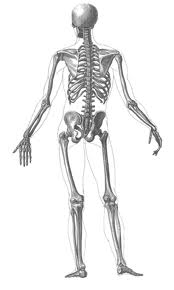 Many second-half-of-life people become impatient with first-half-driven institutions, including the church. “Historically, in the Catholic and Orthodox traditions, you just went off to the side and became a monk or a nun, but now even religious life suffers from the same institutionalization, and is not always a satellite of freedom or the wisdom school that it was meant to be.” He notes that many people involved in really meaningful ministry find their primary support from a couple of other friends, and, in a distant second, from the larger institution. “Larger institutions might well provide the skeleton, but the muscle, meat, and miracles invariably happen at the local level.” As he delineates how this works itself out, Rohr tells us that this information shouldn’t discourage us, but should help us adjust our expectations of what first-half people and institutions can and can’t be. “Don’t expect or demand from groups what they usually cannot give. Doing so will make you needlessly angry and reactionary. They must and will be concerned with identity, boundaries, self-maintenance, self-perpetuation, and self-congratulation.”
It is always interesting to me that the “power of the keys” that Jesus gave to Peter both to “bind and to loose” (Matthew 16:19) is invariably used to bind so seldom used to loose – unless it is to the church institution’s advantage.
Rohr suggests that even we extroverts become more introverted as we get older so that we can reflect and process what life has given to us and taken from us: “We move toward understimulation, if we are on the schedule of soul.” He also notes that new voices may have resonance in our lives, suggesting that “if your politics do not become more compassionate and inclusive, I doubt whether you are on the second journey.” No single group or affiliation meets all of our needs if we’re growing into second-half people. “More calm and contemplative seeing does not appear suddenly, but grows almost unconsciously over many years of conflict, confusion, healing, broadening, loving, and forgiving reality.”
Maturity, then, moves beyond “us versus them” dualistic thinking and toward both synthesis and new action.. “In the second half of life, all that you avoided for the sake of a manufactured ego ideal starts coming back as a true friend and teacher. Doers become thinkers, feelers become doers, thinkers become feelers, extroverts become introverts, visionaries become practical, and the practical ones long for vision. We all go toward the very places we avoided for the last forty years, and our friends are amazed. Now we begin to understand why Jesus is always welcoming the outsider, the foreigner, the sinner, the wounded one. He was a second half-of-life man who has had the unenviable task of trying to teach and be understood by a largely first half-of-life history, church and culture.”
This chapter touched on a number of things I’ve been experiencing in recent years: the shift in some of my friendships, the growing impatience with the self-preserving nature of institutions, the self-reflection and the change in emphasis in the way I interact with the world. Father Rohr’s words gave me words of my own that gave me language for the changes I’ve experienced.
I’ve had more than a few challenges when it comes to church. In recent years, however, I’ve felt a bit of an emotional disconnection from the institution. I serve with a ministry that networks churches. I write and speak about church issues. I attend a local church. And yet…when those in charge degrade into institution-guarding instead of kingdom-building, I find I am more at peace than I ever used to be about watching them do their self-serving thing from a distance without trying to intervene (“Hey leader-people! Your behavior is hurtful and WRONG!”). Back in the day, I might have been right, and I might have spoken out of love, but my impassioned pleas for change almost always fell on deaf ears. My error came as I misread soul for ego, and expected that institutionalized groups – and the alphas who ran them – be what they never could.
Father Rohr’s words about institutions being devoted to first-half concerns clicked for me. I have occasionally wondered if I’ve lost the fire in my soul that once led me to advocate in one congregation after another for the underdog and agitate against bloated or self-protective bureaucracy. I have plenty of second-adulthood energy for individuals who are truth-tellers and God-seekers.
It’s a far more peaceful place to be. .
How about you? Do you find that you’re changing the way you relate to the institutions in your world as the years go by?
Previous Post

August 27, 2012
I was the 36%
Next Post
September 10, 2012 After The Infant Dedication/Baptism/Naming Ceremony...
Browse Our Archives
Select a Category Baggage Books Calendar Church and Ministry CVID Ecclesiology Everyday Christian life Faith Falling Upward From The Margins Housing Jesus Movement's Unintended Consequences Midlife Midlife Survey #1 Midlife Survey #2 Moments and Days Out To The Margins Pilgrim's Road Trip Regret Seminary Spiritual Formation Uncategorized What's A Nice Jewish Grandmother Like You Doing In Seminary? When The Heart Waits Writing
Select a Month June 2017 May 2017 April 2017 March 2017 February 2017 January 2017 December 2016 November 2016 October 2016 September 2016 August 2016 July 2016 June 2016 May 2016 April 2016 March 2016 February 2016 January 2016 December 2015 November 2015 October 2015 September 2015 August 2015 July 2015 June 2015 May 2015 April 2015 March 2015 February 2015 January 2015 December 2014 November 2014 October 2014 September 2014 August 2014 July 2014 June 2014 May 2014 April 2014 March 2014 February 2014 January 2014 December 2013 October 2013 September 2013 August 2013 July 2013 June 2013 May 2013 April 2013 March 2013 February 2013 January 2013 December 2012 November 2012 October 2012 September 2012 August 2012 July 2012 June 2012 May 2012 April 2012 March 2012 February 2012 January 2012 December 2011 November 2011 October 2011 September 2011 August 2011 July 2011 June 2011 May 2011 April 2011 March 2011 February 2011 January 2011 December 2010 November 2010 October 2010 September 2010 August 2010 July 2010 June 2010 May 2010 April 2010 March 2010 February 2010 January 2010 December 2009 November 2009 October 2009 September 2009 August 2009 July 2009 June 2009 May 2009 April 2009 March 2009 February 2009 January 2009 December 2008 November 2008 October 2008 September 2008 August 2008 July 2008 June 2008 May 2008 April 2008 March 2008 February 2008 January 2008 December 2007 November 2007 October 2007 September 2007 August 2007 July 2007 June 2007 May 2007 April 2007
Follow Us!
TAKE THE
Religious Wisdom Quiz
I was rejected by God as king for offering an unauthorized sacrifice instead of waiting. Who am I?
Select your answer to see how you score.
David Saul Solomon Rehoboam
Related posts from Pilgrim's Road Trip

Falling Upward: Chapter 13 / Conclusion



TRENDING AT PATHEOS Evangelical

The REST of Your Life: A Creative Wrestles...
This week I had a conversation with a good friend from church....

How the author of the world's best hymn...
I've been working with John Newton for a while now. This makes...

Long before this Lectio Divina, Psalm 130 - the song - started...

What About the Trees? Another Living Parable
After I finished writing the last article about falling leaves as a...

Why Classical Education Is a Conversation, Not a...
Come and Read: Joy in Classical Education When I was a little...

Cornell University has received a great deal of negative publicity and intense...
view all Evangelical blogs
Ad-Free & Subscriber Log-In Subscription Support
- About Us
- 2026 Calendar
- Videos
- Podcasts
- Library of World Religions
- Faith In Media Tracker
- Advertise With Us
- Write for Us
- Privacy Policy
- Terms of Service
- Do Not Sell My Data
- Contact Us
- Radiant Digital
- Manage Newsletter Subscriptions
- Unsubscribe From Notifications
- Sitemap
Copyright 2008-2026, Patheos. All rights reserved.
Subscription Support Ad-Free & Subscriber Log-In
Follow Patheos