
BuddhistCatholicContemplativeEvangelicalGeneral ChristianHinduJewishLatter-day SaintMuslimNew VisionsProgressive Christian
Beliefs
- Buddhist
- Catholic
- Contemplative
- Evangelical
- General Christian
- Hindu
- Jewish
- Latter-day Saint
- More Voices
- Muslim
- New Visions
- Pagan
- Progressive Christian
Topics
- Religion News
- Food and Religion
- Sports and Religion
- Religious Art
- Religious Music and Entertainment
- Religious Events
- History and Religion
- Style and Religion
- Politics and Religion
- Women in Religion
- Recreation Outdoors and Religion
- Business Finance and Religion
- Careers Workplace and Religion
- Education and Religion
- Family Parenting and Religion
- Health Fitness and Religion
- Home and Religion
- Relationships and Religion
- Technology and Religion
- Travel and Religion
Columnists
- Buddhist Columnists
- Business Finance and Religion Columnists
- Careers Workplace and Religion Columnists
- Catholic Columnists
- Contemplative Columnists
- Education and Religion Columnists
- Evangelists Columnists
- Family Parenting and Religion Columnists
- General Christian Columnists
- Health Fitness and Religion Columnists
- Hindu Columnists
- History and Religion Columnists
- Home and Religion Columnists
- Jewish Columnists
- More Voices Columnists
- Latter Day Columnists
- Muslim Columnists
- New Visions Columnists
- Nonreligious Columnists
- Pagan Columnists
- Politics and Religion Columnists
- Progressive Columnists
- Recreation Outdoors and Religion Columnists
- Relationships and Religion Columnists
- Religion News Columnists
- Religious Art Columnists
- Religious Events Columnists
- Religious Music and Entertainment Columnists
- Sports and Religion Columnists
- Style and Religion Columnists
- Technology and Religion Columnists
- Travel and Religion Columnists
- Women in Religion Columnists
Resource Library
- 2026 Calendar
- Library of World Religions
- The 100 Most Holy Places on Earth
- Patheos Answers
- Podcasts
- Videos
- Faith Leaders Database
- Anglican Episcopalian
- Bahai
- Baptist
- Buddhism
- Christianity
- Confucianism
- Eastern Orthodoxy
- Hinduism
- Holiness and Pentecostal
- ISKCON
- Islam
- Judaism
- Lutheran
- Methodist
- The Church of Jesus Christ of Latter-day Saints
- New Age
- Paganism
- Presbytarian and Reformed
- Protestantism
- Religion Behind the Scenes
- Roman Catholic
- Scientology
- Shia Islam
- Sikhism
- Sufism
- Sunni Islam
- Taoism
- Zen
- See all religions
Research Tools
 Ad-Free & Subscriber Log-In Subscription Support
Ad-Free & Subscriber Log-In Subscription Support
Follow Patheos 

- Trending:
- Forgiveness
- |
- Marriage
- |
- Consciousness
- |
- Death Penalty
- |
- Election
- |
- Halloween
 Pilgrim's Road Trip
- Home
- Evangelical
- Falling Upward, Chapter 6
Falling Upward, Chapter 6
Last updated on: March 15, 2012 at 3:52 pm by Michelle Van Loon
Falling Upward, Chapter 6 2012-03-15T15:52:15-05:00 Michelle Van Loon
Patheos Explore the world's faith through different perspectives on religion and spirituality! Patheos has the views of the prevalent religions and spiritualities of the world.
I’m blogging through Father Richard Rohr’s Falling Upward: A Spirituality Through The Two Halves Of Life. Even if you haven’t read the book, please stick around and join the conversation here if you’re facing a mid-life transition. Father Rohr offers us all some meaty food for thought.
Here are links to my previous posts in the series: Intro — Chapter 1 — Chapter 2 — Chapter 3 —Chapter 4 – Chapter 5
* * * * * * *
Chapter 6 is titled “Necessary Suffering”, and offers a discussion about the role suffering plays in our human development. “Ironically, this refusal of necessary pain of being human brings to the person ten times more suffering in the long run,” Rohr writes. Suffering is a crucible that clarifies our inner lives. “Before the truth ‘sets you free’, it tends to make you miserable.”
He doesn’t make a distinction between the kind of suffering that accompanies dying to oneself versus, say, suffering that accompanies injustice or illness. Perhaps it is because these kinds of suffering can do the same kind of work in our lives as the loss that comes with change. There can be a lot of overlap, but I think the chapter could use some discussion about the kinds of suffering that introduce us to the crucible in addition to the useful discussion Rohr does offer us about suffering’s purpose in our lives.
His own Catholic faith has been that crucible for Rohr. Though he’s also been a vocal critic of his own faith family, he also realizes that his struggle with the Church has helped him to fully integrate and internalize the “incarnational mysticism” he’s discovered at the core of the Catholic worldview.
“The pedestrian and everyday church has remained a cauldron of transformation for me by holding me inside both the dark and the light side of almost everything, and by teaching me nondualistic thinking to survive. It has also shown me that neither I nor the churches themselves really live much of the real Gospel – at least enough to actually change our present lifestystyles! It is just too big a message. Refusing to split and deny reality keeps me in regular touch with my own shadow self, and much more patient with the rather evident shadow of the church. I see the exact same patterns in every other group, so my own home base is as good a place to learn shadow boxing as anywhere else, and often better than most.”
Nature portrays the process of “necessary suffering” for us, if only we’ll have eyes to see: death that accompanies a change of seasons, the number of seedlings launched into the wind that never become trees, Yet most people deny the necessary suffering that accompanies change. You can see this denial at work in both institutions and in individuals. Rohr notes that even if people say ‘no’ to the pain of change, he trust in the God who waits and empowers free will and a free ‘yes’. “In a certain but real sense, the church itself is the first cross that Jesus is crucified on, as we limit, mangle, and try to control the always too big message….I am without a doubt a microcosm of this universal church.”
Rohr shifts then to a discussion about what it means to hate our family, and how this “hate” relates to the Fourth Commandment. This commandment is necessary for the first half of life, he notes, and it can be possible for the whole of our lives. However, in an interesting application of the inherent tension between these two Bible passages, Rohr explains that many people are restrained from growth in the second half of their lives by the “pious, immature, or rigid expectations of their first-half-of-life family.”
It isn’t just family that restrains us, Rohr notes. It is our peer group and our society. “Without very real inner work, most folks never move beyond it…To move beyond family-of-origin stuff, local church stuff, cultural stuff, flag-and-country stuff is a path few of us follow and with integrity.” Leaving home (the home of our first half), helps us find home.
“Your false self is your role, title, and personal image that is largely a creation of your own mind and attachments. it will and must die in exact correlation to how much you want the Real.”
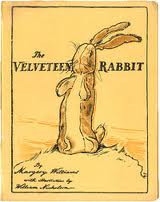 Losing that false self is the reason for the necessary suffering so that we can find “‘the pearl of great price’ hidden inside this lovely but passing shell”.
Even if I am certain I’ve left behind my family of origin, I am amazed at how some of my childhood story has bubbled to the surface in recent years. I can attribute some of this to the deaths of both of my parents. But I think there is something more than this, something that has more to do with the falling upward of the second half of life. Am I the person my childhood experiences told me I was?
I’ve been surprised to discover that some of what I’d long discarded from those experiences as I entered my first adulthood needs to be welcomed into my second adulthood identity – but a whole lot more of that first adulthood needs to be honored, then left behind as a husk. A good counselor and a few prayerful friends have been a help in figuring out which is baby and which is bathwater, which is Real and which is only a shadow.
I want the Real.
Note: If you’re enjoying this discussion, you might want to visit “The Rest Of The Story” blog, where Angie is also blogging her way through Falling Upward.
Previous Post

March 10, 2012
Book review: No Easy Choice
Next Post
March 19, 2012 Graduating from my own writing "school"
Browse Our Archives
Select a Category Baggage Books Calendar Church and Ministry CVID Ecclesiology Everyday Christian life Faith Falling Upward From The Margins Housing Jesus Movement's Unintended Consequences Midlife Midlife Survey #1 Midlife Survey #2 Moments and Days Out To The Margins Pilgrim's Road Trip Regret Seminary Spiritual Formation Uncategorized What's A Nice Jewish Grandmother Like You Doing In Seminary? When The Heart Waits Writing
Select a Month June 2017 May 2017 April 2017 March 2017 February 2017 January 2017 December 2016 November 2016 October 2016 September 2016 August 2016 July 2016 June 2016 May 2016 April 2016 March 2016 February 2016 January 2016 December 2015 November 2015 October 2015 September 2015 August 2015 July 2015 June 2015 May 2015 April 2015 March 2015 February 2015 January 2015 December 2014 November 2014 October 2014 September 2014 August 2014 July 2014 June 2014 May 2014 April 2014 March 2014 February 2014 January 2014 December 2013 October 2013 September 2013 August 2013 July 2013 June 2013 May 2013 April 2013 March 2013 February 2013 January 2013 December 2012 November 2012 October 2012 September 2012 August 2012 July 2012 June 2012 May 2012 April 2012 March 2012 February 2012 January 2012 December 2011 November 2011 October 2011 September 2011 August 2011 July 2011 June 2011 May 2011 April 2011 March 2011 February 2011 January 2011 December 2010 November 2010 October 2010 September 2010 August 2010 July 2010 June 2010 May 2010 April 2010 March 2010 February 2010 January 2010 December 2009 November 2009 October 2009 September 2009 August 2009 July 2009 June 2009 May 2009 April 2009 March 2009 February 2009 January 2009 December 2008 November 2008 October 2008 September 2008 August 2008 July 2008 June 2008 May 2008 April 2008 March 2008 February 2008 January 2008 December 2007 November 2007 October 2007 September 2007 August 2007 July 2007 June 2007 May 2007 April 2007
Follow Us!
TAKE THE
Religious Wisdom Quiz
Which Old Testament book does not mention God?
Select your answer to see how you score.
Ruth Esther Song of Solomon Ecclesiastes
Related posts from Pilgrim's Road Trip
Falling Upward: Chapter 13 / Conclusion
TRENDING AT PATHEOS Evangelical

The REST of Your Life: A Creative Wrestles...
This week I had a conversation with a good friend from church....

How the author of the world's best hymn...
I've been working with John Newton for a while now. This makes...

Long before this Lectio Divina, Psalm 130 - the song - started...

What About the Trees? Another Living Parable
After I finished writing the last article about falling leaves as a...

Why Classical Education Is a Conversation, Not a...
Come and Read: Joy in Classical Education When I was a little...

Cornell University has received a great deal of negative publicity and intense...
view all Evangelical blogs
Ad-Free & Subscriber Log-In Subscription Support
- About Us
- 2026 Calendar
- Videos
- Podcasts
- Library of World Religions
- Faith In Media Tracker
- Advertise With Us
- Write for Us
- Privacy Policy
- Terms of Service
- Do Not Sell My Data
- Contact Us
- Radiant Digital
- Manage Newsletter Subscriptions
- Unsubscribe From Notifications
- Sitemap
Copyright 2008-2026, Patheos. All rights reserved.
Subscription Support Ad-Free & Subscriber Log-In
Follow Patheos