
BuddhistCatholicContemplativeEvangelicalGeneral ChristianHinduJewishLatter-day SaintMuslimNew VisionsProgressive Christian
Beliefs
- Buddhist
- Catholic
- Contemplative
- Evangelical
- General Christian
- Hindu
- Jewish
- Latter-day Saint
- More Voices
- Muslim
- New Visions
- Pagan
- Progressive Christian
Topics
- Religion News
- Food and Religion
- Sports and Religion
- Religious Art
- Religious Music and Entertainment
- Religious Events
- History and Religion
- Style and Religion
- Politics and Religion
- Women in Religion
- Recreation Outdoors and Religion
- Business Finance and Religion
- Careers Workplace and Religion
- Education and Religion
- Family Parenting and Religion
- Health Fitness and Religion
- Home and Religion
- Relationships and Religion
- Technology and Religion
- Travel and Religion
Columnists
- Buddhist Columnists
- Business Finance and Religion Columnists
- Careers Workplace and Religion Columnists
- Catholic Columnists
- Contemplative Columnists
- Education and Religion Columnists
- Evangelists Columnists
- Family Parenting and Religion Columnists
- General Christian Columnists
- Health Fitness and Religion Columnists
- Hindu Columnists
- History and Religion Columnists
- Home and Religion Columnists
- Jewish Columnists
- More Voices Columnists
- Latter Day Columnists
- Muslim Columnists
- New Visions Columnists
- Nonreligious Columnists
- Pagan Columnists
- Politics and Religion Columnists
- Progressive Columnists
- Recreation Outdoors and Religion Columnists
- Relationships and Religion Columnists
- Religion News Columnists
- Religious Art Columnists
- Religious Events Columnists
- Religious Music and Entertainment Columnists
- Sports and Religion Columnists
- Style and Religion Columnists
- Technology and Religion Columnists
- Travel and Religion Columnists
- Women in Religion Columnists
Resource Library
- 2026 Calendar
- Library of World Religions
- The 100 Most Holy Places on Earth
- Patheos Answers
- Podcasts
- Videos
- Faith Leaders Database
- Anglican Episcopalian
- Bahai
- Baptist
- Buddhism
- Christianity
- Confucianism
- Eastern Orthodoxy
- Hinduism
- Holiness and Pentecostal
- ISKCON
- Islam
- Judaism
- Lutheran
- Methodist
- The Church of Jesus Christ of Latter-day Saints
- New Age
- Paganism
- Presbytarian and Reformed
- Protestantism
- Religion Behind the Scenes
- Roman Catholic
- Scientology
- Shia Islam
- Sikhism
- Sufism
- Sunni Islam
- Taoism
- Zen
- See all religions
Research Tools
 Ad-Free & Subscriber Log-In Subscription Support
Ad-Free & Subscriber Log-In Subscription Support
Follow Patheos 

- Trending:
- Forgiveness
- |
- Marriage
- |
- Consciousness
- |
- Death Penalty
- |
- Election
- |
- Halloween

- Home
- General Christian
- Travel and Religion
- Tears of the Theotokos: Meditations for Lent
Tears of the Theotokos: Meditations for Lent
Last updated on: March 5, 2025 at 2:53 pm by HJ Sandigo
Tears of the Theotokos: Meditations for Lent 2025-03-05T14:53:51-08:00 HJ Sandigo
Patheos Explore the world's faith through different perspectives on religion and spirituality! Patheos has the views of the prevalent religions and spiritualities of the world.
For Lent, I will be sharing a series of meditations on the Seven Sorrows of Mary through the lens of the Eastern Church, drawing from its tradition of the Prayer of the Heart and the tears of repentance. According to the Fathers, tears are a gift from God, leading us from contrition (penthos) to enlightenment, healing the wounds of sin, and carrying us from sorrow to joy. I will be posting excerpts up until Pascha. May these reflections deepen your journey toward the Resurrection.
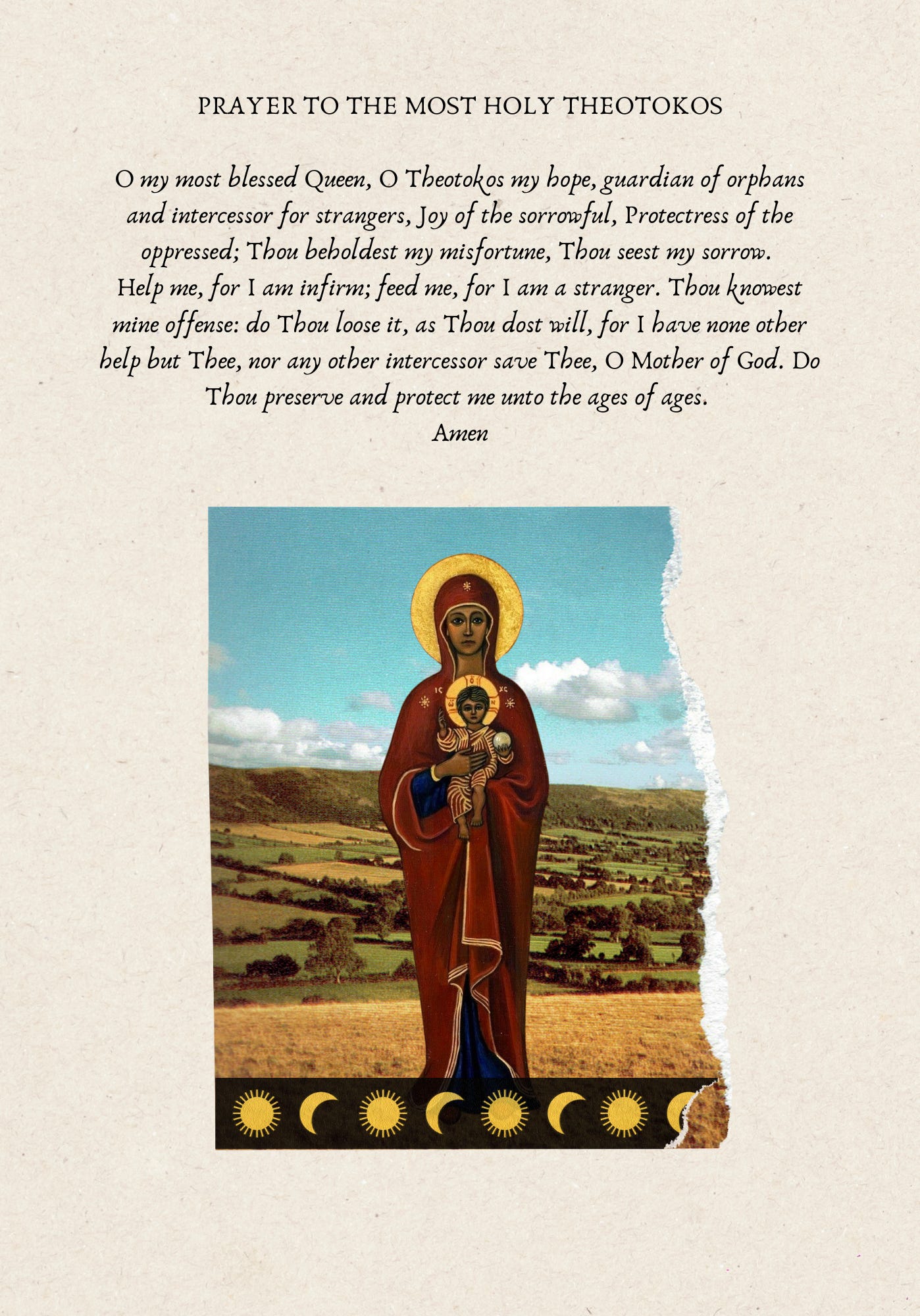
Most mothers give their child away in marriage, so they may become one flesh with another, raise children, and live out the vocation of holy matrimony. But Our Lady did not walk Christ down the aisle—rather, she walked with Him to Calvary.
At Golgotha, the place of the skull, Jesus trampled death by death, reaching into Hades to redeem Adam’s sin as the New Adam, setting the captives free.
It was a resurrection procession—the source of our life, our sweetness, and our hope. Without the Resurrection, Jesus is merely a teacher, His words another philosophy rather than the fulfillment of all things. But triumphantly, we proclaim at Pascha:
Christ is Risen! Indeed, He is Risen!
Our God is alive, and we live in the reality of the One who is, was, and always shall be. (Revelation 1:8)
He, present everywhere and filling all things, is our treasury of blessings and the giver of life. (From the Divine Liturgy of Saint John Chrysostom)
Compelled by love, Jesus gave Himself fully, sparing not a single drop of blood.
And Our Lady, who bore witness to this offering, sees the price of her Son’s holocaust in every soul. There is no hope of Heaven—where every tear is wiped away—without the Cross. And preceding the Cross was the rejection, humiliation, and torment of Christ at the hands of His creation, some of whom had cried ‘Hosanna’ (Matthew 21:9) just days before.
The Great Fast is a time of repentance, almsgiving, and sacrifice. Our attitude and approach to the fast are crucial. We can go through the motions, check the boxes, or do the bare minimum, but if we do not allow such abstinence to draw us closer to Christ and to love others more deeply, we waste the opportunity.
St. Maximilian Kolbe reminds us: “Penance, penance, penance—that is what the Immaculata calls us to.” Through our sacrifices, united with Christ, we join in His redemptive work, transforming our hearts and the world. The Theotokos, who bore the Savior of our souls, remained by His side through His ministry, rejection, and suffering.
What a mystery—that the Creator of the universe became an infant, cradled in the arms of the Virgin, and that at the Cross, the King of the Cosmos embraced all creation, redeeming it in His love.
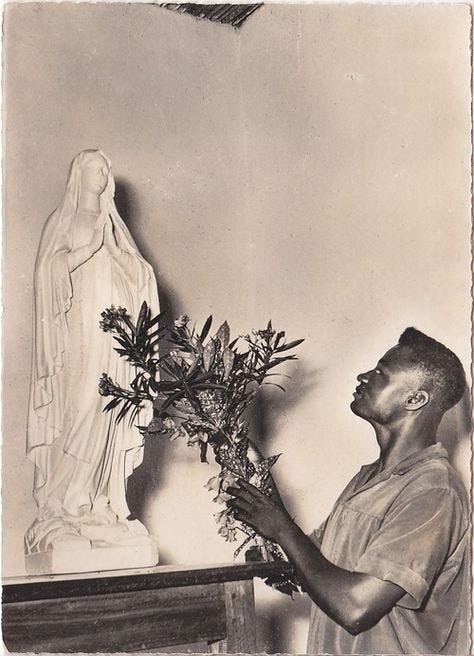
There is no better guide for us this Lent than Mary, the Mother of God. She leads us through every aspect of the fast—from the spiritual preparation of Clean Monday, through Holy Week, and ultimately to Pascha. She helps us prepare our souls for confession and the reception of the Mystical Supper.
From her, we learn how to ponder all things in our hearts (Luke 2:19), crave silence and contemplation, and surrender ourselves to God. Like Our Lady, we learn to say in every situation: Be it done unto me according to Your will.
One of the most striking aspects of Compline at a monastery is when the abbot says, “Forgive me, brothers, for I am a sinner,” and the brothers, in turn, ask for forgiveness. This is the heart of Lent—a time to be reconciled with God and with one another, stripping away all that is unnecessary so that we may stand humbly before God.
Penance is not a solitary act. It is a means of purgation, by which we are passed through the Theotokos’s most immaculate hands.
We are raised by our Mother of Mercy in the ‘ways in which we should go’ (Proverbs 22:6).
In her maternal intercession, we find refuge and strength, and through our sacrifices, we join in her work of bringing souls to Christ.
May we continue to grow in prayer, charity, and, above all, love for one another. Let us be doers of the Word, speaking from the depths of our being like the publican: Lord, have mercy on me, a sinner.
The world has no shortage of things to pray for, and each of us carries our own crosses.
We all know someone who suffers. May these meditations on the Tears of the Theotokos prompt us to intercede for others, to enter into the presence of God, and to cleanse our souls with tears of repentance and thanksgiving.
As we begin this holy season of Lent, let us do so with hearts open to the graces of God, mindful that the fast is a path of union with Christ and a means of transforming our hearts. Together with Mary, Mother of all, may we walk with Jesus every step of the way. May this meditation on her tears soften our hearts and prepare them for the triumph of Pascha.
Catholic
Religious Events
Previous Post
September 27, 2024
The Art of Silence: Encounter vs. Escape
Next Post
March 14, 2025 When Joy Meets Sorrow: Mary at the Temple
Browse Our Archives
Select a Category Contemplative Road Reels Storytelling Travel Stories Uncategorized
Select a Month August 2025 May 2025 March 2025 September 2024 August 2024 May 2024 April 2024 March 2024 February 2024 January 2024 December 2023 November 2023 October 2023
Follow Us!
TAKE THE
Religious Wisdom Quiz
Which Christian group is known for not celebrating holidays or birthdays?
Select your answer to see how you score.
Episcopalians Jehovah's Witnesses Orthodox Methodists
Related posts from Pilgrim and Scarlet
Mary’s Silent Lament and the Call to Suffer...
The Road of Exile: Trusting God in the...
When Joy Meets Sorrow: Mary at the Temple

Troubled by Thoughts: A Journey of Faith and...
TRENDING AT PATHEOS General Christian

The First Eucharistic Controversy: Christ’s Real Presence
For Catholics, the Eucharist is the source and summit of the Christian...

How to Make a Decision When You Can't...
Main point: It’s much more valuable to stay close to God so...

Archdiocese Hosts Military Marriage Retreat in Germany
RASTATT, Germany — The transient military lifestyle, with its frequent deployments and...

Nearly every morning, I make the drive to Detroit with my high-school-age...

The Real AI Story Is Adoption Without Trust
Artificial intelligence has crossed a political threshold. It is no longer a...

A new article, written by Jeff Lindsay and Gale L. Pooley,...
view all General Christian blogs
Ad-Free & Subscriber Log-In Subscription Support
- About Us
- 2026 Calendar
- Videos
- Podcasts
- Library of World Religions
- Faith In Media Tracker
- Advertise With Us
- Write for Us
- Privacy Policy
- Terms of Service
- Do Not Sell My Data
- Contact Us
- Radiant Digital
- Manage Newsletter Subscriptions
- Unsubscribe From Notifications
- Sitemap
Copyright 2008-2026, Patheos. All rights reserved.
Subscription Support Ad-Free & Subscriber Log-In
Follow Patheos