
BuddhistCatholicContemplativeEvangelicalGeneral ChristianHinduJewishLatter-day SaintMuslimNew VisionsProgressive Christian
Beliefs
- Buddhist
- Catholic
- Contemplative
- Evangelical
- General Christian
- Hindu
- Jewish
- Latter-day Saint
- More Voices
- Muslim
- New Visions
- Pagan
- Progressive Christian
Topics
- Religion News
- Food and Religion
- Sports and Religion
- Religious Art
- Religious Music and Entertainment
- Religious Events
- History and Religion
- Style and Religion
- Politics and Religion
- Women in Religion
- Recreation Outdoors and Religion
- Business Finance and Religion
- Careers Workplace and Religion
- Education and Religion
- Family Parenting and Religion
- Health Fitness and Religion
- Home and Religion
- Relationships and Religion
- Technology and Religion
- Travel and Religion
Columnists
- Buddhist Columnists
- Business Finance and Religion Columnists
- Careers Workplace and Religion Columnists
- Catholic Columnists
- Contemplative Columnists
- Education and Religion Columnists
- Evangelists Columnists
- Family Parenting and Religion Columnists
- General Christian Columnists
- Health Fitness and Religion Columnists
- Hindu Columnists
- History and Religion Columnists
- Home and Religion Columnists
- Jewish Columnists
- More Voices Columnists
- Latter Day Columnists
- Muslim Columnists
- New Visions Columnists
- Nonreligious Columnists
- Pagan Columnists
- Politics and Religion Columnists
- Progressive Columnists
- Recreation Outdoors and Religion Columnists
- Relationships and Religion Columnists
- Religion News Columnists
- Religious Art Columnists
- Religious Events Columnists
- Religious Music and Entertainment Columnists
- Sports and Religion Columnists
- Style and Religion Columnists
- Technology and Religion Columnists
- Travel and Religion Columnists
- Women in Religion Columnists
Resource Library
- 2026 Calendar
- Library of World Religions
- The 100 Most Holy Places on Earth
- Patheos Answers
- Podcasts
- Videos
- Faith Leaders Database
- Anglican Episcopalian
- Bahai
- Baptist
- Buddhism
- Christianity
- Confucianism
- Eastern Orthodoxy
- Hinduism
- Holiness and Pentecostal
- ISKCON
- Islam
- Judaism
- Lutheran
- Methodist
- The Church of Jesus Christ of Latter-day Saints
- New Age
- Paganism
- Presbytarian and Reformed
- Protestantism
- Religion Behind the Scenes
- Roman Catholic
- Scientology
- Shia Islam
- Sikhism
- Sufism
- Sunni Islam
- Taoism
- Zen
- See all religions
Research Tools
 Ad-Free & Subscriber Log-In Subscription Support
Ad-Free & Subscriber Log-In Subscription Support
Follow Patheos 

- Trending:
- Forgiveness
- |
- Marriage
- |
- Consciousness
- |
- Death Penalty
- |
- Election
- |
- Halloween
 Pia de Solenni
- Home
- Catholic
- James Foley And Shifting Thoughts on Martyrdom.
James Foley And Shifting Thoughts on Martyrdom.
Last updated on: August 28, 2014 at 9:55 am by Pia de Solenni
James Foley And Shifting Thoughts on Martyrdom. 2014-08-28T09:55:52-07:00 Pia de Solenni
Patheos Explore the world's faith through different perspectives on religion and spirituality! Patheos has the views of the prevalent religions and spiritualities of the world.
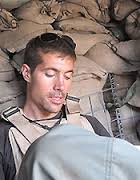 Last week I wrote about James Foley and the increasing use of the word “martyr” in the wake of his execution. I’m pleased to note that others are having similar conversations, including David Gibson of Religion News Services. One of his recent RNS pieces is online at Huffington Post: “Is James Foley A Martyr? Brutal Death Sparks Faith-Based Debate.”
Gibson noted an important shift in the discussion about martyrdom:
For example, Salvadoran Archbishop Oscar Romero, who lived under constant threat for his advocacy on behalf of the poor and in defense of human rights, was immediately hailed as a martyr in 1980 when he was assassinated by paramilitary forces while celebrating Mass.
But under the papacies of John Paul II and Benedict XVI, Romero’s canonization cause was repeatedly stalled because conservatives in the Vatican argued that Romero had become an icon of liberation theology and was killed for political rather than religious reasons.
Only this month, in fact, Pope Francis — who has long revered Romero – announced that the archbishop’s sainthood process had been “unblocked.”
Francis also indicated that he wanted the church to consider whether those who are killed “for performing the works that Jesus commands us to do for our neighbor” are martyrs just as those who are killed for professing the creed. If that happens it could mark a significant shift in the church’s understanding of martyrdom.
John Allen makes a similar point in his book, The Global War On Christians:
[T]he late Pope John Paul II stretched the concept of martyrdom to include not only those killed in hatred of the faith but also those who died in hatred of the church. many theologians today are increasingly willing to include also those killed out of hatred for the virtues inspired by the faith.
Allen then gives as an example St. Maximilian Kolbe who was not killed in odium fidei (hatred of the faith). He died in a concentration camp during World War II when he offered his life to spare the life of a man who was a husband and a father. Instead, when St. John Paul II canonized Kolbe he termed him a “martyr of charity.” Allen notes that he was killed for choices made on the basis of his faith.
Gibson surveys a variety of opinions and I’m honored that he included mine at the end of his piece:
“We don’t want to cheapen the meaning of the word ‘martyr,’” the Catholic blogger Pia de Solenni wrote in a detailed meditation on Foley’s death. “But this is real. It’s happening everywhere. It’s making extraordinary witnesses out of ordinary people. We should not cheapen their witness by ignoring the reality of their sacrifice, their martyrdom.”
As a theologian, I see the discussion of martyrdom advancing out of necessity. There are an increasing number of people dying for or because of their faith, including non Christians. What does their witness tell us about them and the type of people they were? Were they people who clung to the truth, insofar as they knew it, to the point of death? I think the conversation began with St. John Paul II. Pope Francis seems to be continuing it. Time will tell.
In the meantime, I hope the witness that these individuals give reaches us and makes us realize just how many people are being killed not simply because of their faith, but because of their consciences.
The Catechism of the Catholic Church gives a profound reflection on conscience at n. 1776 (citing Gaudium et Spes, 16):
“Deep within his conscience man discovers a law which he has not laid upon himself but which he must obey. Its voice, ever calling him to love and to do what is good and to avoid evil, sounds in his heart at the right moment. . . . For man has in his heart a law inscribed by God. . . . His conscience is man’s most secret core and his sanctuary. There he is alone with God whose voice echoes in his depths.”
It seems to me that the martyr is someone who is deeply connected to his or her conscience and, were it not for that connection – even submission – they would likely be in different circumstances that would not result in their unjust death.
The topic of martyrdom has to be an ongoing conversation. Feel free to continue it in the com-boxes below!
Previous Post

August 26, 2014
The Legion Defames A Woman. A Saint.
Next Post
September 3, 2014 Evangelization - Two Birds With One Stone
Browse Our Archives
Select a Category Articles Thinking Out Loud Uncategorized
Select a Month August 2016 July 2016 May 2016 March 2016 February 2016 July 2015 June 2015 May 2015 April 2015 March 2015 February 2015 January 2015 December 2014 November 2014 October 2014 September 2014 August 2014 July 2014 June 2014 May 2014 April 2014 March 2014 February 2014 September 2013 August 2013 May 2013 April 2013 March 2013 February 2013 January 2013 December 2012 November 2012 October 2012 September 2012 August 2012 July 2012 June 2012 April 2012 March 2012 February 2012 January 2012 December 2011 November 2011 October 2011 September 2011 August 2011 July 2011 June 2011 May 2011 April 2011 March 2011 February 2011 January 2011 December 2010 November 2010 October 2010 September 2010 May 2010 April 2010 March 2010 August 2009 June 2009 May 2009 April 2009 March 2009 February 2009 December 2008 November 2008 October 2008 September 2008 August 2008 July 2008 June 2008 May 2008 April 2008 March 2008 February 2008 January 2008 December 2007 November 2007 October 2007 September 2007 July 2007 October 1008
Follow Us!
TAKE THE
Religious Wisdom Quiz
What does Proverbs say about "a soft answer"?
Select your answer to see how you score.
It brings riches It brings rain It makes a fool wise It turns away wrath
Related posts from Pia de Solenni
Is James Foley A Martyr? 16 Points To...

Moving Forward: Muslims And Jews Show Solidarity With...

On divorce, Chaput and Francis singing from the...

The Trans Movement - Another Form of Patriarchy
TRENDING AT PATHEOS Catholic

Rejecting Doom: Christian Hope And Human Action
Christianity is a religion of hope. We are to have hope and...

It’s What Comes From Within Which Matters
One of the most difficult things for us to understand is why...

Why I Choose the Eucharist Over the Sermon
Choose the Eucharist, Not the Sermon What are we supposed to get...

5 Design Elements Found in Spiritually Rooted Homes
Putting Spirituality Into Home Decor Our homes are more than our living...

Credo: A Story of God Told with the...
About 10 years ago, I began to imagine a personal "Credo" that...

The Anatomy of Divine Revelation in Catholic Thought
The claim that God has made Himself known to human beings is...
view all Catholic blogs
Ad-Free & Subscriber Log-In Subscription Support
- About Us
- 2026 Calendar
- Videos
- Podcasts
- Library of World Religions
- Faith In Media Tracker
- Advertise With Us
- Write for Us
- Privacy Policy
- Terms of Service
- Do Not Sell My Data
- Contact Us
- Radiant Digital
- Manage Newsletter Subscriptions
- Unsubscribe From Notifications
- Sitemap
Copyright 2008-2026, Patheos. All rights reserved.
Subscription Support Ad-Free & Subscriber Log-In
Follow Patheos