
BuddhistCatholicContemplativeEvangelicalGeneral ChristianHinduJewishLatter-day SaintMuslimNew VisionsProgressive Christian
Beliefs
- Buddhist
- Catholic
- Contemplative
- Evangelical
- General Christian
- Hindu
- Jewish
- Latter-day Saint
- More Voices
- Muslim
- New Visions
- Pagan
- Progressive Christian
Topics
- Religion News
- Food and Religion
- Sports and Religion
- Religious Art
- Religious Music and Entertainment
- Religious Events
- History and Religion
- Style and Religion
- Politics and Religion
- Women in Religion
- Recreation Outdoors and Religion
- Business Finance and Religion
- Careers Workplace and Religion
- Education and Religion
- Family Parenting and Religion
- Health Fitness and Religion
- Home and Religion
- Relationships and Religion
- Technology and Religion
- Travel and Religion
Columnists
- Buddhist Columnists
- Business Finance and Religion Columnists
- Careers Workplace and Religion Columnists
- Catholic Columnists
- Contemplative Columnists
- Education and Religion Columnists
- Evangelists Columnists
- Family Parenting and Religion Columnists
- General Christian Columnists
- Health Fitness and Religion Columnists
- Hindu Columnists
- History and Religion Columnists
- Home and Religion Columnists
- Jewish Columnists
- More Voices Columnists
- Latter Day Columnists
- Muslim Columnists
- New Visions Columnists
- Nonreligious Columnists
- Pagan Columnists
- Politics and Religion Columnists
- Progressive Columnists
- Recreation Outdoors and Religion Columnists
- Relationships and Religion Columnists
- Religion News Columnists
- Religious Art Columnists
- Religious Events Columnists
- Religious Music and Entertainment Columnists
- Sports and Religion Columnists
- Style and Religion Columnists
- Technology and Religion Columnists
- Travel and Religion Columnists
- Women in Religion Columnists
Resource Library
- 2026 Calendar
- Library of World Religions
- The 100 Most Holy Places on Earth
- Patheos Answers
- Podcasts
- Videos
- Faith Leaders Database
- Anglican Episcopalian
- Bahai
- Baptist
- Buddhism
- Christianity
- Confucianism
- Eastern Orthodoxy
- Hinduism
- Holiness and Pentecostal
- ISKCON
- Islam
- Judaism
- Lutheran
- Methodist
- The Church of Jesus Christ of Latter-day Saints
- New Age
- Paganism
- Presbytarian and Reformed
- Protestantism
- Religion Behind the Scenes
- Roman Catholic
- Scientology
- Shia Islam
- Sikhism
- Sufism
- Sunni Islam
- Taoism
- Zen
- See all religions
Research Tools
 Ad-Free & Subscriber Log-In Subscription Support
Ad-Free & Subscriber Log-In Subscription Support
Follow Patheos 

- Trending:
- Forgiveness
- |
- Marriage
- |
- Consciousness
- |
- Death Penalty
- |
- Election
- |
- Halloween
 Pia de Solenni
- Home
- Catholic
- 6 Things You Need To Know About The Zika Virus
6 Things You Need To Know About The Zika Virus
Last updated on: February 9, 2016 at 5:07 pm by Pia de Solenni
6 Things You Need To Know About The Zika Virus 2016-02-09T17:07:16-07:00 Pia de Solenni
Patheos Explore the world's faith through different perspectives on religion and spirituality! Patheos has the views of the prevalent religions and spiritualities of the world.
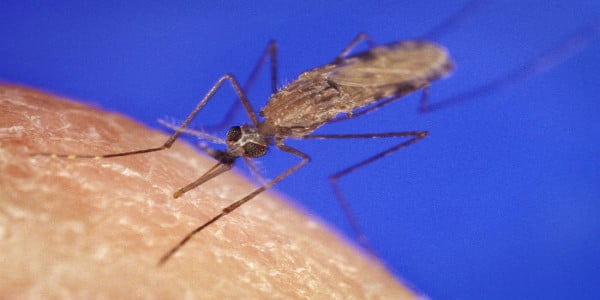 Various people subscribe to the maxim, “Never let a crisis go to waste.” Well, considering the Zika virus, it looks like the proponents of abortion and contraception see the current crisis as an opportunity to push their agenda. As usual, this is a band-aid approach to human well being and development. These treatments mask the real issues. In the case of the Zika virus, here are some things to consider.
First, we really don’t know the numbers of fetuses that will be affected by Zika. At this point, it’s somewhat speculative. Check out this article from CNN.
According to the Brazil Ministry of Health, from November 8 through January 30, 404 babies were born with microcephaly, an unusually high number. Seventeen of these cases have been linked to Zika. Authorities are investigating another 3,670 suspected cases of microcephaly.
So only 17 of the cases have been linked to Zika? Out of 404? That’s 4%. Is there another cause? Or is this all hype? Taken with the fact that authorities are investigating another 3,670 suspected cases indicates that this could be hysteria rather than epidemic, admittedly understandable in the current media climate. But keep in mind that 96% of the cases of microcephaly in the numbers cited by the Brazil Ministry of Health were not attributed to Zika.
Secondly, throughout the recent week of various interviews, I’ve heard doctors say that no one wants a disabled child. Well, yes and no. No sane person wants to cause a child to be disabled. But that’s not the same thing as not wanting a disabled child. For those of you who missed the Today Show’s heartwarming story about the family that takes in hospice infants and children, click here. Think carefully. You and I both know people who lovingly raise children with disabilities. There are even people who have children with Zika and are grateful for them. And there are people with Zika who are happy to be alive. 24 year-old Brazilian journalist Ana Carolina Carceres is one of them. (Here’s a Spanish-language BBC interview with her.)
Several years ago, I was contacted by a sidewalk counselor who was working with a woman who would not abort her Down Syndrome child if she could find a couple to adopt the child. Some friends of mine – three families with children of their own – all said that they would happily parent the child when born. I followed up with the counselor. She replied, “I have over 600 families who have reached out to me saying that they will adopt the child.” But “no one wants a disabled child.” Yeah. Right. In the meantime let’s get back to the science and some additional considerations.
Thirdly, we don’t know enough about Zika yet. Dr. Gerard Nadal was kind enough to point me in the direction of the published CDC findings on Zika. From interim guidelines directed at ob/gyns (not the general public), dated January 22, 2016:
“Maternal-fetal transmission of Zika virus has been documented throughout pregnancy (4,7,8). Although Zika virus RNA has been detected in the pathologic specimens of fetal losses (4), it is not known if Zika virus caused the fetal losses. Zika virus infections have been confirmed in infants with microcephaly (4), and in the current outbreak in Brazil, a marked increase in the number of infants born with microcephaly has been reported (9). However, it is not known how many of the microcephaly cases are associated with Zika virus infection. Studies are under way to investigate the association of Zika virus infection and microcephaly, including the role of other contributory factors (e.g., prior or concurrent infection with other organisms, nutrition, and environment). The full spectrum of outcomes that might be associated with Zika virus infections during pregnancy is unknown and requires further investigation.” [emphasis mine]
In other words, the jury is out. But wait. There’s more that we don’t know. From the same CDC guidelines:
“Zika virus RT-PCR testing can be performed on amniotic fluid (7,9). Currently, it is unknown how sensitive or specific this test is for congenital infection. Also, it is unknown if a positive result is predictive of a subsequent fetal abnormality, and if so, what proportion of infants born after infection will have abnormalities. Amniocentesis is associated with an overall 0.1% risk of pregnancy loss when performed at less than 24 weeks of gestation (19). Amniocentesis performed ≥15 weeks of gestation is associated with lower rates of complications than those performed at earlier gestational ages, and early amniocentesis (≤14 weeks of gestation) is not recommended (20). Health care providers should discuss the risks and benefits of amniocentesis with their patients. A positive RT-PCR result on amniotic fluid would be suggestive of intrauterine infection and potentially useful to pregnant women and their health care providers (20).”
Translation – The test can detect the virus, but the CDC cannot confirm that a positive test for Zika confirms that the fetus will have microcephaly. And, yes, there is a risk to amniocentesis itself. Speaking of not knowing, according to Breitbart, Dr. Gubio Soares, one of the virologists to have first identified the presence of the Zika virus in Brazil, has stated that we don’t know if there’s a link between the Zika virus and microcephaly precisely because of abortion. (His original comments can be found here in Portuguese.) In other words, if the babies who look like they may have microcephaly are aborted, the diagnosis cannot be confirmed, much less studied or treated. So much for abortion as the answer.
Fourth, we do have other means to protect people from the Zika virus. To start, we have numerous governmental and non-governmental agencies that could start distributing mosquito netting and mosquito repellent. These are cheap supplies that can be readily made available. But governments could go further. Instead of eradicating the victim, namely the unborn child who may or may not have microcephaly, why not eradicate the mosquito in areas where it poses a grave threat to human life? The pesticide DDT could be used to do just that. In fact it was used to kill mosquitos and to wipe out malaria in many parts of the world. More on DDT can be found here, here, and here. Dr. Elizabeth M. Whelan has one of the most succinct analyses I’ve come across. With regard to Zika, Dr. Robert Zubrin makes a pretty good case for the use of DDT. He brings out the stark contrast: mosquitos or babies?
The role of DDT in saving half a billion lives did not positively impress everyone, however. On the contrary, many environmentalist leaders were quite upset. As Alexander King, the co-founder of the Club of Rome, put it in 1990, “my chief quarrel with DDT in hindsight is that it has greatly added to the population problem.”
Which brings me to my fifth point. There is an agenda to promote abortion and contraception everywhere. In fact, the CDC now recommends that sexually active women who consume alcohol should use contraception until they stop drinking and decide that they want to get pregnant. Never mind that women have consumed alcohol for millennia while pregnant and generations upon generations of people were born without fetal alcohol syndrome. The last time I saw research on FAS, the fine print revealed that the mothers of FAS babies consumed five or more drinks at one sitting. That’s surely not the same as an expectant mother enjoying a glass of wine at dinner. Nevertheless, the official CDC recommendation is now that a woman who drinks any alcohol at all should fill herself with synthetic hormones or devices so long as she is sexually active with men and of childbearing age. If that isn’t an agenda, I don’t know what is. (For more opinion on this recommendation from the CDC, read Simcha Fisher’s piece.) Abortion and contraception don’t target the virus…
Meanwhile, the Catholic Church faces challenges for her positions against contraception and abortion. This brings me to my sixth point – it’s time to encourage a worldwide campaign for the teaching of fertility awareness. Given that men are generally fertile all of the time and women only periodically, fertility awareness focuses on the basic knowledge of a woman’s body. It’s not rocket science. If the Church is going to be involved in healthcare, she has the unique opportunity to offer something pro-woman that most secular healthcare fails to even acknowledge. Yes, the Zika virus may give individuals good reason to postpone a pregnancy. So let’s give them the knowledge to do so in a way that’s compatible with human dignity and doesn’t objectify women. (Cf Humanae Vitae, n. 17)
Professor Chris Kaczor has a good piece examining the moral framework of this question within the context of the Zika virus. Zika could turn out to be an epidemic. It could also turn out to be the new SARS. [The epidemic that wasn’t.] Regardless, we need to be guided by science and the principles of human dignity, not agendas of any sort, including those to promote abortion and contraception. In other words, when it comes to the Zika virus, target the mosquitos and the virus, not women and unborn babies.
Next Post

February 18, 2016 UPDATED: What did the Pope say on the way back from Mexico...?
Browse Our Archives
Select a Category Articles Thinking Out Loud Uncategorized
Select a Month August 2016 July 2016 May 2016 March 2016 February 2016 July 2015 June 2015 May 2015 April 2015 March 2015 February 2015 January 2015 December 2014 November 2014 October 2014 September 2014 August 2014 July 2014 June 2014 May 2014 April 2014 March 2014 February 2014 September 2013 August 2013 May 2013 April 2013 March 2013 February 2013 January 2013 December 2012 November 2012 October 2012 September 2012 August 2012 July 2012 June 2012 April 2012 March 2012 February 2012 January 2012 December 2011 November 2011 October 2011 September 2011 August 2011 July 2011 June 2011 May 2011 April 2011 March 2011 February 2011 January 2011 December 2010 November 2010 October 2010 September 2010 May 2010 April 2010 March 2010 August 2009 June 2009 May 2009 April 2009 March 2009 February 2009 December 2008 November 2008 October 2008 September 2008 August 2008 July 2008 June 2008 May 2008 April 2008 March 2008 February 2008 January 2008 December 2007 November 2007 October 2007 September 2007 July 2007 October 1008
Follow Us!
TAKE THE
Religious Wisdom Quiz
Who said, "The just shall live by faith"?
Select your answer to see how you score.
Jesus John Paul Peter
Related posts from Pia de Solenni

Moving Forward: Muslims And Jews Show Solidarity With...

On divorce, Chaput and Francis singing from the...

The Trans Movement - Another Form of Patriarchy

Don't Make The Church A Stepford Wife
TRENDING AT PATHEOS Catholic

Creation, Preservation, and Teleology in Catholic Theology
As I write this, it is very early Monday morning. Like millions...

The Parable Of The Sower And The Word...
One of Christ’s most famous parables is that of the sower who...

Rejecting Doom: Christian Hope And Human Action
Christianity is a religion of hope. We are to have hope and...

Why I Choose the Eucharist Over the Sermon
Choose the Eucharist, Not the Sermon What are we supposed to get...

5 Design Elements Found in Spiritually Rooted Homes
Putting Spirituality Into Home Decor Our homes are more than our living...

Credo: A Story of God Told with the...
About 10 years ago, I began to imagine a personal "Credo" that...
view all Catholic blogs
Ad-Free & Subscriber Log-In Subscription Support
- About Us
- 2026 Calendar
- Videos
- Podcasts
- Library of World Religions
- Faith In Media Tracker
- Advertise With Us
- Write for Us
- Privacy Policy
- Terms of Service
- Do Not Sell My Data
- Contact Us
- Radiant Digital
- Manage Newsletter Subscriptions
- Unsubscribe From Notifications
- Sitemap
Copyright 2008-2026, Patheos. All rights reserved.
Subscription Support Ad-Free & Subscriber Log-In
Follow Patheos