
BuddhistCatholicContemplativeEvangelicalGeneral ChristianHinduJewishLatter-day SaintMuslimNew VisionsProgressive Christian
Beliefs
- Buddhist
- Catholic
- Contemplative
- Evangelical
- General Christian
- Hindu
- Jewish
- Latter-day Saint
- More Voices
- Muslim
- New Visions
- Pagan
- Progressive Christian
Topics
- Religion News
- Food and Religion
- Sports and Religion
- Religious Art
- Religious Music and Entertainment
- Religious Events
- History and Religion
- Style and Religion
- Politics and Religion
- Women in Religion
- Recreation Outdoors and Religion
- Business Finance and Religion
- Careers Workplace and Religion
- Education and Religion
- Family Parenting and Religion
- Health Fitness and Religion
- Home and Religion
- Relationships and Religion
- Technology and Religion
- Travel and Religion
Columnists
- Buddhist Columnists
- Business Finance and Religion Columnists
- Careers Workplace and Religion Columnists
- Catholic Columnists
- Contemplative Columnists
- Education and Religion Columnists
- Evangelists Columnists
- Family Parenting and Religion Columnists
- General Christian Columnists
- Health Fitness and Religion Columnists
- Hindu Columnists
- History and Religion Columnists
- Home and Religion Columnists
- Jewish Columnists
- More Voices Columnists
- Latter Day Columnists
- Muslim Columnists
- New Visions Columnists
- Nonreligious Columnists
- Pagan Columnists
- Politics and Religion Columnists
- Progressive Columnists
- Recreation Outdoors and Religion Columnists
- Relationships and Religion Columnists
- Religion News Columnists
- Religious Art Columnists
- Religious Events Columnists
- Religious Music and Entertainment Columnists
- Sports and Religion Columnists
- Style and Religion Columnists
- Technology and Religion Columnists
- Travel and Religion Columnists
- Women in Religion Columnists
Resource Library
- 2026 Calendar
- Library of World Religions
- The 100 Most Holy Places on Earth
- Patheos Answers
- Podcasts
- Videos
- Faith Leaders Database
- Anglican Episcopalian
- Bahai
- Baptist
- Buddhism
- Christianity
- Confucianism
- Eastern Orthodoxy
- Hinduism
- Holiness and Pentecostal
- ISKCON
- Islam
- Judaism
- Lutheran
- Methodist
- The Church of Jesus Christ of Latter-day Saints
- New Age
- Paganism
- Presbytarian and Reformed
- Protestantism
- Religion Behind the Scenes
- Roman Catholic
- Scientology
- Shia Islam
- Sikhism
- Sufism
- Sunni Islam
- Taoism
- Zen
- See all religions
Research Tools
 Ad-Free & Subscriber Log-In Subscription Support
Ad-Free & Subscriber Log-In Subscription Support
Follow Patheos 

- Trending:
- Forgiveness
- |
- Marriage
- |
- Consciousness
- |
- Death Penalty
- |
- Election
- |
- Halloween
 The Phoenix and Olive Branch
- Home
- New Visions
- Further thoughts on disability and abortion, by request
Further thoughts on disability and abortion, by request
Last updated on: July 3, 2014 at 11:24 am by Sierra Phoenix
Further thoughts on disability and abortion, by request 2014-07-03T11:24:35-04:00 Sierra Phoenix
Patheos Explore the world's faith through different perspectives on religion and spirituality! Patheos has the views of the prevalent religions and spiritualities of the world.
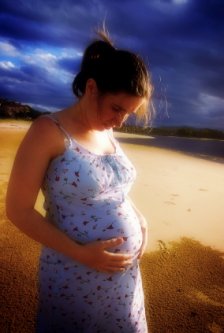
A pregnant woman on a beach. If only the realities of pregnancy were always so serene.
I’ve been asked to consider this topic again, as Meghan has decided to make it the launching point for a blog series of her own and emailed me her first response. I initially wrote about it in a response to a Christianity Today article demonizing women for choosing abortion based on disability. The point of my response, for the TL;DR among us, was that there are a whole host of reasons a woman might choose abortion and that it is possible to see them as moral and compassionate reasons (as opposed to simple “selfishness”). After some criticism, I wrote an additional post to clarify that I wrote only in the context of individual choice, not as a recommendation to all pregnant women, and that attempts to turn my argument into a society-wide program would be just as oppressive as forcing all women all the time to carry unwanted pregnancies to term. You can read Meghan’s response to me here.
Both Meghan and S.E. Smith have spent a great deal of time critiquing my alleged attitude. Meghan writes, “Sierra has a profoundly condescending tone toward her audience.” Really? Well… huh. My original post began with what was supposed to be a tongue-in-cheek take on the traditional trigger warning, and has instead been regarded as an assault on the intelligence of my readers (especially dissenters). If I have come across as condescending, then I do, sincerely, apologize for that. I am an irreverent writer, but I don’t intend to be rude. Trigger warnings in general are redundant and can easily be read as patronizing: I certainly don’t need help figuring out that posts with ‘domestic violence’ and ‘rape’ in their titles probably involve potentially disturbing discussions of sexual assault. Still, I participate in the tradition of placing a trigger warning at the beginning of such posts. Why? I don’t know. It’s just how things are done on the internet. My warning that the post contained “controversial subject matter” was a self-consciously redundant statement modeled upon a trigger warning, not an expression of doubt in my readers’ ability to detect and deal with controversy.
Meghan writes:
“In this blog post, I will explain why Sierra’s piece is condescending, ahistorical, and embraces eugenic ideas related to the continued influence of ableism in our culture. I will also consider the issue of ablebodied privilege and its influence on discussions related to ableism and selective abortion.”
It’s intriguing that Meghan has identified my article as ahistorical, given her willingness to deploy “eugenics” as a bogeyman. She writes, “History classes ignore the disability rights movement, the murder of disabled people during the Holocaust, the original American eugenics/euthanasia movement, and other aspects of disability history. If curricula included this information, perhaps Sierra would have a better understanding of why her article reflects prejudiced attitudes.” What she doesn’t realize is that I teach history curricula that include this information. Meghan assumes that I am ignorant because I reproduce an idea with a politically charged history: the prevention of suffering. This is an incredibly simplistic, ahistorical gut reaction.
It’s not news to me that the same logic informed the practices of abusive eugenics doctors and “racial purity” programs like the Nazis’. However, to look historically at the issues of the eugenics movement is not to simply invoke the word “eugenics” and flee the scene. The eugenics movement is notorious for its abuses, but the desire to prevent suffering is hardly the source of the problem. The movement’s problems stemmed from its erroneous, discriminatory diagnostic practices and its erroneous, discriminatory and abusive treatment practices. The eugenics movement defined things like racial differences as diseases – this was part of the problem. The other crucial part was that the “solution” or “treatment” involved actually killing people or preventing them from having children in a concerted, society-wide attempt to reduce their population size. Neither of those things are involved when an individual woman chooses abortion. To conflate them is to place women’s rights in opposition to the collective rights of disabled populations. It is that polarization to which I’m opposed.
We are still engaged in judgments about what constitutes disease or disability and how to deal with diseases once we’ve defined them. For instance, the Christianity Today article that prompted my response brought up cystic fibrosis and Down syndrome. I acknowledged that Down syndrome presents on a scale and that many Downs individuals are capable of living full, independent lives. In their case, yes, obviously, society is the source of what “suffering” they might experience, not biology. But cystic fibrosis? I don’t at all buy the argument that society is the problem there. Fluid buildup in the lungs, painful hospital treatments to extract said fluid, repeated and severe bacterial infections, long periods of exhausting recovery, shortened life expectancies… those are experiences of suffering in their own right. And that’s why I went out of my way to point out that cystic fibrosis and mild to moderate Down syndrome shouldn’t be compared. As for autism, which S.E. Smith brings up: I never mentioned it at all, as it was not the subject of the Christianity Today article. Extrapolating an argument based on cystic fibrosis and severe Down syndrome to cover the whole autism spectrum is just disingenuous.
Meghan argues that it’s impossible to make judgments involving the prevention of suffering for a fetus without granting some level of personhood to a fetus, because it’s impossible to judge the potential quality of life of a fetus without judging the lives of living disabled people. Well, yes and no. Yes, a woman carrying a fetus that is projected to have cystic fibrosis is going to look at the symptoms and see how they impact the lives of people with cystic fibrosis. Yes, that’s a judgment call. To make the decision, however, not to bring a child into the world under those conditions is not equivalent to deciding that living people with CF would be better off dead, or to advocate that all women everywhere make the same choice to eliminate the population. The only way to see an individual abortion based on disability as equivalent to murder is to decide that a fetus has “a life” or personhood (distinct from the simple biological fact of being alive) to be eliminated. That is a fallacy.
Meghan also claims that I afford a special “moral, compassionate” status to abortion based on disability that I don’t also afford to abortions for other reasons: namely, poverty. That’s not true. I do consider morality and compassion the basis for choosing not to bring a child into the world for any reason, including poverty, if the intended parents believe that they can’t provide a loving, supportive and adequately supplied home for the child. It’s a moral, compassionate choice if a woman decides to abort because her partner might abuse her child, or she can’t afford to feed the child properly. But to be more specific, my choice of the words “moral” and “compassionate” were invoked against the specter of the heartless, selfish woman who aborts a disabled fetus because she doesn’t want to be “inconvenienced” by the resulting child’s special needs. It’s obviously not a moral or compassionate decision if someone coerces a woman into aborting a disabled fetus or forces her to get sterilized because she’s poor. This is where the eugenics movement went horribly, horribly wrong.
Now, for the disability movement as a contemporary issue: We need a movement to rectify that and prevent it from ever happening again [my emphasis]. I’m glad we have one. Now. Here’s where I depart from Zylstra and other activists… Astonishingly, Meghan has taken this statement as I believe abuses of disabled people no longer occur: “Sierra’s statement ignores the fact that the mistreatments she attributes to the past still go on today.” This is absurd. I have nowhere denied that abuses of disabled people continue today. I have nowhere stated that I believe in a benighted, ignorant past that no longer haunts our fair, enlightened minds. Meghan objects to a position that I have not taken and do not advocate. Indeed, if “we need a movement” (present tense) isn’t enough of an indication that I’m aware that abuse is ongoing, I’m not sure what would suffice.
“Contrary to her rather aggrandizing conception of this essay, Sierra’s argument isn’t new. It certainly isn’t going to shock disability activists and allies into “plotting her demise.””
Aggrandizing? Once again, Meghan has taken what was supposed to be a tongue-in-cheek remark as evidence of some deep condescension on my part. If anything, the obviously exaggerated nature of the statement (the idea that anyone would bother to want to kill me over a blog post) should prove that I don’t see myself or my argument as particularly worthy of notice. I never claimed that my article was important or original; on the contrary, I’ve repeatedly pointed out that it was simply one response to one article in Christianity Today. The fact that I used keywords like “disability” and “abortion” in my title does not mean that I meant to write a manifesto on either topic.
A second principal critique that both S.E. Smith and Meghan have made of me is not based on my article at all, but on who they think I am:
“Sierra makes huge assumptions about things that she has not experienced. She bases her assumptions about disability upon her experience of growing up in poverty. The two are simply not the same thing. While issues of class and disability certainly intersect, being an impoverished non-disabled person does not confer knowledge of what it is like to live as a disabled person of any economic background. She “wagers” that the disabled wouldn’t have chosen to be disabled, an assumption based entirely on hubris. … Because she doesn’t realize that being able-bodied predisposes her to view that status as universally desirable, she assumes that all disabled people want to be able-bodied like her.”
I deliberately ignored this argument when it came from S.E. Smith, because I think my identity is beside the point. But since this has come up again, I will deal with it, front and center. Smith and Meghan: You do not know what my experiences are. You do not know whether or not I am disabled. You assume that I am not because I disagree with you, and that is hubris. I do not believe I owe you or anyone else on the internet a personal medical history. You assume that I approach this issue from a position of pure privilege and personal distance, and you are wrong. As disability activists, you should know better than most people the discrimination and disadvantage that can attend the professional lives of people who reveal disabilities publicly. I will not take the bait and “out” myself by revealing private information for the sake of an argument. Yes, I know there’s a certain level of privilege attendant to not having to reveal medical information (not having a noticeable disability), but I do think it’s my individual right to keep private what I wish to keep private about my body.
Let me say simply that there are conditions I have experienced that I would not wish on others, that I do not consider part of my identity. Meghan’s argument, “Most people I know in the disability rights and studies communities embrace their disabilities as a fundamental part of their identities that should not be changed,” reflects a philosophical position with which I simply disagree. I do think it’s possible for me to continue to be myself with a somewhat different body. If you disagree with me, at least acknowledge that it’s a matter of philosophical position, not undisputed fact.
Finally, my “wager” was attached to the phrase “most people.” I don’t know how “most people” feel about anything; if I did, I’d be God. Short of that, I have to wager. Both Smith and Meghan have taken this “wager” as a sign of my distance from the issue, as evidence that I can only speculate about things that others live intimately. Given that I have revealed my working-class upbringing, let me use that as an example one more time: I can’t know what “most poor people” want – I can only “wager” that most of them, like me, wouldn’t want to be born poor. If I’m wrong, then I’m wrong, because human beings’ defining characteristic is their ability to disagree about everything.
“Moreover, because Sierra used a Christianity Today article as her only source, my final post will address issues related to disability and religion.”
Once again, I’d like to remind Meghan and her readers that my post was never more than a response to that Christianity Today article. I didn’t cite other sources because my post was not meant to stand apart from the one that prompted it, or to deal with more than the examples that article provided in the first place. I would like to ask Meghan, Smith, and others who have brought up my essay, in good faith: How would you respond to the Christianity Today article? I really would like to see your arguments.
The problem I have with the arguments of Smith and Meghan, as with the Christianity Today article, is that their formulation of the issue either intentionally or unintentionally plays into the hands of the anti-choice movement by opposing disability rights to women’s rights. When you frame abortion based on disability as an especially heinous crime, you implicitly argue that women have a responsibility to bear disabled children in order to protect disabled populations. When you argue that women who abort disabled fetuses are ableist and cruel and shame them for their choices, you increase the likelihood that an unprepared and unwilling parent will bear a disabled child and thus increase the likelihood that the child will be abused, neglected or treated with resentment. (Incidentally, this is also why I’m not squeamish about sex-selective abortion: it’s not for me to decide whether or not a woman is equipped to raise a child of either sex, or to demand that she be prepared for either possibility.) When you argue that aborting a disabled fetus is anything more than an individual choice based on a calculation of individual needs, resources, desires and hopes, you help make abortion a subject of public obligation and responsibility and thus promote discourses of shame for women who choose it.
I want women who become mothers to do so with willingness, knowledge, preparation and support. Not with guilt, obligation, frustration and sorrow. I would rather every disabled child hear, “I wanted you and welcomed you” than “I didn’t have the heart to abort you.” Just as I want that for able-bodied children.
Finally, Meghan brings up the pain involved in the decision to terminate a pregnancy based on disability. This goes to the heart of my argument: it’s a hard enough decision to make without being told you’re an evil 20th century eugenicist and you want to kill off all disabled people everywhere. Women who have to make this choice are usually already mourning the loss of their hopes for their child. They don’t deserve the added guilt of allegedly sabotaging the disability movement.
Previous Post

October 22, 2012
The Sexuality Project Returns! Part One: Sex Education and the Body
Next Post

October 24, 2012 Sexuality Project: Sex Education and the Body, Q. 2
Browse Our Archives
Select a Category abortion birth control chastity christian culture economy eschatology families fear feminism graduate school homeschooling islam LGBTQ issues love marriage media men modesty music patriarchy phoenix preaching quiverfull race sexuality project skirts-only submission Uncategorized william branham witnessing women
Select a Month July 2013 April 2013 February 2013 January 2013 December 2012 November 2012 October 2012 September 2012 August 2012 July 2012 June 2012 May 2012 April 2012 March 2012 February 2012 December 2011 November 2011 October 2011 September 2011 August 2011 July 2011 May 2011 April 2011 March 2011 February 2011 December 2010 November 2010 October 2010 September 2010 August 2010
Follow Us!
TAKE THE
Religious Wisdom Quiz
What vision did Daniel have of four beasts representing empires?
Select your answer to see how you score.
Horse, eagle, serpent, leopard Four dragons Lion, bear, leopard, terrifying beast Ox, ram, goat, lion
Related posts from The Phoenix and Olive Branch

The Fistfight Fallacy: rape culture's ahistorical premise
Sexism, Judgment Day and Forgetting as a Survival...
A Sober Second Look writes about Islamophobia

What my feminism is, and why I'm not...
TRENDING AT PATHEOS New Visions

Did Prayer Cure His Cancer? Or Was It...
At 4 AM one morning, Joshua W. Brown’s wife awoke to a...

8 Ways a Near-Death Experience Rewires the Soul
Does Consciousness Survive Physical Death? After 50 Years of Research, Dr. Raymond...

Holy Longing: What Our Restlessness Is Telling Us
“One can find so many pains when the rain is falling.” -John...

What this is NOT about. This blog is definitely not about...

Who said the Israelites were God’s chosen? That’s right, they did. Who...

The Spirit World Is the Real World: God...
A Monk’s Wisdom on Body and Spirit I sit with Brother Martin...
view all New Visions blogs
Ad-Free & Subscriber Log-In Subscription Support
- About Us
- 2026 Calendar
- Videos
- Podcasts
- Library of World Religions
- Faith In Media Tracker
- Advertise With Us
- Write for Us
- Privacy Policy
- Terms of Service
- Do Not Sell My Data
- Contact Us
- Radiant Digital
- Manage Newsletter Subscriptions
- Unsubscribe From Notifications
- Sitemap
Copyright 2008-2026, Patheos. All rights reserved.
Subscription Support Ad-Free & Subscriber Log-In
Follow Patheos