
BuddhistCatholicContemplativeEvangelicalGeneral ChristianHinduJewishLatter-day SaintMuslimNew VisionsProgressive Christian
Beliefs
- Buddhist
- Catholic
- Contemplative
- Evangelical
- General Christian
- Hindu
- Jewish
- Latter-day Saint
- More Voices
- Muslim
- New Visions
- Pagan
- Progressive Christian
Topics
- Religion News
- Food and Religion
- Sports and Religion
- Religious Art
- Religious Music and Entertainment
- Religious Events
- History and Religion
- Style and Religion
- Politics and Religion
- Women in Religion
- Recreation Outdoors and Religion
- Business Finance and Religion
- Careers Workplace and Religion
- Education and Religion
- Family Parenting and Religion
- Health Fitness and Religion
- Home and Religion
- Relationships and Religion
- Technology and Religion
- Travel and Religion
Columnists
- Buddhist Columnists
- Business Finance and Religion Columnists
- Careers Workplace and Religion Columnists
- Catholic Columnists
- Contemplative Columnists
- Education and Religion Columnists
- Evangelists Columnists
- Family Parenting and Religion Columnists
- General Christian Columnists
- Health Fitness and Religion Columnists
- Hindu Columnists
- History and Religion Columnists
- Home and Religion Columnists
- Jewish Columnists
- More Voices Columnists
- Latter Day Columnists
- Muslim Columnists
- New Visions Columnists
- Nonreligious Columnists
- Pagan Columnists
- Politics and Religion Columnists
- Progressive Columnists
- Recreation Outdoors and Religion Columnists
- Relationships and Religion Columnists
- Religion News Columnists
- Religious Art Columnists
- Religious Events Columnists
- Religious Music and Entertainment Columnists
- Sports and Religion Columnists
- Style and Religion Columnists
- Technology and Religion Columnists
- Travel and Religion Columnists
- Women in Religion Columnists
Resource Library
- 2026 Calendar
- Library of World Religions
- The 100 Most Holy Places on Earth
- Patheos Answers
- Podcasts
- Videos
- Faith Leaders Database
- Anglican Episcopalian
- Bahai
- Baptist
- Buddhism
- Christianity
- Confucianism
- Eastern Orthodoxy
- Hinduism
- Holiness and Pentecostal
- ISKCON
- Islam
- Judaism
- Lutheran
- Methodist
- The Church of Jesus Christ of Latter-day Saints
- New Age
- Paganism
- Presbytarian and Reformed
- Protestantism
- Religion Behind the Scenes
- Roman Catholic
- Scientology
- Shia Islam
- Sikhism
- Sufism
- Sunni Islam
- Taoism
- Zen
- See all religions
Research Tools
 Ad-Free & Subscriber Log-In Subscription Support
Ad-Free & Subscriber Log-In Subscription Support
Follow Patheos 

- Trending:
- Forgiveness
- |
- Marriage
- |
- Consciousness
- |
- Death Penalty
- |
- Election
- |
- Halloween
 Philosophical Fragments
- Home
- Evangelical
- Reflections on the Gay Marriage Decision
Reflections on the Gay Marriage Decision
Last updated on: June 30, 2015 at 1:38 pm by Peter Wehner
Reflections on the Gay Marriage Decision 2015-06-30T13:38:15-04:00 Peter Wehner
Patheos Explore the world's faith through different perspectives on religion and spirituality! Patheos has the views of the prevalent religions and spiritualities of the world.
As ever, a pleasure to offer this guest post from my friend Peter Wehner, a thoughtful Christian and one of the most important voices on public policy today:
*
Some Reflections on the Gay Marriage Decision
By Peter Wehner
In light of the Supreme Court’s 5-4 decision in Obergefell v. Hodges, here are some thoughts on what it all might mean:
1. In one respect, the Supreme Court decision won’t radically alter the facts on the ground. Prior to the decision 37 states and Washington, D.C. allowed gay unions (in good measure because of lower court decisions rather than by referenda or by representatives of the people). Before last week more than 70 percent of Americans were living in states that allowed same-sex marriage. To pull in the other 13 states and 30 percent of the population is a significant thing, but it’s not as if we’re entering a whole new world.
In addition, Americans support same-sex unions by a large margin (60 percent v. 37 percent based on this recent Gallup poll, with the gap even greater among the millennial generation). So we were rapidly heading toward a same-sex marriage world before the court weighed in last Friday.
2. The effects gay marriage will have on the institution of marriage is being hotly debated. Some argue that redefining marriage will be a crushing blow to the institution; others say that won’t be the case, and in fact this moment can be turned to one that strengthens marriage. We’ll find out soon enough. For now, I concur with the words of Justice Samuel Alito: “At present, no one — including social scientists, philosophers, and historians—can predict with any certainty what the long-term ramifications of widespread acceptance of same-sex marriage will be. And judges are certainly not equipped to make such an assessment.”
3. The Supreme Court decision, as a matter of jurisprudence, was quite problematic. What I have in mind is the manner in which the Court decided the case. As the four dissenting justices argued in Obergefell v. Hodges, the Court usurped a power that belongs to the people and short-circuited a debate that was being conducted just as it should in a republic. The invention of Constitutional rights is wrong; so is undermining self-government. Both occurred in this instance. There were several avenues open to promoting gay marriage without the Supreme Court disfiguring the Constitution in the process.
4. My overriding concern is that the Supreme Court decision is used to pressure or even attempt to break religious institutions (colleges, para-church organizations and eventually churches themselves) based on the argument that Christians and people of other faiths who oppose gay marriage are the moral equivalent of George Wallace and should be treated institutionally like Bob Jones University. (This exchange in April between Solicitor General Donald Verrilli and Justice Alito was not encouraging.)
I don’t expect the broader society to embrace Christian teachings on a variety of topics – but society should allow churches to teach and act on their core beliefs, which, it’s probably worth pointing out, are beliefs that until just a few years ago were held by every human society throughout history. (For those who don’t follow such things, the basis of the orthodox Christian view of marriage includes complementarity between the sexes and living in accord with what the followers of Christianity believe to be God’s design. I understand many people utterly reject this view; I mention it only to demonstrate that it’s not capricious or based on bigotry.)
There are admirable gay rights advocates like Jonathan Rauch and Andrew Sullivan who are genuine pluralists – strong advocates for gay marriage and yet who also believe religious institutions shouldn’t be intimidated or coerced into jettisoning tenets of their faith. (Michael Gerson makes the same point here.) I hope their approach will prevail. If it doesn’t, we might well be drawn into a fractious and divisive cultural conflict that would leave people on both sides wounded and resentful and bent on revenge. A good model to look at and build on is the so-called “Utah Compromise” which protects people in the LGBT community from employment and housing decisions based on their gender identity or sexual orientation, while still shielding religious institutions that stand against homosexuality.
5. Social conservatives, having lost the same-sex marriage battle, might be tempted to remain stuck on it, unwilling to move far beyond it; or they might be tempted to withdraw from the debate about marriage and culture more generally. That would be a significant error. As Michael Gerson and I wrote several years ago in COMMENTARY:
far from being a strictly private matter, the collapse of the marriage culture in America has profound public ramifications, affecting everything from welfare and education to crime, income inequality, social mobility, and the size of the state. Yet few public or political figures are even willing to acknowledge that this collapse is happening… the fact remains that our marriage culture began to disintegrate long before a single court or a single state approved gay marriage. It is heterosexuals, not homosexuals, who have made a hash out of marriage, and when it comes to strengthening an institution in crisis, Republicans need to have something useful to offer. The advance of gay marriage does not release them from their responsibilities to help fortify that institution and speak out confidently on the full array of family-related issues. Republicans need to make their own inner peace with working with those who both support gay marriage and are committed to strengthening the institution of marriage.
It would be an interesting test to ask leading Republicans to speak about strengthening the marriage culture for, say, five minutes without mentioning same-sex marriage.
* * * *
The reaction to the Court decision is as dramatically different as any I can recall. On the one hand are stories from friends who suffered the emotional pain of growing up gay and feeling they were disordered and defective and treated cruelly, sometimes by the church itself. For them, this is a moment when marginalization ends and being fully accepted by society begins.
I’ve heard as well from Christian friends and read public statements about the feelings that have arisen from the Supreme Court decision, ranging from bitterness to fatalism to calls for disengagement. There is a sense that people feel alienated from their own country in ways that they never have before; that this is a moral inflection point for America. And they are frankly afraid that their commitment to Biblical authority will make them a target. As one person wrote to me, “Christian institutions will be systematically harassed and hunted, with every person I ever attended church with or studied under treated — as a matter of law — as a bigot, the exact equivalent of George Wallace.”
As we sort through the aftershocks of the decision, some Christians are talking about this being a time for the church to “disentangle herself from the morally disintegrating broader culture.” I’m all for attending to our own house, but if I understand the implications of what some are arguing for, I think it would be a mistake, in part because the responsibility we have to pursue justice and a good and decent society hasn’t changed or gone away. It’s not an option in a world that is still marked by too much suffering, too many hardships, and too many broken lives. Regardless of how you react to this decision, it doesn’t change the need to explain why life is, as David Brooks puts it in The Road to Character, “essentially a moral drama” and why “the best life is oriented around the increasing excellence of the soul and is nourished by moral joy.” That case can still be made – must be made — in a post-Obergefell world.
Whatever one thinks about same-sex marriage in the context of faith – and I have laid out my theological approach here and here – it’s fair to say, I think, that over the years some evangelical Christians have allowed this issue to occupy far too central a place in their theology and public rhetoric. I’ve referred to it as the Christian version of the funhouse mirror effect, in which certain images are distorted and exaggerated.
This past weekend I found myself writing to two ministers I admire, saying to them what I have said before to others: “Given all that the Gospel represents,” I asked, “and all that it teaches, and all that it offers, how is it that people – when they’re asked about the Christian church – often think of it and us as connected to gay rights? I recognize that a lot of this has to do with the media, which can’t cover our faith without being drawn to this issue like moths to a flame. But we Christians have played a role in it, too.” Mark Galli of Christianity Today has written about what he called “Biblical inconsistency,” by which he meant our passion to root out sexual sins while being relatively indifferent to many others.
Over the years some prominent public voices have made the case for traditional marriage in an impressive and morally serious manner (my Ethics and Public Policy Center colleague George Weigel comes to mind). Yet others have succeeded in portraying Christianity as a faith characterized by judgment, stridency and punishment more than grace and redemption.
A final thought: Christians ought to be among the last people to react to setbacks with panic or bitterness, fear or rage, because we believe – or so we claim – in the sovereignty of God; that we are part of a larger story that He is the author of; and that “in every high and stormy gale, my anchor holds within the veil.” Throughout history the church has dealt with far, far worse than what American Christians are facing today. And even amidst the worst trials – and Obergefell v. Hodges is hardly that — the most faithful among us still find joy in the journey.
In a period of rapidly diminishing influence in culture, those of us of the Christian faith need to reflect on how we can demonstrate faithfulness and grace in a world that is rapidly changing; speak the truths we hold in a manner that can be heard and received; treat others with genuine respect and dignity because they are precious in the sight of the God; and keep open, always, the possibility of reconciliation and redemption.
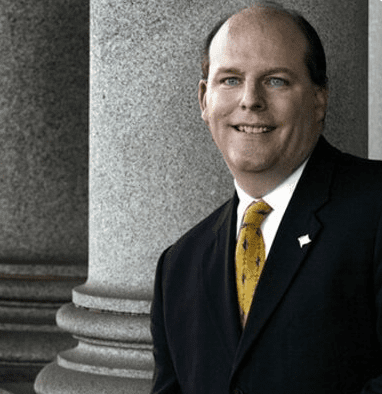 Peter Wehner is a contributing opinion writer for The New York Times and Senior Fellow at the Ethics and Public Policy Center. After serving in the Reagan and the first Bush administrations, Mr. Wehner led the Office of Strategic Initiatives in the George W. Bush White House. He writes widely on political, cultural, religious, and national-security issues and is coauthor with Michael Gerson of City of Man and with Arthur Brooks of Wealth and Justice.
Christian Approach to Politics
Previous Post

June 16, 2015
Gay Unions and Christian Divisions
Next Post

October 30, 2015 Open Letter to Sarah Palin: We Need to Change Our Tone on Guns
Browse Our Archives
Select a Category Abortion Abortion adoption Africa Aging AIDS America Worship American history Americolatry An Open Letter to a College Freshman animals Apologetics art Atheism Authors Barack Obama Bible Biblical Scholarship Billy Graham Blogging Bono Book Review Books That Change Lives Breakfast Links Bulletin Board Business Children Christian Approach to Politics Christian Media Christian Right Derangement Syndrome Christianity and Homosexuality Christians in Government Christmas Chuck Colson CLS v Martinez Comic Creation Creativity and the Arts Cross Examinations Cross Investigations Daily Fragment Daily Trinity Death debt Deep Thoughts on Fatherhood depression economy education Election 2012 entertainment Environment Epistemology Erik Campano Euthanasia Evangelicalism Evangelicals and Gays Everyday Transcendence evil evolution Facebook Jesus faith Faith and Politics Faith and Politics Faith and Politics Faith and Politics Faith and Politics Faith and Politics Faith and Politics faith and reason family Feminism foreign affairs Franklin Graham Future of Evangelicalism Galen D. gay marriage George W. Bush Guest Posts Guns Gymnastics Harold Camping Heaven Hell Holidays Hollywood Homosexuality iam2.org Illegal Immigration immigration Immigration Reform Injustice Inspiration Interviews Islam Jeremy Lin Jesus jesus christ John Mark Reynolds Johnnie Moore Judgment Day Just War Theory Killing Osama Link of the Day Lists of the Week Mark Goldblatt Marriage Military Missions Mitt Romney Modern Western Thought Monastic wisdom Mormonism Morning Hash Morning Report Motherhood Movies Obamacare Old Testament Orphan Care Palin Parenting Pastoral Resources Patheos Peace Between Religions PEPFAR Persecution Peter Wehner Peter Wehner Philosophy Political Quotes of the Day politics Politics and Economics Pornography Prejudice Prisoner Rape Question of the Week Race Radical Faith Rapture Ravi Zacharias Rick Santorum Russia Salvation Sarah Palin Scandals Science Science and Faith Separation of Church and State Series sex sex slavery social justice Social Justice Ministry Spiritual Disciplines sports Steven Tyler Suffering Suicide Sunday Funnies T. Dalrymple Tea Party Technology terrorism The Christian Media Files The Daily Trinity The Electorate The Ethics of Rhetoric The Future of Seminary Education The Middle East The Obama Presidency theological Theological Renewal Theology Uncategorized Understanding Evangelicalism Vocation war War and Peace With Distinction Word to the Wise Writers
Select a Month October 2015 June 2015 May 2015 March 2015 December 2014 September 2014 August 2014 July 2014 June 2014 May 2014 April 2014 March 2014 February 2014 January 2014 December 2013 November 2013 October 2013 September 2013 August 2013 July 2013 June 2013 May 2013 April 2013 March 2013 February 2013 January 2013 December 2012 November 2012 October 2012 September 2012 August 2012 July 2012 June 2012 May 2012 April 2012 March 2012 February 2012 January 2012 December 2011 November 2011 October 2011 September 2011 August 2011 July 2011 June 2011 May 2011 April 2011 March 2011 February 2011 January 2011 December 2010 November 2010 October 2010 September 2010 August 2010 July 2010 June 2010 May 2010 April 2010 March 2010 October 2009 September 2009 August 2009 July 2009 June 2009
Follow Us!
TAKE THE
Religious Wisdom Quiz
Who was cast into a pit by his brothers?
Select your answer to see how you score.
Jacob Daniel Joseph Moses
Related posts from Philosophical Fragments
Gay Unions and Christian Divisions

The Secularization of Suicide: Guarding the Elevators


Applying to Medical School at 54
TRENDING AT PATHEOS Evangelical

How the author of the world's best hymn...
I've been working with John Newton for a while now. This makes...

Long before this Lectio Divina, Psalm 130 - the song - started...

What About the Trees? Another Living Parable
After I finished writing the last article about falling leaves as a...

Why Classical Education Is a Conversation, Not a...
Come and Read: Joy in Classical Education When I was a little...

Falling Leaves: A Living Parable on Letting Go
I’ve spent the vast majority of my life in the southeast corner...

Cornell University has received a great deal of negative publicity and intense...
view all Evangelical blogs
Ad-Free & Subscriber Log-In Subscription Support
- About Us
- 2026 Calendar
- Videos
- Podcasts
- Library of World Religions
- Faith In Media Tracker
- Advertise With Us
- Write for Us
- Privacy Policy
- Terms of Service
- Do Not Sell My Data
- Contact Us
- Radiant Digital
- Manage Newsletter Subscriptions
- Unsubscribe From Notifications
- Sitemap
Copyright 2008-2026, Patheos. All rights reserved.
Subscription Support Ad-Free & Subscriber Log-In
Follow Patheos