
BuddhistCatholicContemplativeEvangelicalGeneral ChristianHinduJewishLatter-day SaintMuslimNew VisionsProgressive Christian
Beliefs
- Buddhist
- Catholic
- Contemplative
- Evangelical
- General Christian
- Hindu
- Jewish
- Latter-day Saint
- More Voices
- Muslim
- New Visions
- Pagan
- Progressive Christian
Topics
- Religion News
- Food and Religion
- Sports and Religion
- Religious Art
- Religious Music and Entertainment
- Religious Events
- History and Religion
- Style and Religion
- Politics and Religion
- Women in Religion
- Recreation Outdoors and Religion
- Business Finance and Religion
- Careers Workplace and Religion
- Education and Religion
- Family Parenting and Religion
- Health Fitness and Religion
- Home and Religion
- Relationships and Religion
- Technology and Religion
- Travel and Religion
Columnists
- Buddhist Columnists
- Business Finance and Religion Columnists
- Careers Workplace and Religion Columnists
- Catholic Columnists
- Contemplative Columnists
- Education and Religion Columnists
- Evangelists Columnists
- Family Parenting and Religion Columnists
- General Christian Columnists
- Health Fitness and Religion Columnists
- Hindu Columnists
- History and Religion Columnists
- Home and Religion Columnists
- Jewish Columnists
- More Voices Columnists
- Latter Day Columnists
- Muslim Columnists
- New Visions Columnists
- Nonreligious Columnists
- Pagan Columnists
- Politics and Religion Columnists
- Progressive Columnists
- Recreation Outdoors and Religion Columnists
- Relationships and Religion Columnists
- Religion News Columnists
- Religious Art Columnists
- Religious Events Columnists
- Religious Music and Entertainment Columnists
- Sports and Religion Columnists
- Style and Religion Columnists
- Technology and Religion Columnists
- Travel and Religion Columnists
- Women in Religion Columnists
Resource Library
- 2026 Calendar
- Library of World Religions
- The 100 Most Holy Places on Earth
- Patheos Answers
- Podcasts
- Videos
- Faith Leaders Database
- Anglican Episcopalian
- Bahai
- Baptist
- Buddhism
- Christianity
- Confucianism
- Eastern Orthodoxy
- Hinduism
- Holiness and Pentecostal
- ISKCON
- Islam
- Judaism
- Lutheran
- Methodist
- The Church of Jesus Christ of Latter-day Saints
- New Age
- Paganism
- Presbytarian and Reformed
- Protestantism
- Religion Behind the Scenes
- Roman Catholic
- Scientology
- Shia Islam
- Sikhism
- Sufism
- Sunni Islam
- Taoism
- Zen
- See all religions
Research Tools
 Ad-Free & Subscriber Log-In Subscription Support
Ad-Free & Subscriber Log-In Subscription Support
Follow Patheos 

- Trending:
- Forgiveness
- |
- Marriage
- |
- Consciousness
- |
- Death Penalty
- |
- Election
- |
- Halloween
 Philosophical Fragments
- Home
- Evangelical
- Michael Gerson: Looking Back on a Decade of PEPFAR
Michael Gerson: Looking Back on a Decade of PEPFAR
Last updated on: July 16, 2014 at 12:55 pm by Guest Contributor
Michael Gerson: Looking Back on a Decade of PEPFAR 2014-07-16T12:55:54-04:00 Guest Contributor
Patheos Explore the world's faith through different perspectives on religion and spirituality! Patheos has the views of the prevalent religions and spiritualities of the world.
Editors’ Note: This article is part of the Public Square 2014 Summer Series: Conversations on Religious Trends. We are holding this conversation in collaboration with the ONE Campaign. Read more about the ONE Campaign and their work fighting extreme poverty and AIDS at their website — and read other perspectives from the Evangelical community here.
*
ONE Fellow Michael Gerson reflects on the President’s Emergency Plan for AIDS Relief, one of the greatest examples of bipartisanship, compromise and mercy to come out of the American political system.
*

A new mother gazes at her healthy, HIV-free baby boy at the Chicuque Rural Hospital in Maxixe, Mozambique. Photo credit: PEPFAR
Among the most moving visits I have ever made to an African health facility took place about a year ago. Reaching a rural hospital at the end of a winding road, I asked a doctor if he would show me the ward containing AIDS patients with opportunistic infections.
He responded that they currently had no such cases. Nearly everyone in that remote part of Rwanda who needed AIDS treatment was receiving it. The hospital was dealing mainly with chronic diseases such as diabetes and heart disease and with the health challenges of low birth weight babies.
After seeing so many full AIDS wards over the years, it was an emotional moment to see an empty one. And one of the main explanations for this progress in Rwanda has been the President’s Emergency Plan for AIDS Relief, or PEPFAR.
I saw the history of PEPFAR from a unique vantage point. I worked for President George W. Bush as head of speechwriting and policy advisor. I watched the White House policy team, led by Josh Bolten, and brilliant researchers at NIH, particularly Tony Fauci and Mark Dybul, pull together the ambitious plan. And I became an advocate for PEPFAR within the system.
My single best experience in government was this: I sat in the Oval Office for the meeting in which PEPFAR was presented to the president. I watched him probe the details – questioning how the AIDS drugs would be delivered, insisting on a clear management structure and measured outcomes. And I saw President Bush eventually approve the largest initiative to fight a single disease in human history.
In his 2003 State of the Union address, President Bush said: “Tonight I propose the Emergency Plan for AIDS Relief, a work of mercy beyond all current international efforts to help the people of Africa. This comprehensive plan will prevent 7 million new AIDS infections, treat at least 2 million people with life-extending drugs and provide humane care for millions of people suffering from AIDS and for children orphaned by AIDS.”
In retrospect, these were not the most eloquent words I ever helped to produce as a speechwriter. But the moment was remarkable. An initiative of this scale was utterly unexpected. Bush’s strongest political supporters had not demanded it. His strongest critics, at least for a time, remained suspicious. PEPFAR existed because of a willing leader, a creative policy team, a vast need – and because of activists who both raised the profile of the AIDS issue and pushed for the program when it came.
It was in this context that I got to know Bono and his team at DATA, which later became ONE. The Republican president and the rock star, perhaps surprisingly, got along famously. And DATA became one of our main outside partners during the passage and implementation of PEPFAR. During this period, I first experienced the distinctive spirit of ONE: persistent, consistent, positive, effective and nonpartisan.
When I visited Africa as a Bush administration official soon after the PEPFAR announcement, perhaps 50,000 people were on treatment – out of 30 million people with HIV.
The pandemic had already produced 14 million orphans. Child-headed households were common; child-headed villages were not unknown. Walking through South African shantytowns, you mainly met grandparents and their grandchildren. The intervening generation had been nearly erased. Millions were dying at the same time and yet in total isolation, surrounded by the barbed wire of stigma. In the worst affected countries, life expectancy had fallen by 20 years.
But progress since 2003 has exceeded almost everyone’s expectations. Thanks to PEPFAR, The Global Fund, partner organizations, and the increasing contributions of African nations themselves, 7.6 million Africans are on treatment. More than 1 million mother-to-child infections have been prevented by PEPFAR alone.
The work, of course, is unfinished. Across sub-Saharan Africa, more than half of people who need treatment still lack it based on new WHO guidelines, and the percentage is even higher among infants with HIV. Yet advances in the fight against HIV/AIDS over the last decade have been some of the swiftest, most dramatic in the history of public health. Much of a generation has been saved from needless death.
This obviously matters most to the parents who are living to raise their children and the children who living to build their lives and their countries.
But PEPFAR also represents some good things about America – things worth celebrating as America celebrates its birthday.
This great national effort has shown the best face of the American political system. It has been genuinely bipartisan – the work of a Republican president, joined by congressional leaders of both parties, skillfully implemented across two administrations. It is a safe harbor from bitterness and division, demonstrating what our country can accomplish with a unifying goal.

George W. Bush and Laura Bush visit a PEPFAR clinic in Lusaka, Zambia, in 2012. Photo credit: The Bush Center
PEPFAR has also become the best face of America in large parts of the world. While many Americans know little about it, even in the smallest African villages, people know what PEPFAR means.
In 2005, a friend of mine visited a remote clinic in Zambia. She found that some people who had come to the facility – sick with AIDS – had walked for days in the hope of treatment. When asked why they had come, one Zambian woman responded, “Because we heard the Americans are going to help us.”
That is a familiar refrain in history. In Nazi-occupied Europe… in the gulags of the Soviet Union… there were many who said, “We heard the Americans are going to help us.” That is what America has been, and should always be.
PEPFAR is perhaps the greatest American work of mercy since the Marshall Plan. And Americans should know about it and be proud of it.
Because of these gains, the fight against AIDS has reached a critical moment. There is now a realistic scientific prospect – not just of providing broader treatment – but of dramatically reducing new infections. A series of interventions – including male circumcision, condom use and early treatment – can make the disease harder to pass long. And the transmission of HIV from mother to child can be prevented in nearly all cases with a few simple pills.
When these and other forms of prevention are combined and focused in the most affected groups, in the most affected places, scientists project a reduction in transmission of up to 60 percent. At that point, the number of new infections would drop lower than the number of new people put on treatment – which would be a turning point in this struggle. We are on the verge of something exciting: the beginning of the end of the AIDS pandemic.
Our sense of urgency should be just as great as it was a decade ago. And the effort and idealism of ONE members is needed now more than ever. Everyone who has supported PEPFAR over the years has reason to be proud; but no one who supports it has reason to be complacent, until all the wards are emptied.
Take action: Tell Congress to increase funding to PEPFAR. Sign the petition here.
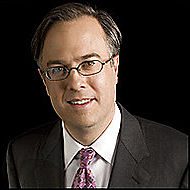 Michael Gerson is a ONE fellow, Washington Post columnist, and former speechwriter for President George W. Bush.
This article was first published at ONE.org.
Previous Post

July 6, 2014
Faint Praise for PEPFAR
Next Post

July 20, 2014 Applying to Medical School at 54
Browse Our Archives
Select a Category Abortion Abortion adoption Africa Aging AIDS America Worship American history Americolatry An Open Letter to a College Freshman animals Apologetics art Atheism Authors Barack Obama Bible Biblical Scholarship Billy Graham Blogging Bono Book Review Books That Change Lives Breakfast Links Bulletin Board Business Children Christian Approach to Politics Christian Media Christian Right Derangement Syndrome Christianity and Homosexuality Christians in Government Christmas Chuck Colson CLS v Martinez Comic Creation Creativity and the Arts Cross Examinations Cross Investigations Daily Fragment Daily Trinity Death debt Deep Thoughts on Fatherhood depression economy education Election 2012 entertainment Environment Epistemology Erik Campano Euthanasia Evangelicalism Evangelicals and Gays Everyday Transcendence evil evolution Facebook Jesus faith Faith and Politics Faith and Politics Faith and Politics Faith and Politics Faith and Politics Faith and Politics Faith and Politics faith and reason family Feminism foreign affairs Franklin Graham Future of Evangelicalism Galen D. gay marriage George W. Bush Guest Posts Guns Gymnastics Harold Camping Heaven Hell Holidays Hollywood Homosexuality iam2.org Illegal Immigration immigration Immigration Reform Injustice Inspiration Interviews Islam Jeremy Lin Jesus jesus christ John Mark Reynolds Johnnie Moore Judgment Day Just War Theory Killing Osama Link of the Day Lists of the Week Mark Goldblatt Marriage Military Missions Mitt Romney Modern Western Thought Monastic wisdom Mormonism Morning Hash Morning Report Motherhood Movies Obamacare Old Testament Orphan Care Palin Parenting Pastoral Resources Patheos Peace Between Religions PEPFAR Persecution Peter Wehner Peter Wehner Philosophy Political Quotes of the Day politics Politics and Economics Pornography Prejudice Prisoner Rape Question of the Week Race Radical Faith Rapture Ravi Zacharias Rick Santorum Russia Salvation Sarah Palin Scandals Science Science and Faith Separation of Church and State Series sex sex slavery social justice Social Justice Ministry Spiritual Disciplines sports Steven Tyler Suffering Suicide Sunday Funnies T. Dalrymple Tea Party Technology terrorism The Christian Media Files The Daily Trinity The Electorate The Ethics of Rhetoric The Future of Seminary Education The Middle East The Obama Presidency theological Theological Renewal Theology Uncategorized Understanding Evangelicalism Vocation war War and Peace With Distinction Word to the Wise Writers
Select a Month October 2015 June 2015 May 2015 March 2015 December 2014 September 2014 August 2014 July 2014 June 2014 May 2014 April 2014 March 2014 February 2014 January 2014 December 2013 November 2013 October 2013 September 2013 August 2013 July 2013 June 2013 May 2013 April 2013 March 2013 February 2013 January 2013 December 2012 November 2012 October 2012 September 2012 August 2012 July 2012 June 2012 May 2012 April 2012 March 2012 February 2012 January 2012 December 2011 November 2011 October 2011 September 2011 August 2011 July 2011 June 2011 May 2011 April 2011 March 2011 February 2011 January 2011 December 2010 November 2010 October 2010 September 2010 August 2010 July 2010 June 2010 May 2010 April 2010 March 2010 October 2009 September 2009 August 2009 July 2009 June 2009
Follow Us!
TAKE THE
Religious Wisdom Quiz
What does "Moses" mean?
Select your answer to see how you score.
Drawn Out (of water) Born Amid Trouble Gifted Rescued
Related posts from Philosophical Fragments

Reflections on the Gay Marriage Decision
Gay Unions and Christian Divisions

The Secularization of Suicide: Guarding the Elevators

TRENDING AT PATHEOS Evangelical

The REST of Your Life: A Creative Wrestles...
This week I had a conversation with a good friend from church....

How the author of the world's best hymn...
I've been working with John Newton for a while now. This makes...

Long before this Lectio Divina, Psalm 130 - the song - started...

What About the Trees? Another Living Parable
After I finished writing the last article about falling leaves as a...

Why Classical Education Is a Conversation, Not a...
Come and Read: Joy in Classical Education When I was a little...

Cornell University has received a great deal of negative publicity and intense...
view all Evangelical blogs
Ad-Free & Subscriber Log-In Subscription Support
- About Us
- 2026 Calendar
- Videos
- Podcasts
- Library of World Religions
- Faith In Media Tracker
- Advertise With Us
- Write for Us
- Privacy Policy
- Terms of Service
- Do Not Sell My Data
- Contact Us
- Radiant Digital
- Manage Newsletter Subscriptions
- Unsubscribe From Notifications
- Sitemap
Copyright 2008-2026, Patheos. All rights reserved.
Subscription Support Ad-Free & Subscriber Log-In
Follow Patheos