
BuddhistCatholicContemplativeEvangelicalGeneral ChristianHinduJewishLatter-day SaintMuslimNew VisionsProgressive Christian
Beliefs
- Buddhist
- Catholic
- Contemplative
- Evangelical
- General Christian
- Hindu
- Jewish
- Latter-day Saint
- More Voices
- Muslim
- New Visions
- Pagan
- Progressive Christian
Topics
- Religion News
- Food and Religion
- Sports and Religion
- Religious Art
- Religious Music and Entertainment
- Religious Events
- History and Religion
- Style and Religion
- Politics and Religion
- Women in Religion
- Recreation Outdoors and Religion
- Business Finance and Religion
- Careers Workplace and Religion
- Education and Religion
- Family Parenting and Religion
- Health Fitness and Religion
- Home and Religion
- Relationships and Religion
- Technology and Religion
- Travel and Religion
Columnists
- Buddhist Columnists
- Business Finance and Religion Columnists
- Careers Workplace and Religion Columnists
- Catholic Columnists
- Contemplative Columnists
- Education and Religion Columnists
- Evangelists Columnists
- Family Parenting and Religion Columnists
- General Christian Columnists
- Health Fitness and Religion Columnists
- Hindu Columnists
- History and Religion Columnists
- Home and Religion Columnists
- Jewish Columnists
- More Voices Columnists
- Latter Day Columnists
- Muslim Columnists
- New Visions Columnists
- Nonreligious Columnists
- Pagan Columnists
- Politics and Religion Columnists
- Progressive Columnists
- Recreation Outdoors and Religion Columnists
- Relationships and Religion Columnists
- Religion News Columnists
- Religious Art Columnists
- Religious Events Columnists
- Religious Music and Entertainment Columnists
- Sports and Religion Columnists
- Style and Religion Columnists
- Technology and Religion Columnists
- Travel and Religion Columnists
- Women in Religion Columnists
Resource Library
- 2026 Calendar
- Library of World Religions
- The 100 Most Holy Places on Earth
- Patheos Answers
- Podcasts
- Videos
- Faith Leaders Database
- Anglican Episcopalian
- Bahai
- Baptist
- Buddhism
- Christianity
- Confucianism
- Eastern Orthodoxy
- Hinduism
- Holiness and Pentecostal
- ISKCON
- Islam
- Judaism
- Lutheran
- Methodist
- The Church of Jesus Christ of Latter-day Saints
- New Age
- Paganism
- Presbytarian and Reformed
- Protestantism
- Religion Behind the Scenes
- Roman Catholic
- Scientology
- Shia Islam
- Sikhism
- Sufism
- Sunni Islam
- Taoism
- Zen
- See all religions
Research Tools
 Ad-Free & Subscriber Log-In Subscription Support
Ad-Free & Subscriber Log-In Subscription Support
Follow Patheos 

- Trending:
- Forgiveness
- |
- Marriage
- |
- Consciousness
- |
- Death Penalty
- |
- Election
- |
- Halloween
 Philosophical Fragments
- Home
- Evangelical
- Detroit Pastor Envisions an ‘Urban Turn’ in Christian Apologetics
Detroit Pastor Envisions an ‘Urban Turn’ in Christian Apologetics
Last updated on: April 28, 2014 at 9:01 am by Guest Contributor
Detroit Pastor Envisions an ‘Urban Turn’ in Christian Apologetics 2014-04-28T09:01:40-04:00 Guest Contributor
Patheos Explore the world's faith through different perspectives on religion and spirituality! Patheos has the views of the prevalent religions and spiritualities of the world.
By Joseph E. Gorra
Different images and ideas tend to populate the imagination of evangelical laity and pastors when they think about the ‘work of Christian apologetics.’ Maybe some mostly imagine people ‘winning arguments’ or ‘defeating objections’ to Christian faith. Or, still others may just predominately think of the work of leading personalities in apologetics (e.g., William Lane Craig, Ravi Zacharias, Lee Strobel, etc).
Regardless, most rarely envision the task, mission and value of apologetics along the lines of the flourishing of all people, and especially ethnic minorities, living in urban contexts.
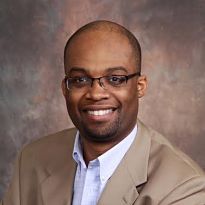 Enter: Detroit pastor, educator and author, Christopher Brooks. His forthcoming book, Urban Apologetics: Answering Challenges to Faith for Urban Believers, may very well be the kind of model needed to help catalyze further creative pastoral and intellectual fruitfulness in this area. Writing about the mission of this kind of apologetics, Brooks says that it “is to present a Christianity that is as concerned with human flourishing as it is with doctrinal orthodoxy” (30-31).
Pastor Brooks, an alum of Biola University’s graduate program in Christian apologetics, was recently interviewed by Patheos.com guest interviewer, Joseph E. Gorra. In the interview, Brooks goes on to say,
I am convinced that the end goal of all theological study is far more than information, rather it is application that leads to flourishing and community transformation – this is scholarship at its highest level.
There is a ‘gospel-shaped’ theology of public life that seems to operate in the background of the foreground of Urban Apologetics. Why might his be essential to the work of apologetics? Brooks answers:
It is precisely because the public lives of Christians are being so heavily scrutinized by our secular culture. The increasing animosity that exists between the church and non-Christians can be attributed as much to failure in our ability to have a robust theology of public life as to any other factor. However, wired into the DNA of biblical Christianity is this commitment to having every aspect of our public and private lives shaped by the gospel. This is, undoubtedly, the major emphasis of the New Testament epistles.
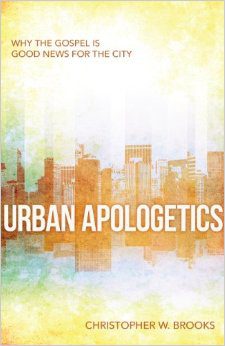 What is ‘Urban Apologetics’?
Simply stated Urban Apologetics is the art and science of providing gospel-centered answers to the major questions about life and the issues that are shaping our culture, which are being asked by those who live in the urban centers of America.
Is ‘Urban Apologetics’ a specific kind of contextualizing task? Is it a new kind of apologetics altogether?
Certainly, the major task of Urban Apologetics is contextualization. The goal is to help those who desire to reach the men and women who live in inner cities to understand the unique questions and challenges faced by the Christian message. However, what makes it a new approach to the field is the method of delivery, the emphasis on creative and soulful expressions of truth, as well as the recognition of the need for specialized training on how to combat the dangerous impact that liberationist philosophies/theologies have had on the urban mind. Finally, there is an intentionally high-level of focus placed upon incarnational evangelism, which is the act of embodying the ethics of our faith.
To what extent does moral-spiritual apathy shape the conditions of believability in urban contexts?
Like much of U.S. culture, there is a rapidly growing segment of urban America that is rejecting affiliation with any organized religion and more specifically there is a formal denunciation of Christianity (e.g., those known as “nones”). Although somewhat impacted by this trend, minorities are still largely religious people with 87% of Blacks and 85% of Latinos claiming to be Christians. Minorities have yet to catch up with their white-evangelical counterparts in the specific area of “apathy”. However, the ethical questions are shifting and the church must be able to adapt to this shift and seek to not only provide the right answers but more importantly to answer the right questions. There is a high level of moral fervor on issues of justice and equality.
Lots of books, conferences, networks and even D.Min programs have been developed in recent years among evangelicals regarding ‘urban ministry.’ Why is it that Christian apologetics – as a body of knowledge, set of skills and literacy – has seemed late-in-coming to these developments?
There are a few reasons for this phenomenon. Apologetics has historically been viewed as a philosophical field of study and sadly to many the urban church is the least likely place one would turn to when looking to engage in deep philosophical discourse. Thankfully this is changing as minorities are producing more theological and apologetic books, lectures and resources.
There is the additional reality that mainstream apologetics simply has not prioritized the reaching of minority populations, but with shifts in demographics as well as the dramatic increase in the perceived influence of minorities on the country with the election of the first black president there has been a new awakening in this area. Finally, the main reason for the book is to spark a passion in the hearts of urban Christians for the relevance of apologetics. The misperception of the urban church concerning apologetics is that, “they aren’t answering our questions”. This has led to a lack of demand and outcry from minorities to institutions of higher learning for training in the area of apologetics.
You write that the ‘urban apologist’ must “be a preacher-poet if he or she will capture the souls and minds of listeners” (22). What does that look like, and are you concerned about an overly-‘intellectualist’ rendering of the task, process and goals of Christian apologetics?
It is impossible to strip apologetics from the intellectual foundation that undergirds the task. Our defense of the faith must be well-reasoned and tenable. But apologetics at its best satisfies both the hunger of the mind for evidence credibility and the thirst of the heart for emotional coherence. So, the preacher-poet analogy is to say that in order to capture the heart and soul of urbanites, propositional truth must be presented in proses that resonate deeply with the longings and life experience of minorities. We must liberate apologetics from the classroom and place it into the hands of singers, poets, spoken-word artists, novelist, movie writers and musicians. Artists like Propaganda and Reach Life Records are great examples of this. The work that LeCrae has done in advancing arguments for the gospel has strongly impacted minority youth for Christ.
I want to explore a little this interesting (and often under-addressed) intersection between cultural conditions and apologetics. Is part of what you are saying in this book the claim that American Christian apologetics endeavors have become too ‘suburbanized’?
Yes, I believe this is one of the side effects of market driven capitalism on the field of apologetics. Most research and educational resources are designed to address the audience concerns of those who invest financially in higher education programs, buy products, attend conferences and donate to ministries in large amounts. This leads to a similar phenomenon as to the one we see in the medical research field, where diseases that are associated with the poor are often overlooked in comparison to illnesses that more prevalently afflict those with disposable incomes in the West. Unfortunately there is a perception that urban communities have a low level of interest and willingness to invest in apologetic research and projects.
Another contributing factor to the ‘suburbanization of apologetics’ is the fact that apologists are naturally drawn to subjects that they have personally encountered in their evangelistic ministries and life-experience. Therefore, since urban apologists are under-represented in most seminaries and publishing houses, our stories and issues are not being discussed. If this trend has any hope of being reversed there must be more intentionality with academia and the apologetic world as a whole to create platforms for urban voices.
I want to make an observation about apologetics literature and then have you respond. I see several different contemporary, North American apologetics streams converging in Urban Apologetics: Emphasis on ‘existentialist reasons for belief in God’ (e.g., from Cliff Williams), ‘imaginative apologetics’ (e.g., from Andrew Davison, Holly Ordway), the necessity to embody our moral apologetics and ethics (e.g., from David Horner, Mark Coppenger); and the integral way that pastoral care and leadership ought to orient the apologetics endeavor. In some way, whether explicitly or indirectly, is your work swimming in some of these streams?
This is very perceptive of you. Urban Apologetics seeks to tap into the ethos of ethnic minority communities. What I discovered is that there is a hunger for the gospel to address the existential questions of the heart, with a distinctly pastoral feel and presented by highly credible voices who emphasize praxis as much as orthodoxy. In this way, however, I do also recognize that the connection with each of these streams is not a uniquely urban development. What does make Urban Apologetics distinctive is the bringing together of each of these trends into one project and focus.
How might a local church learn to better integrate the vision and stewardship of an ‘Urban Apologetics’ through their enfolding and training communities?
The local church is the best place for urban apologetic work to be done. In chapter nine of my book I recommend several ways local churches can assimilate Urban Apologetics into their mission. The overarching counsel that I give is for churches to begin by creating a listening evangelistic environment that seeks to address the specific questions and concerns of the community they endeavor to reach with the gospel, as opposed to giving answers to questions that aren’t being asked in their specific mission field. Secondly, I highly encourage churches to cultivate a vision for producing urban apologists. This can be done by vocally and visually providing support through investing into the education and training of these types of ministry workers.
It seems that evangelical educational institutions – especially seminaries – can help to facilitate better attentiveness to the issues and needs for training laity and clergy in ‘Urban Apologetics.’ What are some top institutional recommendations for developments in this area?
Bible Colleges and Seminaries play an extremely vital role in training laity and leaders for engaging in Urban Apologetics. There are several ways that educational institutions can best approach this work. They can begin by doing a demographic study of the immediate communities they serve in order to discover what religious groups are garnering the most interest and attention. It was because of my demographic research and community analysis that I added an appendix to the book that deals with religions that aren’t mainstream, but are very prevalent in urban communities. Groups like the Moorish Temple, Egyptology and the 5 Percent nation are capturing the attention of minorities and therefore must not be overlooked in our books and training programs. Demographic data should influence curriculum and class offerings.
Secondly, schools should maintain the posture of being a resource to the broader Christian community for facilitating crucial conversations around the major issues shaping culture. Educational institutions should not shy away from inviting guest speakers t0 address special topics of interest to urbanites. My final recommendation is for Evangelical seminaries to create space in their degree programs for classes on how Christians should respond to the social justice and ethical questions of our day.
 Joseph E. Gorra is co-writer with William Lane Craig for A Reasonable Response: Answers to Tough Questions on God, Christianity and the Bible (Moody, 2013), and is the founder and director of the religious nonprofit, Veritas Life Center. Twitter: www.twitter.com/GorraResearch
Previous Post
April 23, 2014
Remembering James R. Schlesinger
Next Post

April 29, 2014 Bad Epistemology
Browse Our Archives
Select a Category Abortion Abortion adoption Africa Aging AIDS America Worship American history Americolatry An Open Letter to a College Freshman animals Apologetics art Atheism Authors Barack Obama Bible Biblical Scholarship Billy Graham Blogging Bono Book Review Books That Change Lives Breakfast Links Bulletin Board Business Children Christian Approach to Politics Christian Media Christian Right Derangement Syndrome Christianity and Homosexuality Christians in Government Christmas Chuck Colson CLS v Martinez Comic Creation Creativity and the Arts Cross Examinations Cross Investigations Daily Fragment Daily Trinity Death debt Deep Thoughts on Fatherhood depression economy education Election 2012 entertainment Environment Epistemology Erik Campano Euthanasia Evangelicalism Evangelicals and Gays Everyday Transcendence evil evolution Facebook Jesus faith Faith and Politics Faith and Politics Faith and Politics Faith and Politics Faith and Politics Faith and Politics Faith and Politics faith and reason family Feminism foreign affairs Franklin Graham Future of Evangelicalism Galen D. gay marriage George W. Bush Guest Posts Guns Gymnastics Harold Camping Heaven Hell Holidays Hollywood Homosexuality iam2.org Illegal Immigration immigration Immigration Reform Injustice Inspiration Interviews Islam Jeremy Lin Jesus jesus christ John Mark Reynolds Johnnie Moore Judgment Day Just War Theory Killing Osama Link of the Day Lists of the Week Mark Goldblatt Marriage Military Missions Mitt Romney Modern Western Thought Monastic wisdom Mormonism Morning Hash Morning Report Motherhood Movies Obamacare Old Testament Orphan Care Palin Parenting Pastoral Resources Patheos Peace Between Religions PEPFAR Persecution Peter Wehner Peter Wehner Philosophy Political Quotes of the Day politics Politics and Economics Pornography Prejudice Prisoner Rape Question of the Week Race Radical Faith Rapture Ravi Zacharias Rick Santorum Russia Salvation Sarah Palin Scandals Science Science and Faith Separation of Church and State Series sex sex slavery social justice Social Justice Ministry Spiritual Disciplines sports Steven Tyler Suffering Suicide Sunday Funnies T. Dalrymple Tea Party Technology terrorism The Christian Media Files The Daily Trinity The Electorate The Ethics of Rhetoric The Future of Seminary Education The Middle East The Obama Presidency theological Theological Renewal Theology Uncategorized Understanding Evangelicalism Vocation war War and Peace With Distinction Word to the Wise Writers
Select a Month October 2015 June 2015 May 2015 March 2015 December 2014 September 2014 August 2014 July 2014 June 2014 May 2014 April 2014 March 2014 February 2014 January 2014 December 2013 November 2013 October 2013 September 2013 August 2013 July 2013 June 2013 May 2013 April 2013 March 2013 February 2013 January 2013 December 2012 November 2012 October 2012 September 2012 August 2012 July 2012 June 2012 May 2012 April 2012 March 2012 February 2012 January 2012 December 2011 November 2011 October 2011 September 2011 August 2011 July 2011 June 2011 May 2011 April 2011 March 2011 February 2011 January 2011 December 2010 November 2010 October 2010 September 2010 August 2010 July 2010 June 2010 May 2010 April 2010 March 2010 October 2009 September 2009 August 2009 July 2009 June 2009
Follow Us!
TAKE THE
Religious Wisdom Quiz
I refused to bow to a high official and sat at the king's gate, sparking a genocidal plot. Who am I?
Select your answer to see how you score.
Nehemiah Daniel Haman Mordecai
Related posts from Philosophical Fragments

Reflections on the Gay Marriage Decision
Gay Unions and Christian Divisions

The Secularization of Suicide: Guarding the Elevators

TRENDING AT PATHEOS Evangelical

The REST of Your Life: A Creative Wrestles...
This week I had a conversation with a good friend from church....

How the author of the world's best hymn...
I've been working with John Newton for a while now. This makes...

Long before this Lectio Divina, Psalm 130 - the song - started...

What About the Trees? Another Living Parable
After I finished writing the last article about falling leaves as a...

Why Classical Education Is a Conversation, Not a...
Come and Read: Joy in Classical Education When I was a little...

Cornell University has received a great deal of negative publicity and intense...
view all Evangelical blogs
Ad-Free & Subscriber Log-In Subscription Support
- About Us
- 2026 Calendar
- Videos
- Podcasts
- Library of World Religions
- Faith In Media Tracker
- Advertise With Us
- Write for Us
- Privacy Policy
- Terms of Service
- Do Not Sell My Data
- Contact Us
- Radiant Digital
- Manage Newsletter Subscriptions
- Unsubscribe From Notifications
- Sitemap
Copyright 2008-2026, Patheos. All rights reserved.
Subscription Support Ad-Free & Subscriber Log-In
Follow Patheos