
BuddhistCatholicContemplativeEvangelicalGeneral ChristianHinduJewishLatter-day SaintMuslimNew VisionsProgressive Christian
Beliefs
- Buddhist
- Catholic
- Contemplative
- Evangelical
- General Christian
- Hindu
- Jewish
- Latter-day Saint
- More Voices
- Muslim
- New Visions
- Pagan
- Progressive Christian
Topics
- Religion News
- Food and Religion
- Sports and Religion
- Religious Art
- Religious Music and Entertainment
- Religious Events
- History and Religion
- Style and Religion
- Politics and Religion
- Women in Religion
- Recreation Outdoors and Religion
- Business Finance and Religion
- Careers Workplace and Religion
- Education and Religion
- Family Parenting and Religion
- Health Fitness and Religion
- Home and Religion
- Relationships and Religion
- Technology and Religion
- Travel and Religion
Columnists
- Buddhist Columnists
- Business Finance and Religion Columnists
- Careers Workplace and Religion Columnists
- Catholic Columnists
- Contemplative Columnists
- Education and Religion Columnists
- Evangelists Columnists
- Family Parenting and Religion Columnists
- General Christian Columnists
- Health Fitness and Religion Columnists
- Hindu Columnists
- History and Religion Columnists
- Home and Religion Columnists
- Jewish Columnists
- More Voices Columnists
- Latter Day Columnists
- Muslim Columnists
- New Visions Columnists
- Nonreligious Columnists
- Pagan Columnists
- Politics and Religion Columnists
- Progressive Columnists
- Recreation Outdoors and Religion Columnists
- Relationships and Religion Columnists
- Religion News Columnists
- Religious Art Columnists
- Religious Events Columnists
- Religious Music and Entertainment Columnists
- Sports and Religion Columnists
- Style and Religion Columnists
- Technology and Religion Columnists
- Travel and Religion Columnists
- Women in Religion Columnists
Resource Library
- 2026 Calendar
- Library of World Religions
- The 100 Most Holy Places on Earth
- Patheos Answers
- Podcasts
- Videos
- Faith Leaders Database
- Anglican Episcopalian
- Bahai
- Baptist
- Buddhism
- Christianity
- Confucianism
- Eastern Orthodoxy
- Hinduism
- Holiness and Pentecostal
- ISKCON
- Islam
- Judaism
- Lutheran
- Methodist
- The Church of Jesus Christ of Latter-day Saints
- New Age
- Paganism
- Presbytarian and Reformed
- Protestantism
- Religion Behind the Scenes
- Roman Catholic
- Scientology
- Shia Islam
- Sikhism
- Sufism
- Sunni Islam
- Taoism
- Zen
- See all religions
Research Tools
 Ad-Free & Subscriber Log-In Subscription Support
Ad-Free & Subscriber Log-In Subscription Support
Follow Patheos 

- Trending:
- Forgiveness
- |
- Marriage
- |
- Consciousness
- |
- Death Penalty
- |
- Election
- |
- Halloween
 Philosophical Fragments
- Home
- Evangelical
- The Largest Group of Oppressed and Enslaved People on Earth
The Largest Group of Oppressed and Enslaved People on Earth
Last updated on: July 30, 2012 at 8:28 am by Timothy Dalrymple
The Largest Group of Oppressed and Enslaved People on Earth 2012-07-30T08:28:02-04:00 Timothy Dalrymple
Patheos Explore the world's faith through different perspectives on religion and spirituality! Patheos has the views of the prevalent religions and spiritualities of the world.
NOTE: The following is a guest post from my sainted father, Galen C. Dalrymple, director at iam2.org, an organization devoted to crowd-sourcing compassion and empowering ministries serving the neediest children in the world.
Recently the filmmakers of Not Today, along with my friends at Lovell-Fairchild, took my father to India to learn more about the film. He is an extraordinary man of God with a passion for these issues and stands at the helm of a faith-informed organization that can make a real difference for children in need of food, water or protection. See the first installment of his story here — below is the second installment.
*
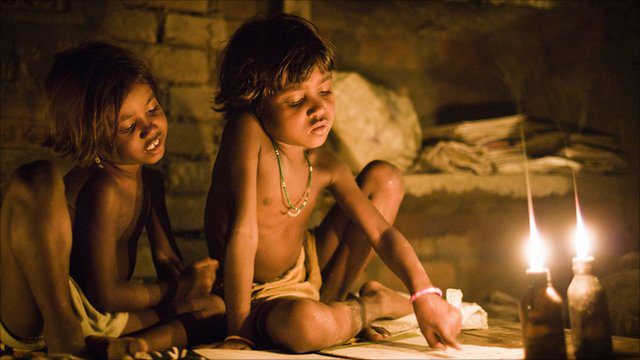 ”The sins of Girdharilal Maurya are many, his attackers insisted. He has bad karma. Why else would he, like his ancestors, be born an Untouchable, if not to pay for his past lives? Look, he is a leatherworker, and Hindu law says that working with animal skins makes him unclean, someone to avoid and revile. And his unseemly prosperity is a sin. Who does this Untouchable think he is, buying a small plot of land outside the village? Then he dared speak up, to the police and other authorities, demanding to use the new village well. He got what Untouchables deserve.
“One night, while Maurya was away in a nearby city, eight men from the higher Rajput caste came to his farm. They broke his fences, stole his tractor, beat his wife and daughter, and burned down his house. The message was clear: Stay at the bottom where you belong.” – National Geographic
If you were to venture a guess as to the largest group of oppressed and enslaved people in a single nation on the face of the earth in the 21st century, what people group do you think would wear that dubious title? Would it be people who were being persecuted because of their faith or race in the Middle East or Southeastern Asia? Would it be those who have a substandard education and are prevented from learning and developing their skills and abilities to become contributing members of society in sub-Saharan Africa? Would it be the indigenous peoples of Australia’s outback?
The correct answer the Dalit people of India, the largest group of enslaved people in the world. India is a crowded country, boasting a population of approximately 1.2 billion persons. Nearly one-quarter, 250 million of those people, are Dalits. Who are the Dalits? The Dalits
were historically called the “untouchables”…those in India who were not even considered high enough to be part of the caste system, but were below the lowest level of caste.
The term “Dalit” may be unfamiliar to you. It is not a racial group or a tribe or clan. It is a classification of human beings based upon their ancestry. It could be likened to being born Asian, or black, or white – things about which we have no voice or choice. Some things happen to us simply as a fact related to one’s birth and lot in life.
There are an estimated 250 million Dalits in India, nearly one quarter of India’s 1.2 billion people. They are, according to some, the longest standing group of oppressed people in history. Formerly referred to as the “untouchables”, the Dalits comprise the largest number of people categorized as victims of human trafficking and enslavement in any single nation on the face of the earth. On November 15, 2008, the Honorable Dr. Justice Arijit Pasayat of the Supreme Court of India stated that there is “no bigger problem in India today than human trafficking.” Later, in May 2009, India’s Home Secretary, Madhukar Gupta, remarked that by his estimates “at least 100 million people were involved in human trafficking in India.” Nearly all those 100 million persons are Dalits.
The word Dalit means “broken to pieces”, ground”, “suppressed”, or “crushed”. Systematically, the Dalits are ground down and crushed by discrimination. How bad is the oppression? Consider: Dalits will not live on the eastern side of a village because it is believed that if even their shadow were to fall upon a non-Dalit, the non-Dalit would be polluted. For years they were called “untouchables” because to touch such a person (or even a glass or bowl that had been touched by an untouchable) made those of higher castes impure.
The earliest descriptions and expression of the concept of caste is found in the Vedas, part of India’s body of religious scripture. The Vedas are believed to have been completed 1500-1000 BC. For generations, the Vedas were passed along verbally before being written down. The first of the four basic Vedic books is the Rig Veda, which contains the story in which the first man, Purusa, is sacrificed in order to bring about the rise of the four varnas. [EDITOR: see comment below from Agnikan] Purusa was cut up into four parts which each gave rise to one of the four castes: the Brahmin was from Purusa’s head and mouth and thus was the highest caste. The Kshatriya caste of warriors and nobility came from his shoulders and two arms, while the Vaishya caste (skilled tradesmen, etc.) came from his thighs. The serving caste, the Sudra, came from his feet. The untouchables, or Dalits as they are known today, were totally outside of the caste system, considered too lowly to be included.
While the caste system started out as a way to classify people according to their occupations, it soon became a matter of heredity and people were born into what became an unchangeable social status, or caste.
Untouchable status was historically conferred on those who had occupations that would cause them to be ritually impure, including working with leather, butchering of animals, clearing away trash, dead animal carcasses and human and animal waste products. The untouchables often labored at cleaning streets, latrines, and sewers. Such roles were believed to pollute the person and the pollution was believed to be contagious. As one might expect, the Dalits were isolated, banned from joining in the social life of those around them. They were not even allowed to enter a temple or school, and had to stay outside of villages.
Although the government of India has passed laws that make it a crime to treat one person differently than another because of caste, the stigma remains and so does prejudice and mistreatment.
In my next post, I’ll go into more detail about how the Dalits are treated in modern day India – and delve into the issues related to human trafficking and enslavement. There is hope. While in India I saw reason for hope first hand – but the problems remain huge and serious. The Dalits of India need and deserve our help and support. They have much to offer and have made some great strides, but there is
much to be done.
I hope you’ll stay with us for future stories about the Dalits of India!
*
Thanks to Galen C. Dalrymple. Please check out the Not Today website and the iam2.org site.
Previous Post

July 25, 2012
You Built a Company - Now Use It to Build a Better World
Next Post

July 26, 2012 What's the Difference Between Art and Propaganda?
Browse Our Archives
Select a Category Abortion Abortion adoption Africa Aging AIDS America Worship American history Americolatry An Open Letter to a College Freshman animals Apologetics art Atheism Authors Barack Obama Bible Biblical Scholarship Billy Graham Blogging Bono Book Review Books That Change Lives Breakfast Links Bulletin Board Business Children Christian Approach to Politics Christian Media Christian Right Derangement Syndrome Christianity and Homosexuality Christians in Government Christmas Chuck Colson CLS v Martinez Comic Creation Creativity and the Arts Cross Examinations Cross Investigations Daily Fragment Daily Trinity Death debt Deep Thoughts on Fatherhood depression economy education Election 2012 entertainment Environment Epistemology Erik Campano Euthanasia Evangelicalism Evangelicals and Gays Everyday Transcendence evil evolution Facebook Jesus faith Faith and Politics Faith and Politics Faith and Politics Faith and Politics Faith and Politics Faith and Politics Faith and Politics faith and reason family Feminism foreign affairs Franklin Graham Future of Evangelicalism Galen D. gay marriage George W. Bush Guest Posts Guns Gymnastics Harold Camping Heaven Hell Holidays Hollywood Homosexuality iam2.org Illegal Immigration immigration Immigration Reform Injustice Inspiration Interviews Islam Jeremy Lin Jesus jesus christ John Mark Reynolds Johnnie Moore Judgment Day Just War Theory Killing Osama Link of the Day Lists of the Week Mark Goldblatt Marriage Military Missions Mitt Romney Modern Western Thought Monastic wisdom Mormonism Morning Hash Morning Report Motherhood Movies Obamacare Old Testament Orphan Care Palin Parenting Pastoral Resources Patheos Peace Between Religions PEPFAR Persecution Peter Wehner Peter Wehner Philosophy Political Quotes of the Day politics Politics and Economics Pornography Prejudice Prisoner Rape Question of the Week Race Radical Faith Rapture Ravi Zacharias Rick Santorum Russia Salvation Sarah Palin Scandals Science Science and Faith Separation of Church and State Series sex sex slavery social justice Social Justice Ministry Spiritual Disciplines sports Steven Tyler Suffering Suicide Sunday Funnies T. Dalrymple Tea Party Technology terrorism The Christian Media Files The Daily Trinity The Electorate The Ethics of Rhetoric The Future of Seminary Education The Middle East The Obama Presidency theological Theological Renewal Theology Uncategorized Understanding Evangelicalism Vocation war War and Peace With Distinction Word to the Wise Writers
Select a Month October 2015 June 2015 May 2015 March 2015 December 2014 September 2014 August 2014 July 2014 June 2014 May 2014 April 2014 March 2014 February 2014 January 2014 December 2013 November 2013 October 2013 September 2013 August 2013 July 2013 June 2013 May 2013 April 2013 March 2013 February 2013 January 2013 December 2012 November 2012 October 2012 September 2012 August 2012 July 2012 June 2012 May 2012 April 2012 March 2012 February 2012 January 2012 December 2011 November 2011 October 2011 September 2011 August 2011 July 2011 June 2011 May 2011 April 2011 March 2011 February 2011 January 2011 December 2010 November 2010 October 2010 September 2010 August 2010 July 2010 June 2010 May 2010 April 2010 March 2010 October 2009 September 2009 August 2009 July 2009 June 2009
Follow Us!
TAKE THE
Religious Wisdom Quiz
What city is known as the Holy City, sacred to Jews, Christians, and Muslims?
Select your answer to see how you score.
Jerusalem Cairo Rome Athens
Related posts from Philosophical Fragments

Suffering Through the Prism of Faith

The Secularization of Suicide: Guarding the Elevators

Osteenification and What It Portends

Out of Africa 6: Looking Homeward and Inward
TRENDING AT PATHEOS Evangelical

The REST of Your Life: A Creative Wrestles...
This week I had a conversation with a good friend from church....

How the author of the world's best hymn...
I've been working with John Newton for a while now. This makes...

Long before this Lectio Divina, Psalm 130 - the song - started...

What About the Trees? Another Living Parable
After I finished writing the last article about falling leaves as a...

Why Classical Education Is a Conversation, Not a...
Come and Read: Joy in Classical Education When I was a little...

Cornell University has received a great deal of negative publicity and intense...
view all Evangelical blogs
Ad-Free & Subscriber Log-In Subscription Support
- About Us
- 2026 Calendar
- Videos
- Podcasts
- Library of World Religions
- Faith In Media Tracker
- Advertise With Us
- Write for Us
- Privacy Policy
- Terms of Service
- Do Not Sell My Data
- Contact Us
- Radiant Digital
- Manage Newsletter Subscriptions
- Unsubscribe From Notifications
- Sitemap
Copyright 2008-2026, Patheos. All rights reserved.
Subscription Support Ad-Free & Subscriber Log-In
Follow Patheos